In October 2025, the second mission under the Blue Deal Economic Mechanism project took place at Waterschap Limburg in Roermond.
This location was no coincidence. Waterschap Limburg has been closely involved with Romania’s water sector since the very beginning of the Dutch-Romanian collaboration in 2006. One of the key figures from that time, Philip Daelmans, remains actively engaged and helped design a diverse and insightful programme together with his colleagues.
Why water financing matters
Financing water management is a challenge faced not only in Romania but across many Blue Deal partnerships worldwide. Sustainable funding is essential for maintaining infrastructure, improving services, and meeting long-term water security goals. The Dutch water authorities have developed a unique tax system that ensures stable financing for water management, an approach that sparks interest from many countries looking for practical solutions.
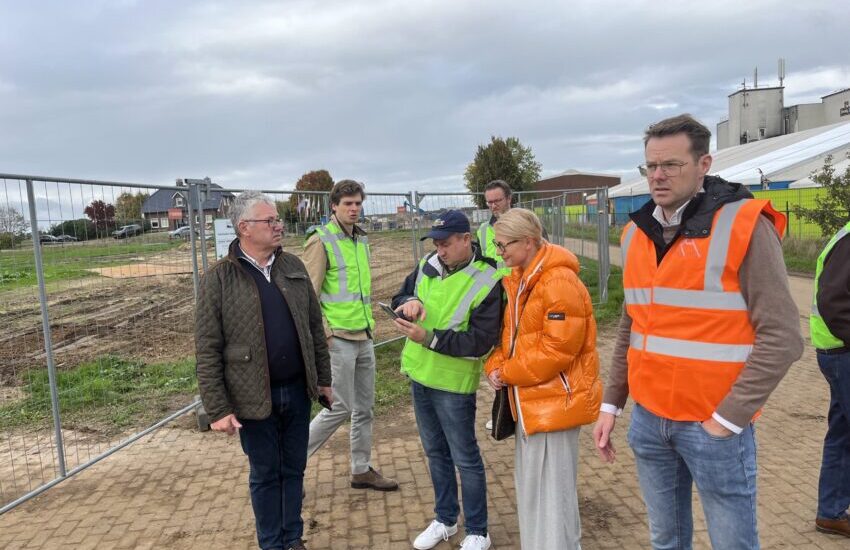
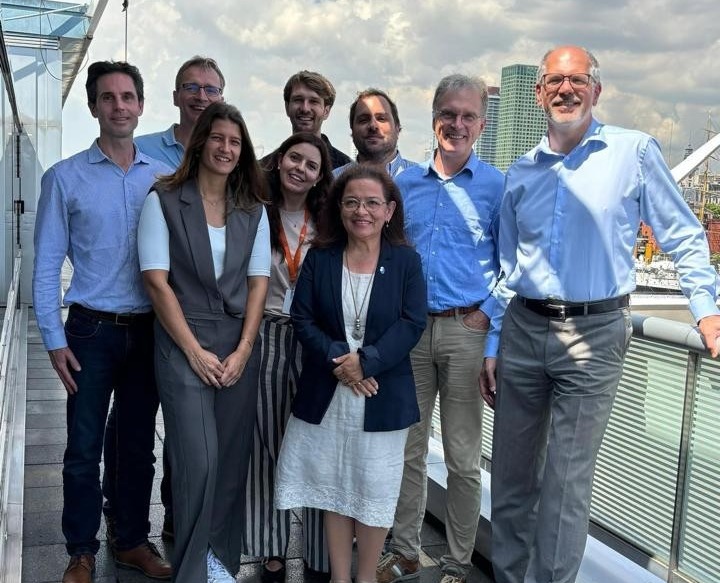
The Romanian delegation was shown around the Water Authority in Roermond, Limburg
Key themes and discussions
The workshops focused on several pressing topics, with a recurring theme being how Romanian water authorities generate income. Unlike in the Netherlands, revenue collection in Romania is not as straightforward as levying taxes on citizens. While taxes are collected, the process is far more limited and labour-intensive. The challenges, struggles, and potential solutions for improving revenue streams were discussed in depth. A highlight was the presentation by Rianne Janssen, tax specialist at Waterschap Limburg, who explained Limburg’s tax collaboration model – sparking great interest among Romanian participants.
The topic is key, as the European Commission announced a new dialogue with Romania to improve implementation of EU water legislation. Local impact – financial and social – must be delivered through credible water credit systems.
Another major focus was cost reduction. One example is the shift toward digital invoicing and electronic signatures, which can significantly improve efficiency. The Romanian delegation shared their progress in this area, and several participants presented the financial situation of their own water authorities.
Building better financial insights
The mission also addressed the development of a new Management Information System in Romania. This system aims to provide clearer insights into the finances and performance of Romanian water authorities. Progress has been promising, following guidance provided by World Bank on this front.
Looking ahead to 2026, there is plenty to build on. This mission was a success both in terms of content and relationships. Clear action points have been defined for the next mission, scheduled for June 2026 in Oradea, with an interim digital meeting planned for early 2026.
As climate change accelerates environmental degradation, Ghana’s water and coastal systems face intensifying risks, from erosion and flooding to salinisation and habitat loss.
In response, Blue Deal, with its local partner Water Resources Commission (WRC), and Ghanaian and international partners, is tackling water-related challenges through an integrated approach that combines a portfolio of Nature-based Solutions (NbS), and decentralised governance that puts communities, ecosystems, and equity to strengthen water management and build resilience against climate risks.
Guided by Integrated Water Resources Management (IWRM) plans, WRC and Blue Deal collaborate to manage water resources a co-develop NbS that work with nature, not against it.
Lower Volta Basin: Restoring mangroves as a natural buffer
In the Lower Volta Basin, particularly around the Songor Ramsar Site and UNESCO’s Man and the Biosphere Reserve (Ada), key challenges include flooding and mangrove degradation. Blue Deal’s activities in this landscape combine ecological restoration with social inclusion and practical risk reduction. Mangrove ecosystems help dampen coastal erosion, reduce flooding, and limit salinisation — risks amplified by climate change.
A pilot combines creek dredging/desilting with mangrove restoration to test integrated effectiveness before upscaling. Because the creek supports domestic water use, fishing, and farming, improved flow and habitat health are expected to deliver tangible livelihood and well-being co-benefits.
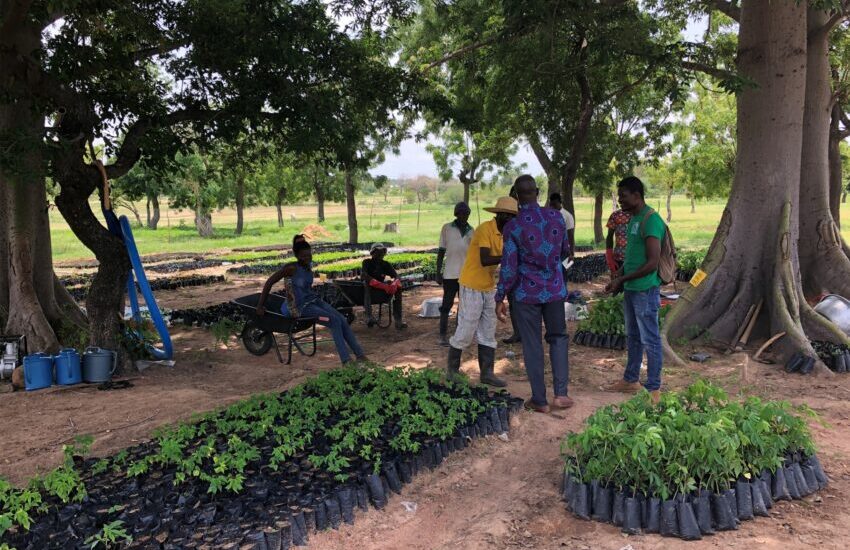
In the White Volta basin, trees are planted as part of a reforestation initiative with local communities
Community Resource Management Areas (CREMA): governance from the ground up
Twenty-seven communities are taking a leading role through the CREMA approach: a proven model that places communities at the centre of natural resource governance.
The result: stronger ownership, positive attitudes, and a shared recognition of the social, economic, and ecological benefits of protecting mangroves and related resources. Communities are now seeking continued co-design of next phases and involvement in pilot implementation, reinforcing a key principle of adaptation, as resilience is most effective when it is locally driven.
The Lower Volta work demonstrates how ecological restoration, community participation, and adaptive management can be blended to deliver practical, people-centred outcomes that are both scalable and replicable across similar coastal and wetland settings.
White Volta Basin: Co-developing catchment NbS with local stakeholders
Blue Deal’s NbS portfolio in Ghana also extends to the White Volta Basin, where work is being shaped in close collaboration with WRC and basin stakeholders to align solutions with catchment priorities under IWRM. This includes co-development pathways that look at how NbS can contribute to risk reduction, land–water management, and long-term resilience – ensuring interventions are locally relevant, practically implementable, and institutionally supported. One such example is a tree-planting initiative in close collaboration with the local chiefs in the region, highlighting the importance of working closely with the traditional authorities.
From Dialogue to Delivery: Ghana’s National NbS Dialogue (3–4 November 2025, Accra)
To consolidate momentum, WRC hosted Ghana’s first National Dialogue on Nature-based Solutions in Accra on 3–4 November 2025 — a milestone event bringing together national agencies, research institutions and universities, local communities, and international partners, including Blue Deal counterparts from Ghana and the Netherlands. Focus of the dialogue was on NbS for the coastal region of Ghana.
A few highlights:
Local governance and ownership: Co-designing NbS with communities and traditional authorities emerged as essential for long-term success, maintenance, and social licence. Participants also highlighted citizen science and social media engagement as practical ways to broaden participation and awareness.
Financing and policy enablers: Discussions covered funding pathways—national budgets, climate finance, and Public–Private Partnerships (PPPs)—and the importance of a dedicated Coastal Management Policy to mainstream NbS. A key message: the sooner NbS are implemented, the more cost-effective they are, because delays magnify climate impacts and costs.
Partnerships and hybrid approaches: Experts from HKV, Tree Aid, and IUCN shared enabling conditions and lessons learned, including hybrid designs that combine NbS with hard structures where appropriate. Case insights from neighbouring Togo and Benin showcased how sand nourishment, dune restoration, and adaptive monitoring can deliver sustainable outcomes.
Moving to action: Pilot sites have been identified, institutions are gearing up for implementation, and high-level engagements will follow to secure a robust rollout.
A keynote speaker of the dialogue captured the essence of NbS: “Nature, when protected and restored, protects us in return.” This dialogue underscores Ghana’s readiness to move from ambition to action—protecting communities and ecosystems by working with nature.
From coastal and mangrove restoration to tree planting and catchment governance, Ghana’s Nature-based Solutions journey is gaining pace. These initiatives share a common thread: working with nature to protect water resources, strengthen resilience, and improve livelihoods.
In November, Blue Deal South Africa strengthened its partnerships and advanced its commitment to social inclusion through two key initiatives. From tackling water quality challenges in KwaZulu-Natal to empowering women in the water sector, these activities reflect our shared vision for sustainable and inclusive water management.
Strengthening Collaboration in KwaZulu-Natal
Blue Deal’s Msunduzi-uMngeni River Project team focused on deepening collaboration with the local partner, the Pongola-uMzimkulu Catchment Management Agency (PUCMA). Together, they joined a two-day stakeholder meeting of the uMngeni Ecological Infrastructure Partnership (UEIP) in Hillcrest, which included a site visit to the Inanda Dam.
The purpose of this engagement was to connect with partners in person, create space for strategic discussions on catchment management and water resource challenges, and gain a better understanding of issues such as water quality in the Msunduzi River and the spread of invasive species like water hyacinth.
A highlight of the visit was a demonstration by several Amanzi Champions, showcasing how they remove water hyacinths, take measurements, and manage the collected plants afterward.
The Amanzi champions demonstrate the removal of the invasive water hyacinths
Alongside PUCMA, the team also met with the Msunduzi Municipality and visited the renovation site of the Darvill sewer outfall pipes, previously a major source of pollution in the Msunduzi River.
In addition, the working visit included a capacity building programme for young professionals. Blue Deal, together with GreenMatter, WRC, and SANBI, organised a two-day workshop on Project Planning and Proposal Writing at the KwaZulu-Natal National Botanical Garden. This was the third workshop this year, bringing the total number of participants across all sessions to about 75.
Looking ahead, future actions for 2026 were explored with the local partners, including further development of the Catchment Management Strategy, implementation of Early Warning Systems, and expansion of citizen science initiatives. These efforts reaffirm shared commitment to sustainable water management and healthier river systems.
Sisterhood in Water: Empowering Women in the Sector
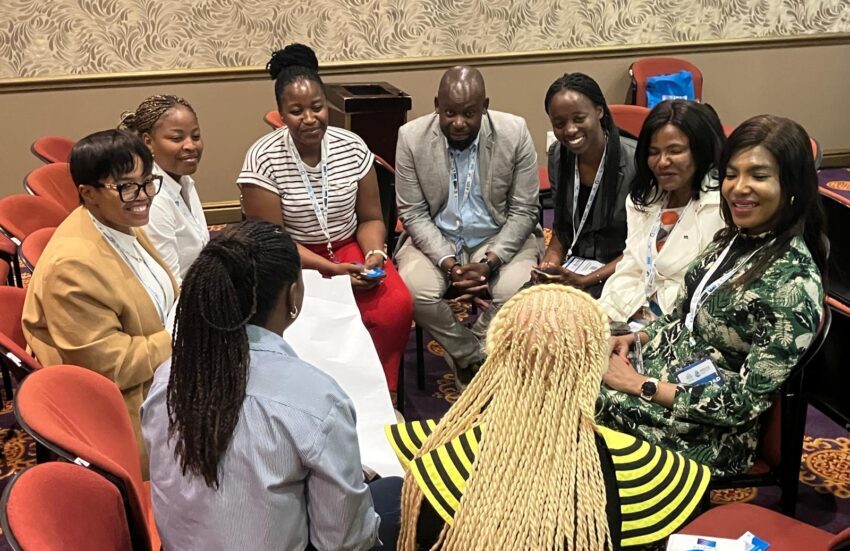
At the AWSISA conference in the Western Cape, focus was on sisterhood in water
In another one of Blue Deal South Africa’s projects in the Western Cape, focus was on female empowerment during the AWSISA Conference. Supporting women in the water sector is one of the goals of Blue Deal South Africa, as part of implementing the cross-cutting theme of social inclusion. Last year, a workshop was organised for young women during the WISA conference, where Ms Zanele Bilumupariwa, Head of DWS Western Cape, gave an inspiring speech followed by group discussions on workplace experiences.
In November, we continued this effort at the AWSISA conference. Dr Jennifer Molwantwa, CEO of the Water Research Commission, shared her lessons learnt on the way to the top with young women. The central question was: How can we enhance sisterhood in water so women support each other rather than struggle alone?
The results were promising. Many young women volunteered to set up activities such as monthly webinars. Blue Deal and the World Water Academy from the Netherlands committed to facilitating a digital platform to form a community. In other words: to be continued!
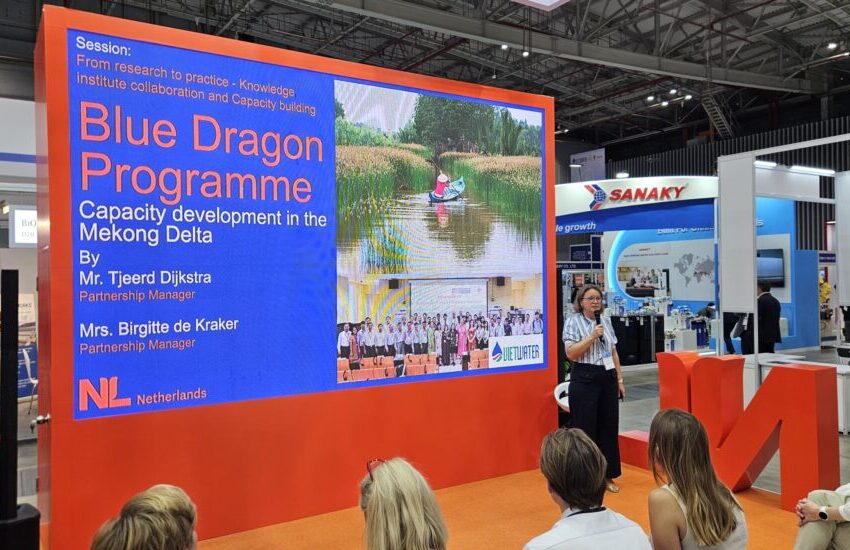
Blue Deal Vietnam's "Blue Dragon" Programme took part in VIETWATER 2025, held from 22–24 October in Ho Chi Minh City, Viet Nam. VIETWATER is an annual exhibition and conference similar to Aquatech, bringing together water professionals from across the region.
The Netherlands hosted a large pavilion at the exhibition, inviting Dutch companies, NGOs, and government-related programmes to contribute. On 25 October, partnership managers Birgitte de Kraker and Tjeerd Dijkstra introduced the Blue Dragon programme Vietnam at the Netherlands Pavilion.
During their presentation, they outlined the program’s objectives and progress, which include capacity building and the implementation of pilot projects. They also highlighted an ongoing pilot in An Giang Province, focusing on nature-based solutions to prevent riverbank erosion.
The Blue Dragon programme was presented at the VIETWATER Conference at the NL pavilion
GIS Training for Mekong Delta Provinces
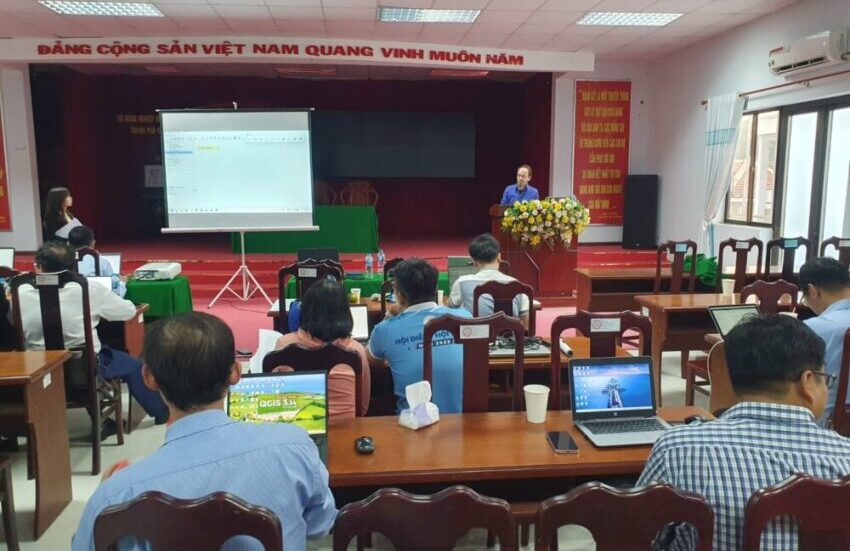
On 19 November, the expert pool on Geographic Information Systems (GIS) completed its sixth week of training. All provinces in the Mekong Delta are participating in this program, which is conducted in cooperation with Can Tho Universityand focuses on agriculture (rice) and water management.
Dutch experts Wietse Wierks (Water Authority De Stichtse Rijnlanden) and Rob van Ede (Water Authority Rivierenland) contributed by sharing practical examples from the Netherlands.
The Vietnamese GIS expert pool completed its sixth week of training, which included practical cases shared by Dutch experts.
Two key initiatives shaped the Ethiopia Awash partnership’s efforts in November: developing drought scenarios using the WEAP model and a study addressing barriers to social inclusion.
November was an active month for the Ethiopia Awash partnership, marked by several field visits and local workshops. Two key activities stood out: the use of WEAP models for drought scenarios and a social inclusion study, both carried out as part of our water allocation planning project.
Training on WEAP model for drought scenarios
During a field visit, the Dutch team trained our partners from the Ministry of Water and the Basin Authority in the use of the WEAP model. This was a follow up of an earlier training given last year, but this time the focus was on using the WEAP model for drought scenarios. Dutch Water Authorities’ experts Hidde Kats and Harmen van de Werfhorst then worked together with the partners to outline possible drought scenarios. These scenarios will be further developed, and an additional training will be planned to further refine the scenarios so they can be integrated into the water allocation plan.
DWA’s Hidde Kats with Ethiopian partners following the drought scenarios work sessions
Social Inclusion pilot: understanding barriers
For the Social Inclusion Pilot (supported by NWB Fund), we conducted surveys with around 125 (agricultural) water users and government representatives. This study provided valuable insights into the causes of exclusion, examples of which include a lack of information, lack of good representation, a lack of budget and a lack of understanding related to the water allocation planning process.
Sharing results and next steps
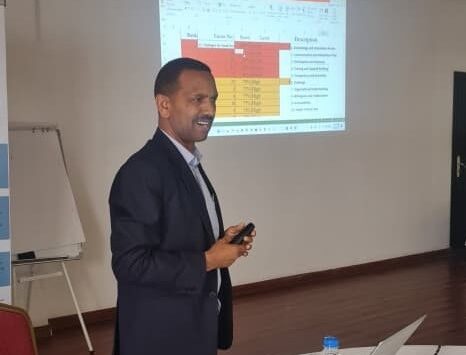
The initial results were shared by Dr. Melaku, one of the local consultants who worked on the study, during a validation workshop with various local authorities and water users. These results will be used to develop conclusions and recommendations for practical improvements.
Dr, Melaku, a consultant involved in the study, presents the outcomes of the Social Inclusion questionnaires to the water authorities
The response to the study has been very positive, recognising that the study can provide very useful and interesting insights to improve the water allocation process and make it more inclusive. The study will also support Blue Deal partners in implementing improvements in the annual water allocation planning cycle.
In November 2025, the Blue Deal team visited their Argentinian partners to discuss the development of an integrated water system analysis and their approach to one of the region's most pressing challenges: managing the dramatic swings between devastating floods and severe droughts.
A Strategic Partnership in Action
From November 3-12, Dutch Water Authorities (DWA) experts worked alongside their partners at Autoridad del Agua (ADA) of Buenos Aires province, furthering a collaboration that has strong support from the Dutch embassy. Ambassador Mauritz Verheijden, who met with the team in Buenos Aires, emphasised the value of this long-term partnership between the Netherlands and Argentina.
The DWA team visiting the Dutch embassy in Buenos Aires to meet with the ambassador Mauritz Verheijden
Breakthrough in Integrated Water Analysis
The mission achieved a major milestone: completing an integrated water system analysis in concept for nearly half of the Blue Deal catchment area. This comprehensive approach brings together several years of measurement data – collected through both technical monitoring and participatory efforts with local farmers – with advanced surface and groundwater modeling.
The analysis does more than map the current situation. It identifies specific problems, defines what a healthy water system would look like for the region, and charts practical pathways to get there. For ADA, this methodology represents a new approach to their water management.
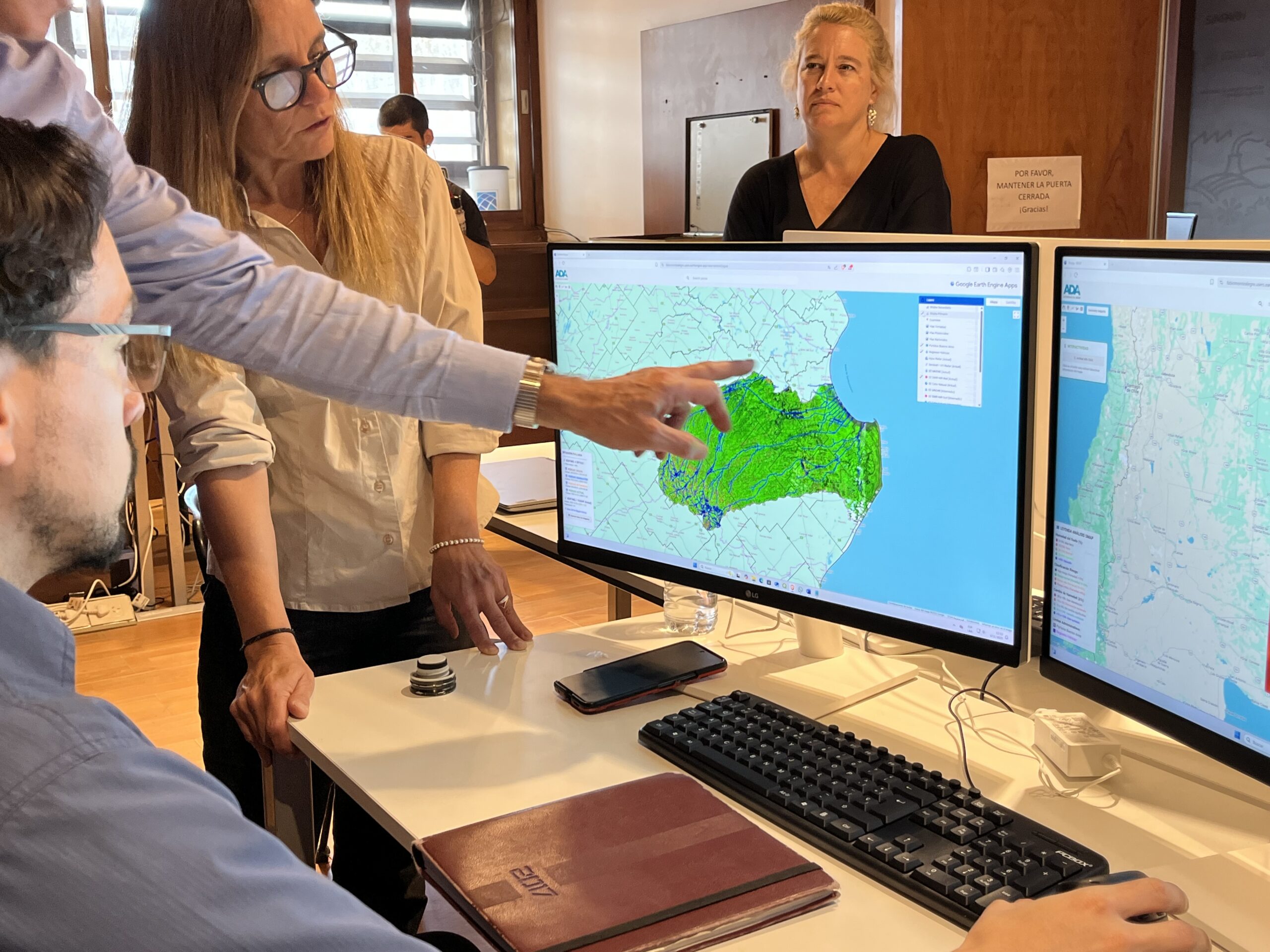
At the offices of ADA (in La Plata), ADA proudly presents its new monitoring and measurement system for meteorological and hydrological data.On the screen is an image of the modelling of the Tandil – General Lavalle basin (size approx. 1/3 of the Netherlands).
Understanding the Extremes
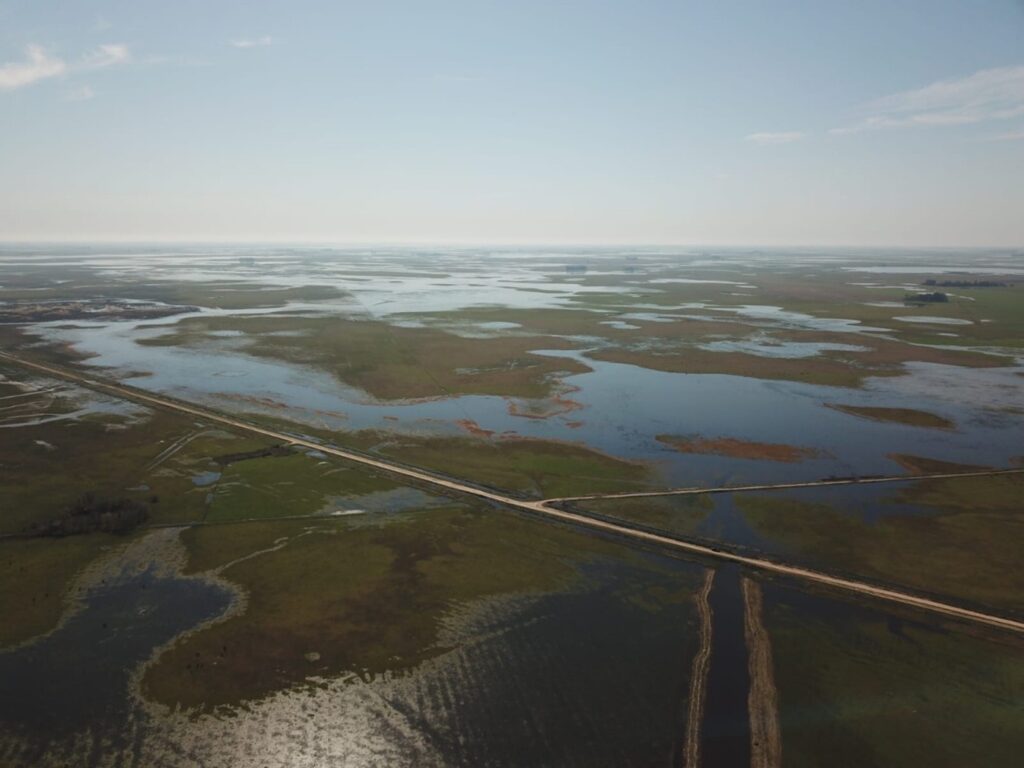
The urgency of this work is clear in the dramatic conditions facing the region. Currently, 2 million hectares across Buenos Aires province lie underwater due to El Niño-driven heavy rainfall. The flat pampas landscape, including the agricultural fields of Ayacucho municipality, becomes a vast floodplain during prolonged rain events. With slow drainage toward the Atlantic Ocean and rivers unable to handle the massive volumes, water lingers for extended periods.
The team visited Ayacucho with the mayor and key municipal staff to examine critical problem areas firsthand. These flooding issues mirror a larger regional pattern affecting agriculture and livelihoods across the province.
Yet just two years ago, the challenge was the opposite. From 2021 to 2023, La Niña brought severe drought to the same areas, with impacts that continue to reverberate. Livestock farmers are still dealing with reduced cattle fertility – a problem that persists for up to three years following extreme drought conditions.
Aerial view north of Channel 2 near Ayacucho (flooding between August-October 2025)
Building Resilience Through Collaboration
Blue Deal’s integrated approach addresses both extremes, working to make the water system more resilient to climate variability. By combining Dutch expertise in water management with local knowledge and ADA’s regional authority, the partnership is developing practical solutions for a region caught between too much water and too little.
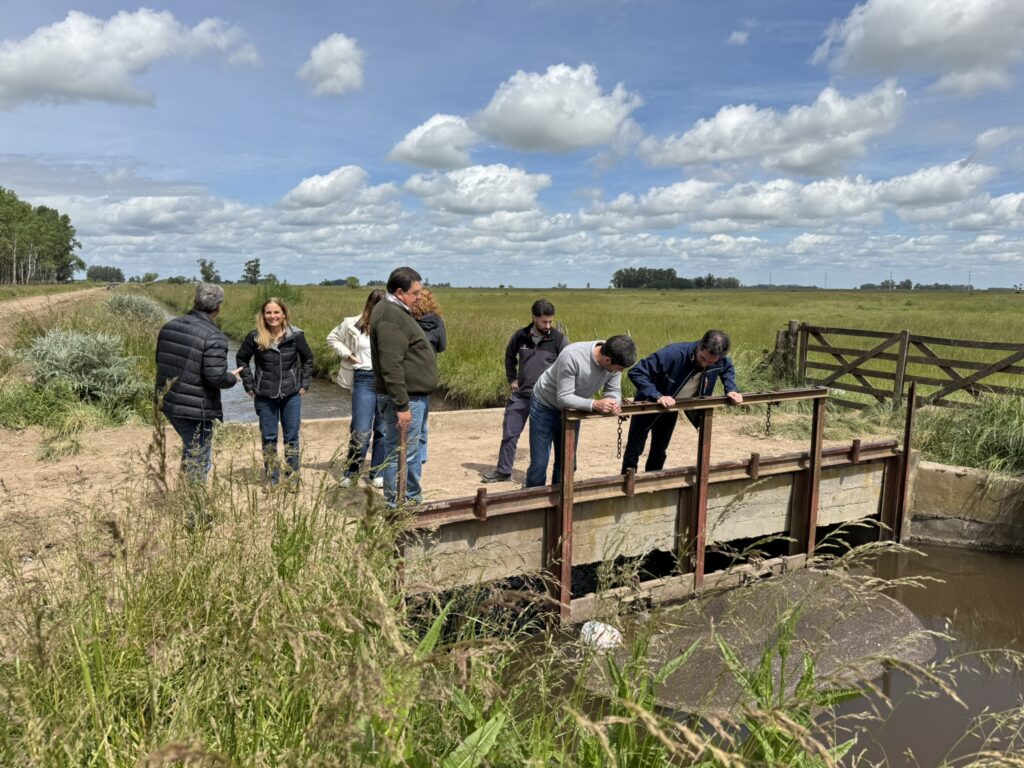
The team visits an important weir that protects the city Ayacucho from flooding
The visit was also an opportunity to connect new members in the Blue Deal partnership: as current partnership manager Simon Hofstra prepares for retirement in February 2026, Udo Perdok is stepping into the role, ensuring continuity in this vital Dutch-Argentinian collaboration.
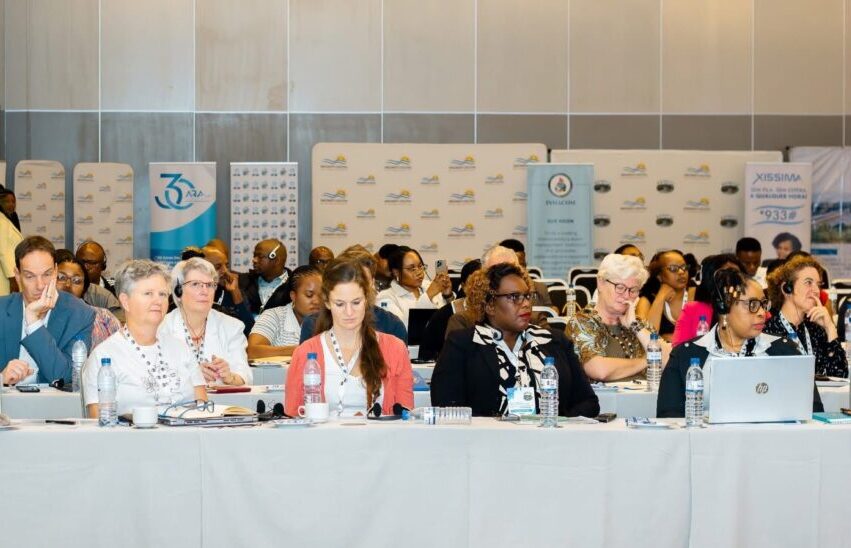
At the beginning of November, the 8th REMCO – the three-country conference on River and Environmental Management Cooperation – took place in Maputo, Mozambique. Hosted by our water colleagues in Mozambique, REMCO is a powerful regional platform for co-learning, innovation, and inclusive decision-making.
More than 150 participants from Mozambique, Eswatini, and South Africa – the countries that share the Incomati-Maputo river basin – came together to strengthen resilience and governance in transboundary water management. Alongside the regional water authorities, Dutch and German water partners also joined the discussions, underlining the international commitment to sustainable water solutions. (See our earlier news on the Remco conference)
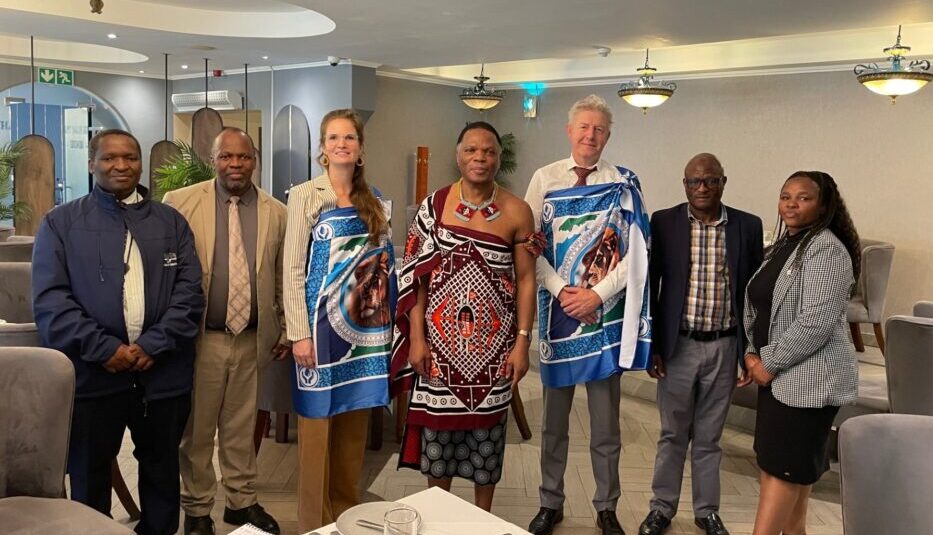
Blue Deal Eswatini’s Celine de Visser and Herbert Bos receive a ‘Kanga’ during a meeting with Eswatini’s Minister of Natural Resources and Energy, together with his Under Secretary, Advisor and Legal representatives
Blue Deal Eswatini: Building Capacity and Collaboration
The following week, Blue Deal Eswatini travelled west to continue the work on knowledge exchange, transboundary water management, capacity building, organisational development, and stakeholder participation.
A key message during this visit: all end users of surface and groundwater must contribute to the work of the water authorities. This principle is implemented together with the Joint River Basin Authorities (JRBA) Project Board – the central organisation coordinating five regional water authorities. Contributions are based on capacity and benefit: small farmers pay little, large companies pay more.
At the same time, the sector faces the challenge of becoming more efficient – having to “do more activities with the same number of people.” We had the privilege of discussing this challenge and necessity with the Minister of Natural Resources and Energy, HRH Prince Lonkhokhela, who honoured us by personally presenting a traditional Kanga as a token of appreciation (see picture).
Next Steps for Organisational Optimisation
During the visit, meetings were also held with the JRBA board and staff, where the team engaged in fruitful discussions with the working committee about the need for and next steps in optimising the organisation of the water sector. This was concluded by providing feedback to JRBA management to prepare follow-up actions together with the Blue Deal.
Looking ahead
In the coming years, the cross-border component of cooperation between South Africa, Eswatini, and Mozambique will become increasingly important. Strengthening governance, improving efficiency, and ensuring inclusive participation will remain at the heart of this collaboration.
This week, the 8th International REMCO Conference is taking place in Maputo, Mozambique. The event brings together over 150 participants from Mozambique, Eswatini, and South Africa - three countries that share the Incomati–Maputo basin - to strengthen resilience and governance in transboundary water management.
REMCO conference 2025
At the heart of REMCO lies the technical and operational exchange between the three catchment management authorities:
ARA-Sul IP (Administração Regional de Águas do Sul – Mozambique)
JRBA-PB (Joint River Basin Authorities Project Board – Eswatini)
IUCMA (Inkomati-Usuthu Catchment Management Agency – South Africa)
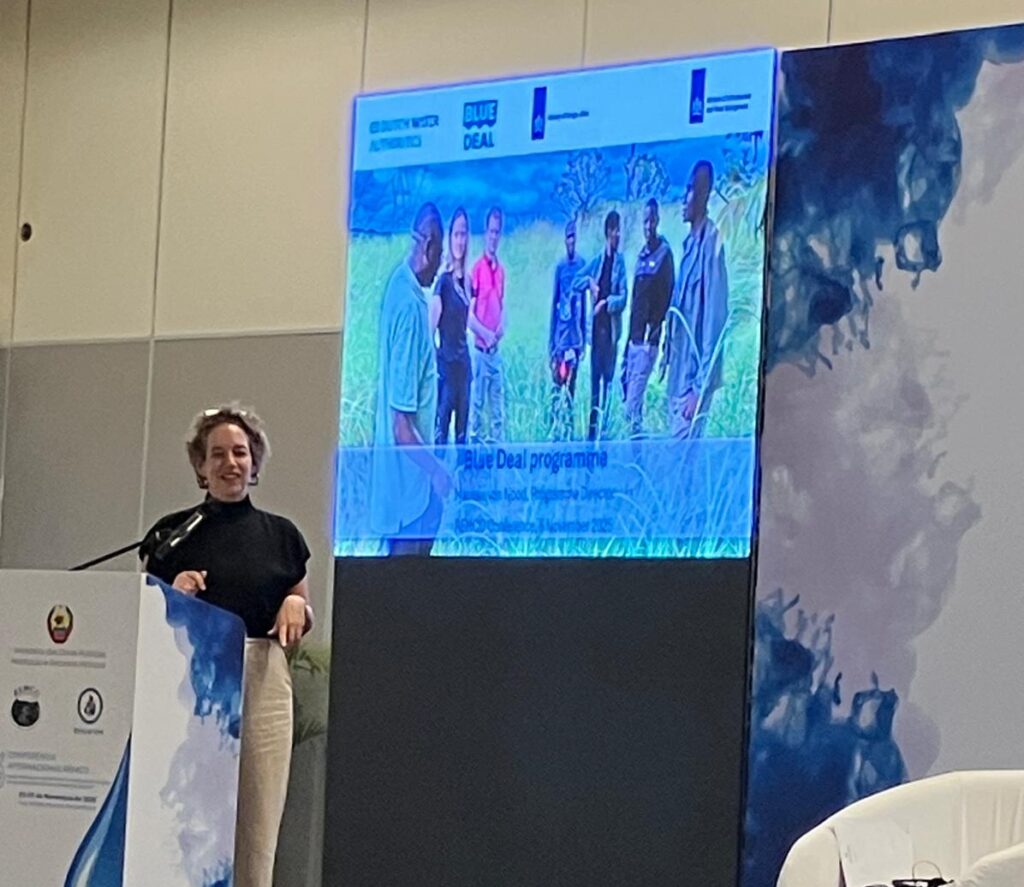
Marieke van Nood presents at the REMCO conference
Together, they collaborate on real-world water management challenges, such as:
Improving flood early warning systems, especially after the flash floods in the Incomati Basin in 2023
Implementing equitable water pricing
Sharing hydrological data and models to improve forecasting and preparedness
Jointly developing cross-border projects that benefit local communities
Blue Deal’s role
The Blue Deal partnerships in Eswatini, Mozambique, and South Africa actively support these authorities on these topics. During the conference, they facilitated knowledge exchange, helped shape discussions and committed to following up on the agreements made. Blue Deal’s Ethiopia Awash partnership also joined the conference, sharing key insights during a discussion on Basin Information Systems. This makes REMCO a powerful regional platform for co-learning, innovation, and inclusive decision-making.
Spotlight on inclusion
To support the topic of inclusive decision-making, the first day of the conference centered around women and youth in water management. Climate and water-related challenges often have the greatest impact on vulnerable people and the communities they live in. Tanah Meijers, Focal Point of Social Inclusion within the Blue Deal, emphasised that these individuals should not only be seen as stakeholders in solutions, but should be actively engaged as partners in designing those practical solutions.
As highlighted by Marieke van Nood, Blue Deal’s Programme Manager during her speech on the final day of the conference: “Together, we make transboundary water management practical and operational. And that is key for a future-proof Incomati – Maputo river basin”.
Water and food are deeply interconnected. Without reliable access to clean and sufficient water, food production cannot thrive. Across the world, climate change, population growth, and competing water demands increasingly disrupt this balance. Sustainable water management is therefore the foundation for long-term food security.
The Blue Deal programme consists of partnerships between Dutch Water Authorities and regional water institutions in 15 countries and works to restore and maintain this crucial water balance. By strengthening regional water authorities and supporting integrated water resource management (IWRM), the Blue Deal contributes to fair, efficient and sustainable use for both people and nature.
While food security is not the primary goal of the programme, many partnerships contribute directly or indirectly to more resilient agricultural systems. Through smarter irrigation, fair water allocation, and ecosystem restoration, we help improve water stability, boost agricultural productivity, and strengthen rural livelihoods.
Four Pillars of Water and Food Security
The Blue Deal contributes to food security through four interconnected pillars that together ensure a balanced and resilient water system:
Insights in the water system and availability: Water quality and quantity monitoring, water balance modelling
Increasing water availability & reliability: Water allocation plans, implementing water retention measures (often Nature-based)
Access & inclusion – ensuring equitable water distribution and strengthening participation of (smallholder) farmers, women, and marginalised groups.
By working together on these pillars, the Blue Deal promotes the establishment of a sustainable balance between water use for agriculture, ecosystems, cities and (rural) communities. In this special news item, we highlight inspiring work in Burkina Faso, Peru and Eswatini – where Blue Deal initiatives are making a tangible impact on the water-food nexus.
Burkina Faso: Inclusion, Gender Equality, and Nature-Based Water Solutions
In Burkina Faso, the Blue Deal partnership and the complementary ECDD–GIRE programme jointly promote social inclusion, gender equality, and sustainable water management to enhance food security.
Pictured:The project in Burkina Faso supports local farmers and women empowerment
Empowering Farmers and Women – The project operates across five water regions, supporting local water committees and agricultural cooperatives to organise farmers around equitable irrigation access. Women, often key contributors to rural economies, are empowered through capacity building and participation in water management.
Climate-Resilient Water Infrastructure – The programme rehabilitates reservoirs and applies erosion-control measures such as sand traps, hedges, and reforestation. These protect farmland, improve soil moisture, and increase productivity.
Nature-Based Solutions for Soil Fertility – Business cases for Nature-Based Solutions (NbS) are being developed to scale sustainable land management and agroforestry. In 2023, interventions with Fertilizer Trees covered 48 hectares, improving soil fertility and moisture retention.
Peru: smart irrigation and capacity building
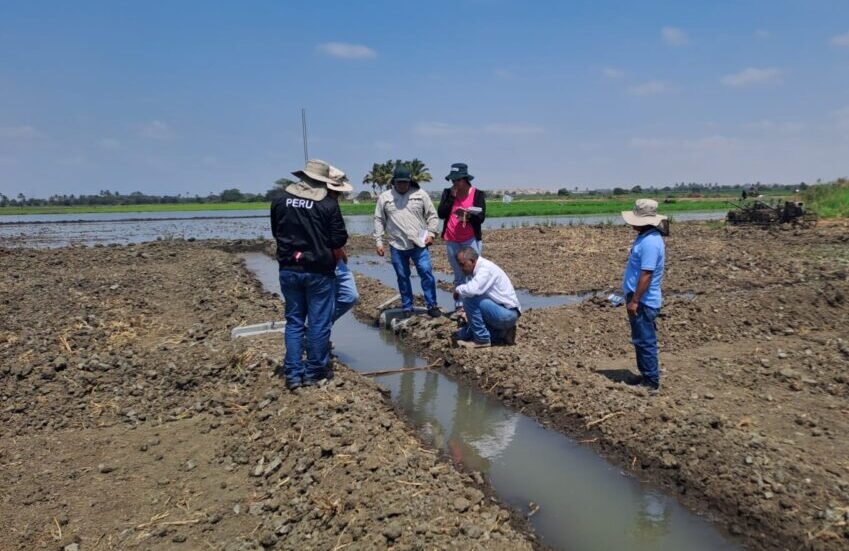
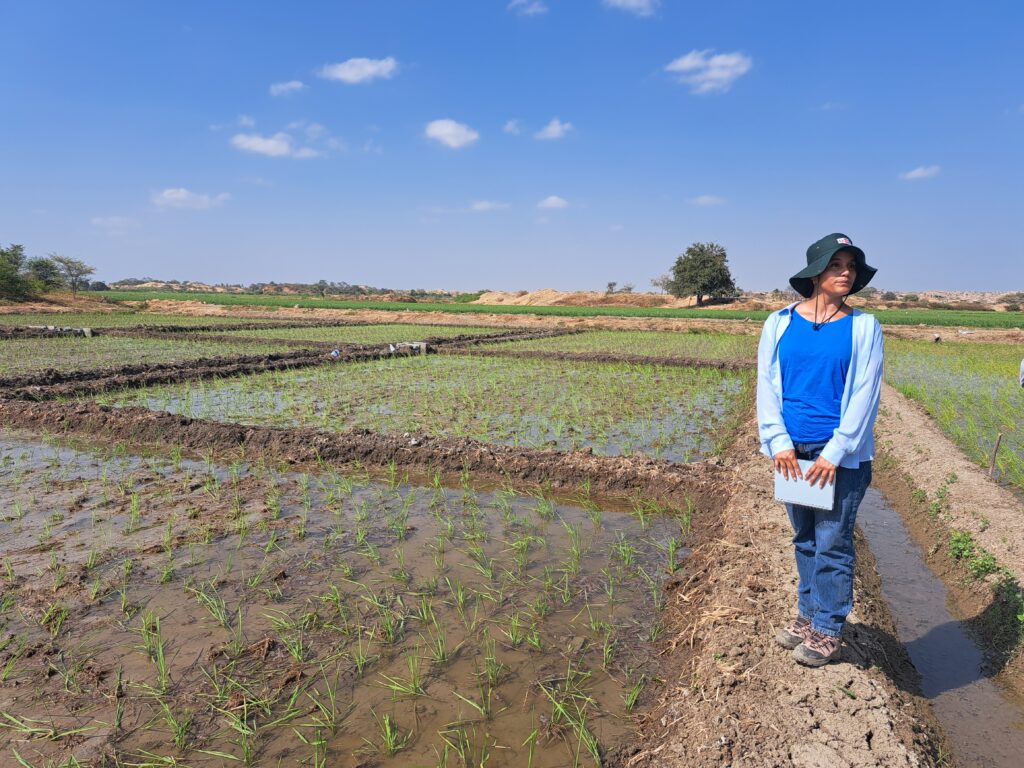
In northern Peru, agriculture, particularly rice cultivation, depends heavily on irrigation, making it vulnerable to drought and inefficient water use. The Blue Deal partnership focuses on climate adaptation and innovation in water management to strengthen food security.
Pictured:Rice study in Piura, Peru
Optimising Water use for Rice Production: Research in the Piura region shows that water use for rice can be reduced even increasing yields. In 2025, the National Water Authority (ANA), the National Agrarian Institute (INIA), and local universities are guiding young researchers to standardize efficient irrigation volumes in the Chira Valley.
In the valley 12000 hectares of rice cultivation are irrigated with 17000 m3/ha/agricultural season. According to the research the new estimated volume is 14000 m3/ha/agricultural season. This represents a water saving of 36 million of m3 per agriculture season and considering that in the Chira valley two seasons are carried out, this will be 72 million m3 per year, with a yield increase of 12%!
Capacity Building and Research: Blue Deal’s scholarship programme supports local researchers and disseminates evidence-based irrigation strategies to farmer organisations, ensuring widespread adoption.
Supporting Ecosystem Services – Collaboration with the Dutch organisation Farm Tree provides technical advice on water retention and reforestation in the highlands of Piura. The partnership also delivers online training on flood prevention and catchment management to help protect downstream banana, lemon and mango farmers plots in Piura and Tumbes.
Pictured:Rice field study in Piura, Peru
Eswatini: Financing innovation and water efficiency for small farmers
In Eswatini, agriculture is highly vulnerable to droughts. The Blue Deal partnership focuses on improving water efficiency and financial access for smallholder farmers, in order to enhance the resilience to climate change.
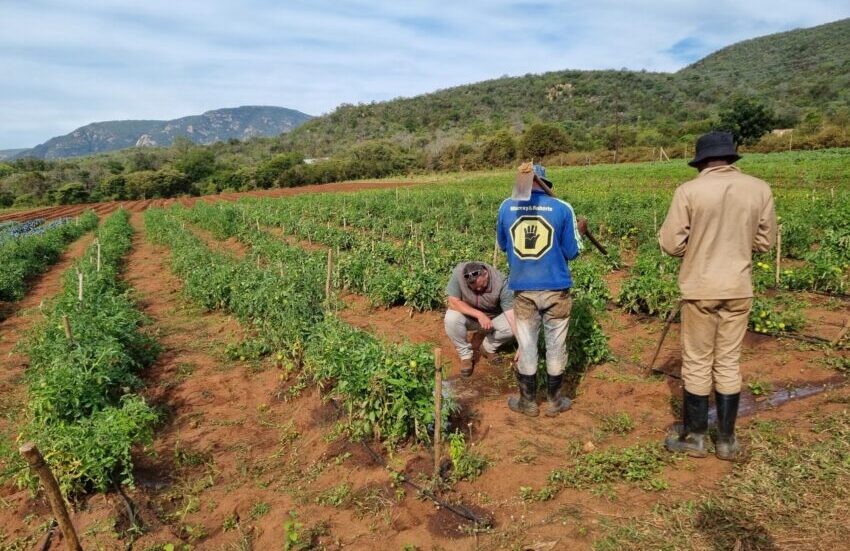
Pictured:Drip irrigation project in Eswatini
Drip Irrigation for Small Farmers – KIWI climate experts work with small-scale farmers in the Lomati River Basin to introduce drip-irrigation systems that significantly reduce water consumption while maintaining or increasing yields.
Financing for Poverty Reduction – The partnership developed a bankable proposal to support small farmers in the Lomati Basin, approved by the national government. In collaboration with the Eswatini Development Agency, it ensures that smallholders have access to the financial resources needed to adopt water-efficient technologies sustainably.
Data-Driven Agricultural Planning – In 2024, a land-use mapping exercise using satellite imagery and farmer surveys provided essential data for better irrigation planning and alignment with water availability.
Building a Resilient Water-Food Nexus
Across these partnerships, the Blue Deal demonstrates that strengthening water authorities and involving local communities in decision-making are key to achieving both water security and food security. By promoting efficient irrigation, equitable water allocation, gender inclusion, and nature-based restoration, the programme helps restore the essential balance between water, agriculture, and ecosystems.
Each country’s approach reflects local realities, but the shared lesson is clear: sustainable food systems depend on strong water governance. Through the Blue Deal, water authorities and communities worldwide are improving access to water for agriculture, ensuring that future generations can continue to rely on it for life and livelihoods.
The annual European Week of Regions and Cities, taking place in Brussels from 13 to 15 October this year, focuses on the role of Europe’s regions and cities. Representatives from nearly all Dutch water authorities are travelling to Brussels to influence EU water policy, attract investments or project partners, exchange knowledge, and strengthen the international position of the Dutch water authorities among European policymakers.
“Dutch water authorities work closely with European partners. Moreover, European legislation influences national regulations and directly affects the work of Dutch water authorities,” says Luzette Kroon, board member responsible for international affairs at the Unie van Waterschappen (Dutch Water Authorities). “This year, for the first time, the Unie is organising a joint programme for all water authorities during the European Week of Regions and Cities (EWRC). Water holds a prominent place in the new European mandate, with the Water Resilience Strategy as a starting point. In the coming period, several key topics will also feature on the European agenda, including public procurement, the circular economy, REACH, PFAS, and climate adaptation.”
Intensive programme On Monday, participants will focus on familiarising themselves with the Brussels policy landscape and current themes. This includes a discussion with Mendeltje van Keulen, researcher and former adviser to the Dutch House of Representatives, who has extensive experience with EU decision-making processes. There will also be an exchange with the German water sector, and discussions on the new Urban Wastewater Treatment Directive and Extended Producer Responsibility (EPR).
On Tuesday, the focus shifts to engaging with the Brussels network. Meetings are scheduled with Ingeborg ter Laak (Member of the European Parliament for the CDA), Robert van Asten (Member of the European Committee of the Regions, D66), and Jessika van Leeuwen (MEP for BBB). There will also be a session on the Water Resilience Strategy. Under the leadership of watergraaf* Stefan Kuks of the Vechtstromen Water Authority, dijkgraaf* Dirk-Siert Schoonman of the Drents Overijsselse Delta Water Authority will engage in a discussion with representatives from Rabobank, NWB Bank, and the European Commission’s Directorates-General for Environment and Climate Action on the urgency and approach to water resilience in the face of climate change.
On Wednesday, the water authorities will collaborate with provinces and municipalities. Several speakers from regional governments, the European Commission, and the European Parliament will contribute to these discussions.
Dutch Water Authorities in Europe Under the name Dutch Water Authorities, the Dutch regional water authorities collaborate with European and other international partners. In Brussels, the Unie van Waterschappen and the Association of Dutch Water Companies (Vewin) jointly represent the interests of Dutch water authorities and drinking water companies within the European Union.
*The titles ‘dijkgraaf’ and ‘watergraaf’ represent top leadership positions on the board of Dutch water authorities
Manage Consent
To provide the best experiences, we use technologies like cookies to store and/or access device information. Consenting to these technologies will allow us to process data such as browsing behavior or unique IDs on this site. Not consenting or withdrawing consent, may adversely affect certain features and functions.
Functional
Always active
The technical storage or access is strictly necessary for the legitimate purpose of enabling the use of a specific service explicitly requested by the subscriber or user, or for the sole purpose of carrying out the transmission of a communication over an electronic communications network.
Preferences
The technical storage or access is necessary for the legitimate purpose of storing preferences that are not requested by the subscriber or user.
Statistics
The technical storage or access that is used exclusively for statistical purposes.The technical storage or access that is used exclusively for anonymous statistical purposes. Without a subpoena, voluntary compliance on the part of your Internet Service Provider, or additional records from a third party, information stored or retrieved for this purpose alone cannot usually be used to identify you.
Marketing
The technical storage or access is required to create user profiles to send advertising, or to track the user on a website or across several websites for similar marketing purposes.