
As climate change accelerates environmental degradation, Ghana’s water and coastal systems face intensifying risks, from erosion and flooding to salinisation and habitat loss.
In response, Blue Deal, with its local partner Water Resources Commission (WRC), and Ghanaian and international partners, is tackling water-related challenges through an integrated approach that combines a portfolio of Nature-based Solutions (NbS), and decentralised governance that puts communities, ecosystems, and equity to strengthen water management and build resilience against climate risks.
Guided by Integrated Water Resources Management (IWRM) plans, WRC and Blue Deal collaborate to manage water resources a co-develop NbS that work with nature, not against it.
Lower Volta Basin: Restoring mangroves as a natural buffer
In the Lower Volta Basin, particularly around the Songor Ramsar Site and UNESCO’s Man and the Biosphere Reserve (Ada), key challenges include flooding and mangrove degradation. Blue Deal’s activities in this landscape combine ecological restoration with social inclusion and practical risk reduction. Mangrove ecosystems help dampen coastal erosion, reduce flooding, and limit salinisation — risks amplified by climate change.
A pilot combines creek dredging/desilting with mangrove restoration to test integrated effectiveness before upscaling. Because the creek supports domestic water use, fishing, and farming, improved flow and habitat health are expected to deliver tangible livelihood and well-being co-benefits.
Community Resource Management Areas (CREMA): governance from the ground up
Twenty-seven communities are taking a leading role through the CREMA approach: a proven model that places communities at the centre of natural resource governance.
The result: stronger ownership, positive attitudes, and a shared recognition of the social, economic, and ecological benefits of protecting mangroves and related resources. Communities are now seeking continued co-design of next phases and involvement in pilot implementation, reinforcing a key principle of adaptation, as resilience is most effective when it is locally driven.
The Lower Volta work demonstrates how ecological restoration, community participation, and adaptive management can be blended to deliver practical, people-centred outcomes that are both scalable and replicable across similar coastal and wetland settings.
White Volta Basin: Co-developing catchment NbS with local stakeholders
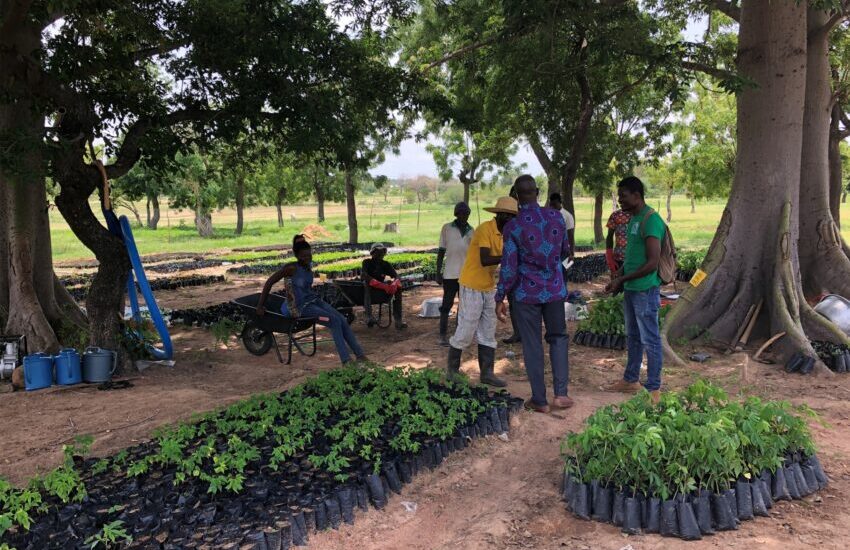
Blue Deal’s NbS portfolio in Ghana also extends to the White Volta Basin, where work is being shaped in close collaboration with WRC and basin stakeholders to align solutions with catchment priorities under IWRM. This includes co-development pathways that look at how NbS can contribute to risk reduction, land–water management, and long-term resilience – ensuring interventions are locally relevant, practically implementable, and institutionally supported. One such example is a tree-planting initiative in close collaboration with the local chiefs in the region, highlighting the importance of working closely with the traditional authorities.
From Dialogue to Delivery: Ghana’s National NbS Dialogue (3–4 November 2025, Accra)
To consolidate momentum, WRC hosted Ghana’s first National Dialogue on Nature-based Solutions in Accra on 3–4 November 2025 — a milestone event bringing together national agencies, research institutions and universities, local communities, and international partners, including Blue Deal counterparts from Ghana and the Netherlands. Focus of the dialogue was on NbS for the coastal region of Ghana.
A few highlights:
- Local governance and ownership: Co-designing NbS with communities and traditional authorities emerged as essential for long-term success, maintenance, and social licence. Participants also highlighted citizen science and social media engagement as practical ways to broaden participation and awareness.
- Financing and policy enablers: Discussions covered funding pathways—national budgets, climate finance, and Public–Private Partnerships (PPPs)—and the importance of a dedicated Coastal Management Policy to mainstream NbS. A key message: the sooner NbS are implemented, the more cost-effective they are, because delays magnify climate impacts and costs.
- Partnerships and hybrid approaches: Experts from HKV, Tree Aid, and IUCN shared enabling conditions and lessons learned, including hybrid designs that combine NbS with hard structures where appropriate. Case insights from neighbouring Togo and Benin showcased how sand nourishment, dune restoration, and adaptive monitoring can deliver sustainable outcomes.
- Moving to action: Pilot sites have been identified, institutions are gearing up for implementation, and high-level engagements will follow to secure a robust rollout.
A keynote speaker of the dialogue captured the essence of NbS: “Nature, when protected and restored, protects us in return.” This dialogue underscores Ghana’s readiness to move from ambition to action—protecting communities and ecosystems by working with nature.
From coastal and mangrove restoration to tree planting and catchment governance, Ghana’s Nature-based Solutions journey is gaining pace. These initiatives share a common thread: working with nature to protect water resources, strengthen resilience, and improve livelihoods.