
Water and food are deeply interconnected. Without reliable access to clean and sufficient water, food production cannot thrive. Across the world, climate change, population growth, and competing water demands increasingly disrupt this balance. Sustainable water management is therefore the foundation for long-term food security.
The Blue Deal programme consists of partnerships between Dutch Water Authorities and regional water institutions in 15 countries and works to restore and maintain this crucial water balance. By strengthening regional water authorities and supporting integrated water resource management (IWRM), the Blue Deal contributes to fair, efficient and sustainable use for both people and nature.

While food security is not the primary goal of the programme, many partnerships contribute directly or indirectly to more resilient agricultural systems. Through smarter irrigation, fair water allocation, and ecosystem restoration, we help improve water stability, boost agricultural productivity, and strengthen rural livelihoods.
Four Pillars of Water and Food Security
The Blue Deal contributes to food security through four interconnected pillars that together ensure a balanced and resilient water system:
- Insights in the water system and availability: Water quality and quantity monitoring, water balance modelling
- Increasing water availability & reliability: Water allocation plans, implementing water retention measures (often Nature-based)
- Climate adaptation & innovation :Including future projection, implementing climate-smart agriculture
- Access & inclusion – ensuring equitable water distribution and strengthening participation of (smallholder) farmers, women, and marginalised groups.
By working together on these pillars, the Blue Deal promotes the establishment of a sustainable balance between water use for agriculture, ecosystems, cities and (rural) communities. In this special news item, we highlight inspiring work in Burkina Faso, Peru and Eswatini – where Blue Deal initiatives are making a tangible impact on the water-food nexus.
Burkina Faso: Inclusion, Gender Equality, and Nature-Based Water Solutions
In Burkina Faso, the Blue Deal partnership and the complementary ECDD–GIRE programme jointly promote social inclusion, gender equality, and sustainable water management to enhance food security.
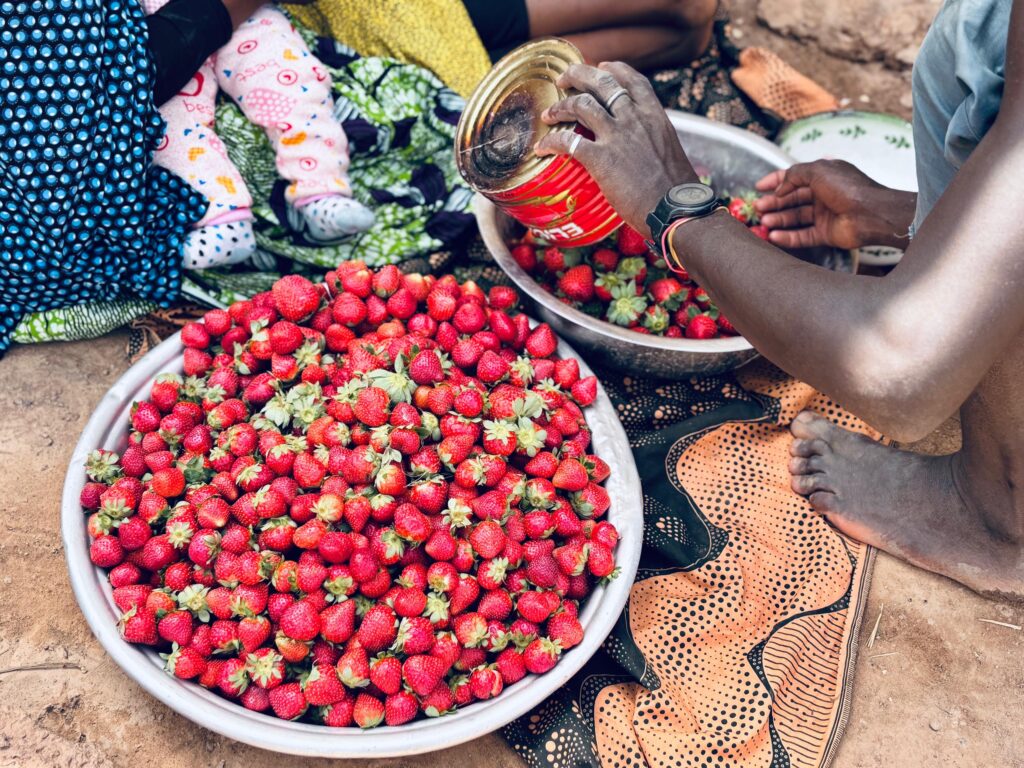
Pictured: The project in Burkina Faso supports local farmers and women empowerment
Empowering Farmers and Women – The project operates across five water regions, supporting local water committees and agricultural cooperatives to organise farmers around equitable irrigation access. Women, often key contributors to rural economies, are empowered through capacity building and participation in water management.
Climate-Resilient Water Infrastructure – The programme rehabilitates reservoirs and applies erosion-control measures such as sand traps, hedges, and reforestation. These protect farmland, improve soil moisture, and increase productivity.
Nature-Based Solutions for Soil Fertility – Business cases for Nature-Based Solutions (NbS) are being developed to scale sustainable land management and agroforestry. In 2023, interventions with Fertilizer Trees covered 48 hectares, improving soil fertility and moisture retention.
Peru: smart irrigation and capacity building
In northern Peru, agriculture, particularly rice cultivation, depends heavily on irrigation, making it vulnerable to drought and inefficient water use. The Blue Deal partnership focuses on climate adaptation and innovation in water management to strengthen food security.
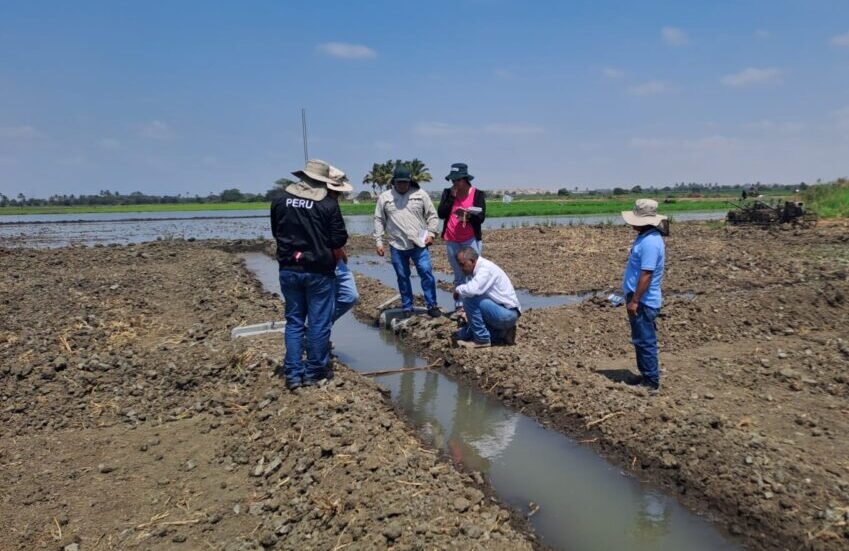
Pictured: Rice study in Piura, Peru
Optimising Water use for Rice Production: Research in the Piura region shows that water use for rice can be reduced even increasing yields. In 2025, the National Water Authority (ANA), the National Agrarian Institute (INIA), and local universities are guiding young researchers to standardize efficient irrigation volumes in the Chira Valley.
In the valley 12000 hectares of rice cultivation are irrigated with 17000 m3/ha/agricultural season. According to the research the new estimated volume is 14000 m3/ha/agricultural season. This represents a water saving of 36 million of m3 per agriculture season and considering that in the Chira valley two seasons are carried out, this will be 72 million m3 per year, with a yield increase of 12%!
Capacity Building and Research: Blue Deal’s scholarship programme supports local researchers and disseminates evidence-based irrigation strategies to farmer organisations, ensuring widespread adoption.
Supporting Ecosystem Services – Collaboration with the Dutch organisation Farm Tree provides technical advice on water retention and reforestation in the highlands of Piura. The partnership also delivers online training on flood prevention and catchment management to help protect downstream banana, lemon and mango farmers plots in Piura and Tumbes.
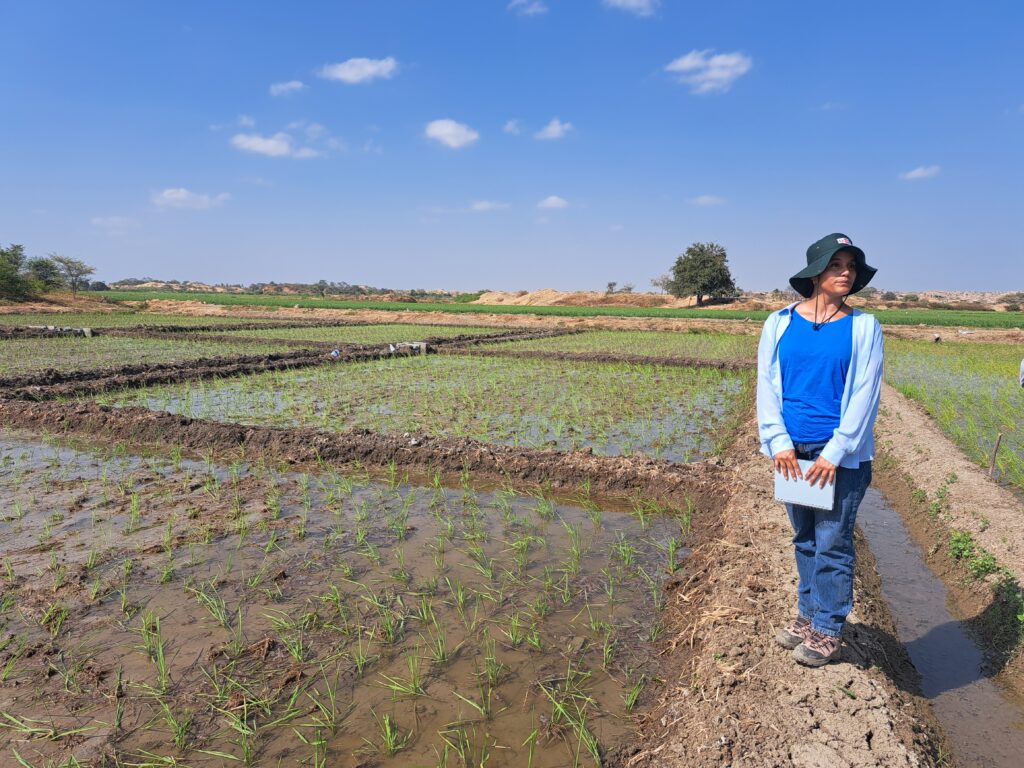
Pictured: Rice field study in Piura, Peru
Eswatini: Financing innovation and water efficiency for small farmers
In Eswatini, agriculture is highly vulnerable to droughts. The Blue Deal partnership focuses on improving water efficiency and financial access for smallholder farmers, in order to enhance the resilience to climate change.
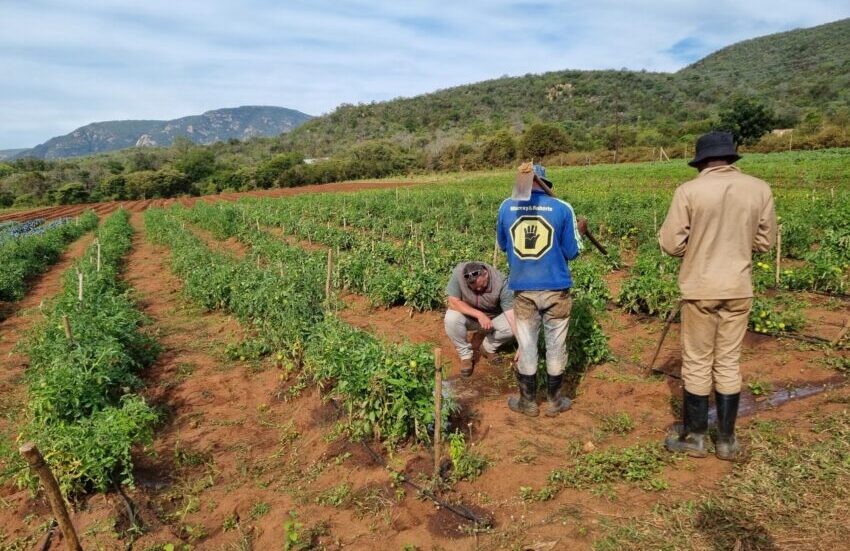
Pictured: Drip irrigation project in Eswatini
Drip Irrigation for Small Farmers – KIWI climate experts work with small-scale farmers in the Lomati River Basin to introduce drip-irrigation systems that significantly reduce water consumption while maintaining or increasing yields.
Financing for Poverty Reduction – The partnership developed a bankable proposal to support small farmers in the Lomati Basin, approved by the national government. In collaboration with the Eswatini Development Agency, it ensures that smallholders have access to the financial resources needed to adopt water-efficient technologies sustainably.
Data-Driven Agricultural Planning – In 2024, a land-use mapping exercise using satellite imagery and farmer surveys provided essential data for better irrigation planning and alignment with water availability.
Building a Resilient Water-Food Nexus
Across these partnerships, the Blue Deal demonstrates that strengthening water authorities and involving local communities in decision-making are key to achieving both water security and food security. By promoting efficient irrigation, equitable water allocation, gender inclusion, and nature-based restoration, the programme helps restore the essential balance between water, agriculture, and ecosystems.
Each country’s approach reflects local realities, but the shared lesson is clear: sustainable food systems depend on strong water governance. Through the Blue Deal, water authorities and communities worldwide are improving access to water for agriculture, ensuring that future generations can continue to rely on it for life and livelihoods.