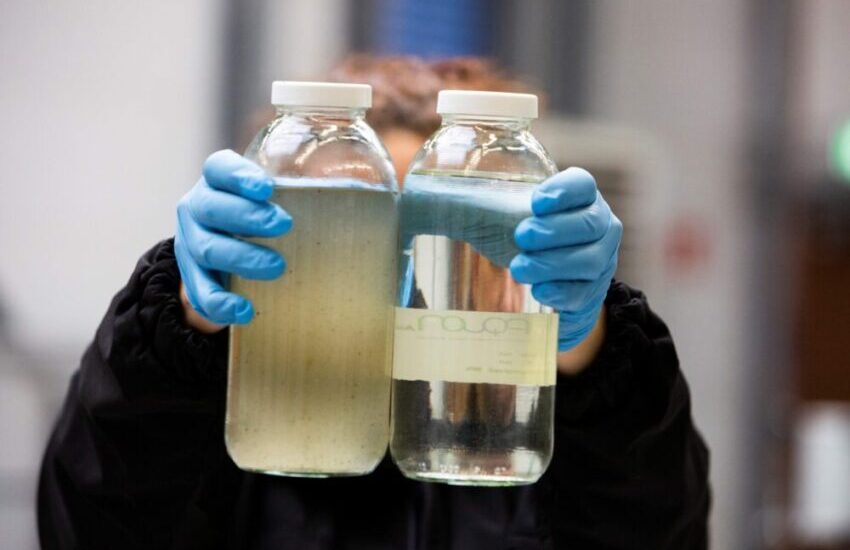
You are invited to the webinar and roundtable discussion on effluent reuse: European opportunities for a water resilient future on 20 November 2025 | 15:00-16:00 online, 16:00-16:30 Hybrid.
November 20 | 15:00–16:00 CET Online, 16:00–16:30 CET Hybrid
Dutch Water Authorities encourages knowledge exchange and cooperation between European countries. To kickstart this exchange, we are launching a new initiative and organising a series of webinars with experts from different countries!
The first webinar will focus on effluent reuse. Drought, freshwater availability, and regulations are putting pressure on drinking water supplies across Europe. At the same time, treated wastewater (effluent) offers great potential as an alternative source, especially for irrigation and industrial use.
During this webinar, we will explore the opportunities and challenges of effluent reuse, drawing lessons from international experiences. Rather than focus on technology and success stories, we will dive into how to overcome the challenges posed by this emerging issue. Experts from Spain, Portugal, and the Netherlands will share their insights and questions about the use of effluent in different contexts:
Spain: Barcelona is facing increasing drought. Effluent is being explored as an alternative water source, but this also brings new challenges
Portugal: In the Algarve, a water reuse programme has been initiated. Experts will explain how effluent use can be implemented effectively
The Netherlands: In Westerschouwen, Zeeland, effluent could be useful for irrigation. What roles and responsibilities are involved, and what does the future of this initiative look like?
We will conclude with an interactive roundtable discussion, where we will jointly reflect on next steps for the Netherlands and Europe. Please register via the link below:
Last week in Nairobi, Kenya, the second batch of Blue Deal Young Experts came together for their second-year return training - a week designed to reflect, grow, and connect.
Exploring strengths and leadership
Throughout the week, the Young Experts focused on identifying their personal values, exploring how these relate to their future goals, and how to apply them in their (personal) leadership. Sessions on facilitation skills, delegation, and responding vs. reacting helped participants sharpen their leadership toolkit.
One key insight was the magic of delegation – not just assigning tasks, but ensuring the right support is in place. Sometimes, this even means delegating upward: asking your manager for the resources or backing needed to succeed. Another powerful takeaway was the difference between reacting impulsively and responding thoughtfully – a subtle shift that can make a big difference in how leadership is perceived.
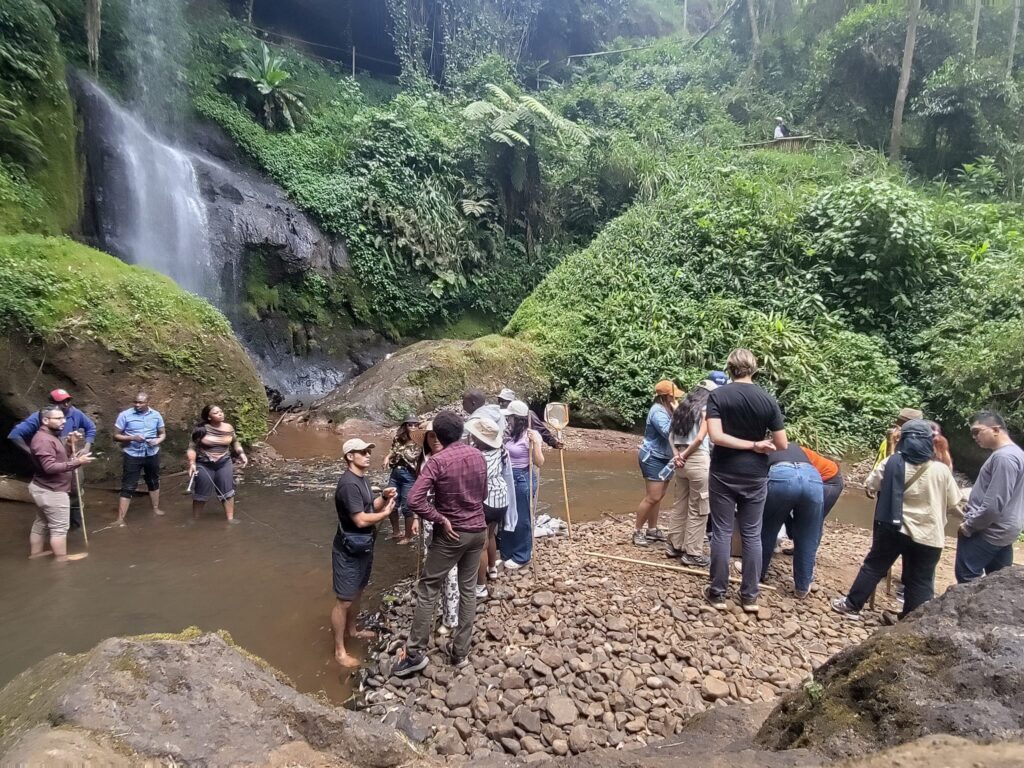
Pictured:Focused on the tray in front of them, a group of Young Experts is identifying insects in the water. Other Young Experts measure the dissolved oxygen and pH of the water. The Blue Deal Young Experts take part in a river health assessment at Twin Falls near Thika Dam, together with the local community as part of the excursion in their second year return training.
Hands-on learning at Twin Falls
Midway through the programme, the Young Experts headed out for a hands-on river health assessment at Twin Falls near Thika Dam. Together with the local community, they identified aquatic insects, measured dissolved oxygen and pH levels, and discussed how to make such assessments inclusive and impactful.
The group reflected on questions like:
How do we involve local communities meaningfully?
What criteria should guide participant selection?
How are results shared and used?
Pictured:The Young Experts perform a river health assessment with the local community
This fieldwork brought theory into practice and sparked important conversations about community engagement and environmental monitoring.
Climate action with ClimateFresk
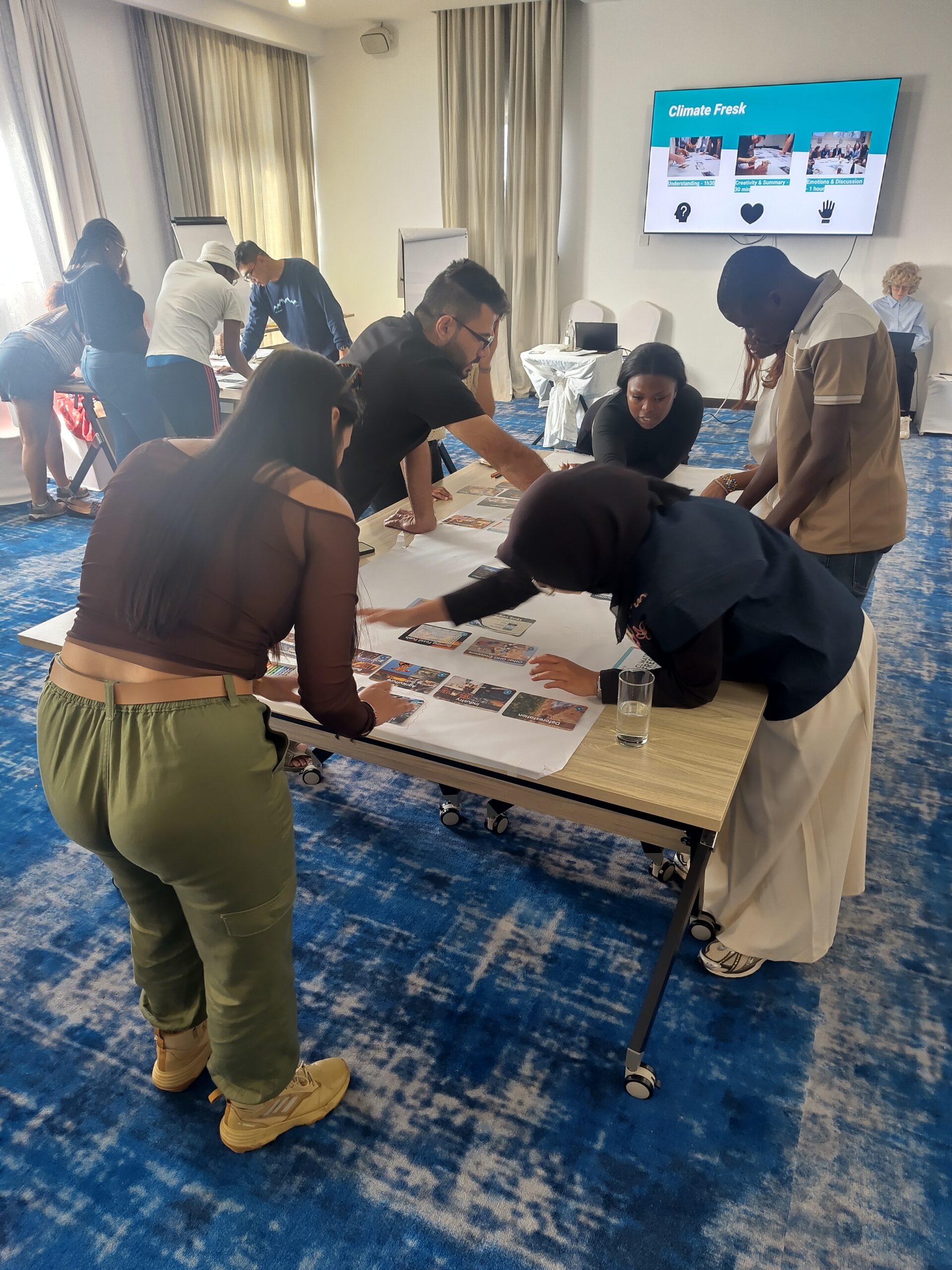
On the final afternoon, the group participated in a ClimateFresk workshop, exploring the causes and consequences of climate change. They brainstormed actions that could be taken at different levels; from personal choices to organisational strategies to mitigate and adapt to climate impacts within the Blue Deal programme.
Pictured:The Young Experts brainstorm ideas to mitigate climate change in the ClimateFresk workshop
Connecting with the network
The training week closed with a networking dinner with Young Experts based in Nairobi and representatives from the Embassy of the Kingdom of the Netherlands in Kenya, including YEP alumnus Jelmer van Veen, now First Secretary for Water, Food Security and Climate at the Embassy.
Ready to influence
Whether the discussions were about personal strengths, leadership, or climate action, one Young Expert summed it up beautifully: “I have more control than I think. And I can influence in different ways.”
With these insights, the Young Experts are ready to continue growing and making meaningful contributions to their organisations and to the ambitions of the Blue Deal programme.
In early summer, the Blue Deal Theewaterskloof team carried out a working visit to Grabouw, South Africa, aimed at supporting sustainable solutions in water management, education, and waste processing. The visit was marked by strong collaboration with local partners, focusing on knowledge exchange, relationship building, and practical steps to address shared challenges.
Collaboration in action One of the key outcomes of the visit was the initiation of a water-focused education programme with local schools in Grabouw. This programme aims to raise awareness among youth about water conservation and environmental stewardship.
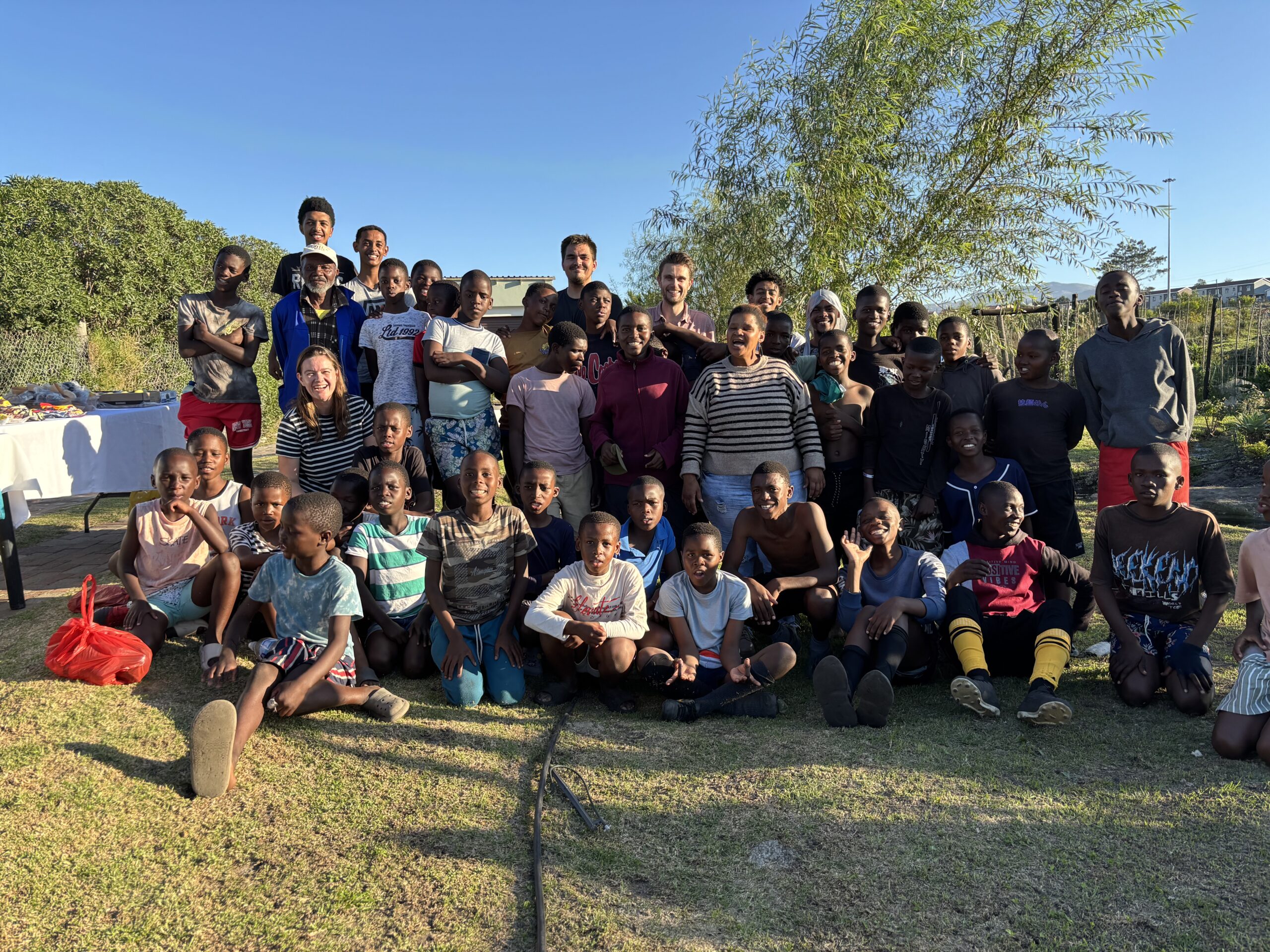
Pictured: Blue Deal representatives with local school children in Grabouw
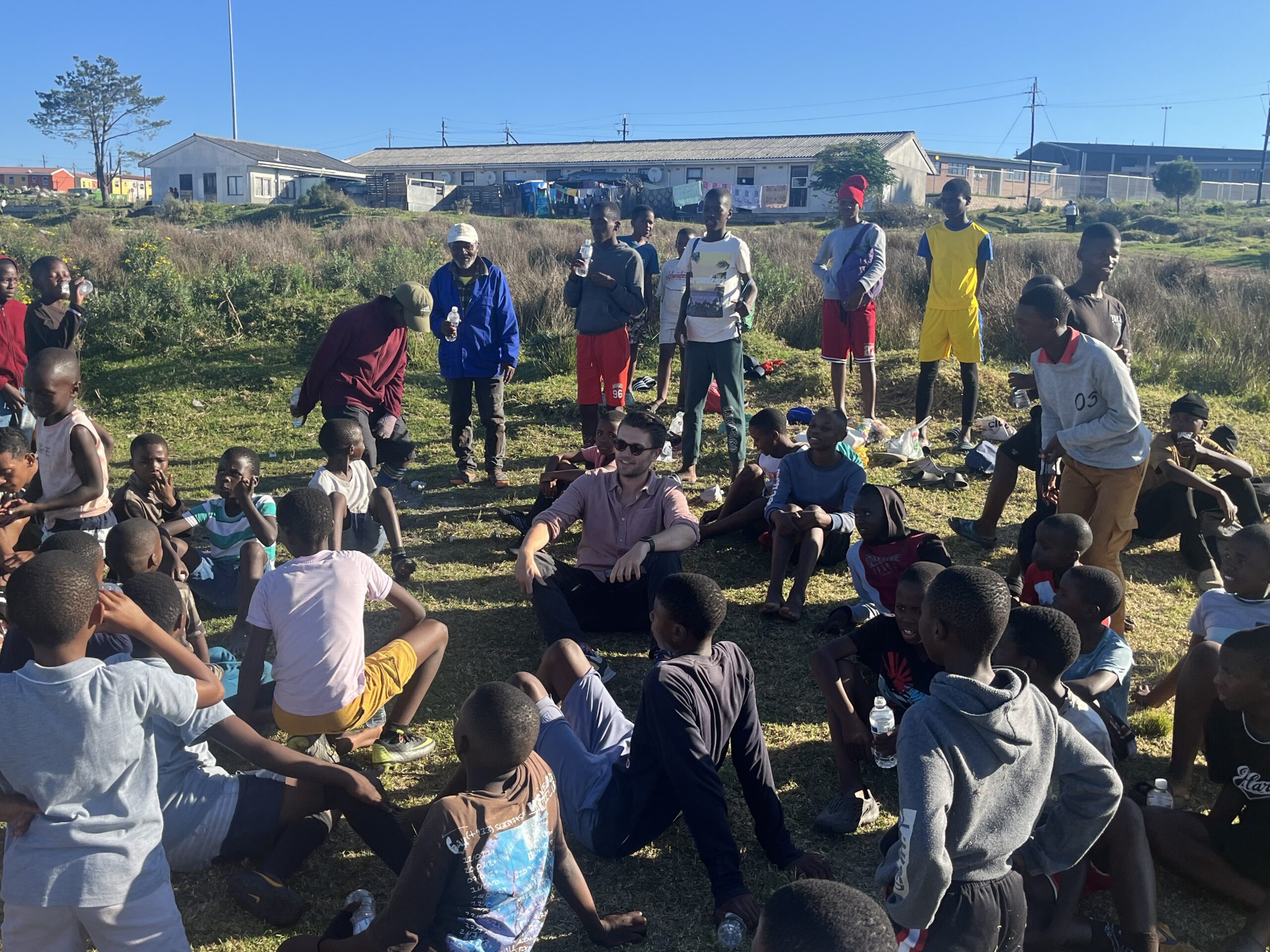
Youth engagement through sport Another effort focused on the younger generation took place in an informal settlement, also in Grabouw. A football match served as a creative platform to engage young people in conversations about waste, reuse, and clean water. This blend of sport, education, and community building proved to be a powerful tool for outreach and awareness.
Pictured:A football match sparked conversations with young people about waste, re-use and clean water
In parallel, discussions with the Grabouw Water Users Association explored ways to better structure and manage local waste streams. These conversations yielded valuable insights and laid the groundwork for future follow-ups. A knowledge exchange session with WWF South Africa highlighted the critical link between water safety and nature conservation, reinforcing the importance of integrated approaches to environmental management.
The team also observed impactful Citizen Science efforts led by BOCMA, including the involvement of Young Expert (YEP) Jordaan Asefi and two community members in the South African Scoring System (SASS) river health assessments. A Clear River Campaign hands-on clean-up at a tributary of the Palmiet River with Deputy Minister Seitlholo was another noted highlight. These activities are helping to build local capacity and foster community ownership of water resources.
More Blue Deal South Africa news: The Theewaterskloof Blue Deal project is just one of the South Africa Blue Deal projects, and there is much more progress to be shared! For an overview of news from the Msunduzi-uMneni project, Blesbokspruit or Vredefort Dome projects, see the most recent Blue Deal South Africa newsletter.
In June 2025, a delegation from Mali - including representatives from the Ministry of Sanitation, Environment and Sustainable Development, ANGESEM, SNV Mali, and the Embassy of the Netherlands in Mali - visited the Netherlands as part of the Blue Deal Mali partnership.
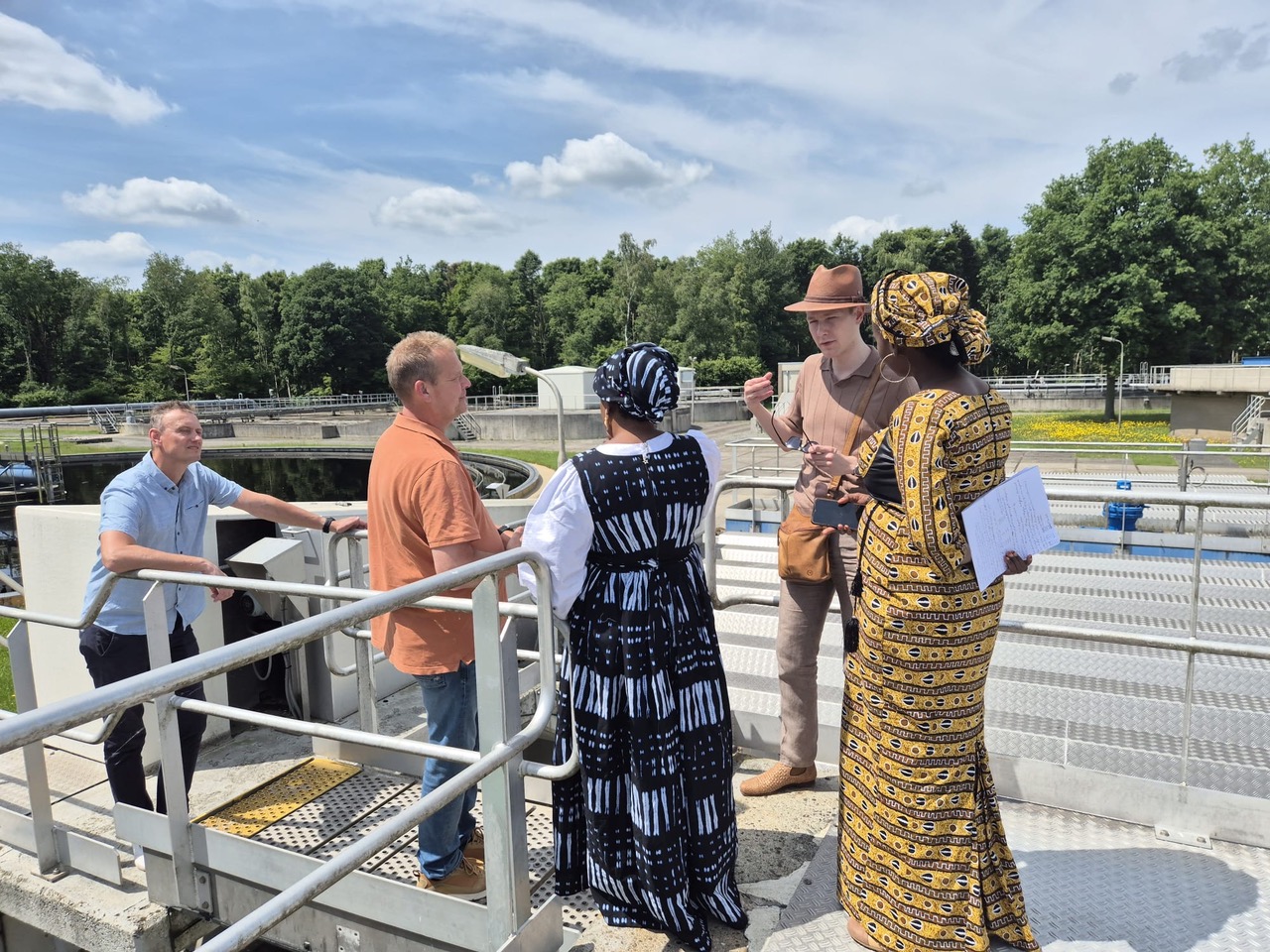
Exchange Mission to the Netherlands: Building ANGESEM’s Capacity The work visit focused on strengthening ANGESEM’s technical and organisational capacities through interactive workshops, site visits to wastewater treatment plants, and hands-on training. Laboratory technicians sharpened their skills at Waterschap Hunze en Aa, while operators gained practical experience at facilities managed by Hoogheemraadschap Hollands Noorderkwartier.
Pictured: Practical exchanges at Dutch wastewater treatment facilities
A leadership workshop hosted by Waterschap Rivierenland provided space to reflect on and improve ANGESEM’s management charter. Aside from these practical visits, the delegation also met with funders – Netherlands Enterprise Agency and NWB Fonds – to discuss the upcoming dyeing project supported by SNV Mali, with involvement from the Dutch Ministry of Foreign Affairs.
This exchange laid a strong foundation for more sustainable and efficient wastewater management in Mali.
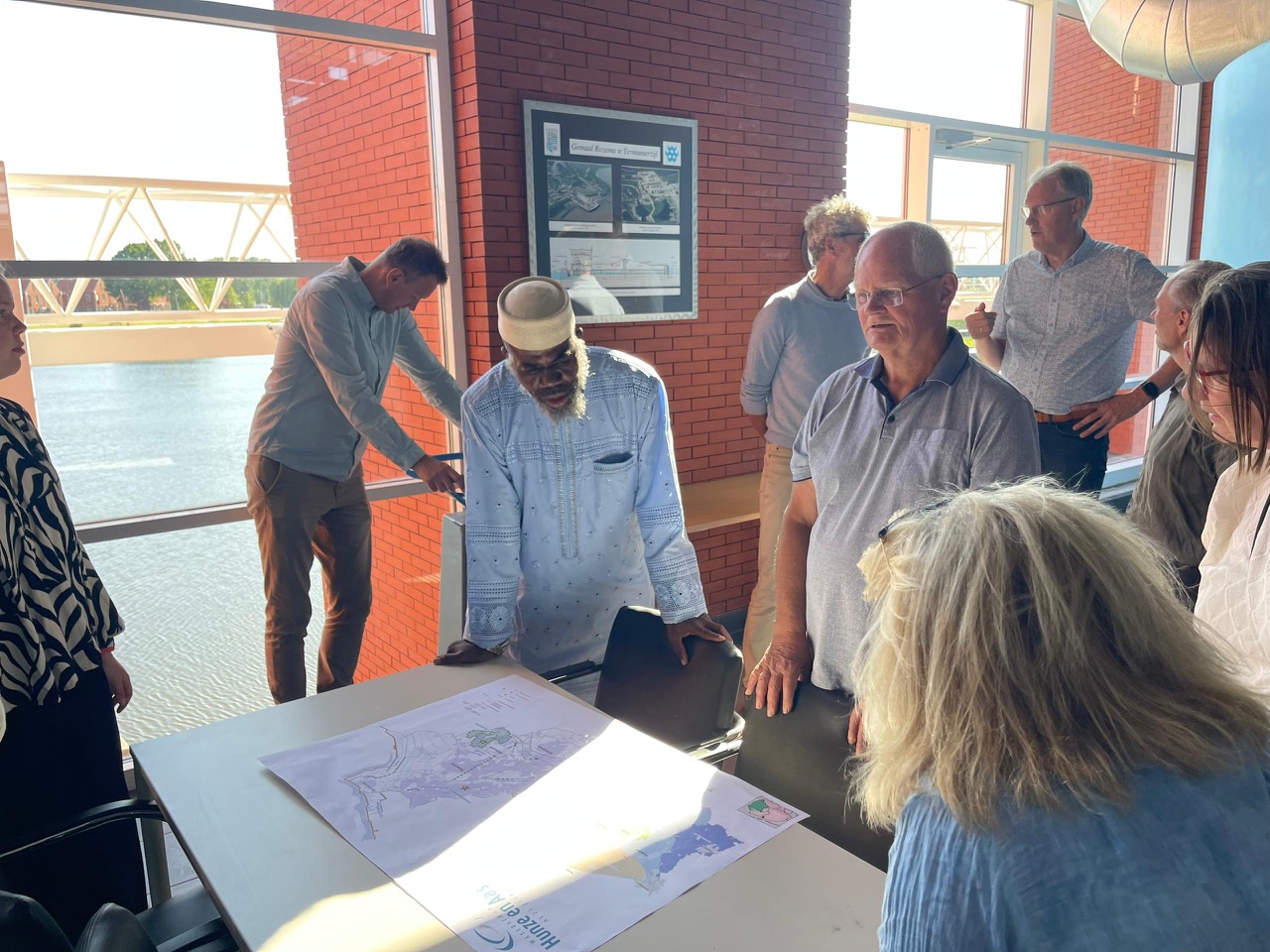
Pictured:A visit to Dutch water authority Hunze en Aa
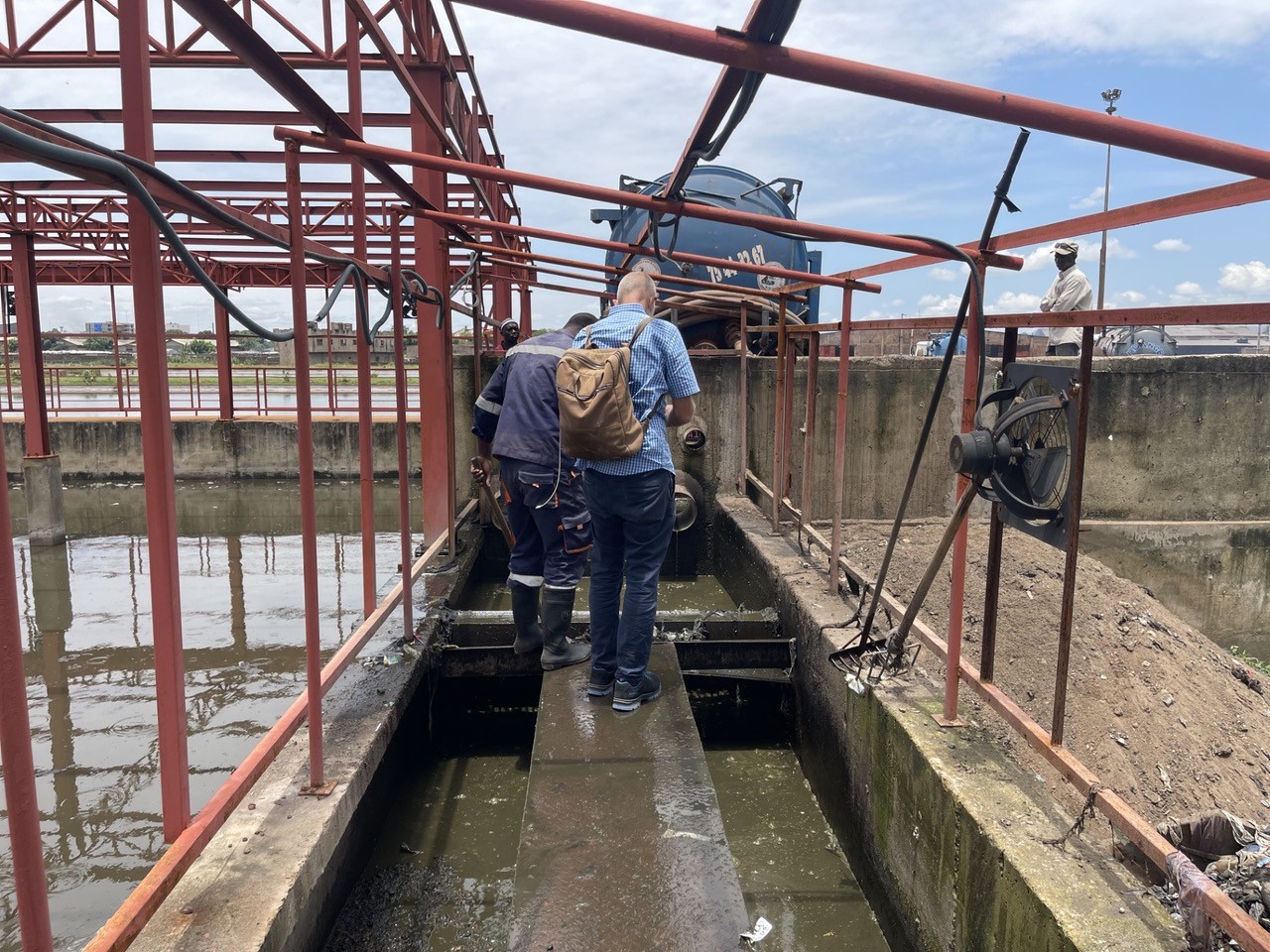
Expert Visit to Mali: Diagnostic Assessment of Bamako’s Treatment Plants To complement the exchange, Dutch wastewater expert Dirk Koot visited Mali from August 12 to 18, 2025, with support from PUM. His work visit involved a thorough diagnostic assessment of ANGESEM’s wastewater treatment plants in Bamako.
The visit concluded with a debriefing workshop, where key challenges and recommendations were shared with ANGESEM’s management, technical departments, and operators. These insights will be integrated into the ongoing Blue Deal partnership, helping to improve the sustainability and performance of sanitation infrastructure – ultimately benefiting both the population and the environment.
Pictured: Dirk Koot visits an ANGESEM wastewater treatment plant in Bamako, Mali
In September, six water professionals traveled to Romania as part of the Tackling Drought project work visit. Central to this working visit was the submission of an Interreg Romania-Bulgaria proposal to the European Commission. This proposal, aiming for €3.5 million in funding, would support the achievement of important goals of the Romanian Blue Deal partnership, including rehabilitation of the Jiet river. This foreseen rehabilitation with Nature-based Solution intends to ensure increased retention of water, in order to ensure sufficient availability of water in dry periods for various purposes including for agriculture.
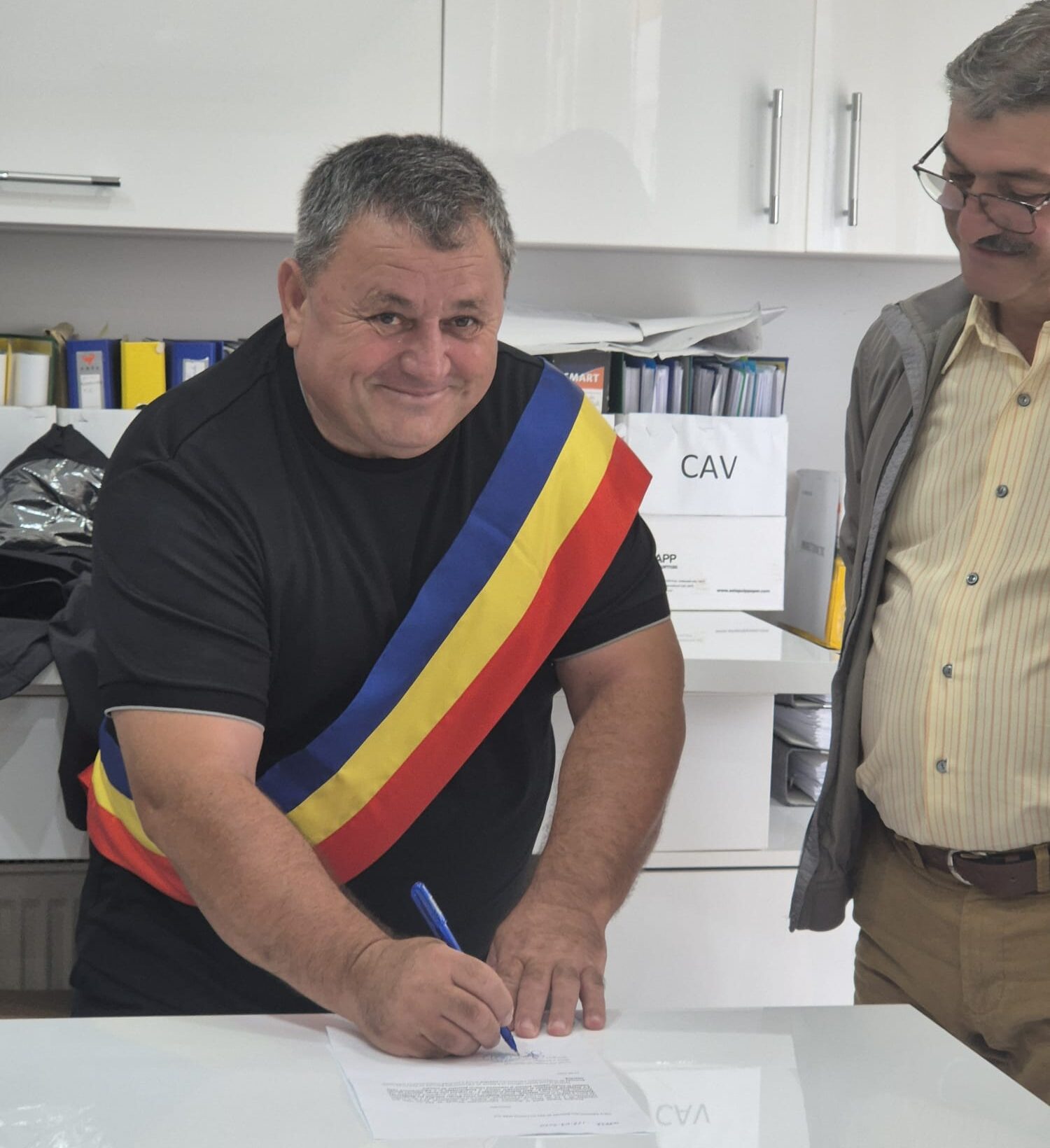
A milestone of the visit included a trip to the town of Rojiste, where the Dutch and Romanian water experts were welcomed by the mayor. He signed a declaration required for a subsidy application, aiming to connect the Jiet river and the Jiu river. Such a connection would improve the water supply downstream of the Jiet River, which is essential for this natural area. The initiative is part of the broader Interreg proposal addressing various Nature-based Solutions in Romania and Bulgaria. Dutch Water Authorities are participating as an associate partner in the proposal.
Pictured: The mayor of Rojiste signs a declaration in support of the Inter-regional proposal
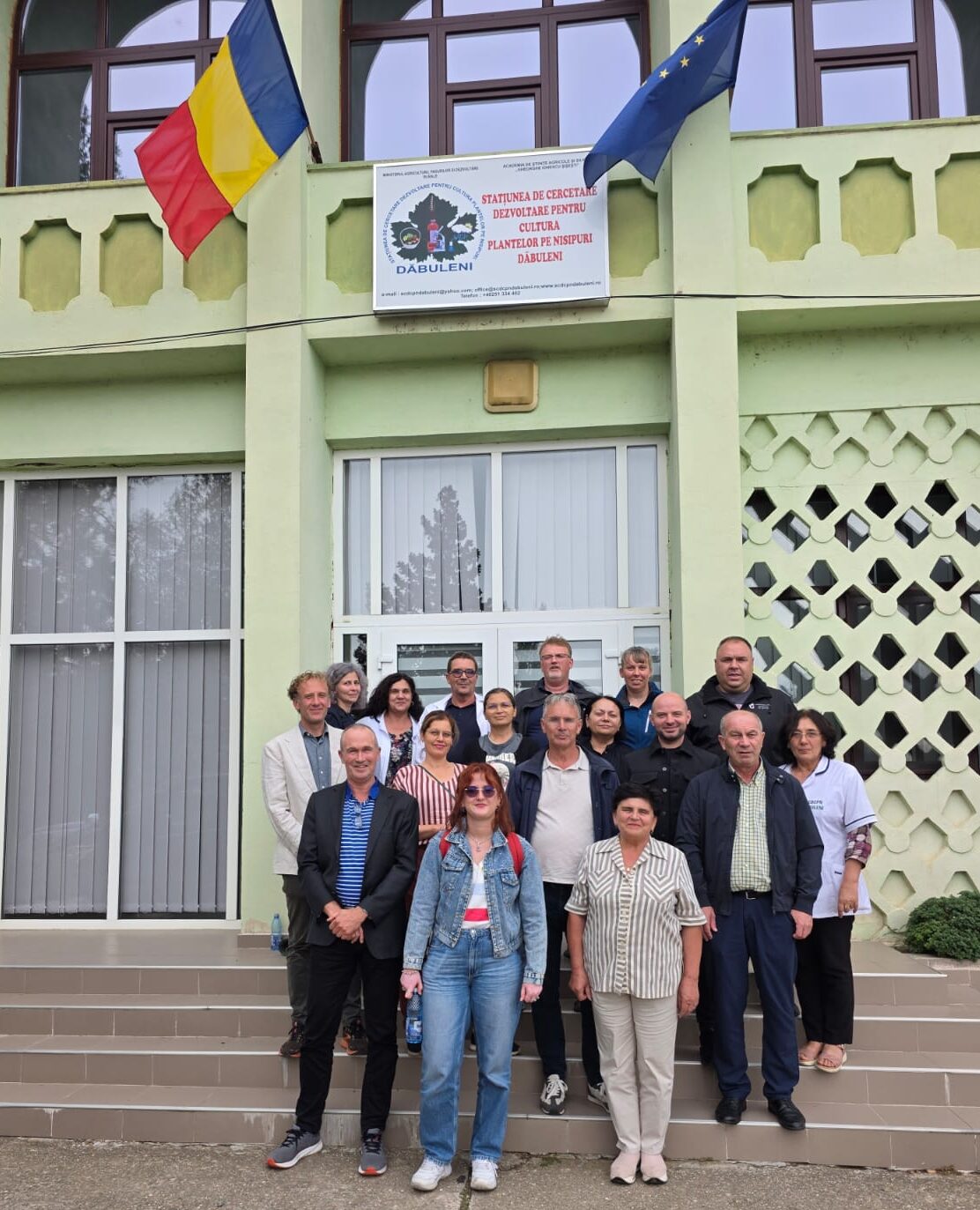
The group also visited the Dabuleni Research Institute. The institute does a lot of research into drought and how to manage this. They are specialised in various drought issues faced by the region, including challenges related to irrigation systems, such as groundwater extraction and what the long-term effects would be on groundwater levels. But also issues related to maintenance of channels, or energy costs related to pumping water from the Danube (and how this should be priced).
Pictured:A visit to Dabuleni Research Institute
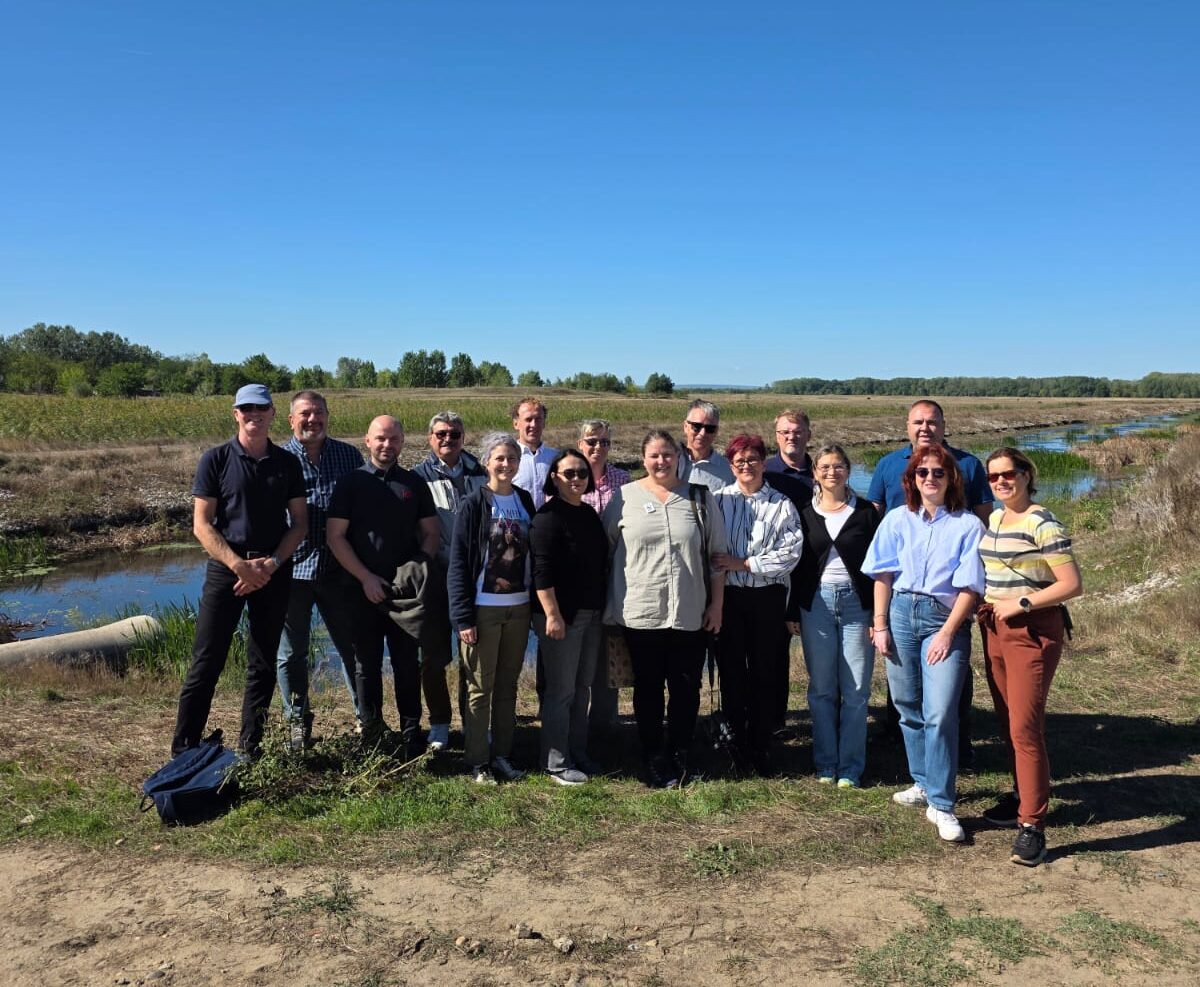
The Dabuleni Research Research Institute is also a partner in a sub-project which the Blue Deal Romania team is collaborating with WWF Romania, restoring a historical water source. Together with our Romanian partners and WWF, the site of this restoration was visited. It is a challenging project that will require extensive stakeholder management with local parties, such as farmers, to discuss topics such as water allocation.
Pictured: Blue Deal Romania and local partners together with WWF during a field visit
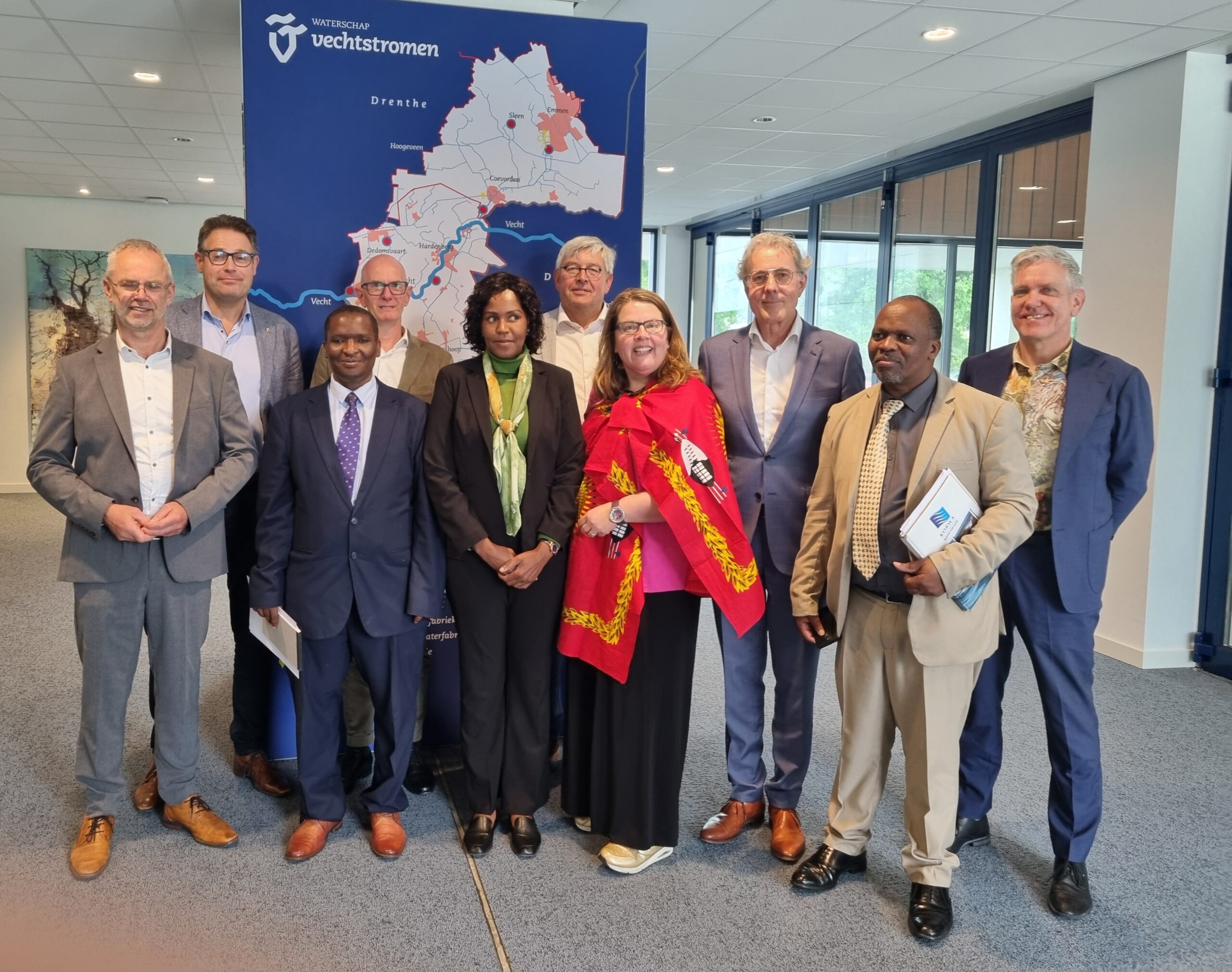
In early summer, Blue Deal Eswatini welcomed a delegation from the Ministry of Natural Resources and Energy (MNRE) of Eswatini to the Netherlands. The delegation included Ms Mbingo (Principal Secretary), Mr Nxumalo (Under Secretary), and Mr Khoza (Director of the Department of Water Affairs).
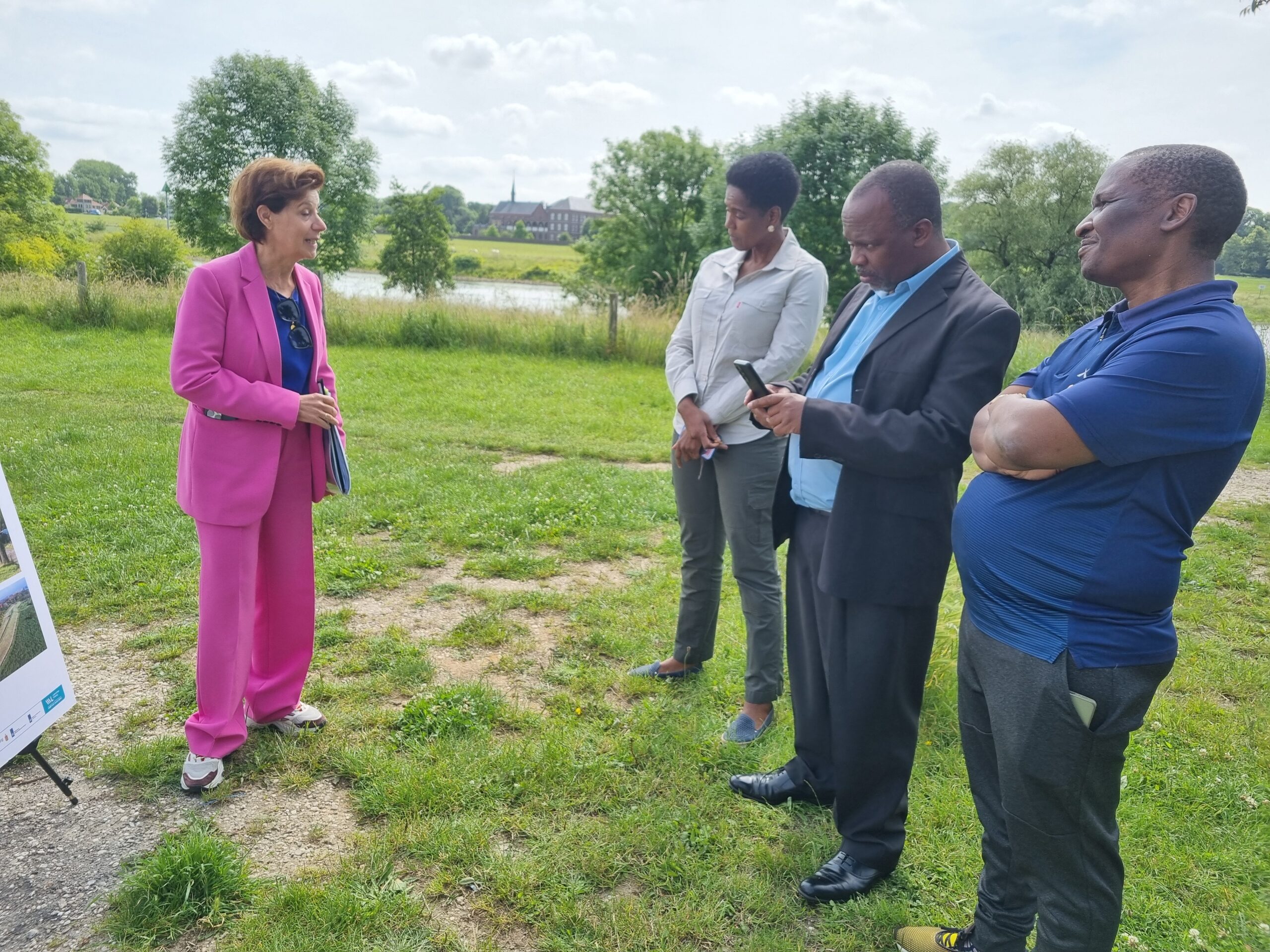
The aim of this working visit was to exchange knowledge on the Dutch system of decentralised, multi-level water governance. We also presented the High-Level Dialogue sessions to the Ministry representatives. Two sessions were already held with key stakeholders in the water sector in Eswatini on strengthening water governance to support integrated water resource management (IWRM), climate resilience, and social inclusion. In the upcoming third session, a promising perspective will be presented, along with initial steps for implementation.
Pictured: The delegation from the Eswatini Ministry visit Waterschap Vechtstromen
Valuable exchanges at the Dutch Water Authorities The week began at Waterschap Vechtstromen, where the delegation engaged in a lively exchange with the entire executive board of the water authority. Both parties shared their experiences and challenges around drought management, an issue that is becoming increasingly pressing in both the Netherlands and Eswatini. The discussion proved fruitful for everyone involved.
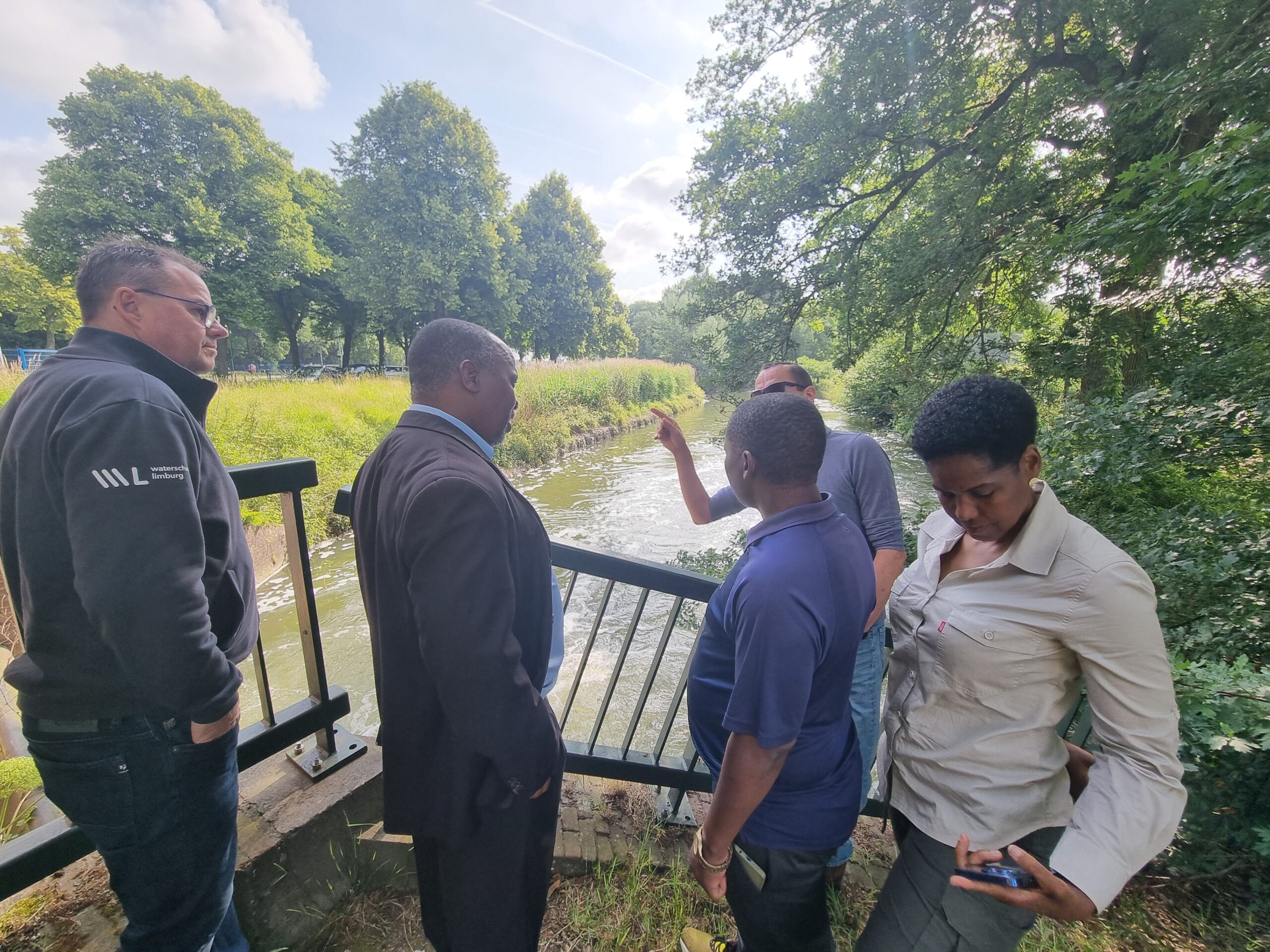
Next, the delegation visited Waterschap Limburg, where they explored the importance of clearly defined roles, responsibilities, and mandates – especially when multiple organisations operate in the same area. The visitors also had a close look at the flood early warning systems in place at the water authority’s office.
The visit continued to The Hague, where the delegation met with the Delta Commissioner’s office. Here, the conversation expanded to global water governance challenges, recognising that many issues faced in the Netherlands are also relevant in Eswatini and southern Africa.
In addition, the delegation met with Blue Deal Programme Management and participated in an in-depth session on the governance of water management led by Professor Herman Havekes of the University of Utrecht.
Pictured:The Environmental manager of Waterschap Limburg presents to Ms. Mbingo, Mr. Khoza and Mr. Nxumalo from Eswatini
Promising news: water pricingproposal accepted Following this visit focused on mutual learning and collaboration in water governance, we received promising news: the Ministry accepted the proposal for water pricing and initiated the next steps for national implementation in Eswatini. This marks a significant step toward improved integrated water resource management (IWRM) and financial sustainability for safe, clean, and sufficient water in Eswatini.
Pictured: A field visit in Waterschap Limburg
Background information: Blue Deal Eswatini At the request of MNRE, the Blue Deal has executed the assignment of the High-Level Dialogues in order to get the proper input for the revision of the National Water Act. During 2024 and 2025 there have been interviews and intensive multi day working sessions with key stakeholders in Eswatini, after which Blue Deal Eswatini was requested to produce an action-oriented proposal for a feasible and realistic structure of the operational IWRM chain in the country. The analyses and results have been shared with all key stakeholders in the water sector and will get follow up.
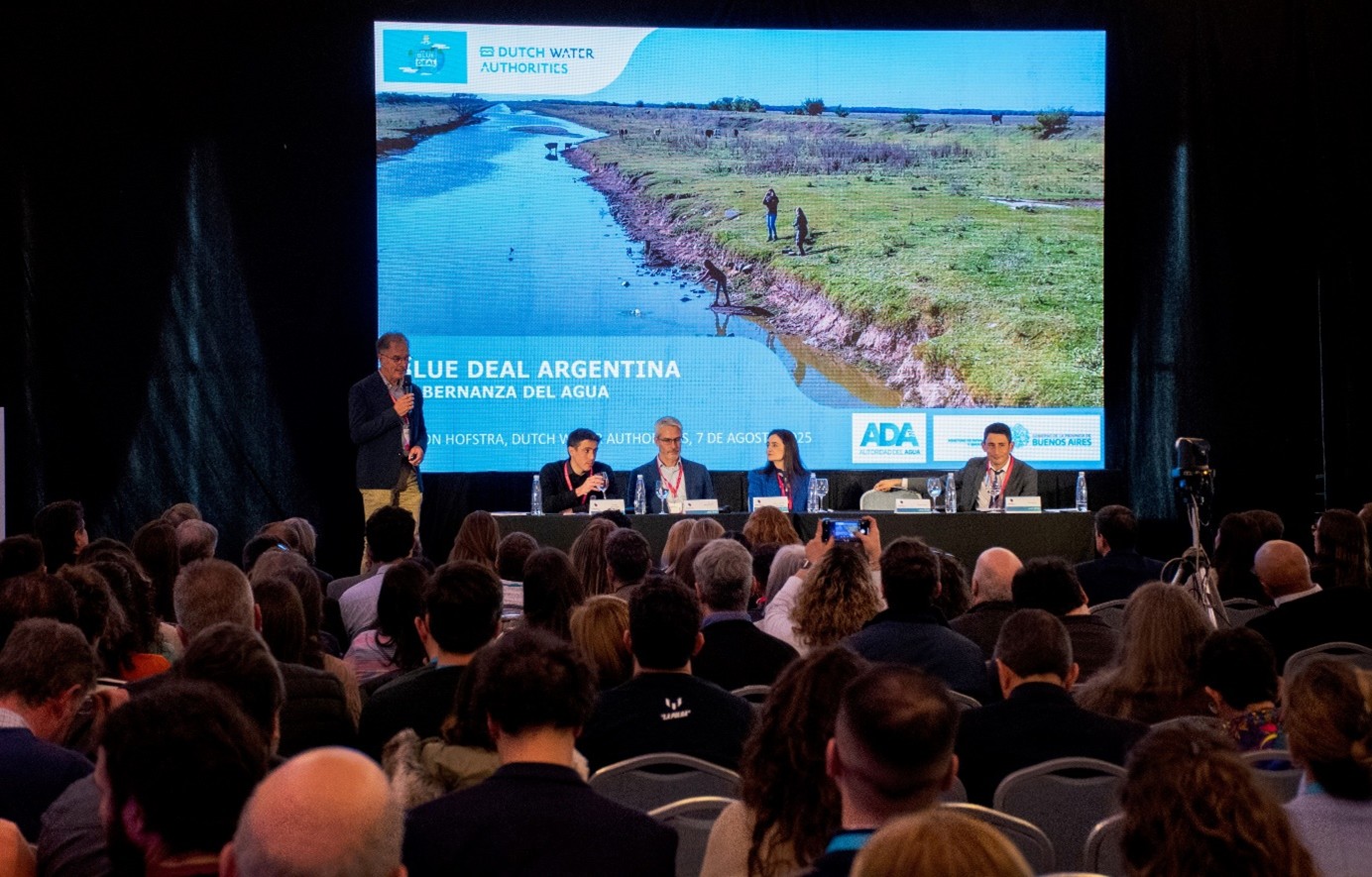
In August 2025, the National Water Congress of Argentina (CONAGUA) took place in Mar del Plata. Blue Deal Argentina was an active participant in this large event.
Moreover, the currently ongoing partnership (2023 – 2030) was formalised in a framework cooperation agreement signed by Damián Costamagna, President of the Buenos Aires Water Authority (ADA), and Gabriel Katopodis, Minister of Infrastructure, on behalf of the province of Buenos Aires. Representing the Dutch Water Authorities, Simon Hofstra (partnership manager Blue Deal Argentina) and Nadji Bilik (head of economic affairs and deputy ambassador at the Dutch embassy) signed the agreement. A similar previous agreement dated from 2019 and needed update for the ongoing second phase of the Blue Deal (2023 – 2030).
Pictured: Simon Hofstra presents at the National Water Congress of Argentina (CONAGUA)
The signing ceremony was preceded by presentations from Damián Costamagna, who spoke about water management in Buenos Aires province, and Simon Hofstra, who highlighted the achievements of the Blue Deal Argentina partnership and outlined the goals for 2026-2030. The Blue Deal presentation also covered coastal erosion, an issue which is faced by both Argentina (including the town of Mar del Plata) and by the Dutch Water Authorities.
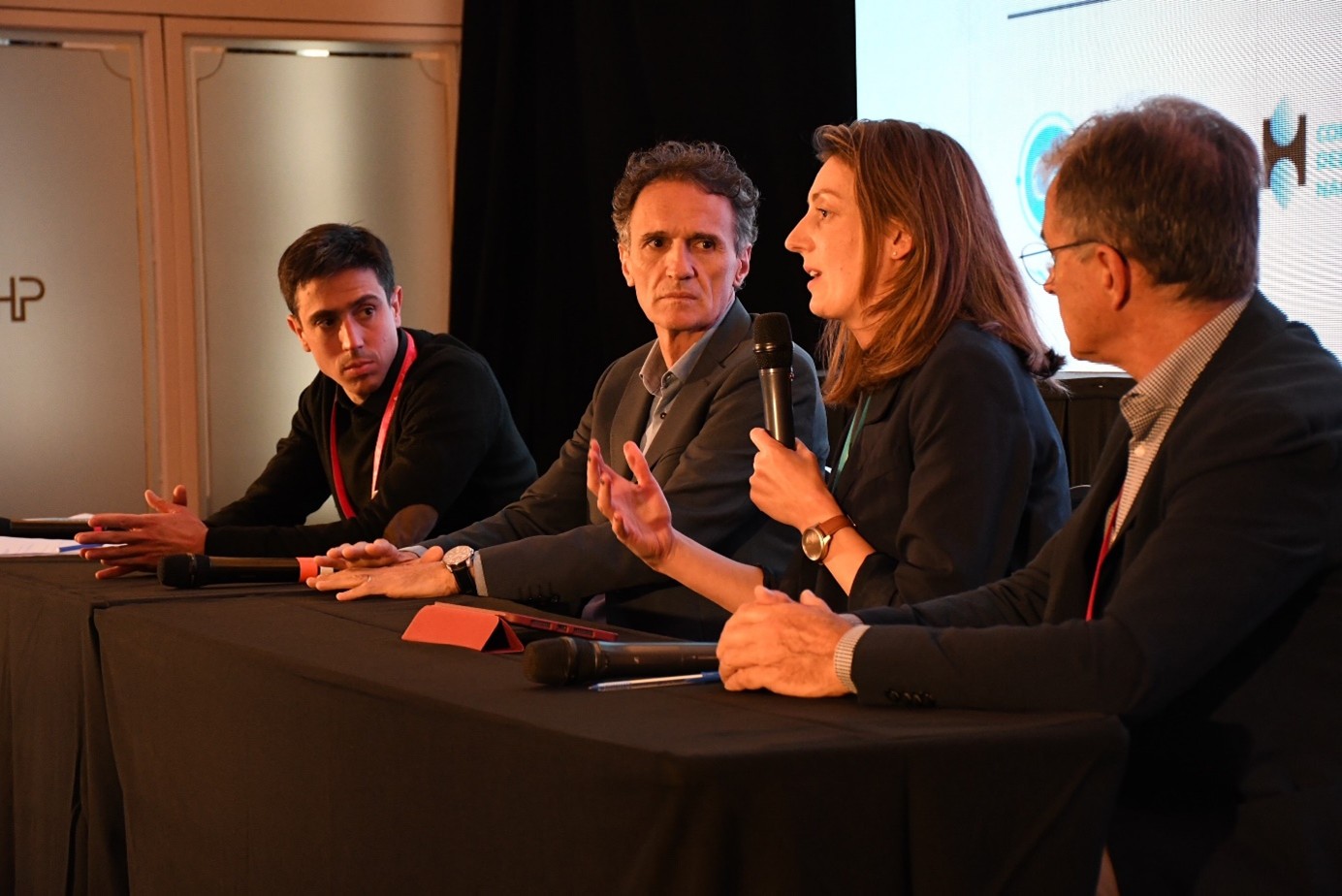
Pictured:Nadji Bilik, head of economic affairs (and deputy ambassador) of the Dutch Embassy, spoke at the congress
CONAGUA is a biennial event that brings together over 1,000 water professionals from across Argentina. ADA staff contributed actively, delivering three presentations and showcasing six posters on the results of the Blue Deal project. Other key speakers included the Secretary-General of the World Meteorological Organisation (WMO) in Geneva. The atmosphere was very positive, with high expectations for significant progress in water governance in the Rio Salado region in the years ahead.
On July 1st, Gowrie Technical High School in Bolgatanga, Ghana, officially opened a new water treatment facility. The system treats greywater from the school’s washrooms, which previously flowed untreated into the Vea dam - a source of drinking water and irrigation.
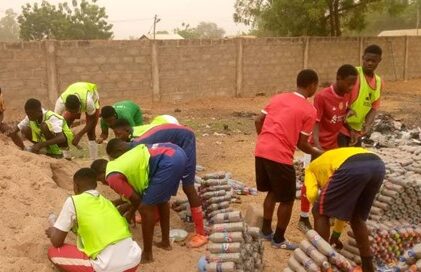
This low-cost, sustainable solution was co-designed by students, the Water Resources Commission (WRC), and Blue Deal colleagues. A unique feature is the use of recycled plastic bottles filled with sand as “bottle bricks” to build treatment pits. As water flows through the pits, it undergoes grease separation, sedimentation, and charcoal filtration. The treated water is now used to irrigate the school garden, where fruit trees and other plants have been planted – turning waste into a resource.
Pictured: Students place the sand-filled bottles for the water treatment facility
Ghana Water Company Limited has added the site to its monitoring programme and is collecting biweekly samples. Early results show improvement, with more data expected soon.
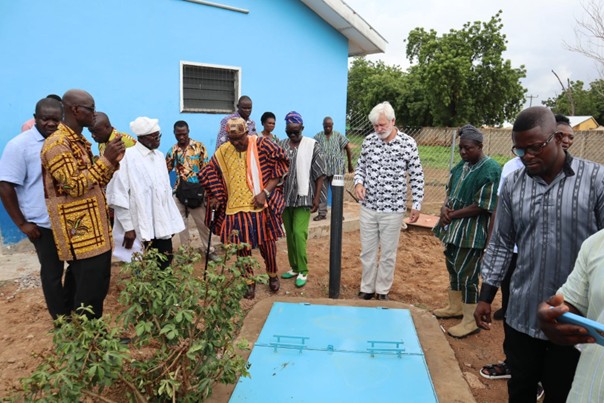
Pictured:The treatment facility is officially opened by Paramount Chief Bolgatanga and Erik de Bruijne representing Dutch Water Authorities
The opening ceremony drew over 400 students and local dignitaries, including the paramount chief and Jesse Kazapoe, Principal Basin Officer for the White Volta catchment. Erik de Bruijne, representing Blue Deal, emphasized the importance of youth-led innovation in tackling water challenges.
WRC colleagues Justice Aduko and Judith Amli are actively promoting the project in the media. The opening was featured on national broadcast, and they’ve given interviews on both TV and radio—raising awareness and highlighting the impact of this initiative.
This project showcases how local knowledge, international collaboration, and creative reuse of materials can drive sustainable water solutions. Blue Deal is proud to support efforts like this and looks forward to continued work in Ghana.
Pictured: Erik de Bruijne is interviewed by local television about the new treatment facility
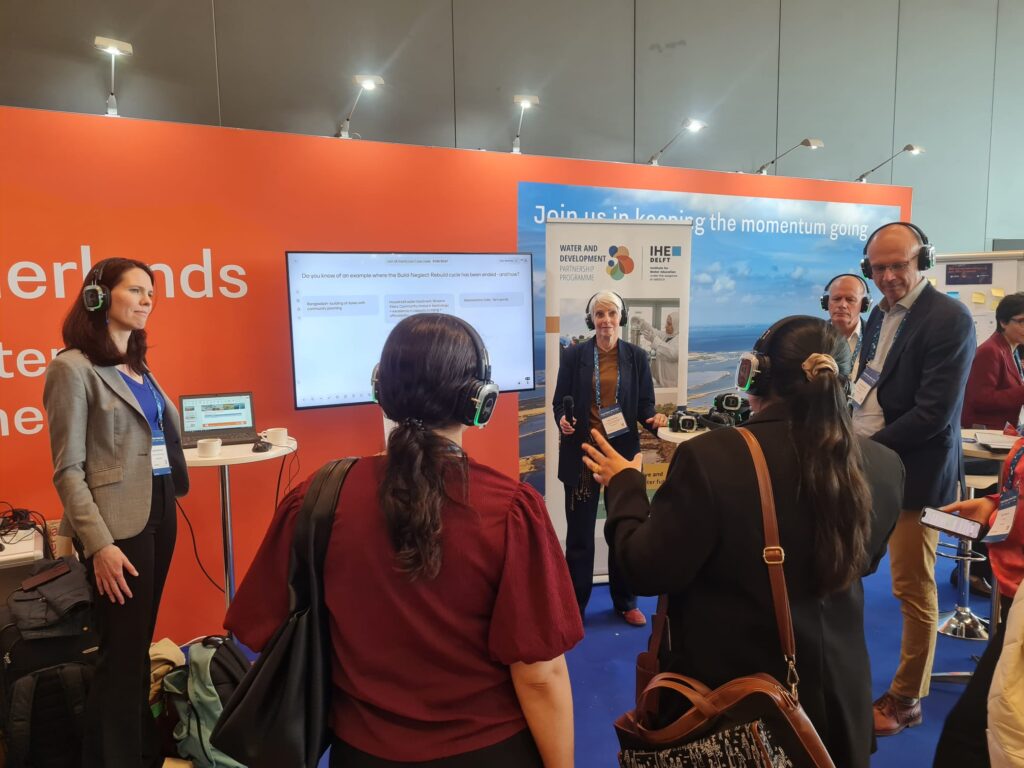
At Stockholm World Water Week 2025, the Blue Deal programme was actively represented with Blue Deal team members from the programme office, Dutch water authorities and international Blue Deal partners. The week brought together key figures from the global water sector, allowing for fruitful discussion and relationship building with new and existing partners.
Aside from networking, the team contributed to three official sessions on important topics such as flood early warning systems, avoiding the build-neglect-rebuild cycle, and learning from past mistakes in water management. These all reaffirmed the important role water authorities play in addressing the world’s most pressing water challenges.
Key takeaways from the sessions
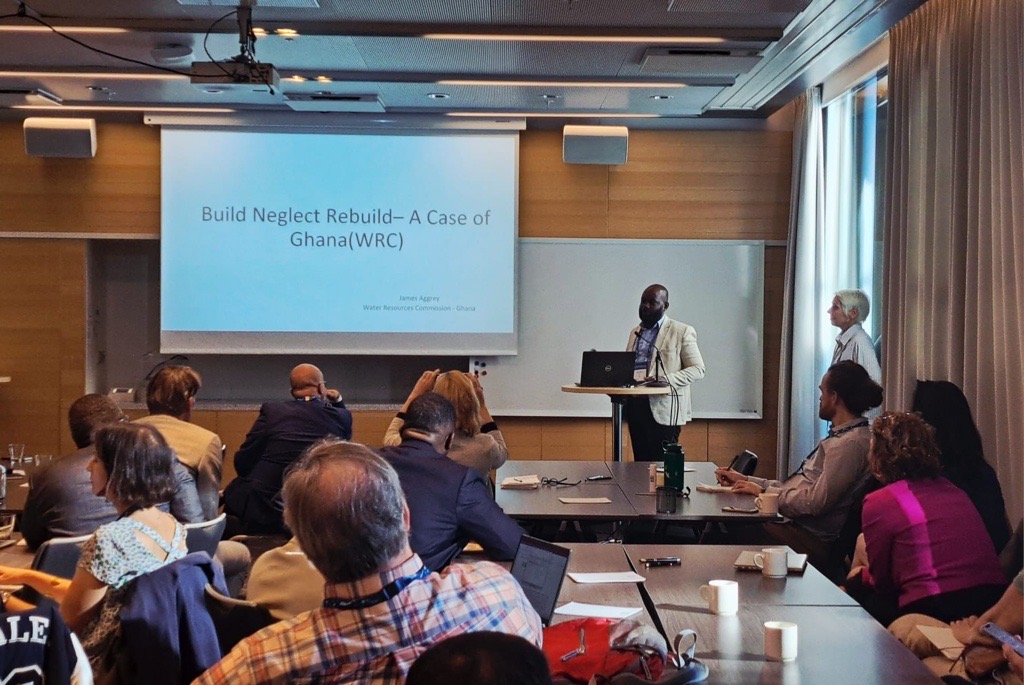
Pictured:James Aggrey (WRC, Blue Deal partner in Ghana) presents
Avoiding Build-Neglect-Rebuild: towards sustainable infrastructure
Organised together with WaterWorX and Partners for Water, this session highlighted the need for a mindshift in how we value infrastructure. Liliane Geerling (Partners for Water) moderated the session which addressed the lifecycle of water infrastructure and advocated for a shift in mindset from celebrating construction to valuing long-term maintenance. As Meike van Ginneken (Dutch Water Envoy), and Anjil Adhikari (Oxfam) emphasised: we must move from being proud of what we build, to being proud of what we sustainably maintain over decades.
Representing our Blue Deal partner in Ghana, James Aggrey (Water Resources Commission) reminded us to examine the origin of an infrastructure idea and whether it has broad support – from grassroots to high-level decision-makers. That support base is fundamental for long-term sustainability. Vikas Goyal of the Asian Development Bank stressed the importance of integratinglong-term operation & maintenance from the very start of a project, rather than leaving it as an afterthought.
An inclusive approach to flood early warning systems
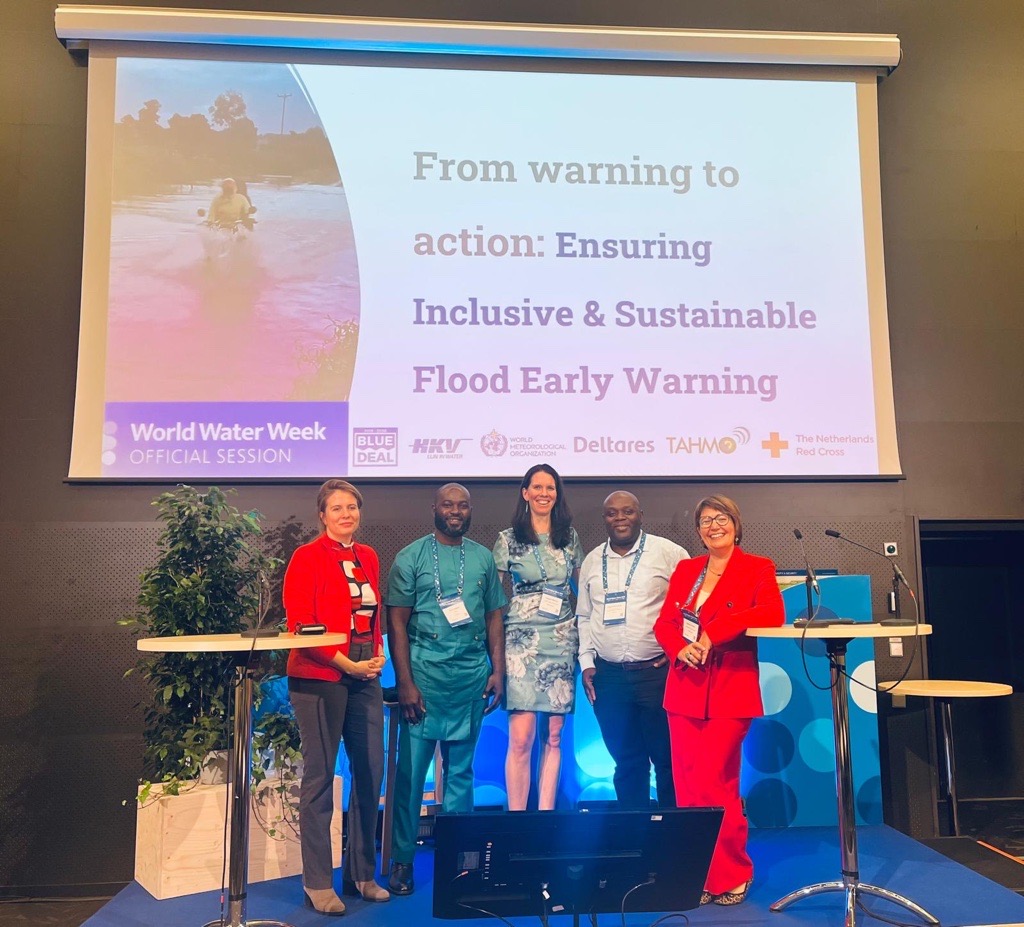
This interative session, organised by Blue Deal, Red Cross The Netherlands, World Meteorological Organization (WMO), TAHMO, HKV and Deltares, was kicked off with an interview with Eva Schreuder of Inclusive Green Growth (Dutch Ministry of Foreign Affairs). During the session we explored how inclusive and effective flood early warning depends on strong collaboration – from communities, to water authorities, to disaster risk teams.
Pictured:Dorien Lugt (HKV), James Aggrey (Blue Deal/WRC Ghana, Liesbeth Wilschut (Blue Deal), Frank Annor (TAHMO), Stefania Giodini (Red Cross The Netherlands)
It highlighted that technical forecasting alone is insufficient; even the best forecasts are ineffective if the warnings don’t reach or resonate with the people who need them, especially in vulnerable communities. Water authorities were identified as key connectors, linking local knowledge with basin-wide oversight and disaster risk teams. The discussion underscored the need for strong collaboration across sectors and levels of governance to ensure timely and actionable flood responses.
Liesbeth Wilschut (Blue Deal) moderated the hybrid session, which brought together not just people in the room, but was also available to attendees online. (The recording will be added to this page when available)
‘Failing Forward’
Pictured: Liesbeth Wilschut (Blue Deal) takes part in the Failing Forward session
This session, organised by Deltares and Partners for Water, promoted a culture of openness and learning in water governance and Integrated Water Resources Management (IWRM). It emphasised that acknowledging and learning from mistakes is essential for progress. The Blue Deal team shared its experience in Ethiopia, where a shift in approach to wastewater management led to more effective and inclusive outcomes. A broad range of speakers came from: CIPRED, Deltares, IHE Delft, Alliance for Global Water Adaptation (AGWA), Fundacion Herencia Ambiental Caribe and the Dutch Government. The interactive session encouraged transparency and adaptive learning as core principles for sustainable water partnerships.
In addition to the sessions, the Blue Deal team met with key partners to explore future collaboration on river basin organisations, nature-based solutions, and Water Operator Partnerships, laying the groundwork for deeper engagement and shared learning in the future.
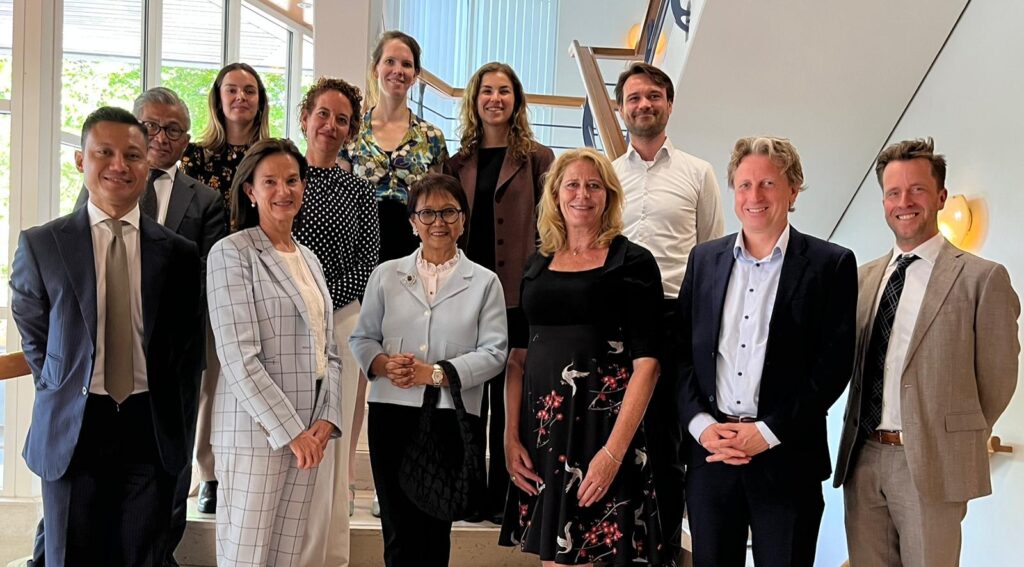
United Nations (UN) Water Envoy, Retno Marsudi, visited the Dutch Water Authorities (Unie van Waterschappen) on Thursday 3 July. Within the UN, Marsudi is responsible for water, including the implementation of the SDG agenda. Additionally, she leads preparations for various high-level international water conferences, such as the UN Water Conference, which will take place in the United Arab Emirates in 2026.
(pictured: UN Water Envoy visits Dutch Water Authorities)
International interest in Dutch Water Authorities
The Dutch Water Authorities hold an autonomous position in water management. This unique position, combined with its specific tax system, has resulted in significant international attention on Dutch water management.
An opportunity to discuss the Dutch approach to water management and financing was one of the reasons of Marsudi’s visit to the Dutch Water Authorities. Discussions also covered her priorities for the UN Water agenda and how the Dutch Water Authorities (DWA) can contribute.
Luzette Kroon, who oversees the international portfolio as a board member of the Dutch Water Authorities, welcomed Marsudi during her visit. She provided the UN Water Envoy with an overview of the origins of the Dutch Water Authorities and elaborated on their water management practices.
Dutch Water Authorities Bank
Lidwien van Velden, Chair of the NWB Bank (Dutch Water Authorities Bank), explained how the bank contributes to financing the Dutch water management system. Dennis van Peppen, Director of the Netherlands Commission for Environmental Impact Assessment (NCEA), was also present. He emphasised the importance of good cooperation between governments, the private sector, the knowledge sector, and civil society.
The various presentations provided Marsudi with a deeper appreciation for the strength and resilience of the Dutch water management model. Perhaps even more significantly, she acquired valuable insights into how affordable financing can be secured for critical water infrastructure projects.
Contribution to the UN Water Conference
Through the Blue Deal programme, the Dutch Water Authorities support the strengthening of international water authorities and partners around the world, including in the area of financing. This includes not only the use of tariffs and taxes but also the development of innovative private financing models. These themes will take center stage at the UN Water Conference 2026, where the Dutch Water Authorities are eager to contribute their expertise.
Manage Consent
To provide the best experiences, we use technologies like cookies to store and/or access device information. Consenting to these technologies will allow us to process data such as browsing behavior or unique IDs on this site. Not consenting or withdrawing consent, may adversely affect certain features and functions.
Functional
Always active
The technical storage or access is strictly necessary for the legitimate purpose of enabling the use of a specific service explicitly requested by the subscriber or user, or for the sole purpose of carrying out the transmission of a communication over an electronic communications network.
Preferences
The technical storage or access is necessary for the legitimate purpose of storing preferences that are not requested by the subscriber or user.
Statistics
The technical storage or access that is used exclusively for statistical purposes.The technical storage or access that is used exclusively for anonymous statistical purposes. Without a subpoena, voluntary compliance on the part of your Internet Service Provider, or additional records from a third party, information stored or retrieved for this purpose alone cannot usually be used to identify you.
Marketing
The technical storage or access is required to create user profiles to send advertising, or to track the user on a website or across several websites for similar marketing purposes.