In November 2025, the Blue Deal team visited their Argentinian partners to discuss the development of an integrated water system analysis and their approach to one of the region's most pressing challenges: managing the dramatic swings between devastating floods and severe droughts.
A Strategic Partnership in Action
From November 3-12, Dutch Water Authorities (DWA) experts worked alongside their partners at Autoridad del Agua (ADA) of Buenos Aires province, furthering a collaboration that has strong support from the Dutch embassy. Ambassador Mauritz Verheijden, who met with the team in Buenos Aires, emphasised the value of this long-term partnership between the Netherlands and Argentina.
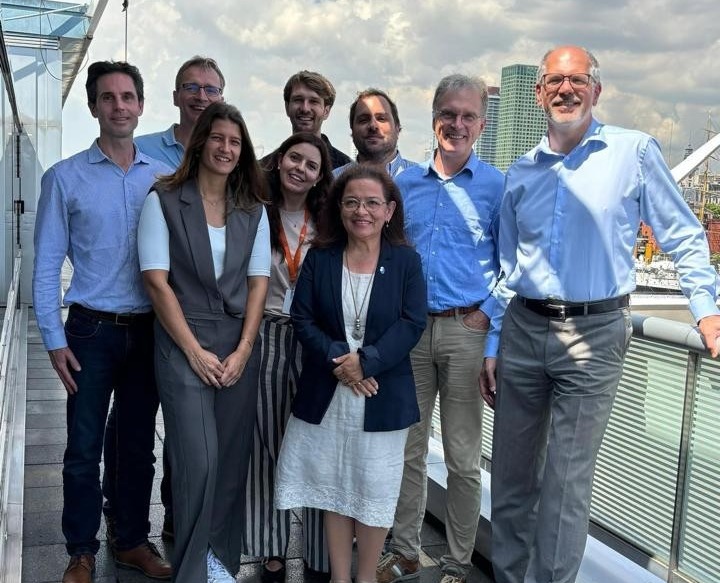
The DWA team visiting the Dutch embassy in Buenos Aires to meet with the ambassador Mauritz Verheijden
Breakthrough in Integrated Water Analysis
The mission achieved a major milestone: completing an integrated water system analysis in concept for nearly half of the Blue Deal catchment area. This comprehensive approach brings together several years of measurement data – collected through both technical monitoring and participatory efforts with local farmers – with advanced surface and groundwater modeling.
The analysis does more than map the current situation. It identifies specific problems, defines what a healthy water system would look like for the region, and charts practical pathways to get there. For ADA, this methodology represents a new approach to their water management.
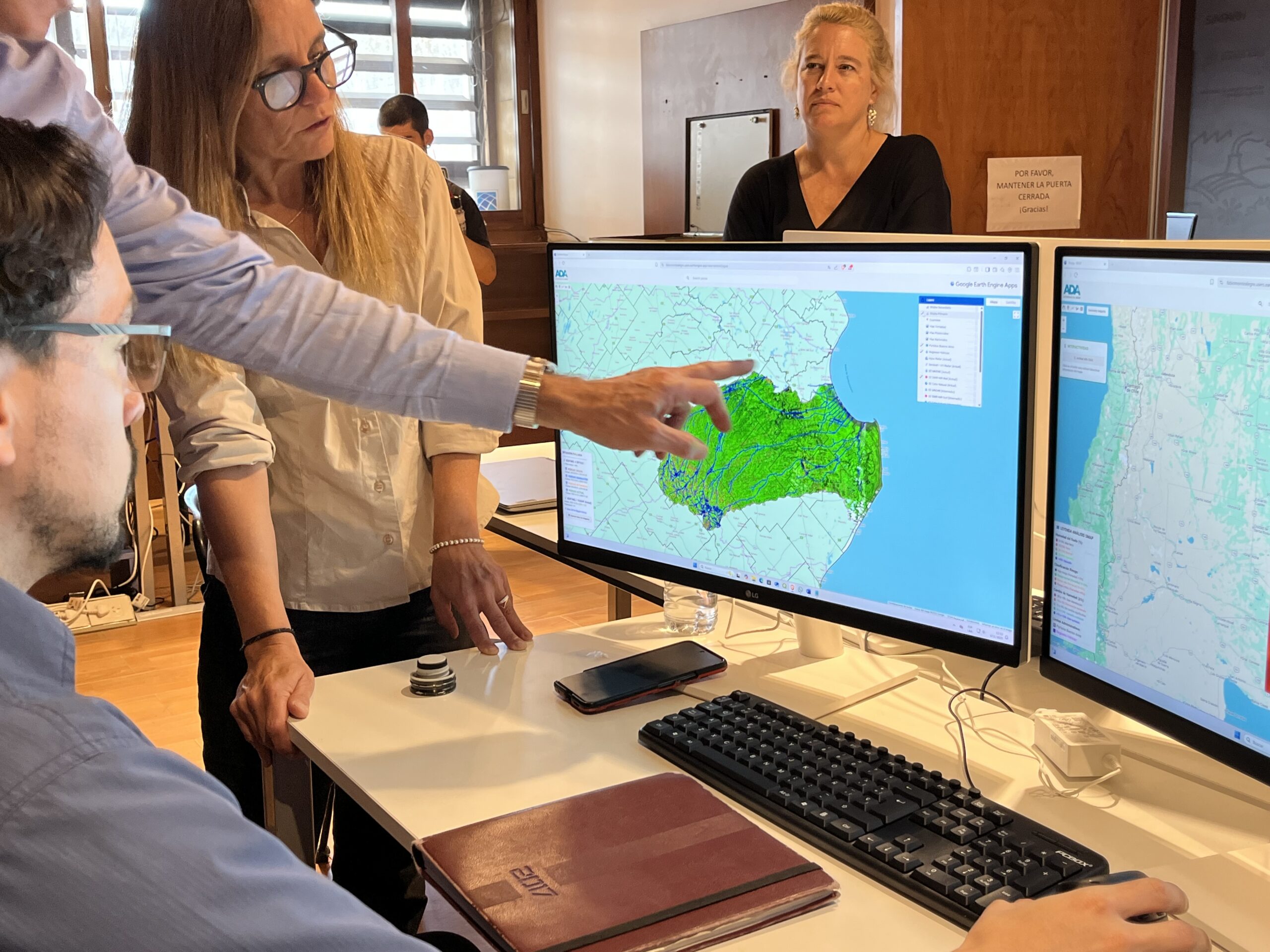
At the offices of ADA (in La Plata), ADA proudly presents its new monitoring and measurement system for meteorological and hydrological data.On the screen is an image of the modelling of the Tandil – General Lavalle basin (size approx. 1/3 of the Netherlands).
Understanding the Extremes
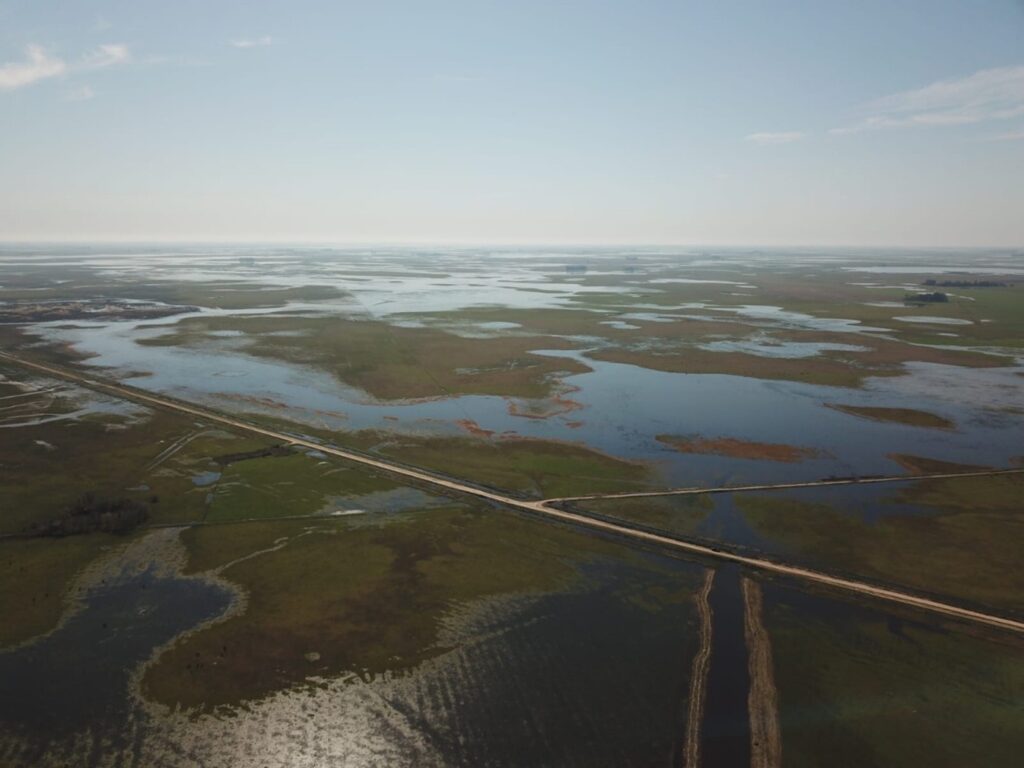
The urgency of this work is clear in the dramatic conditions facing the region. Currently, 2 million hectares across Buenos Aires province lie underwater due to El Niño-driven heavy rainfall. The flat pampas landscape, including the agricultural fields of Ayacucho municipality, becomes a vast floodplain during prolonged rain events. With slow drainage toward the Atlantic Ocean and rivers unable to handle the massive volumes, water lingers for extended periods.
The team visited Ayacucho with the mayor and key municipal staff to examine critical problem areas firsthand. These flooding issues mirror a larger regional pattern affecting agriculture and livelihoods across the province.
Yet just two years ago, the challenge was the opposite. From 2021 to 2023, La Niña brought severe drought to the same areas, with impacts that continue to reverberate. Livestock farmers are still dealing with reduced cattle fertility – a problem that persists for up to three years following extreme drought conditions.
Aerial view north of Channel 2 near Ayacucho (flooding between August-October 2025)
Building Resilience Through Collaboration
Blue Deal’s integrated approach addresses both extremes, working to make the water system more resilient to climate variability. By combining Dutch expertise in water management with local knowledge and ADA’s regional authority, the partnership is developing practical solutions for a region caught between too much water and too little.
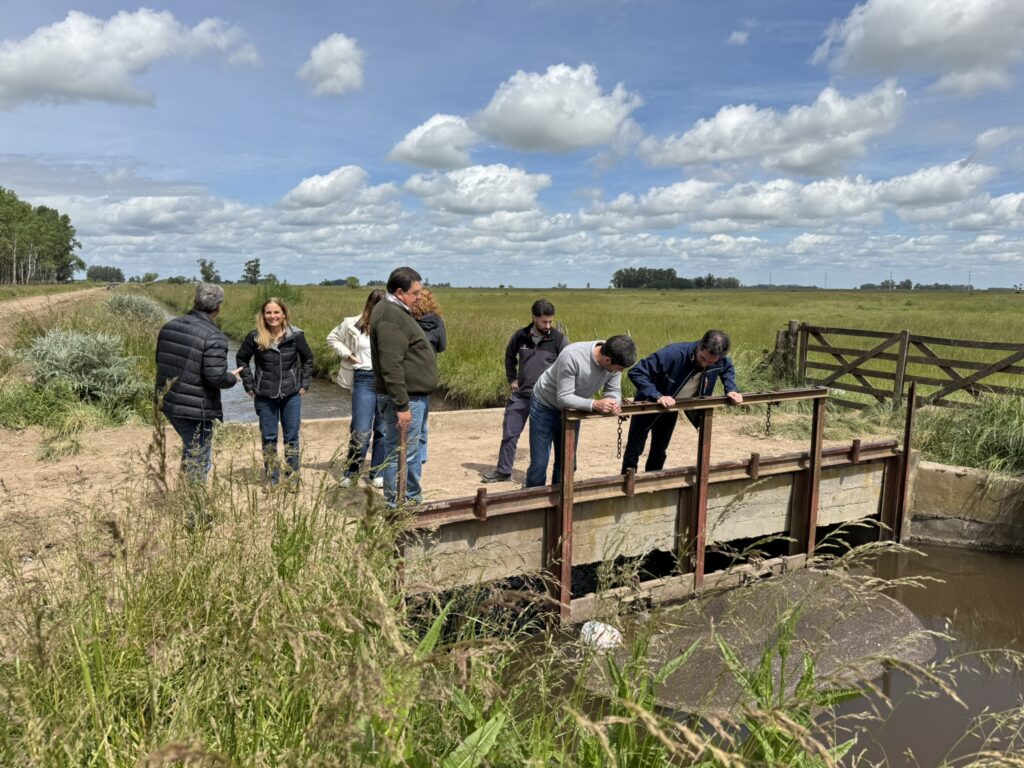
The team visits an important weir that protects the city Ayacucho from flooding
The visit was also an opportunity to connect new members in the Blue Deal partnership: as current partnership manager Simon Hofstra prepares for retirement in February 2026, Udo Perdok is stepping into the role, ensuring continuity in this vital Dutch-Argentinian collaboration.
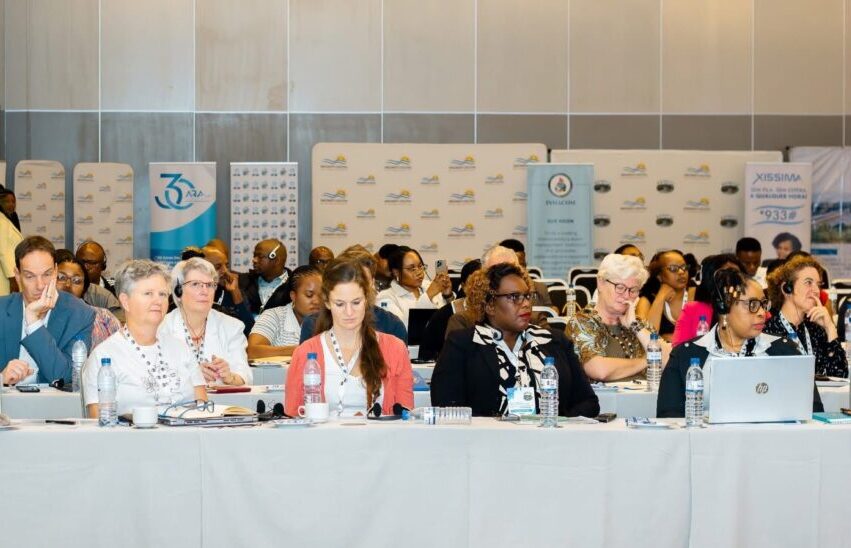
At the beginning of November, the 8th REMCO – the three-country conference on River and Environmental Management Cooperation – took place in Maputo, Mozambique. Hosted by our water colleagues in Mozambique, REMCO is a powerful regional platform for co-learning, innovation, and inclusive decision-making.
More than 150 participants from Mozambique, Eswatini, and South Africa – the countries that share the Incomati-Maputo river basin – came together to strengthen resilience and governance in transboundary water management. Alongside the regional water authorities, Dutch and German water partners also joined the discussions, underlining the international commitment to sustainable water solutions. (See our earlier news on the Remco conference)
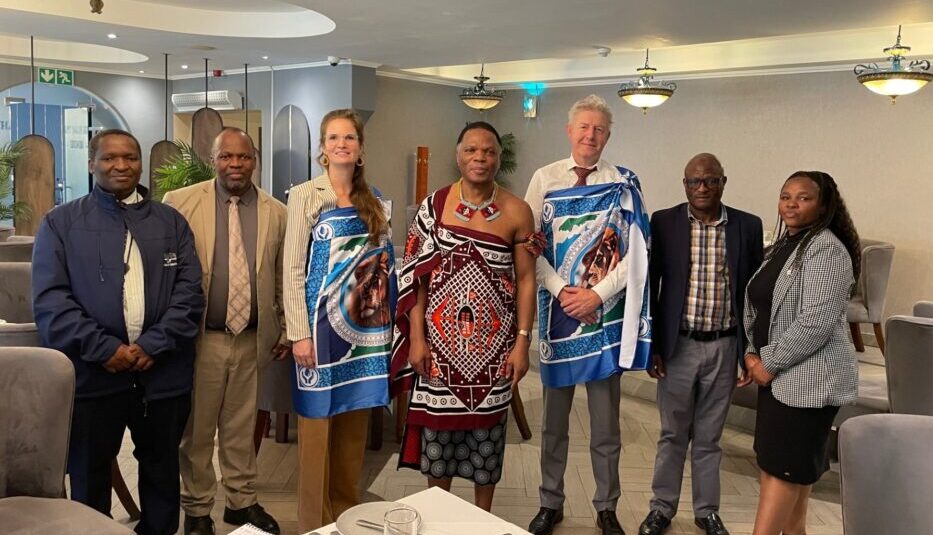
Blue Deal Eswatini’s Celine de Visser and Herbert Bos receive a ‘Kanga’ during a meeting with Eswatini’s Minister of Natural Resources and Energy, together with his Under Secretary, Advisor and Legal representatives
Blue Deal Eswatini: Building Capacity and Collaboration
The following week, Blue Deal Eswatini travelled west to continue the work on knowledge exchange, transboundary water management, capacity building, organisational development, and stakeholder participation.
A key message during this visit: all end users of surface and groundwater must contribute to the work of the water authorities. This principle is implemented together with the Joint River Basin Authorities (JRBA) Project Board – the central organisation coordinating five regional water authorities. Contributions are based on capacity and benefit: small farmers pay little, large companies pay more.
At the same time, the sector faces the challenge of becoming more efficient – having to “do more activities with the same number of people.” We had the privilege of discussing this challenge and necessity with the Minister of Natural Resources and Energy, HRH Prince Lonkhokhela, who honoured us by personally presenting a traditional Kanga as a token of appreciation (see picture).
Next Steps for Organisational Optimisation
During the visit, meetings were also held with the JRBA board and staff, where the team engaged in fruitful discussions with the working committee about the need for and next steps in optimising the organisation of the water sector. This was concluded by providing feedback to JRBA management to prepare follow-up actions together with the Blue Deal.
Looking ahead
In the coming years, the cross-border component of cooperation between South Africa, Eswatini, and Mozambique will become increasingly important. Strengthening governance, improving efficiency, and ensuring inclusive participation will remain at the heart of this collaboration.
This week, the 8th International REMCO Conference is taking place in Maputo, Mozambique. The event brings together over 150 participants from Mozambique, Eswatini, and South Africa - three countries that share the Incomati–Maputo basin - to strengthen resilience and governance in transboundary water management.
REMCO conference 2025
At the heart of REMCO lies the technical and operational exchange between the three catchment management authorities:
ARA-Sul IP (Administração Regional de Águas do Sul – Mozambique)
JRBA-PB (Joint River Basin Authorities Project Board – Eswatini)
IUCMA (Inkomati-Usuthu Catchment Management Agency – South Africa)
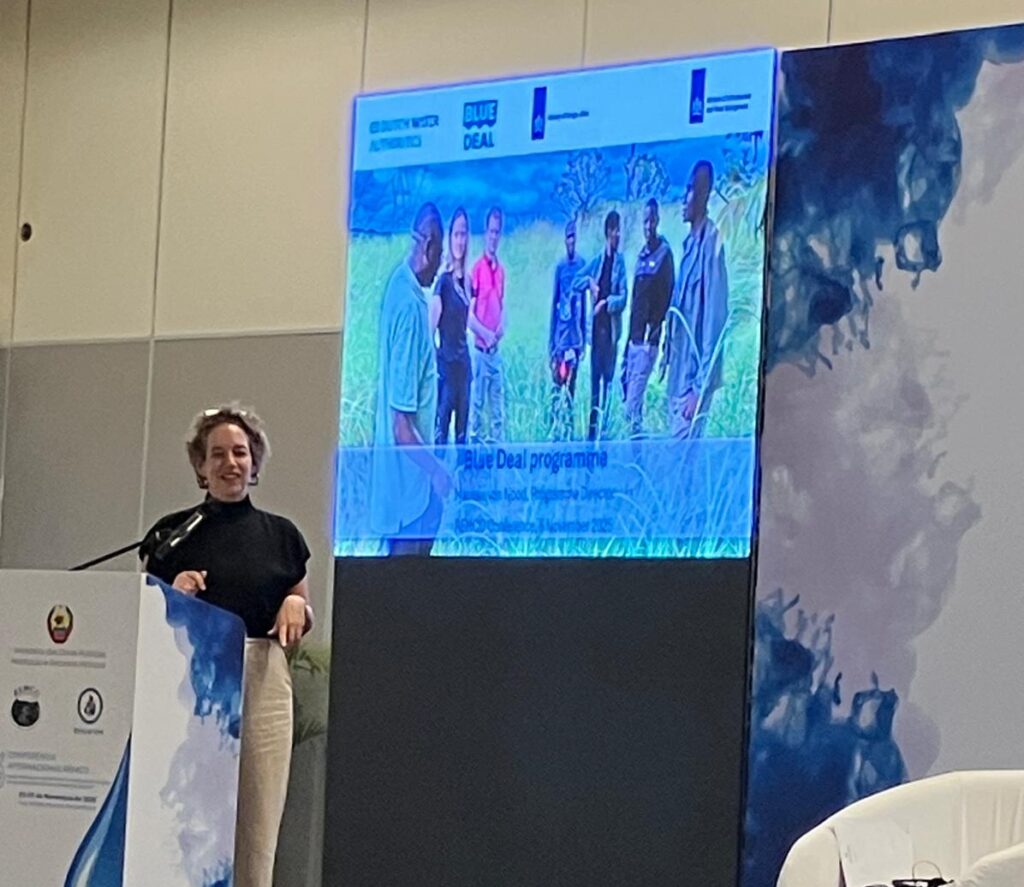
Marieke van Nood presents at the REMCO conference
Together, they collaborate on real-world water management challenges, such as:
Improving flood early warning systems, especially after the flash floods in the Incomati Basin in 2023
Implementing equitable water pricing
Sharing hydrological data and models to improve forecasting and preparedness
Jointly developing cross-border projects that benefit local communities
Blue Deal’s role
The Blue Deal partnerships in Eswatini, Mozambique, and South Africa actively support these authorities on these topics. During the conference, they facilitated knowledge exchange, helped shape discussions and committed to following up on the agreements made. Blue Deal’s Ethiopia Awash partnership also joined the conference, sharing key insights during a discussion on Basin Information Systems. This makes REMCO a powerful regional platform for co-learning, innovation, and inclusive decision-making.
Spotlight on inclusion
To support the topic of inclusive decision-making, the first day of the conference centered around women and youth in water management. Climate and water-related challenges often have the greatest impact on vulnerable people and the communities they live in. Tanah Meijers, Focal Point of Social Inclusion within the Blue Deal, emphasised that these individuals should not only be seen as stakeholders in solutions, but should be actively engaged as partners in designing those practical solutions.
As highlighted by Marieke van Nood, Blue Deal’s Programme Manager during her speech on the final day of the conference: “Together, we make transboundary water management practical and operational. And that is key for a future-proof Incomati – Maputo river basin”.
Water and food are deeply interconnected. Without reliable access to clean and sufficient water, food production cannot thrive. Across the world, climate change, population growth, and competing water demands increasingly disrupt this balance. Sustainable water management is therefore the foundation for long-term food security.
The Blue Deal programme consists of partnerships between Dutch Water Authorities and regional water institutions in 15 countries and works to restore and maintain this crucial water balance. By strengthening regional water authorities and supporting integrated water resource management (IWRM), the Blue Deal contributes to fair, efficient and sustainable use for both people and nature.
While food security is not the primary goal of the programme, many partnerships contribute directly or indirectly to more resilient agricultural systems. Through smarter irrigation, fair water allocation, and ecosystem restoration, we help improve water stability, boost agricultural productivity, and strengthen rural livelihoods.
Four Pillars of Water and Food Security
The Blue Deal contributes to food security through four interconnected pillars that together ensure a balanced and resilient water system:
Insights in the water system and availability: Water quality and quantity monitoring, water balance modelling
Increasing water availability & reliability: Water allocation plans, implementing water retention measures (often Nature-based)
Access & inclusion – ensuring equitable water distribution and strengthening participation of (smallholder) farmers, women, and marginalised groups.
By working together on these pillars, the Blue Deal promotes the establishment of a sustainable balance between water use for agriculture, ecosystems, cities and (rural) communities. In this special news item, we highlight inspiring work in Burkina Faso, Peru and Eswatini – where Blue Deal initiatives are making a tangible impact on the water-food nexus.
Burkina Faso: Inclusion, Gender Equality, and Nature-Based Water Solutions
In Burkina Faso, the Blue Deal partnership and the complementary ECDD–GIRE programme jointly promote social inclusion, gender equality, and sustainable water management to enhance food security.
Pictured:The project in Burkina Faso supports local farmers and women empowerment
Empowering Farmers and Women – The project operates across five water regions, supporting local water committees and agricultural cooperatives to organise farmers around equitable irrigation access. Women, often key contributors to rural economies, are empowered through capacity building and participation in water management.
Climate-Resilient Water Infrastructure – The programme rehabilitates reservoirs and applies erosion-control measures such as sand traps, hedges, and reforestation. These protect farmland, improve soil moisture, and increase productivity.
Nature-Based Solutions for Soil Fertility – Business cases for Nature-Based Solutions (NbS) are being developed to scale sustainable land management and agroforestry. In 2023, interventions with Fertilizer Trees covered 48 hectares, improving soil fertility and moisture retention.
Peru: smart irrigation and capacity building
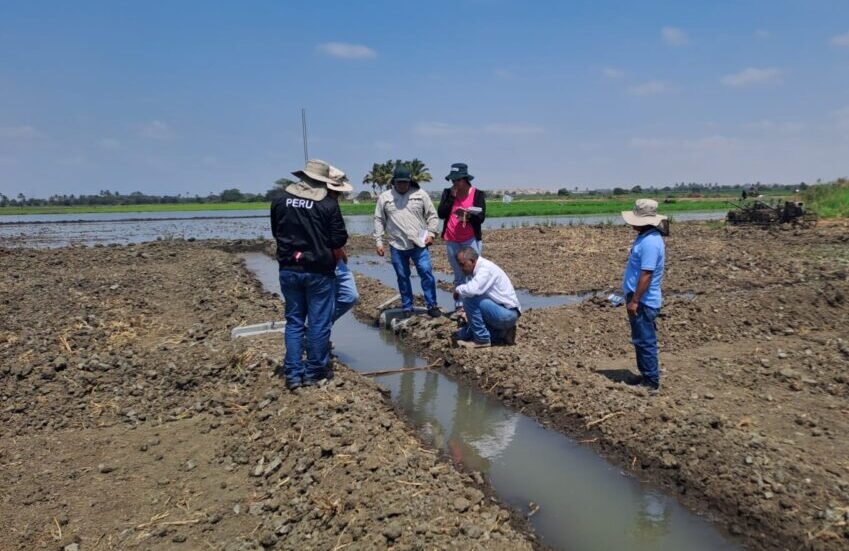
In northern Peru, agriculture, particularly rice cultivation, depends heavily on irrigation, making it vulnerable to drought and inefficient water use. The Blue Deal partnership focuses on climate adaptation and innovation in water management to strengthen food security.
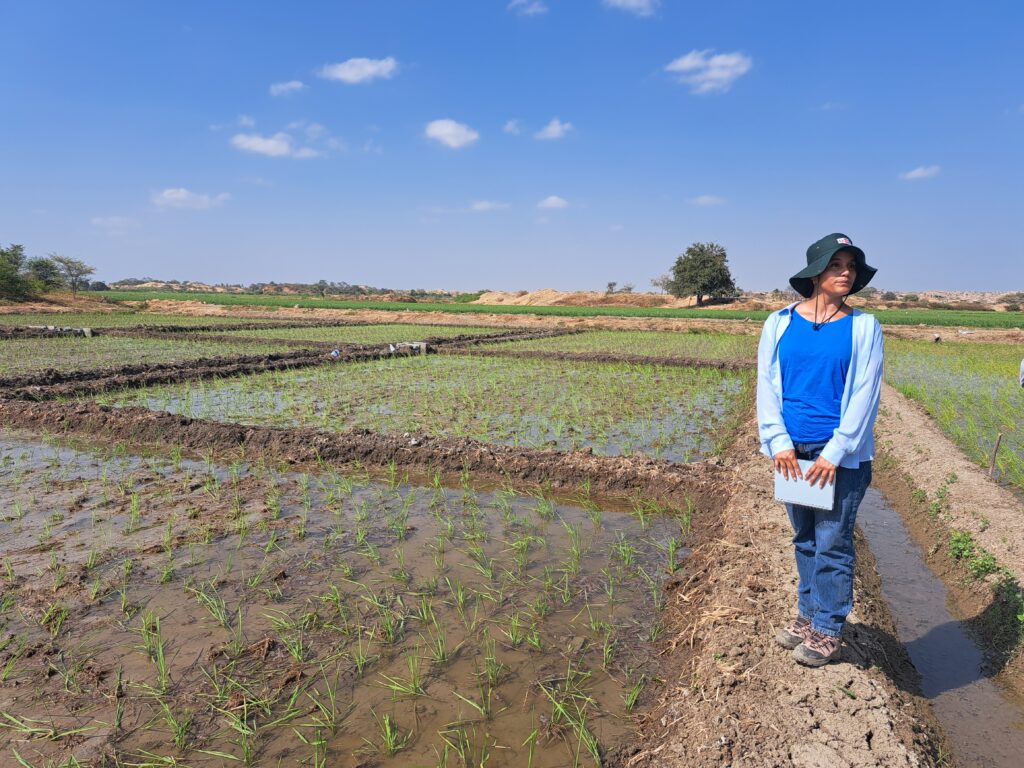
Pictured:Rice study in Piura, Peru
Optimising Water use for Rice Production: Research in the Piura region shows that water use for rice can be reduced even increasing yields. In 2025, the National Water Authority (ANA), the National Agrarian Institute (INIA), and local universities are guiding young researchers to standardize efficient irrigation volumes in the Chira Valley.
In the valley 12000 hectares of rice cultivation are irrigated with 17000 m3/ha/agricultural season. According to the research the new estimated volume is 14000 m3/ha/agricultural season. This represents a water saving of 36 million of m3 per agriculture season and considering that in the Chira valley two seasons are carried out, this will be 72 million m3 per year, with a yield increase of 12%!
Capacity Building and Research: Blue Deal’s scholarship programme supports local researchers and disseminates evidence-based irrigation strategies to farmer organisations, ensuring widespread adoption.
Supporting Ecosystem Services – Collaboration with the Dutch organisation Farm Tree provides technical advice on water retention and reforestation in the highlands of Piura. The partnership also delivers online training on flood prevention and catchment management to help protect downstream banana, lemon and mango farmers plots in Piura and Tumbes.
Pictured:Rice field study in Piura, Peru
Eswatini: Financing innovation and water efficiency for small farmers
In Eswatini, agriculture is highly vulnerable to droughts. The Blue Deal partnership focuses on improving water efficiency and financial access for smallholder farmers, in order to enhance the resilience to climate change.
Pictured:Drip irrigation project in Eswatini
Drip Irrigation for Small Farmers – KIWI climate experts work with small-scale farmers in the Lomati River Basin to introduce drip-irrigation systems that significantly reduce water consumption while maintaining or increasing yields.
Financing for Poverty Reduction – The partnership developed a bankable proposal to support small farmers in the Lomati Basin, approved by the national government. In collaboration with the Eswatini Development Agency, it ensures that smallholders have access to the financial resources needed to adopt water-efficient technologies sustainably.
Data-Driven Agricultural Planning – In 2024, a land-use mapping exercise using satellite imagery and farmer surveys provided essential data for better irrigation planning and alignment with water availability.
Building a Resilient Water-Food Nexus
Across these partnerships, the Blue Deal demonstrates that strengthening water authorities and involving local communities in decision-making are key to achieving both water security and food security. By promoting efficient irrigation, equitable water allocation, gender inclusion, and nature-based restoration, the programme helps restore the essential balance between water, agriculture, and ecosystems.
Each country’s approach reflects local realities, but the shared lesson is clear: sustainable food systems depend on strong water governance. Through the Blue Deal, water authorities and communities worldwide are improving access to water for agriculture, ensuring that future generations can continue to rely on it for life and livelihoods.
The annual European Week of Regions and Cities, taking place in Brussels from 13 to 15 October this year, focuses on the role of Europe’s regions and cities. Representatives from nearly all Dutch water authorities are travelling to Brussels to influence EU water policy, attract investments or project partners, exchange knowledge, and strengthen the international position of the Dutch water authorities among European policymakers.
“Dutch water authorities work closely with European partners. Moreover, European legislation influences national regulations and directly affects the work of Dutch water authorities,” says Luzette Kroon, board member responsible for international affairs at the Unie van Waterschappen (Dutch Water Authorities). “This year, for the first time, the Unie is organising a joint programme for all water authorities during the European Week of Regions and Cities (EWRC). Water holds a prominent place in the new European mandate, with the Water Resilience Strategy as a starting point. In the coming period, several key topics will also feature on the European agenda, including public procurement, the circular economy, REACH, PFAS, and climate adaptation.”
Intensive programme On Monday, participants will focus on familiarising themselves with the Brussels policy landscape and current themes. This includes a discussion with Mendeltje van Keulen, researcher and former adviser to the Dutch House of Representatives, who has extensive experience with EU decision-making processes. There will also be an exchange with the German water sector, and discussions on the new Urban Wastewater Treatment Directive and Extended Producer Responsibility (EPR).
On Tuesday, the focus shifts to engaging with the Brussels network. Meetings are scheduled with Ingeborg ter Laak (Member of the European Parliament for the CDA), Robert van Asten (Member of the European Committee of the Regions, D66), and Jessika van Leeuwen (MEP for BBB). There will also be a session on the Water Resilience Strategy. Under the leadership of watergraaf* Stefan Kuks of the Vechtstromen Water Authority, dijkgraaf* Dirk-Siert Schoonman of the Drents Overijsselse Delta Water Authority will engage in a discussion with representatives from Rabobank, NWB Bank, and the European Commission’s Directorates-General for Environment and Climate Action on the urgency and approach to water resilience in the face of climate change.
On Wednesday, the water authorities will collaborate with provinces and municipalities. Several speakers from regional governments, the European Commission, and the European Parliament will contribute to these discussions.
Dutch Water Authorities in Europe Under the name Dutch Water Authorities, the Dutch regional water authorities collaborate with European and other international partners. In Brussels, the Unie van Waterschappen and the Association of Dutch Water Companies (Vewin) jointly represent the interests of Dutch water authorities and drinking water companies within the European Union.
You are invited to the webinar and roundtable discussion on effluent reuse: European opportunities for a water resilient future on 20 November 2025 | 15:00-16:00 online, 16:00-16:30 Hybrid.
November 20 | 15:00–16:00 CET Online, 16:00–16:30 CET Hybrid
Dutch Water Authorities encourages knowledge exchange and cooperation between European countries. To kickstart this exchange, we are launching a new initiative and organising a series of webinars with experts from different countries!
The first webinar will focus on effluent reuse. Drought, freshwater availability, and regulations are putting pressure on drinking water supplies across Europe. At the same time, treated wastewater (effluent) offers great potential as an alternative source, especially for irrigation and industrial use.
During this webinar, we will explore the opportunities and challenges of effluent reuse, drawing lessons from international experiences. Rather than focus on technology and success stories, we will dive into how to overcome the challenges posed by this emerging issue. Experts from Spain, Portugal, and the Netherlands will share their insights and questions about the use of effluent in different contexts:
Spain: Barcelona is facing increasing drought. Effluent is being explored as an alternative water source, but this also brings new challenges
Portugal: In the Algarve, a water reuse programme has been initiated. Experts will explain how effluent use can be implemented effectively
The Netherlands: In Westerschouwen, Zeeland, effluent could be useful for irrigation. What roles and responsibilities are involved, and what does the future of this initiative look like?
We will conclude with an interactive roundtable discussion, where we will jointly reflect on next steps for the Netherlands and Europe. Please register via the link below:
Last week in Nairobi, Kenya, the second batch of Blue Deal Young Experts came together for their second-year return training - a week designed to reflect, grow, and connect.
Exploring strengths and leadership
Throughout the week, the Young Experts focused on identifying their personal values, exploring how these relate to their future goals, and how to apply them in their (personal) leadership. Sessions on facilitation skills, delegation, and responding vs. reacting helped participants sharpen their leadership toolkit.
One key insight was the magic of delegation – not just assigning tasks, but ensuring the right support is in place. Sometimes, this even means delegating upward: asking your manager for the resources or backing needed to succeed. Another powerful takeaway was the difference between reacting impulsively and responding thoughtfully – a subtle shift that can make a big difference in how leadership is perceived.
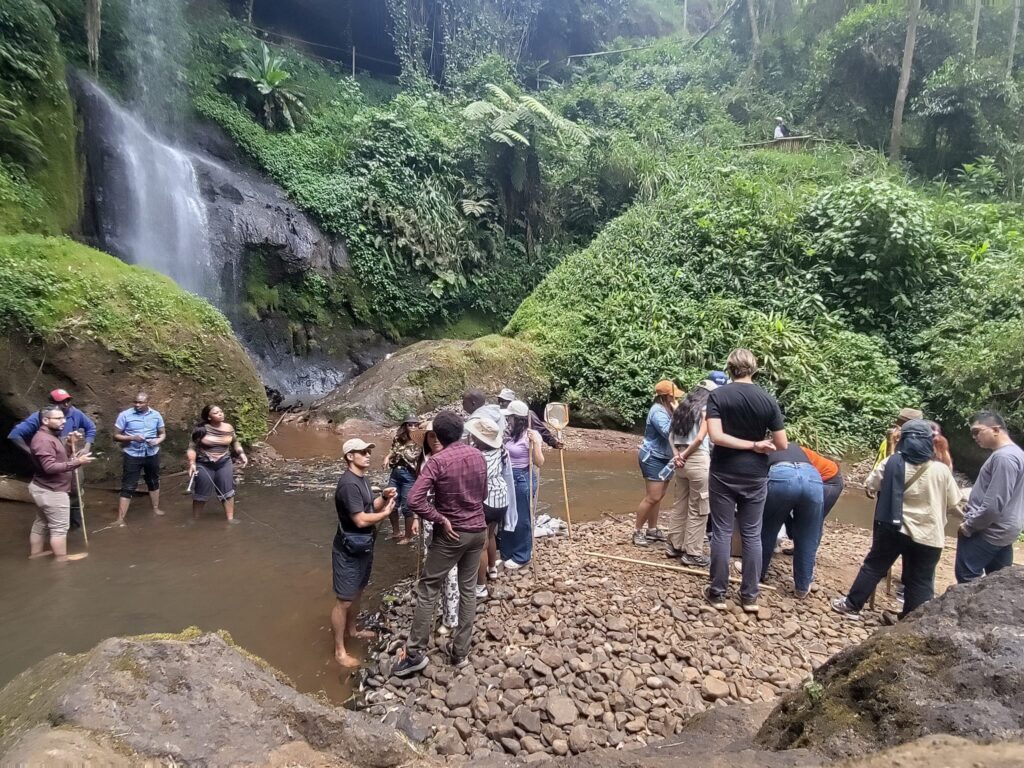
Pictured:Focused on the tray in front of them, a group of Young Experts is identifying insects in the water. Other Young Experts measure the dissolved oxygen and pH of the water. The Blue Deal Young Experts take part in a river health assessment at Twin Falls near Thika Dam, together with the local community as part of the excursion in their second year return training.
Hands-on learning at Twin Falls
Midway through the programme, the Young Experts headed out for a hands-on river health assessment at Twin Falls near Thika Dam. Together with the local community, they identified aquatic insects, measured dissolved oxygen and pH levels, and discussed how to make such assessments inclusive and impactful.
The group reflected on questions like:
How do we involve local communities meaningfully?
What criteria should guide participant selection?
How are results shared and used?
Pictured:The Young Experts perform a river health assessment with the local community
This fieldwork brought theory into practice and sparked important conversations about community engagement and environmental monitoring.
Climate action with ClimateFresk
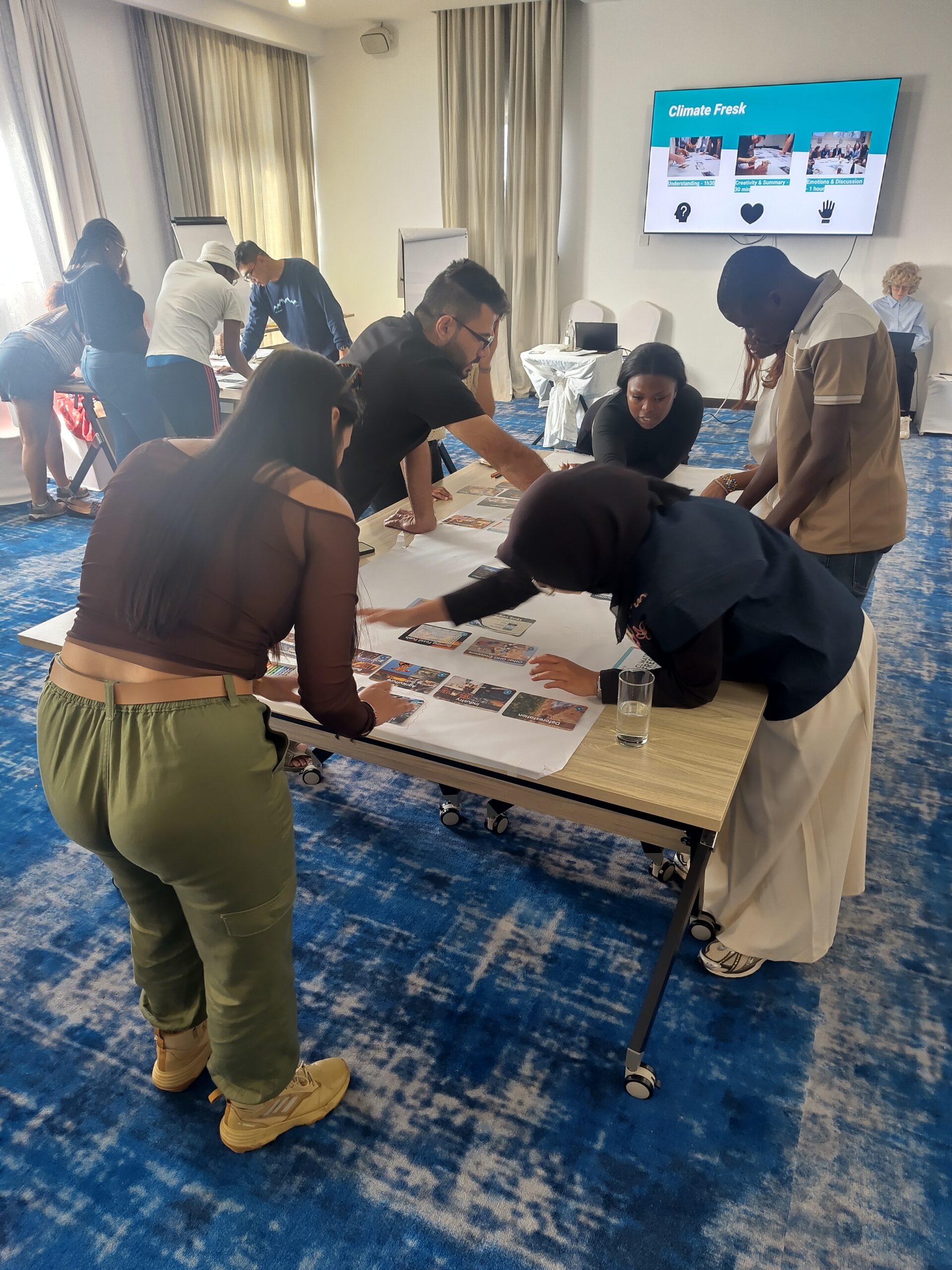
On the final afternoon, the group participated in a ClimateFresk workshop, exploring the causes and consequences of climate change. They brainstormed actions that could be taken at different levels; from personal choices to organisational strategies to mitigate and adapt to climate impacts within the Blue Deal programme.
Pictured:The Young Experts brainstorm ideas to mitigate climate change in the ClimateFresk workshop
Connecting with the network
The training week closed with a networking dinner with Young Experts based in Nairobi and representatives from the Embassy of the Kingdom of the Netherlands in Kenya, including YEP alumnus Jelmer van Veen, now First Secretary for Water, Food Security and Climate at the Embassy.
Ready to influence
Whether the discussions were about personal strengths, leadership, or climate action, one Young Expert summed it up beautifully: “I have more control than I think. And I can influence in different ways.”
With these insights, the Young Experts are ready to continue growing and making meaningful contributions to their organisations and to the ambitions of the Blue Deal programme.
In early summer, the Blue Deal Theewaterskloof team carried out a working visit to Grabouw, South Africa, aimed at supporting sustainable solutions in water management, education, and waste processing. The visit was marked by strong collaboration with local partners, focusing on knowledge exchange, relationship building, and practical steps to address shared challenges.
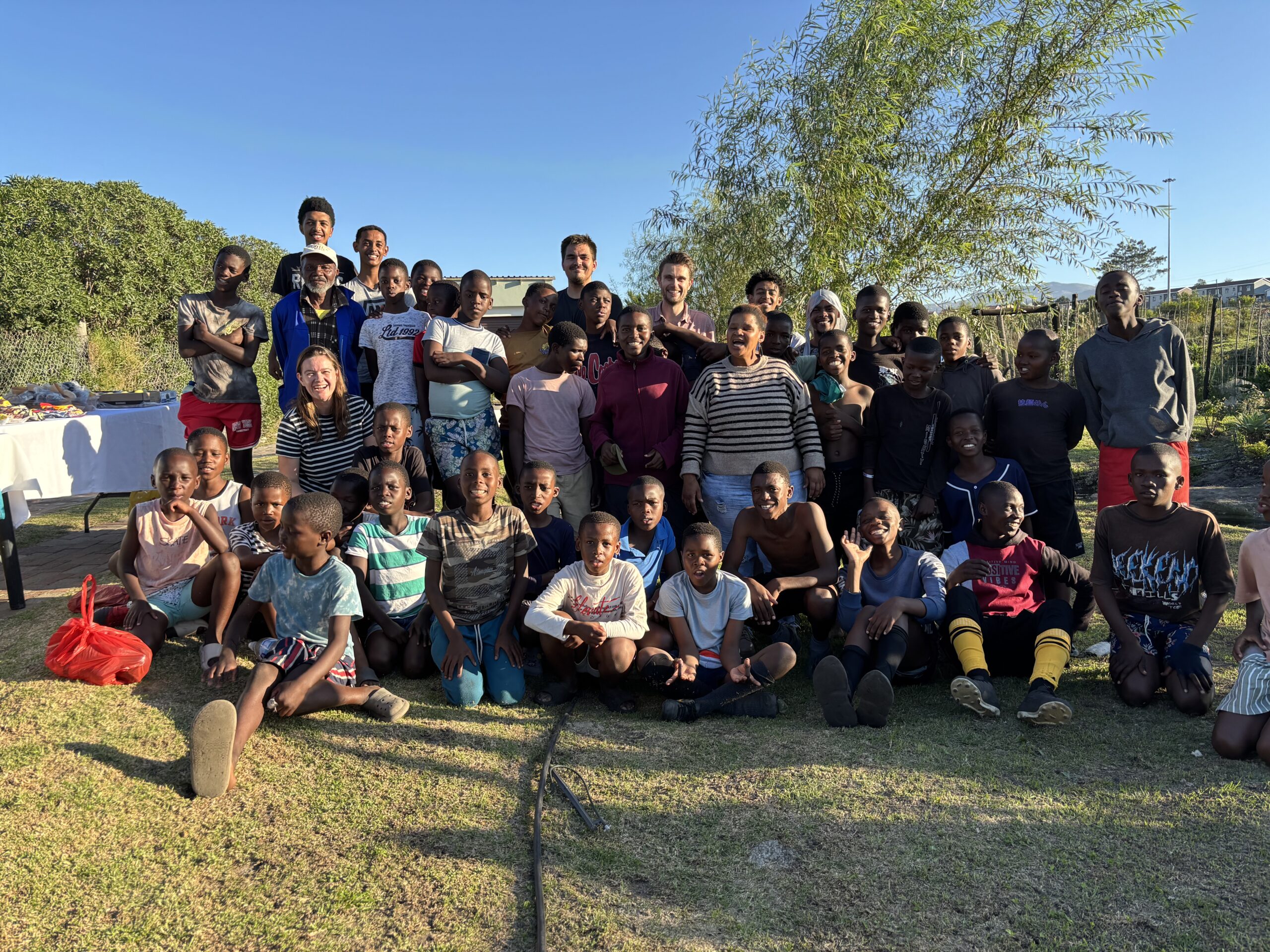
Collaboration in action One of the key outcomes of the visit was the initiation of a water-focused education programme with local schools in Grabouw. This programme aims to raise awareness among youth about water conservation and environmental stewardship.
Pictured: Blue Deal representatives with local school children in Grabouw
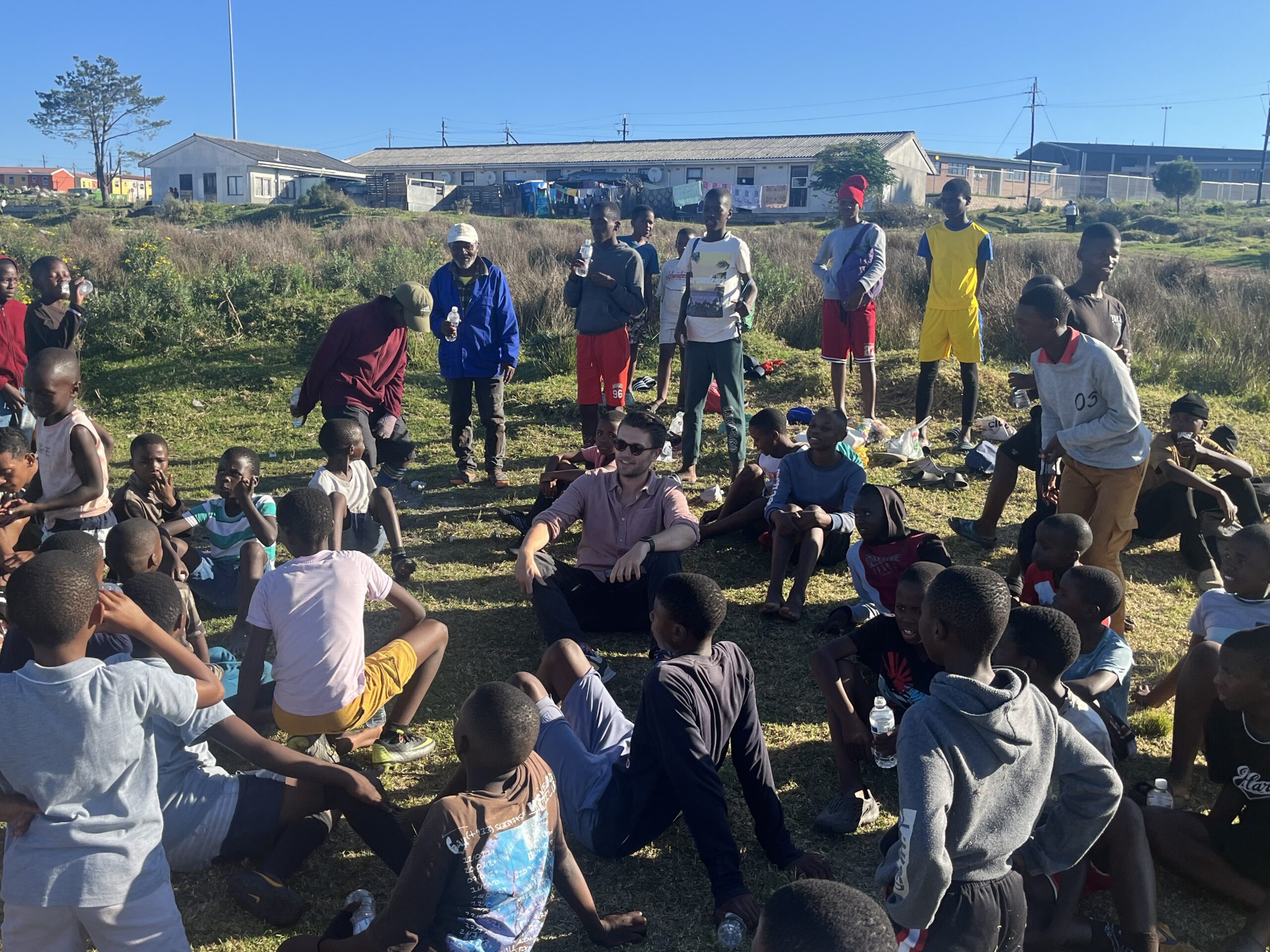
Youth engagement through sport Another effort focused on the younger generation took place in an informal settlement, also in Grabouw. A football match served as a creative platform to engage young people in conversations about waste, reuse, and clean water. This blend of sport, education, and community building proved to be a powerful tool for outreach and awareness.
Pictured:A football match sparked conversations with young people about waste, re-use and clean water
In parallel, discussions with the Grabouw Water Users Association explored ways to better structure and manage local waste streams. These conversations yielded valuable insights and laid the groundwork for future follow-ups. A knowledge exchange session with WWF South Africa highlighted the critical link between water safety and nature conservation, reinforcing the importance of integrated approaches to environmental management.
The team also observed impactful Citizen Science efforts led by BOCMA, including the involvement of Young Expert (YEP) Jordaan Asefi and two community members in the South African Scoring System (SASS) river health assessments. A Clear River Campaign hands-on clean-up at a tributary of the Palmiet River with Deputy Minister Seitlholo was another noted highlight. These activities are helping to build local capacity and foster community ownership of water resources.
More Blue Deal South Africa news: The Theewaterskloof Blue Deal project is just one of the South Africa Blue Deal projects, and there is much more progress to be shared! For an overview of news from the Msunduzi-uMneni project, Blesbokspruit or Vredefort Dome projects, see the most recent Blue Deal South Africa newsletter.
In June 2025, a delegation from Mali - including representatives from the Ministry of Sanitation, Environment and Sustainable Development, ANGESEM, SNV Mali, and the Embassy of the Netherlands in Mali - visited the Netherlands as part of the Blue Deal Mali partnership.
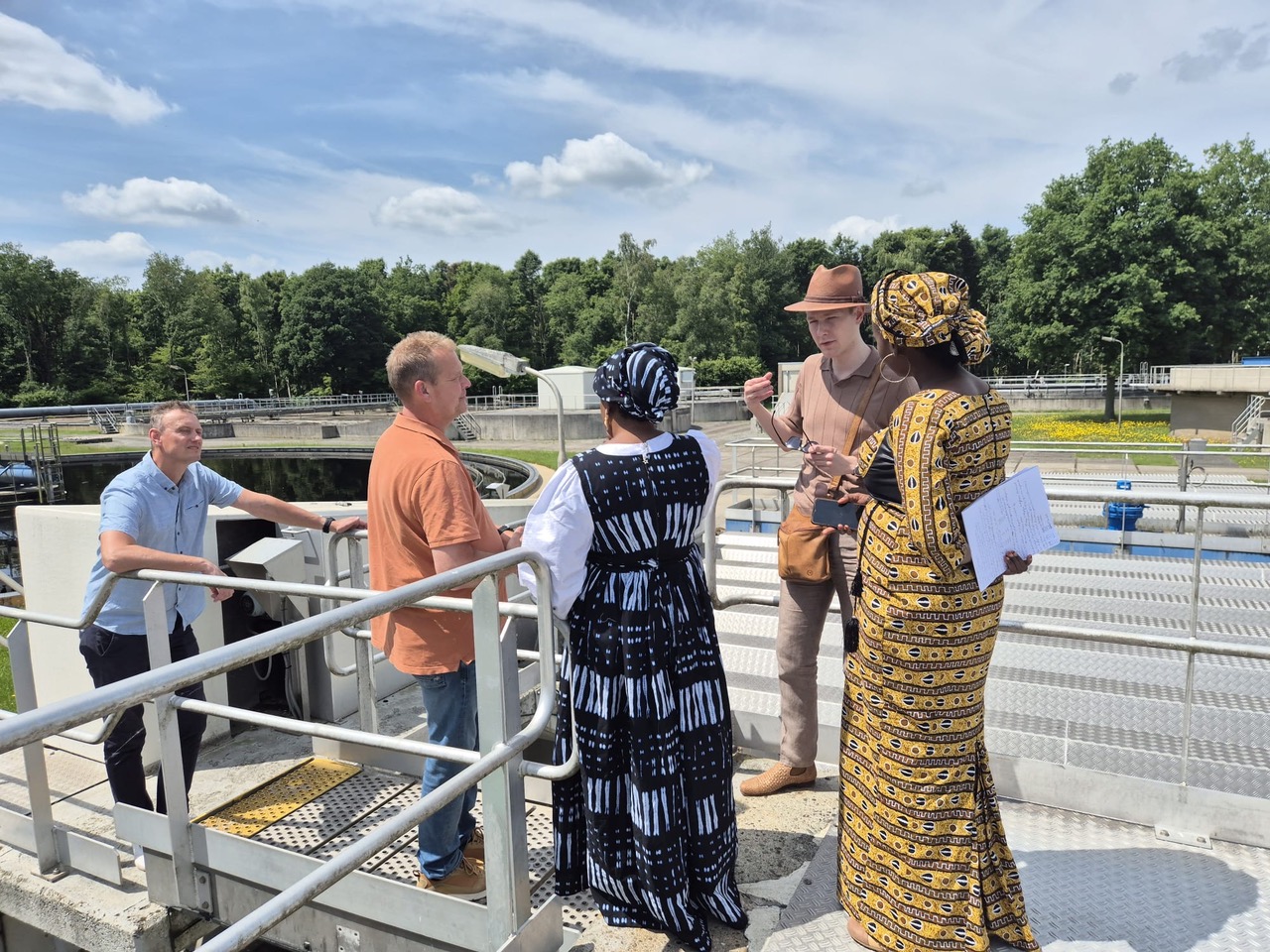
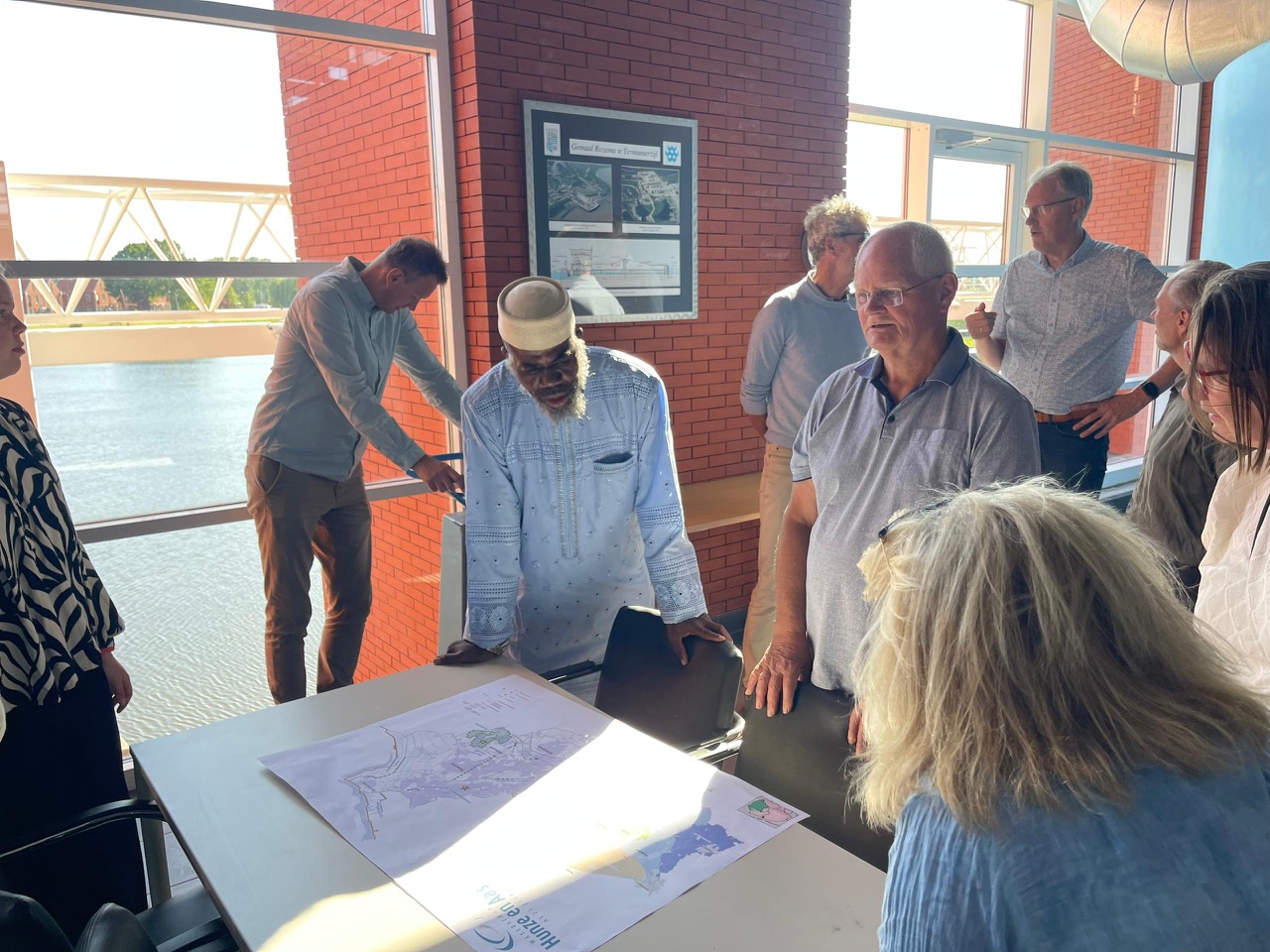
Exchange Mission to the Netherlands: Building ANGESEM’s Capacity The work visit focused on strengthening ANGESEM’s technical and organisational capacities through interactive workshops, site visits to wastewater treatment plants, and hands-on training. Laboratory technicians sharpened their skills at Waterschap Hunze en Aa, while operators gained practical experience at facilities managed by Hoogheemraadschap Hollands Noorderkwartier.
Pictured: Practical exchanges at Dutch wastewater treatment facilities
A leadership workshop hosted by Waterschap Rivierenland provided space to reflect on and improve ANGESEM’s management charter. Aside from these practical visits, the delegation also met with funders – Netherlands Enterprise Agency and NWB Fonds – to discuss the upcoming dyeing project supported by SNV Mali, with involvement from the Dutch Ministry of Foreign Affairs.
This exchange laid a strong foundation for more sustainable and efficient wastewater management in Mali.
Pictured:A visit to Dutch water authority Hunze en Aa
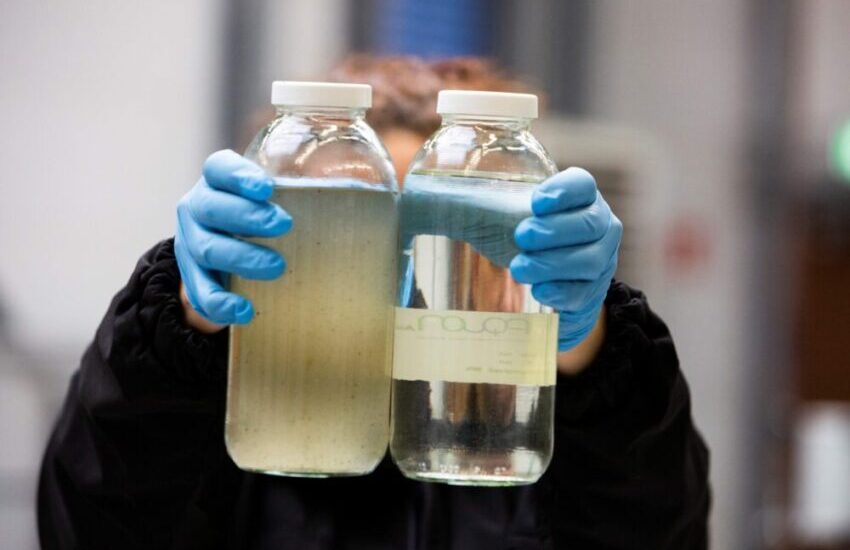
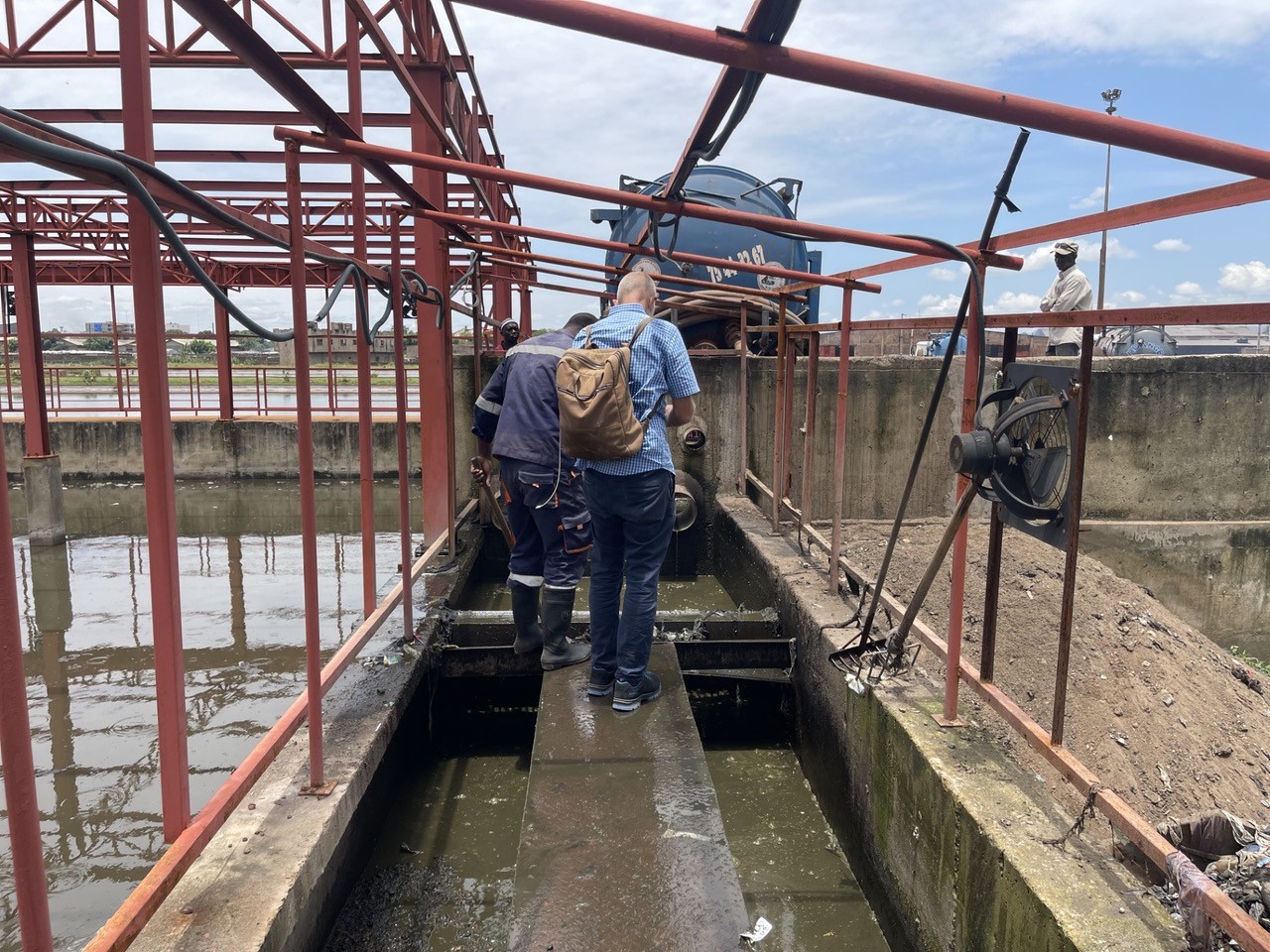
Expert Visit to Mali: Diagnostic Assessment of Bamako’s Treatment Plants To complement the exchange, Dutch wastewater expert Dirk Koot visited Mali from August 12 to 18, 2025, with support from PUM. His work visit involved a thorough diagnostic assessment of ANGESEM’s wastewater treatment plants in Bamako.
The visit concluded with a debriefing workshop, where key challenges and recommendations were shared with ANGESEM’s management, technical departments, and operators. These insights will be integrated into the ongoing Blue Deal partnership, helping to improve the sustainability and performance of sanitation infrastructure – ultimately benefiting both the population and the environment.
Pictured: Dirk Koot visits an ANGESEM wastewater treatment plant in Bamako, Mali
In September, six water professionals traveled to Romania as part of the Tackling Drought project work visit. Central to this working visit was the submission of an Interreg Romania-Bulgaria proposal to the European Commission. This proposal, aiming for €3.5 million in funding, would support the achievement of important goals of the Romanian Blue Deal partnership, including rehabilitation of the Jiet river. This foreseen rehabilitation with Nature-based Solution intends to ensure increased retention of water, in order to ensure sufficient availability of water in dry periods for various purposes including for agriculture.
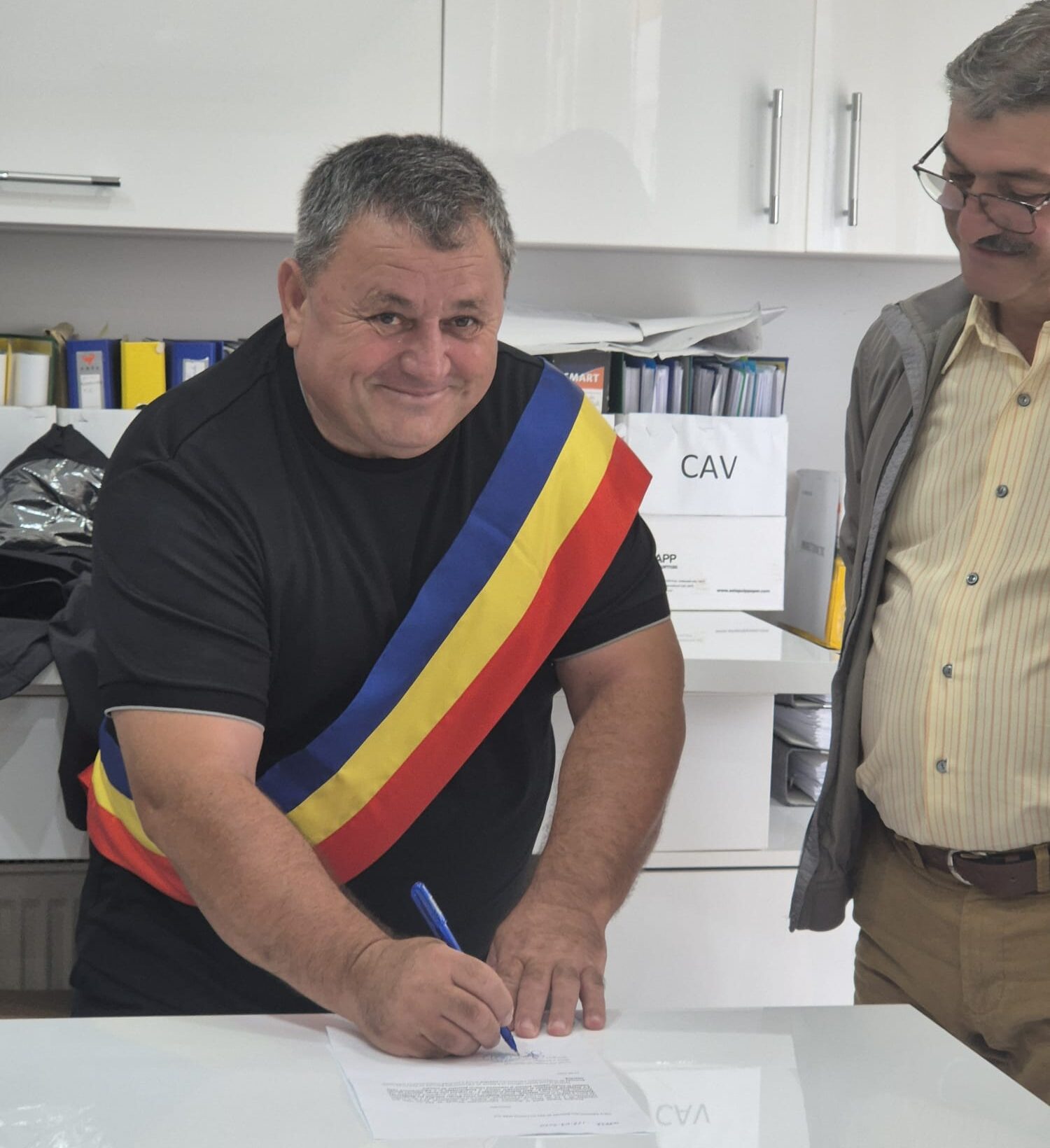
A milestone of the visit included a trip to the town of Rojiste, where the Dutch and Romanian water experts were welcomed by the mayor. He signed a declaration required for a subsidy application, aiming to connect the Jiet river and the Jiu river. Such a connection would improve the water supply downstream of the Jiet River, which is essential for this natural area. The initiative is part of the broader Interreg proposal addressing various Nature-based Solutions in Romania and Bulgaria. Dutch Water Authorities are participating as an associate partner in the proposal.
Pictured: The mayor of Rojiste signs a declaration in support of the Inter-regional proposal
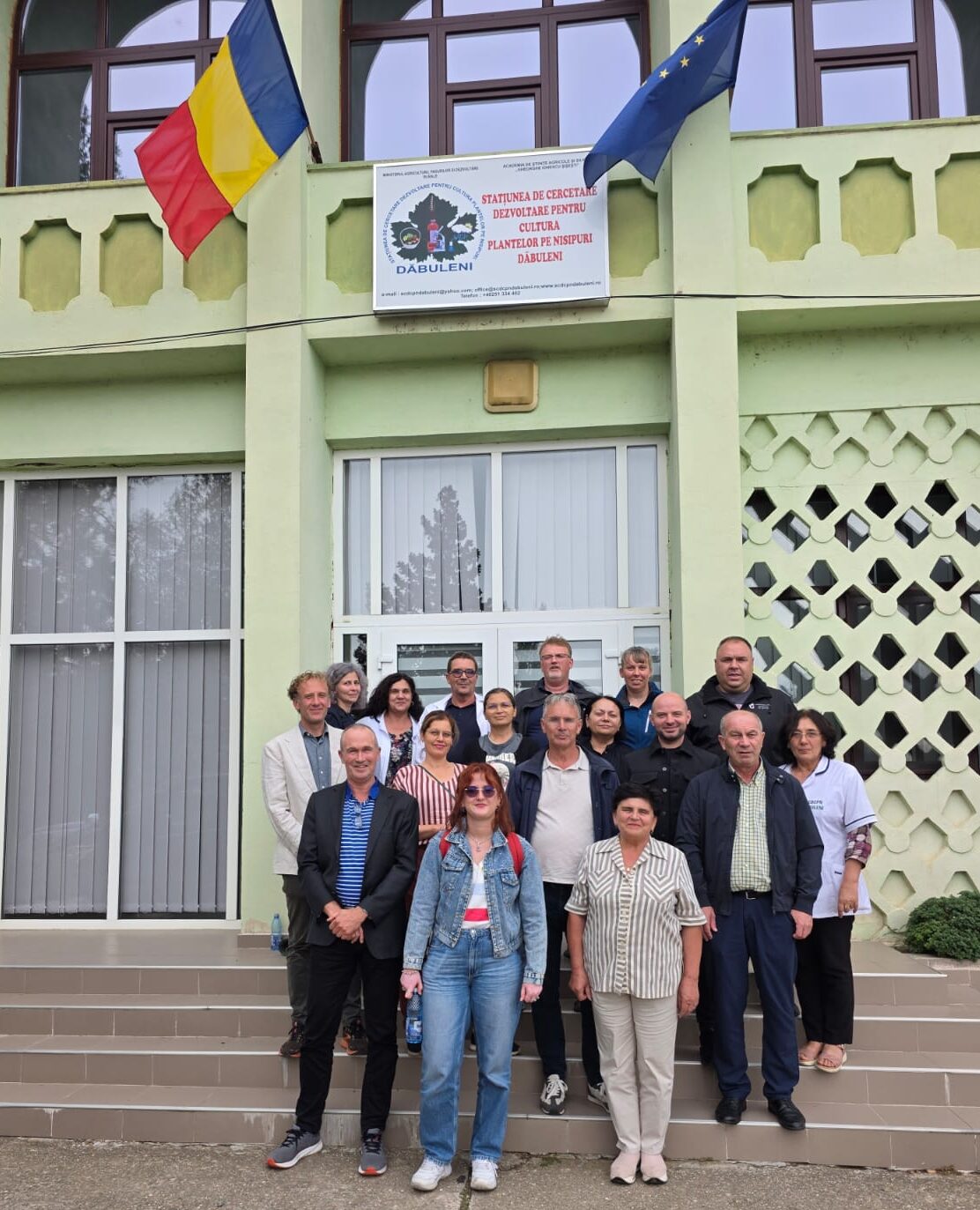
The group also visited the Dabuleni Research Institute. The institute does a lot of research into drought and how to manage this. They are specialised in various drought issues faced by the region, including challenges related to irrigation systems, such as groundwater extraction and what the long-term effects would be on groundwater levels. But also issues related to maintenance of channels, or energy costs related to pumping water from the Danube (and how this should be priced).
Pictured:A visit to Dabuleni Research Institute
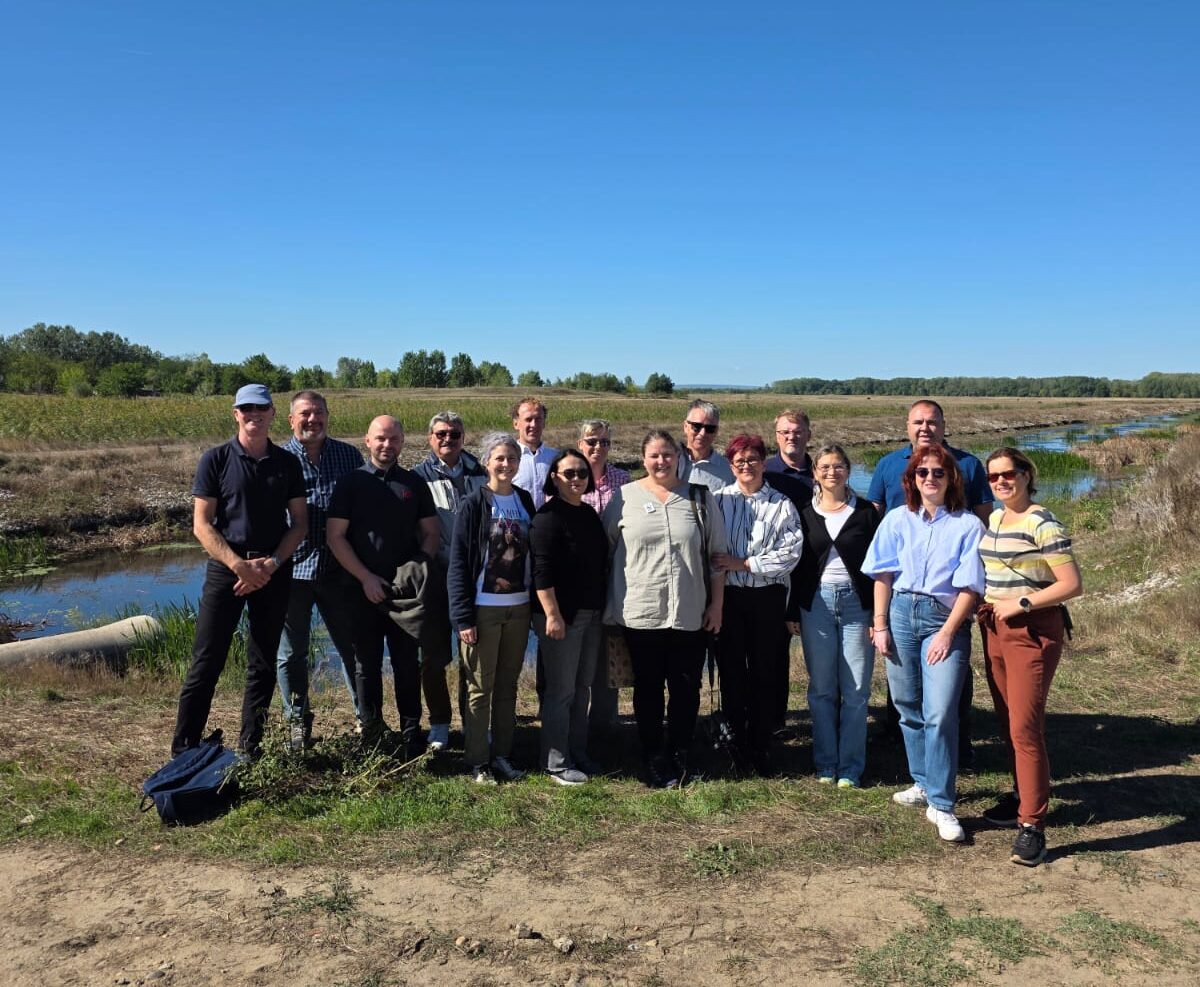
The Dabuleni Research Research Institute is also a partner in a sub-project which the Blue Deal Romania team is collaborating with WWF Romania, restoring a historical water source. Together with our Romanian partners and WWF, the site of this restoration was visited. It is a challenging project that will require extensive stakeholder management with local parties, such as farmers, to discuss topics such as water allocation.
Pictured: Blue Deal Romania and local partners together with WWF during a field visit
Manage Consent
To provide the best experiences, we use technologies like cookies to store and/or access device information. Consenting to these technologies will allow us to process data such as browsing behavior or unique IDs on this site. Not consenting or withdrawing consent, may adversely affect certain features and functions.
Functional
Always active
The technical storage or access is strictly necessary for the legitimate purpose of enabling the use of a specific service explicitly requested by the subscriber or user, or for the sole purpose of carrying out the transmission of a communication over an electronic communications network.
Preferences
The technical storage or access is necessary for the legitimate purpose of storing preferences that are not requested by the subscriber or user.
Statistics
The technical storage or access that is used exclusively for statistical purposes.The technical storage or access that is used exclusively for anonymous statistical purposes. Without a subpoena, voluntary compliance on the part of your Internet Service Provider, or additional records from a third party, information stored or retrieved for this purpose alone cannot usually be used to identify you.
Marketing
The technical storage or access is required to create user profiles to send advertising, or to track the user on a website or across several websites for similar marketing purposes.