Eswatini Ministry visit to the Netherlands leads to promising progress

In early summer, Blue Deal Eswatini welcomed a delegation from the Ministry of Natural Resources and Energy (MNRE) of Eswatini to the Netherlands. The delegation included Ms Mbingo (Principal Secretary), Mr Nxumalo (Under Secretary), and Mr Khoza (Director of the Department of Water Affairs).

The aim of this working visit was to exchange knowledge on the Dutch system of decentralised, multi-level water governance. We also presented the High-Level Dialogue sessions to the Ministry representatives. Two sessions were already held with key stakeholders in the water sector in Eswatini on strengthening water governance to support integrated water resource management (IWRM), climate resilience, and social inclusion. In the upcoming third session, a promising perspective will be presented, along with initial steps for implementation. 
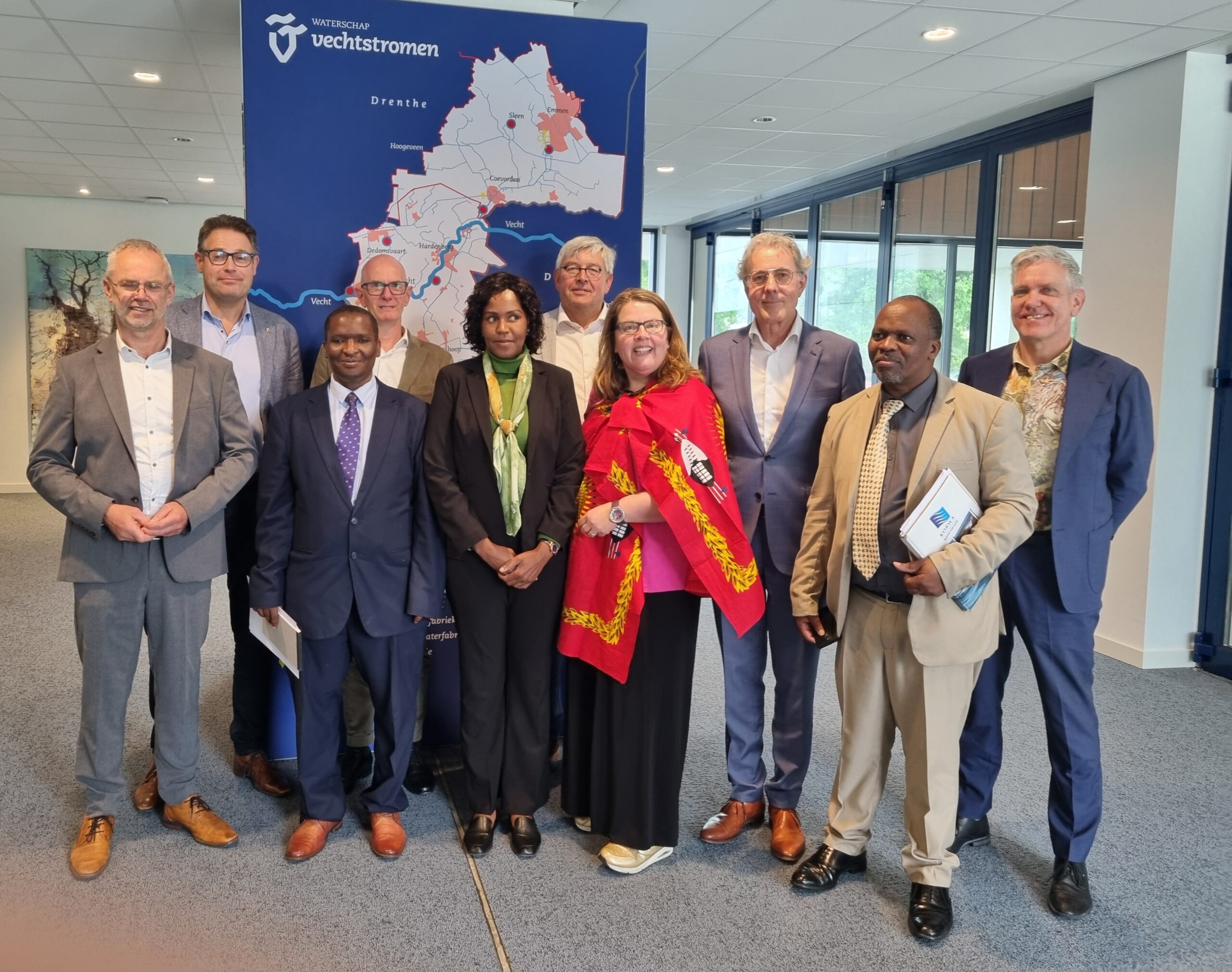
Pictured: The delegation from the Eswatini Ministry visit Waterschap Vechtstromen

Valuable exchanges at the Dutch Water Authorities 
The week began at Waterschap Vechtstromen, where the delegation engaged in a lively exchange with the entire executive board of the water authority. Both parties shared their experiences and challenges around drought management, an issue that is becoming increasingly pressing in both the Netherlands and Eswatini. The discussion proved fruitful for everyone involved.  

Next, the delegation visited Waterschap Limburg, where they explored the importance of clearly defined roles, responsibilities, and mandates – especially when multiple organisations operate in the same area. The visitors also had a close look at the flood early warning systems in place at the water authority’s office.

The visit continued to The Hague, where the delegation met with the Delta Commissioner’s office. Here, the conversation expanded to global water governance challenges, recognising that many issues faced in the Netherlands are also relevant in Eswatini and southern Africa. 

In addition, the delegation met with Blue Deal Programme Management and participated in an in-depth session on the governance of water management led by Professor Herman Havekes of the University of Utrecht.  
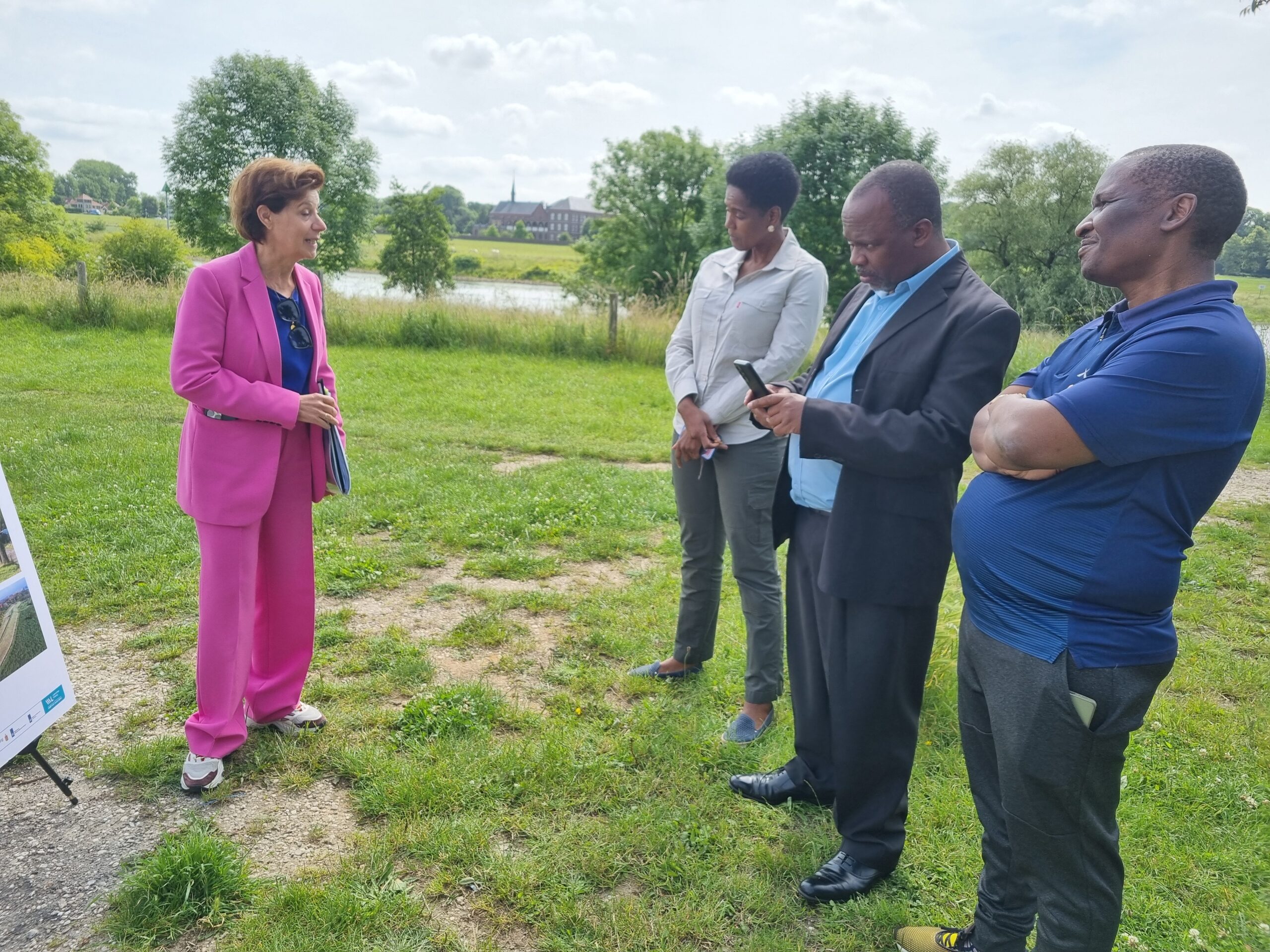
Pictured: The Environmental manager of Waterschap Limburg presents to Ms. Mbingo, Mr. Khoza and Mr. Nxumalo from Eswatini

Promising news: water pricing proposal accepted
Following this visit focused on mutual learning and collaboration in water governance, we received promising news: the Ministry accepted the proposal for water pricing and initiated the next steps for national implementation in Eswatini. This marks a significant step toward improved integrated water resource management (IWRM) and financial sustainability for safe, clean, and sufficient water in Eswatini. 
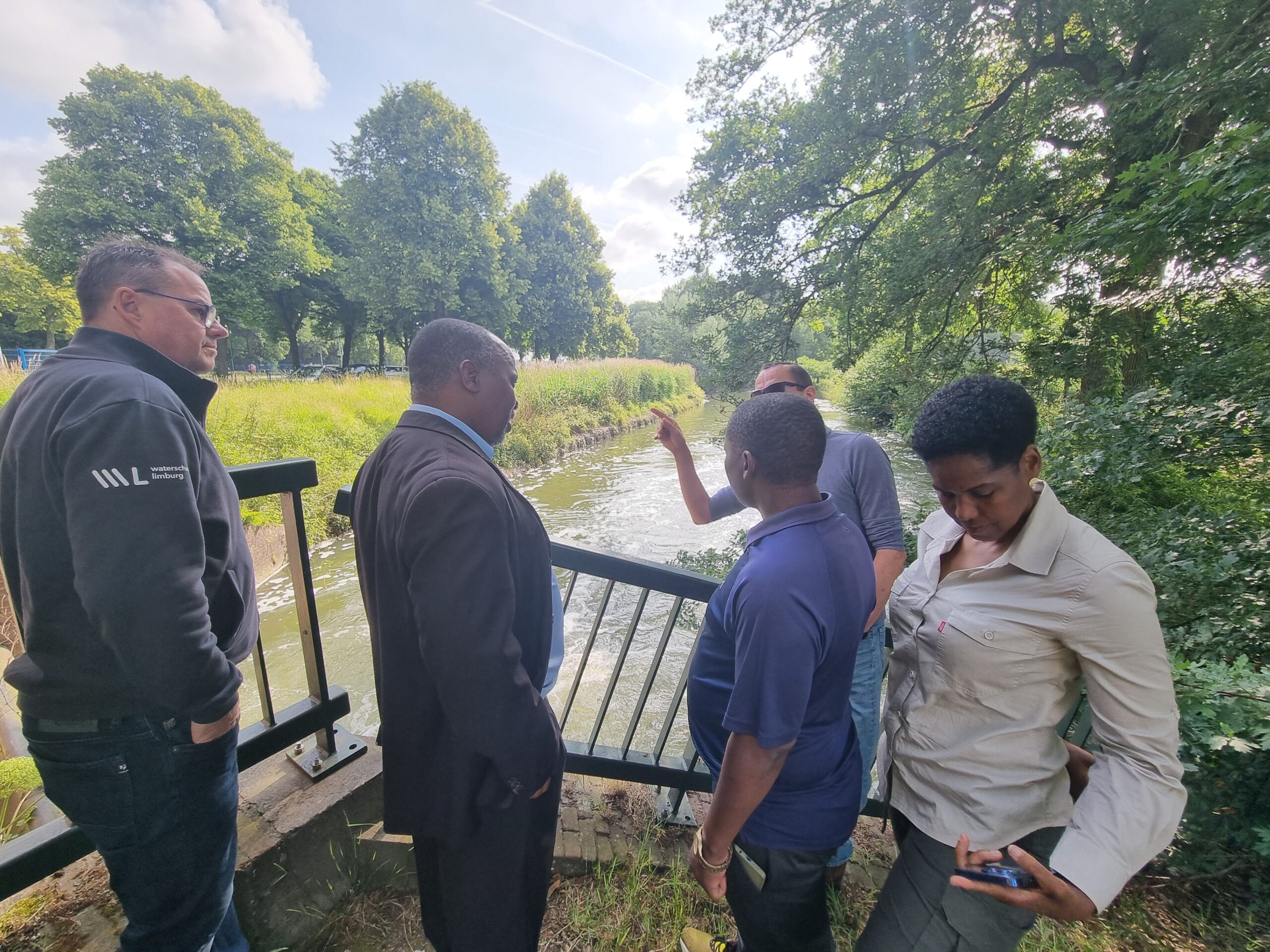
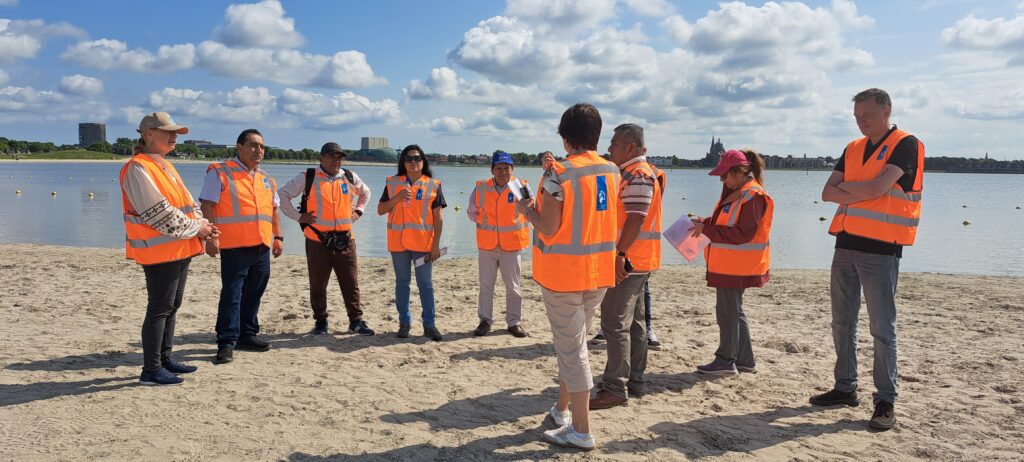
Pictured: A field visit in Waterschap Limburg

Background information: Blue Deal Eswatini 
At the request of MNRE, the Blue Deal has executed the assignment of the High-Level Dialogues in order to get the proper input for the revision of the National Water Act. During 2024 and 2025 there have been interviews and intensive multi day working sessions with key stakeholders in Eswatini, after which Blue Deal Eswatini was requested to produce an action-oriented proposal for a feasible and realistic structure of the operational IWRM chain in the country. The analyses and results have been shared with all key stakeholders in the water sector and will get follow up. 
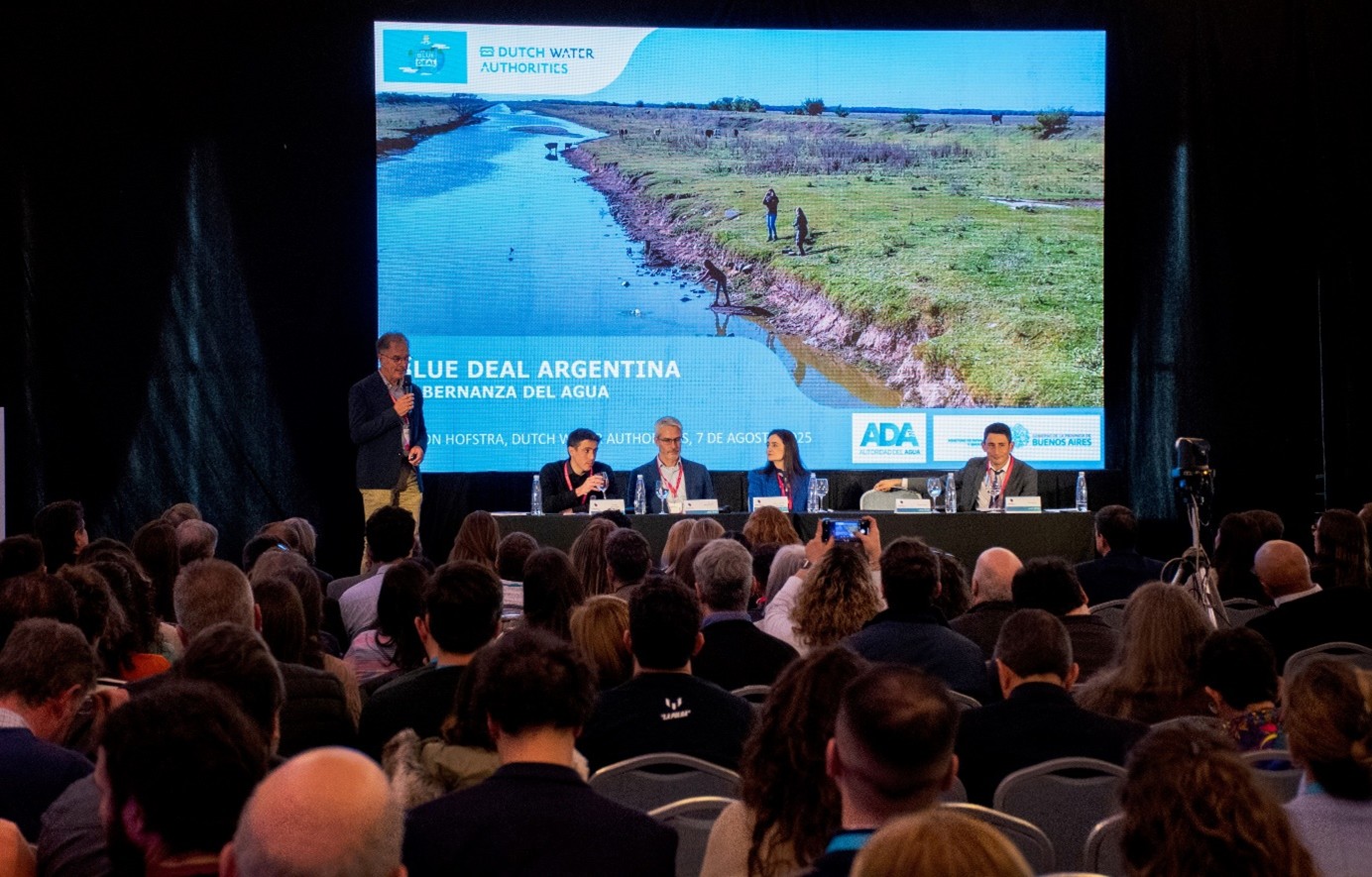
Blue Deal partnership Argentina formalised during National Water Congress

In August 2025, the National Water Congress of Argentina (CONAGUA) took place in Mar del Plata. Blue Deal Argentina was an active participant in this large event.

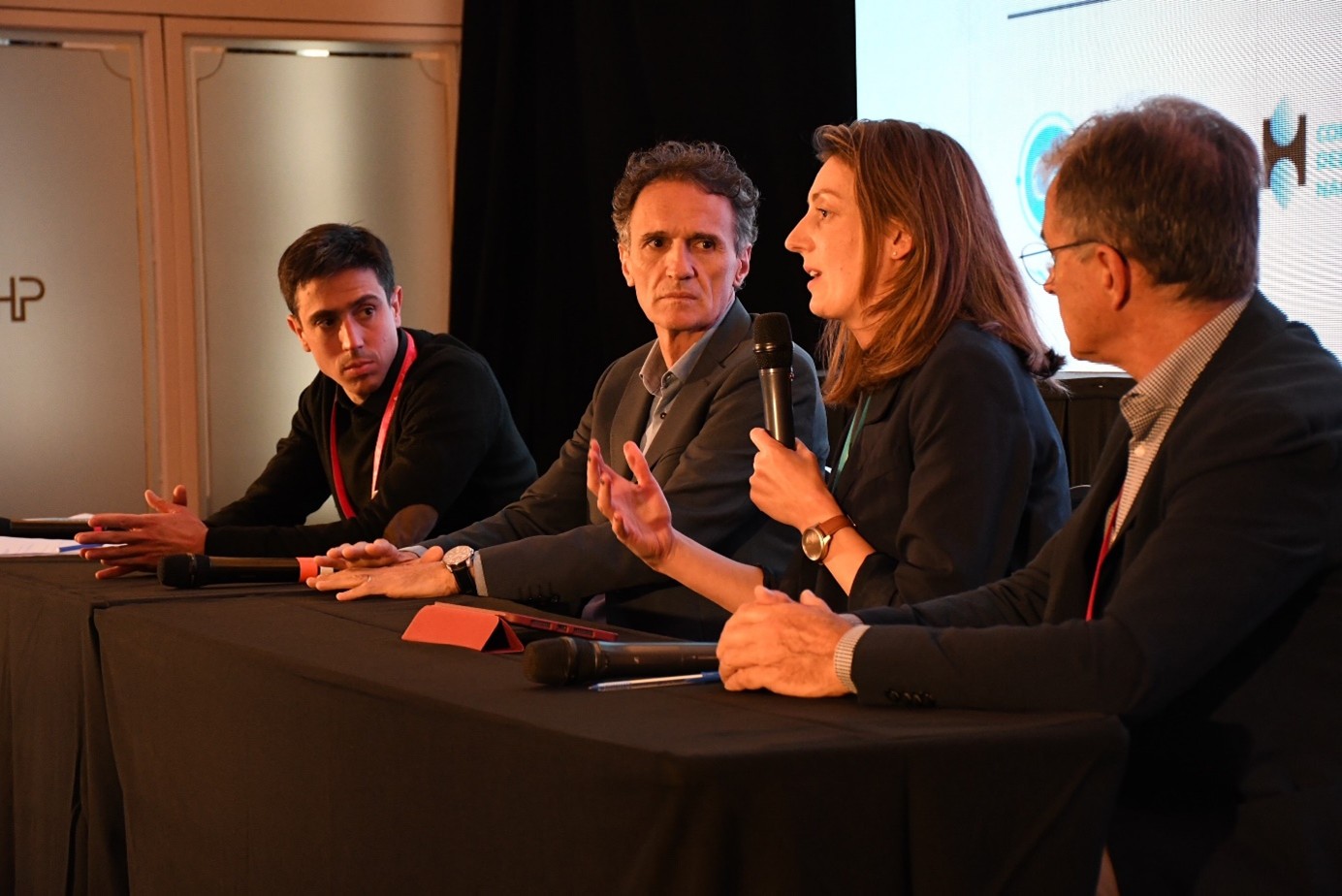
Moreover, the currently ongoing partnership (2023 – 2030) was formalised in a framework cooperation agreement signed by Damián Costamagna, President of the Buenos Aires Water Authority (ADA), and Gabriel Katopodis, Minister of Infrastructure, on behalf of the province of Buenos Aires. Representing the Dutch Water Authorities, Simon Hofstra (partnership manager Blue Deal Argentina) and Nadji Bilik (head of economic affairs and deputy ambassador at the Dutch embassy) signed the agreement. A similar previous agreement dated from 2019 and needed update for the ongoing second phase of the Blue Deal (2023 – 2030).

Pictured: Simon Hofstra presents at the National Water Congress of Argentina (CONAGUA)

The signing ceremony was preceded by presentations from Damián Costamagna, who spoke about water management in Buenos Aires province, and Simon Hofstra, who highlighted the achievements of the Blue Deal Argentina partnership and outlined the goals for 2026-2030. The Blue Deal presentation also covered coastal erosion, an issue which is faced by both Argentina (including the town of Mar del Plata) and by the Dutch Water Authorities.

Pictured: Nadji Bilik, head of economic affairs (and deputy ambassador) of the Dutch Embassy, spoke at the congress

CONAGUA is a biennial event that brings together over 1,000 water professionals from across Argentina. ADA staff contributed actively, delivering three presentations and showcasing six posters on the results of the Blue Deal project. Other key speakers included the Secretary-General of the World Meteorological Organisation (WMO) in Geneva. The atmosphere was very positive, with high expectations for significant progress in water governance in the Rio Salado region in the years ahead.

New Water Treatment Facility Opens: A Student-Led Solution for Cleaner Water in Ghana

On July 1st, Gowrie Technical High School in Bolgatanga, Ghana, officially opened a new water treatment facility. The system treats greywater from the school’s washrooms, which previously flowed untreated into the Vea dam - a source of drinking water and irrigation.

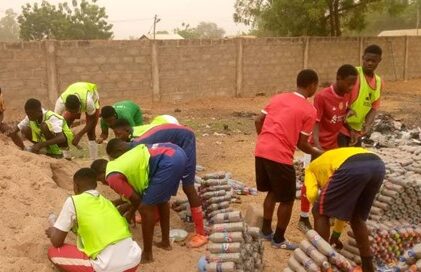
This low-cost, sustainable solution was co-designed by students, the Water Resources Commission (WRC), and Blue Deal colleagues. A unique feature is the use of recycled plastic bottles filled with sand as “bottle bricks” to build treatment pits. As water flows through the pits, it undergoes grease separation, sedimentation, and charcoal filtration. The treated water is now used to irrigate the school garden, where fruit trees and other plants have been planted – turning waste into a resource.

Pictured: Students place the sand-filled bottles for the water treatment facility

Ghana Water Company Limited has added the site to its monitoring programme and is collecting biweekly samples. Early results show improvement, with more data expected soon.

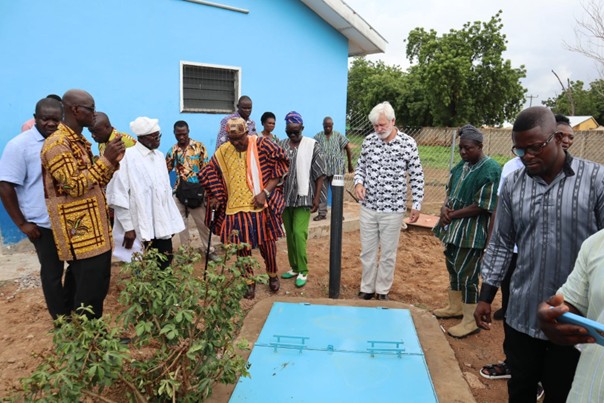
Pictured: The treatment facility is officially opened by Paramount Chief Bolgatanga and Erik de Bruijne representing Dutch Water Authorities

The opening ceremony drew over 400 students and local dignitaries, including the paramount chief and Jesse Kazapoe, Principal Basin Officer for the White Volta catchment. Erik de Bruijne, representing Blue Deal, emphasized the importance of youth-led innovation in tackling water challenges.

WRC colleagues Justice Aduko and Judith Amli are actively promoting the project in the media. The opening was featured on national broadcast, and they’ve given interviews on both TV and radio—raising awareness and highlighting the impact of this initiative.

This project showcases how local knowledge, international collaboration, and creative reuse of materials can drive sustainable water solutions. Blue Deal is proud to support efforts like this and looks forward to continued work in Ghana.

Pictured: Erik de Bruijne is interviewed by local television about the new treatment facility

Reflecting on World Water Week in Stockholm

At Stockholm World Water Week 2025, the Blue Deal programme was actively represented with Blue Deal team members from the programme office, Dutch water authorities and international Blue Deal partners. The week brought together key figures from the global water sector, allowing for fruitful discussion and relationship building with new and existing partners.

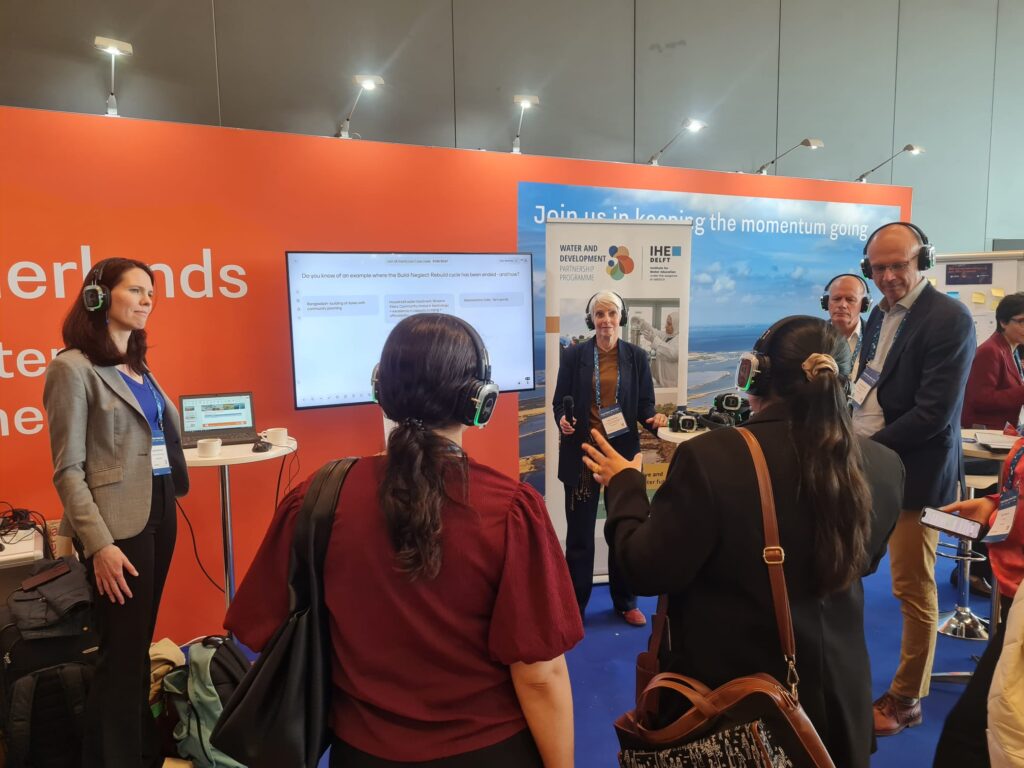
Aside from networking, the team contributed to three official sessions on important topics such as flood early warning systems, avoiding the build-neglect-rebuild cycle, and learning from past mistakes in water management. These all reaffirmed the important role water authorities play in addressing the world’s most pressing water challenges.

Key takeaways from the sessions

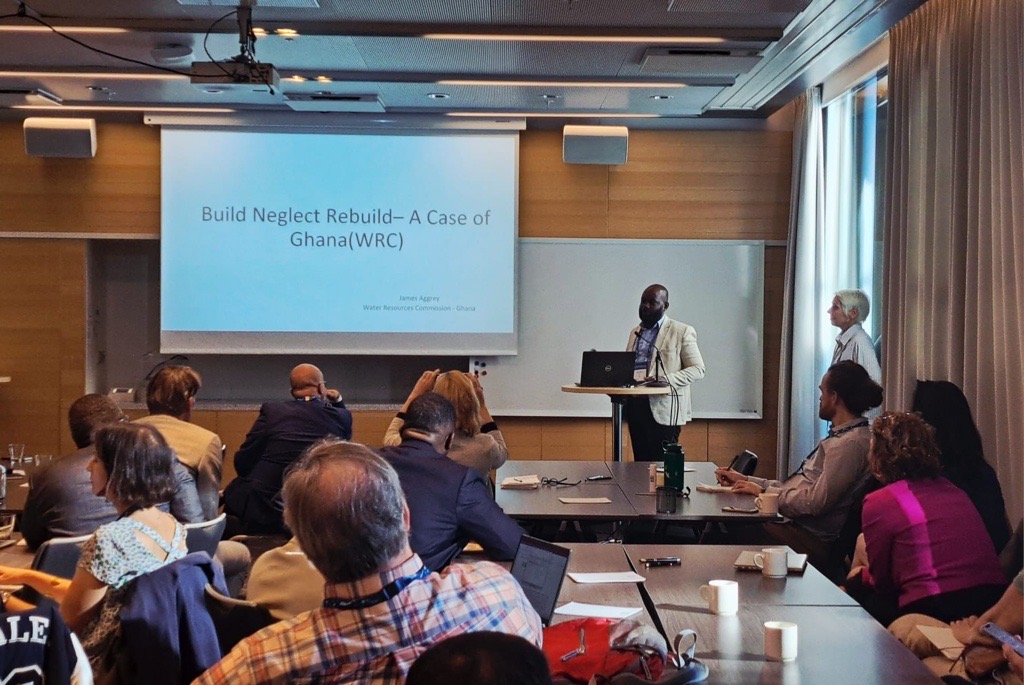
Pictured: James Aggrey (WRC, Blue Deal partner in Ghana) presents

Avoiding Build-Neglect-Rebuild: towards sustainable infrastructure

Organised together with WaterWorX and Partners for Water, this session highlighted the need for a mindshift in how we value infrastructure. Liliane Geerling (Partners for Water) moderated the session which addressed the lifecycle of water infrastructure and advocated for a shift in mindset from celebrating construction to valuing long-term maintenance. As Meike van Ginneken (Dutch Water Envoy), and Anjil Adhikari (Oxfam) emphasised: we must move from being proud of what we build, to being proud of what we sustainably maintain over decades.

Representing our Blue Deal partner in Ghana, James Aggrey (Water Resources Commission) reminded us to examine the origin of an infrastructure idea and whether it has broad support – from grassroots to high-level decision-makers. That support base is fundamental for long-term sustainability.
Vikas Goyal of the Asian Development Bank stressed the importance of integratinglong-term operation & maintenance from the very start of a project, rather than leaving it as an afterthought.

An inclusive approach to flood early warning systems

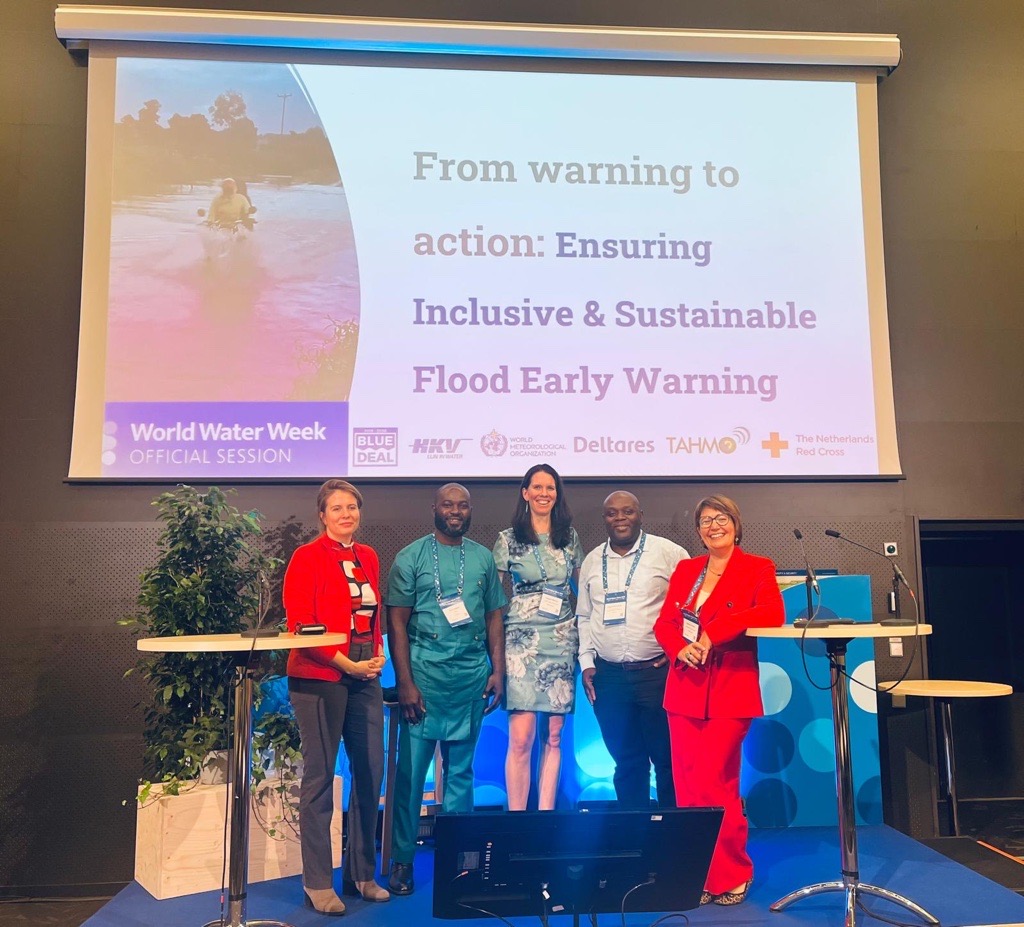
This interative session, organised by Blue Deal, Red Cross The Netherlands, World Meteorological Organization (WMO), TAHMO, HKV and Deltares, was kicked off with an interview with Eva Schreuder of Inclusive Green Growth (Dutch Ministry of Foreign Affairs). During the session we explored how inclusive and effective flood early warning depends on strong collaboration – from communities, to water authorities, to disaster risk teams.

Pictured: Dorien Lugt (HKV), James Aggrey (Blue Deal/WRC Ghana, Liesbeth Wilschut (Blue Deal), Frank Annor (TAHMO), Stefania Giodini (Red Cross The Netherlands)

It highlighted that technical forecasting alone is insufficient; even the best forecasts are ineffective if the warnings don’t reach or resonate with the people who need them, especially in vulnerable communities. Water authorities were identified as key connectors, linking local knowledge with basin-wide oversight and disaster risk teams. The discussion underscored the need for strong collaboration across sectors and levels of governance to ensure timely and actionable flood responses.

Liesbeth Wilschut (Blue Deal) moderated the hybrid session, which brought together not just people in the room, but was also available to attendees online. (The recording will be added to this page when available)

‘Failing Forward’

Pictured: Liesbeth Wilschut (Blue Deal) takes part in the Failing Forward session

This session, organised by Deltares and Partners for Water, promoted a culture of openness and learning in water governance and Integrated Water Resources Management (IWRM). It emphasised that acknowledging and learning from mistakes is essential for progress. The Blue Deal team shared its experience in Ethiopia, where a shift in approach to wastewater management led to more effective and inclusive outcomes. A broad range of speakers came from: CIPRED, Deltares, IHE Delft, Alliance for Global Water Adaptation (AGWA), Fundacion Herencia Ambiental Caribe and the Dutch Government. The interactive session encouraged transparency and adaptive learning as core principles for sustainable water partnerships.

In addition to the sessions, the Blue Deal team met with key partners to explore future collaboration on river basin organisations, nature-based solutions, and Water Operator Partnerships, laying the groundwork for deeper engagement and shared learning in the future.

UN Water Envoy visits Dutch Water Authorities

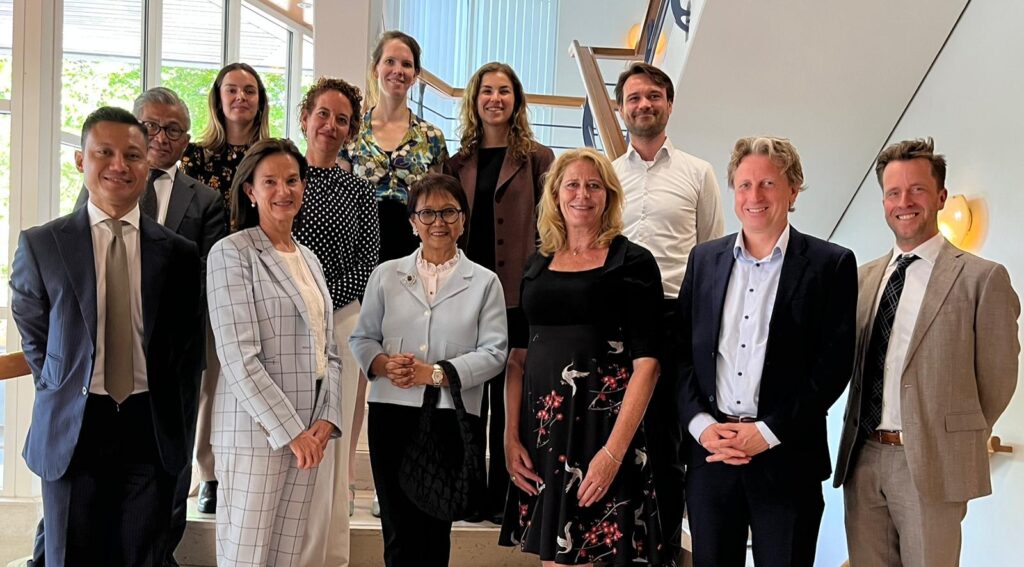
United Nations (UN) Water Envoy, Retno Marsudi, visited the Dutch Water Authorities (Unie van Waterschappen) on Thursday 3 July. Within the UN, Marsudi is responsible for water, including the implementation of the SDG agenda. Additionally, she leads preparations for various high-level international water conferences, such as the UN Water Conference, which will take place in the United Arab Emirates in 2026. 

UN Water envoy meets Dutch Water Authorities

(pictured: UN Water Envoy visits Dutch Water Authorities) 

International interest in Dutch Water Authorities 

The Dutch Water Authorities hold an autonomous position in water management. This unique position, combined with its specific tax system, has resulted in significant international attention on Dutch water management. 

An opportunity to discuss the Dutch approach to water management and financing was one of the reasons of Marsudi’s visit to the Dutch Water Authorities. Discussions also covered her priorities for the UN Water agenda and how the Dutch Water Authorities (DWA) can contribute. 

Luzette Kroon, who oversees the international portfolio as a board member of the Dutch Water Authorities, welcomed Marsudi during her visit. She provided the UN Water Envoy with an overview of the origins of the Dutch Water Authorities and elaborated on their water management practices. 

Dutch Water Authorities Bank 

Lidwien van Velden, Chair of the NWB Bank (Dutch Water Authorities Bank), explained how the bank contributes to financing the Dutch water management system. Dennis van Peppen, Director of the Netherlands Commission for Environmental Impact Assessment (NCEA), was also present. He emphasised the importance of good cooperation between governments, the private sector, the knowledge sector, and civil society. 

The various presentations provided Marsudi with a deeper appreciation for the strength and resilience of the Dutch water management model. Perhaps even more significantly, she acquired valuable insights into how affordable financing can be secured for critical water infrastructure projects.  

Contribution to the UN Water Conference 

Through the Blue Deal programme, the Dutch Water Authorities support the strengthening of international water authorities and partners around the world, including in the area of financing. This includes not only the use of tariffs and taxes but also the development of innovative private financing models. These themes will take center stage at the UN Water Conference 2026, where the Dutch Water Authorities are eager to contribute their expertise. 

Strengthening water governance: Peru delegation visit

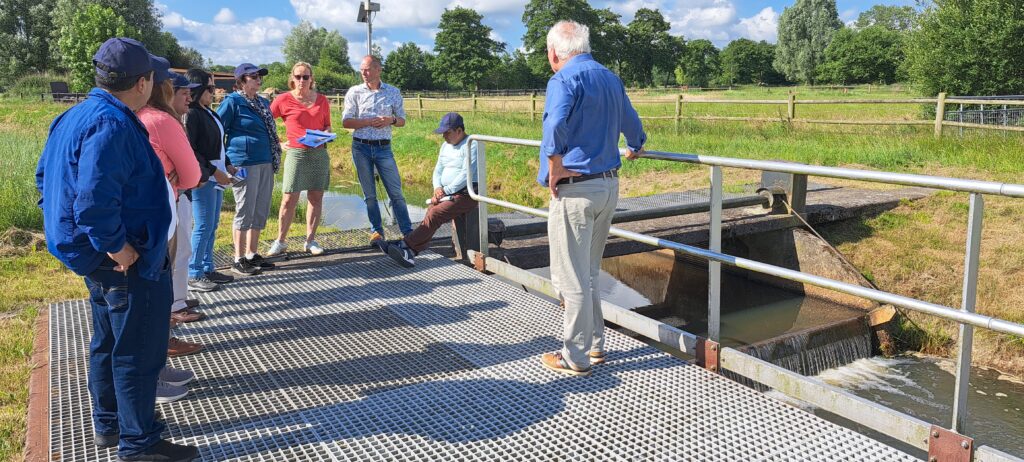
As part of the Blue Deal Peru project, six water experts from the Peru's National Water Authority (ANA) and the Binational Project Puyango-Tumbes visited the Netherlands from 16 to 20 June. This working visit fostered a dynamic exchange of experiences between Peruvian and Dutch water authorities, focusing on governance, climate-resilient water management and institutional coordination.

They were representatives from the National, Regional and Local authorities responsible for the planning and implementation of the National Water Resources Management Systems, the water distribution plans in the regions, institutional coordination within the Watershed Councils and execution of strategic regional-based water projects.

The five-day programme was jointly organised with the delegation and by various Dutch Water Authorities. The programme included relevant themes for the activities and challenges faced by our partners in Lima, and in the regions of Piura and Tumbes. These areas are particularly vulnerable to floods and droughts, so particular attention was given to water safety and flood control, water governance and institutional arrangements for management and distribution plans among different water uses in the context of climate change.

Key Themes and Insights

Water Governance and Institutional Roles

A recurring theme throughout the visit was the importance of effective governance structures. Discussions highlighted the role of board members in Dutch water authorities, such as at Rivierenland, where Melinda Boons explained how elected officials contribute to strategic planning and stakeholder engagement. This sparked meaningful dialogue on how similar governance models could enhance institutional coordination and accountability in Peru’s water management system. At Noorderzijlvest water authority, Director Bas Tammes led a discussion with the Peruvian and Dutch colleagues what mutual learnings could be taken from each other’s processes. Topics of interest were: governance structures, interaction with board members, finances, management and water distribution plans in the Netherlands and in Peru.

Interactive Learning through Serious Games

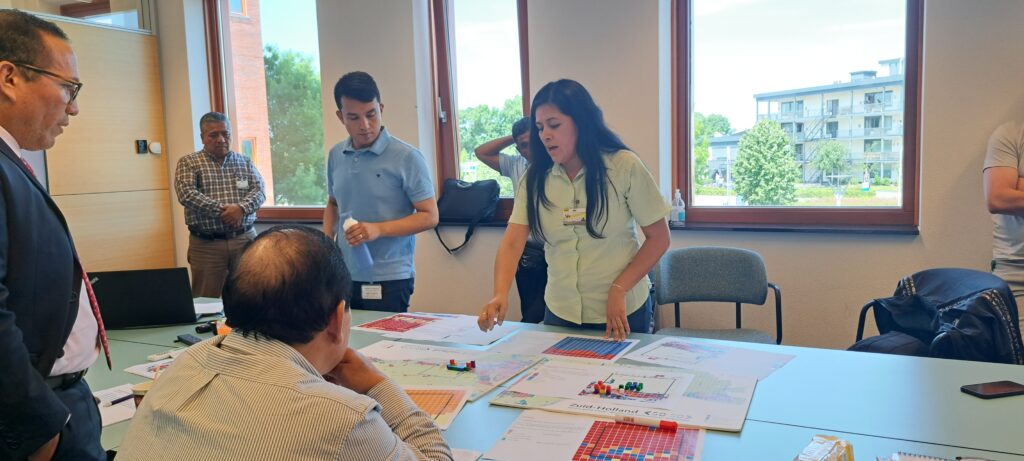
To explore the complexities of water planning through a practical approach, the delegation participated in a serious game simulating the role of city and environmental planners. This hands-on experience emphasised the importance of balancing competing interests, managing stakeholder dynamics, and planning under climate stress – lessons that resonated with the Peruvian context.

Pictured: The delegation plays a Serious Game

Climate Adaptation and Resilience

The delegation had the opportunity to explore several innovative Dutch projects focused on climate resilience. At Noorderzijlvest, they visited De Onlanden project – a great example of nature-based solutions that integrate climate adaptation, flood protection for the city of Groningen, and opportunities for nature and recreation. Additional water retention measures were showcased in the surrounding area of Veenhuizen (Drenthe), where collaboration with local farmers plays a key role.

The group also showed great interest in learning about the construction techniques, materials, and maintenance practices used in these projects, including the challenges posed by dike systems along the Wadden Sea coast, which serve as a critical line of defense.

These experiences underscored the potential of land use changes and the importance of considering diverse water interests – agriculture, urban development, and ecosystems – especially under the growing pressures of climate change. They illustrated how infrastructure, spatial planning, and community engagement can be effectively aligned to enhance both flood safety and drought resilience.

Pictured: A visit to Markermeerdijk in North Holland with colleagues from Hoogheemraadschap Hollands Noorderkwartier

Dutch Water Engineering in Practice

In addition to governance and climate adaptation, the delegation explored the technical foundations of Dutch water management. They learned about the critical role of pumping stations and traditional water mills in regulating water levels in the polders – low-lying tracts of land reclaimed from the sea.

A particularly memorable moment came during a visit to North Holland, where the group discovered that some areas lie as deep as 6.63 meters below sea level. This striking fact offered a powerful illustration of the Netherlands’ long-standing expertise in living with water and left a lasting impression on the Peruvian experts.

International Collaboration and Mutual Learning

The exchange underscored the shared challenges both countries face – ranging from localised droughts to institutional fragmentation – and the value of international cooperation, highlighted by Tjitske Brand from the management team of Wetterskip Fryslân. The delegation left with new perspectives and practical ideas to strengthen Peru’s water governance and resilience strategies.

This visit is part of the Multi-Annual Plan (MAP) 2023–2030 of the Blue Deal Peru Project and reflects the ongoing collaboration between ANA and Dutch Water Authorities, coordinated by Waterschap Noorderzijlvest.

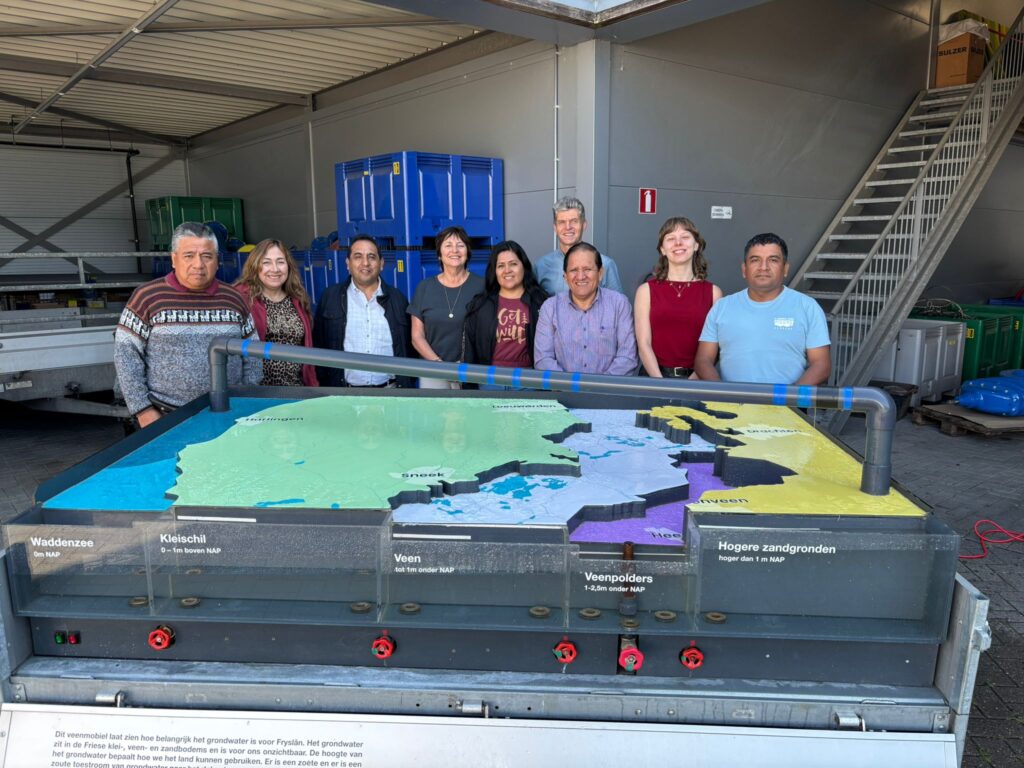
Pictured: The Peruvian delegation with the Peat Mobile at Wetterskip Fryslan

Raising awareness, inspiring action: how Indonesia’s youth are shaping water futures

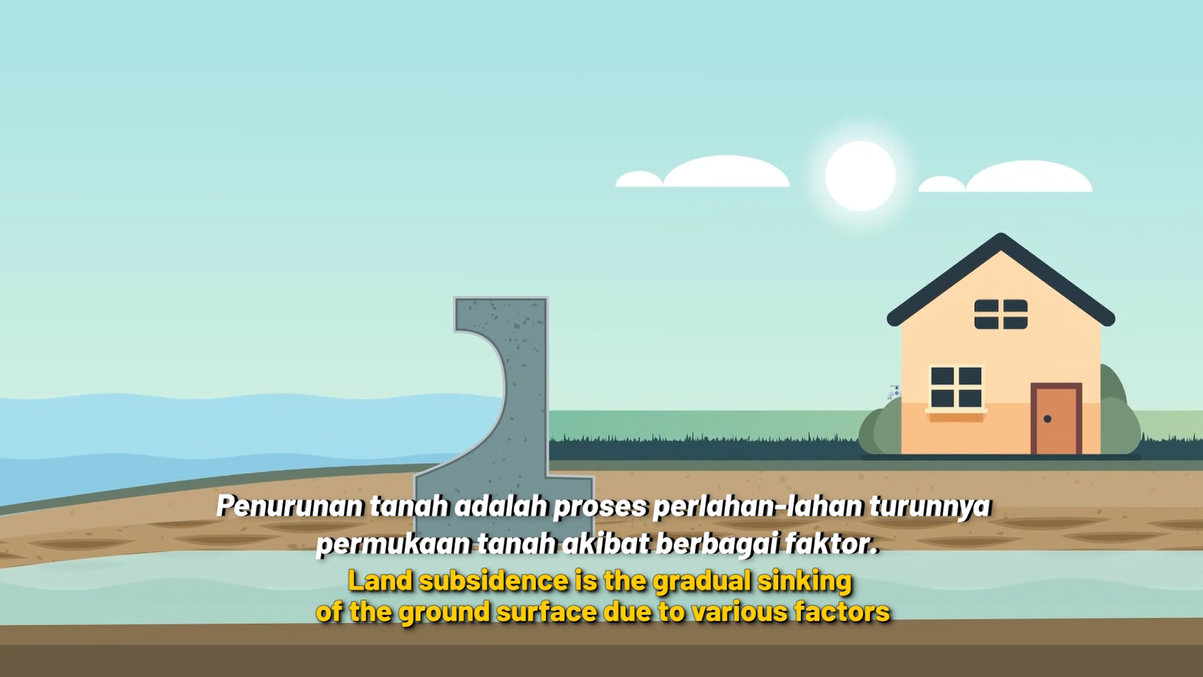
In the city and region of Pekalongan, residents face annual flooding, severe land subsidence, and poor surface water quality. While the local government is investing heavily in infrastructure there’s a growing recognition that sustainable water management isn’t just about infrastructure - it’s about people. Community involvement is essential to finding lasting solutions, with children and students as key players in protecting the environment and improving quality of life.

Our partners are embracing this shift, developing tools and initiatives to actively involve these social groups in water-related challenges and solutions. 

To raise awareness, a video campaign was launched featuring a local influencer and produced in partnership with Blue Deal. Using humor, a relatable tone, and clear expert insights into the key issues, the video explains the challenges and highlights how residents can contribute to improvements. The campaign was officially launched by the Mayor of Pekalongan during the most recent Blue Deal visit. 

Trailer for awareness video in Pekalongan 2025

Trailer for awareness video in Pekalongan 2025

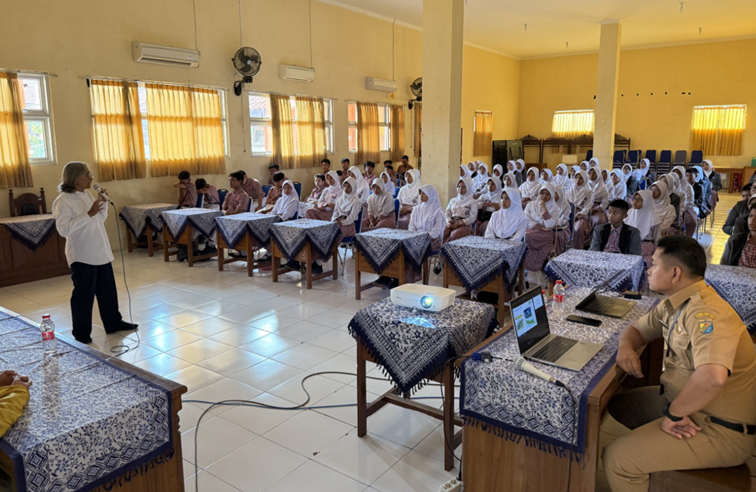
As part of the same awareness campaign, the Dutch Water Authorities (DWA) team was invited to give a guest lecture on water management at a local secondary school – empowering the next generation with knowledge and inspiration. 

Pictured: A guest lecture at a local secondary school 

Tangerang: Youth in Action

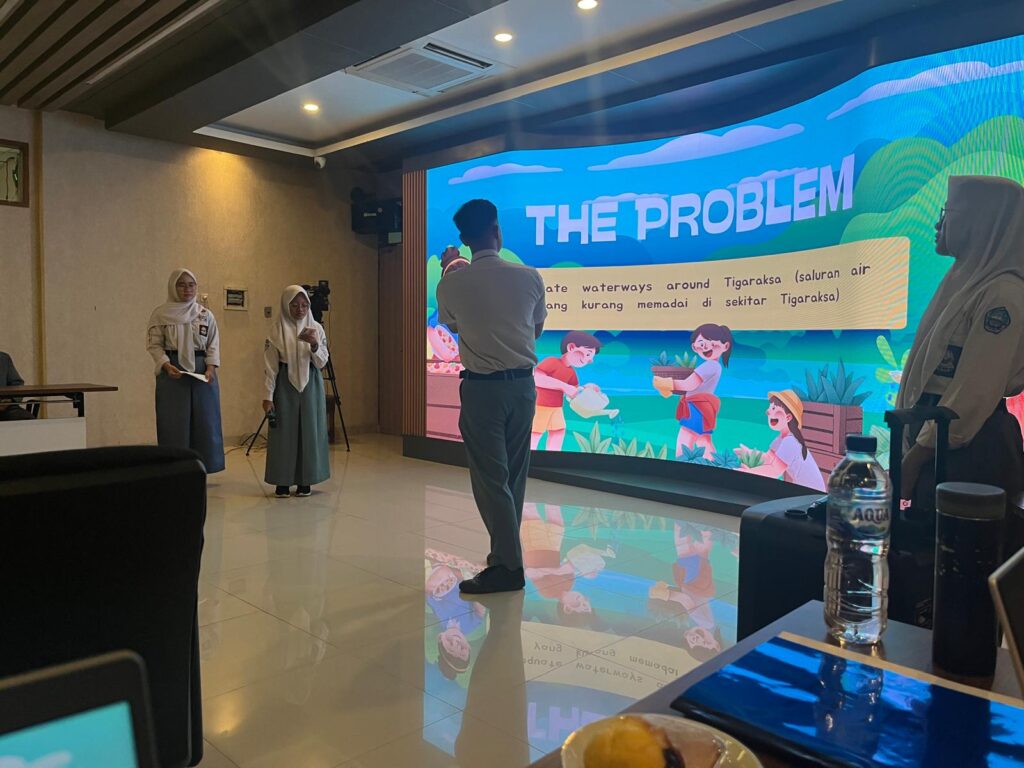
In Tangerang, youth engagement took center stage during a Blue Deal visit in May. A dynamic workshop with high school students kicked off with an introduction to water management and solid waste issues. Students were then challenged to develop ideas to improve their local environment. 

Through brainstorming sessions and school-based follow-ups, students presented a wide range of creative and enthusiastic solutions just days later. Together with our local partner, represented by the head of Bappeda, we are now exploring how to embed these types of awareness activities into a structured, long-term programme.

A cross-cutting theme within the Blue Deal programme is social inclusion. This example from our Indonesia partnership shows that the future belongs to the young generations – and they are ready to lead!

Pictured: Students present their solutions during workshops in Tangerang

Dutch Water Authorities joins ResNRJwater partner meeting in Switzerland

From 3 to 5 June 2025, Dutch Water Authorities participated in the fourth partner meeting of the ResNRJwater project, held in Arbon, Switzerland. The event brought together international partners and experts to exchange knowledge and experiences in the field of renewable energy production at wastewater treatment plants.

The programme included inspiring presentations and discussions on topics such as net zero ambitions for wastewater treatment plants, identification of renewable energy sources, aquathermia, smart energy storage systems, and the development of training materials for water authorities. In addition, participants visited innovative sites, including the Altenrhein and Morgental WWTPs, where practical examples of energy production from wastewater were showcased. 

Dutch Water Authorities, represented by the Unie van Waterschappen, actively contributed to the discussions and shared insights into the Dutch approach to climate and energy. The meeting provided valuable inspiration and practical knowledge that can support Dutch water authorities in further developing and implementing sustainable energy solutions at their facilities.

With many useful lessons learned, Dutch Water Authorities looks forward to sharing the gained knowledge with the regional water authorities in the Netherlands, to help accelerate the transition towards climate-neutral water management.

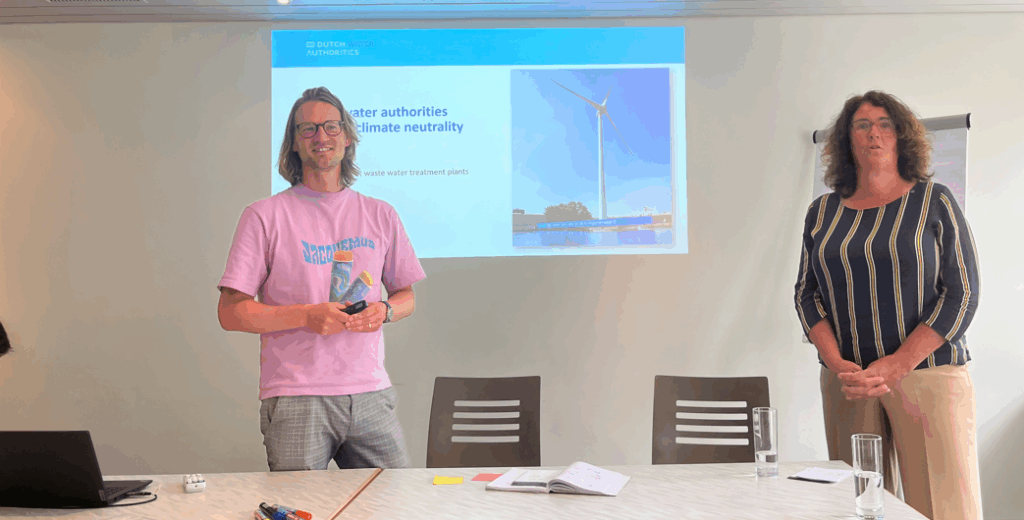
(pictured: Aart Los and Ina Elema of Dutch Water Authorities) 

For more information about ResNRJwater, see: Home | ResNRJwater