Investment mobilisation in the Kenyan water sector: the Njururi fund

That a lot of extra investment is necessary to achieve SDG6 is an understatement. According to the World Bank, an additional 116 billion USD is needed annually for constructing new infrastructure to achieve SDG6 by 2030. Kenya needs an additional 4 billion USD to achieve clean water and sanitation for all Kenyans. So, in 2024, investment mobilisation is one of the primary areas of focus for the Blue Deal team in Kenya.
One of the relevant areas for the Blue Deal partnership is the Thika river basin. It is one of the main sources of water for Nairobi, Kenya’s fast-growing capital, and water quality and quantity has deteriorated over the past decades. Relevant authorities and communities often lack funds, capacity, and stakeholder input to address these issues. There is a need for unprecedented collaboration.

Bring Njururi back

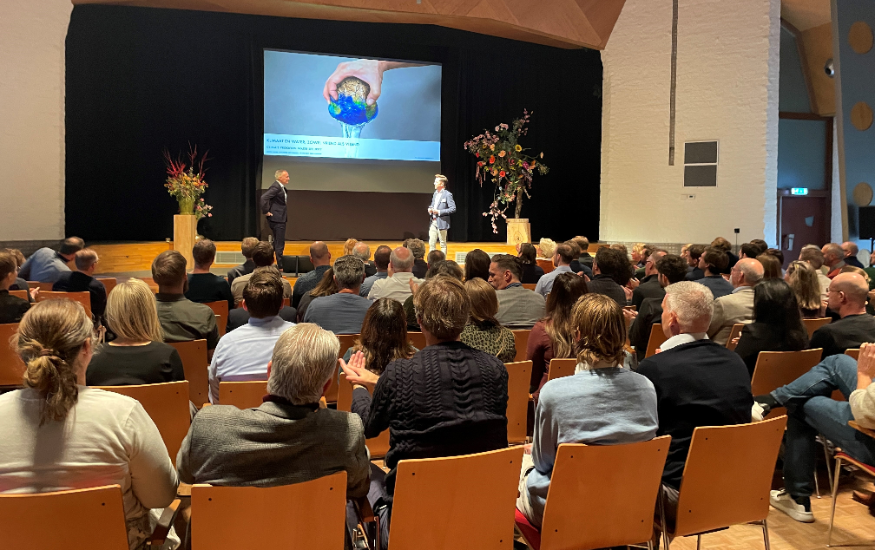
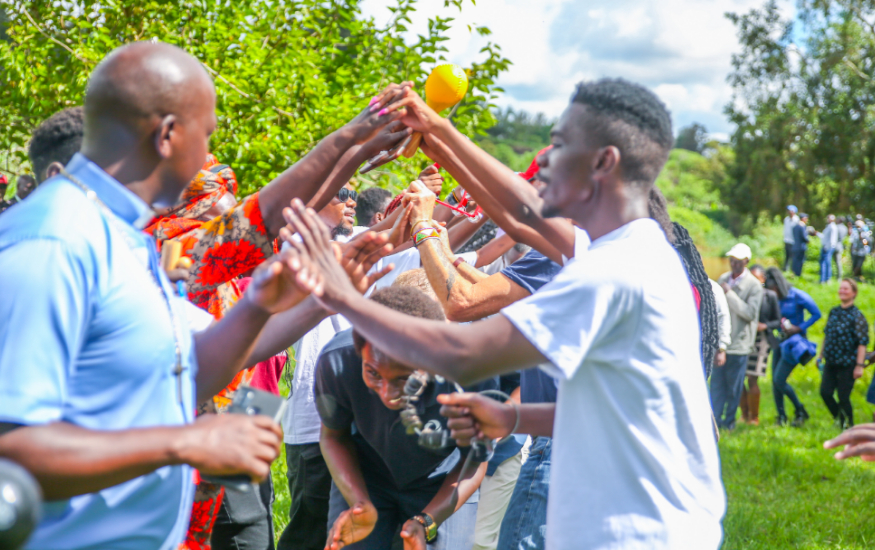
An example of this collaboration happened in April 2023. World Waternet in partnership with Embassy of the Earth, facilitated the Thika River Basin Ecosystem Future Design Basecamp. This was funded by the NWB Fund and through existing Blue Deal and WaterWorX partnerships, which set the stage for a revolutionary approach to ecosystem restoration and water management in Kenya. Participants, including representatives from the public and private sectors, Nairobi City Water and Sewerage Company, and the Water Resources Authority, as well as local communities, shared their ideas on the future of the basin and developed action plans aiming to achieve their most desirable future in 2033. The mission: to bring the Njururi (a water beetle) back to the river.

Participants now decided on the development of a so-called matrix organisation, designed to foster open communication, interdisciplinary collaboration, and a dynamic, open-system approach. The “Matrix Organisation” will be able to implement the initial action plans and to actively adapt to future changes in the turbulent environment they operate in. The design principle is: “Put responsibility for control and coordination at the level where the work is done.”

Njururi Fund

At its heart is the creation of the Njururi Fund, a novel funding mechanism to support seed initiatives focused on revitalising the basin’s ecosystems. This approach involves key actors, private, public and government, contributing seed money – 60% from standing organisations and 40% from external funders. With continued support of the NWB Fund, this Njururi Fund will enter its first stage operationalising the Matrix Organisation through collectively financing and implementing the first 5 seed initiatives. These are implemented by each of the 5 taskforces around water quality and quantity, biodiversity, conservation, recreation, and policy.

Much work lies ahead, and these initiatives alone will not be capable of covering the whole finance gap in the Kenyan water sector. But exploring the potential of this novel approach and engaging with such a wide variety of stakeholders and mobilising new investments in the process, might inspire those working on SDG6, not only in Kenya, but all over the world.

Article written by Jakob Ollivier de Leth (World Waternet).
First work visit of 2024 to Peru

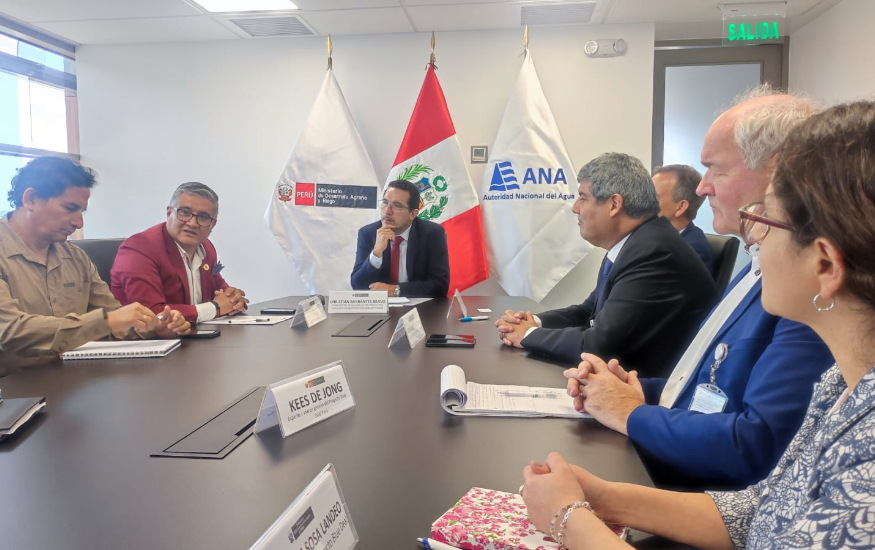
In January, a Dutch team from Dutch Water Authorities visited the Blue Deal partnership in Peru. 3 main themes were the core of this first work visit of the year: climate adaptation, wastewater management, and data for water availability.

Climate adaptation

The Blue Deal Peru team from the 2 Dutch water authorities Wetterskip Fryslân and Noorderzijlvest visited the Casitas Bocapán creek in Tumbes and the proposed areas for a reforestation project. This is an initiative of the Regional government and the technical team of the Tumbes Water Council-ANA. We are looking forward to share expertise on the resilience and water components of the project.

In Piura, the mayor of Lagunas, one of the districts in Ayabaca province and initiator of the feasibility study for carbon credits project, and other involved stakeholders, renewed their commitments to work together this year under the support from the Chira-Piura Water Council. This feasibility study is financed by the NWB Fund.

Wastewater management

In both regions, Piura and Tumbes, we visited different wastewater treatment plants to see how wastewater techniques can be improved and to assess options for water reuse. In Piura, during the visit to the San Martin wastewater treatment plant and under the coordination of the Chira-Piura water council, we held a workshop to gather information from operators and managers about relevant themes for a tailor-made training to be executed this year.

Data for water availability

The Blue Deal Peru team from the 2 Dutch water authorities Hunze en Aa’s and Rivierenland, with the support of Deltares and our Young Experts from Piura and Tumbes, gave a training on the hydrological model W-flow. The training’s objective was to support local capacity generating data for water availability, and enhance interaction amongst organisations responsible for water management in the regions. The training was organised by the technical teams of the water councils of Tumbes and Chira-Piura. A primary exercise during the training involved modeling the Zarumilla River. Triggered by the training, the participants committed themselves to work together, sharing information in follow-up sessions and improving the model for their areas.

National and regional positioning of the partnership

Finally, the national and regional positioning of our partnership and the work with our local partners were also core activities of this first work visit. Our coordination team discussed in Lima the follow-up actions of our visit from last year with the Vice Minister of Agriculture and Irrigation and the General Manager of the National Water Authority (ANA).

We also visited the regional governors of Tumbes and Piura, explained our current projects and the potential themes for cooperation in both regions. With universities’ representatives from both regions, we discussed the next call for scholarships for young professionals. We finished this work visit presenting our project and exploring synergies for cooperation with the professionals of the ANA’s Direction of Water Resources Planning and Development.

Signing for Phase 2 of Blue Deal Partnership Mozambique

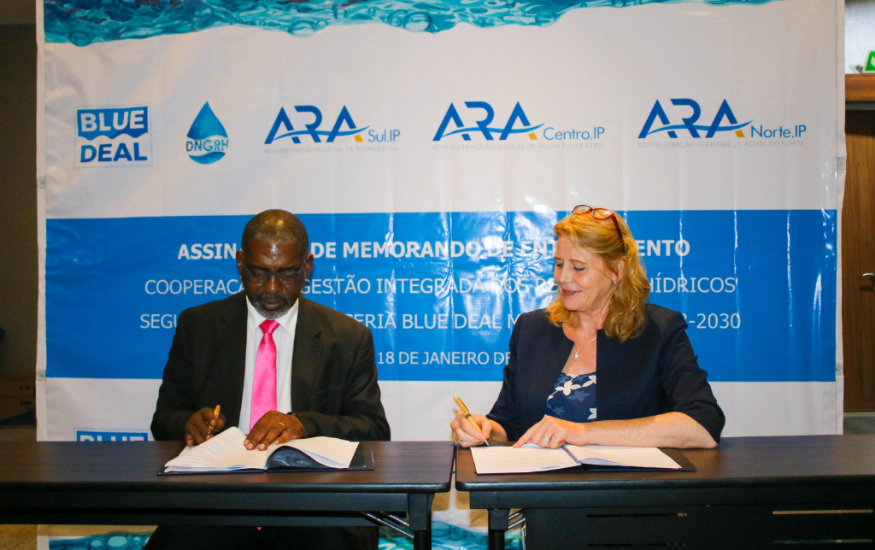
Dutch Water Authorities (DWA) and the Regional Water Administrations (ARAs) in Mozambique signed Phase 2 of the Blue Deal programme 2023 - 2030.

The memoranda of understanding (MoUs) were signed by Luzette Kroon, chair of the Blue Deal programme, alongside the directors of the 3 ARAs. The signing strengthens cooperation between the Netherlands and Mozambique in Integrated Water Resources Management (IWRM), focusing on water quality, availability, flood and drought risk management, and climate change.

The MoUs signing ceremony was attended by Luzette Kroon, Geert-Jan ten Brink, president of the Dutch water authority Hunze en Aa’s, Ivo van Haren, the First Secretary for Water and Sanitation of the Dutch embassy in Mozambique, as well as the directors and technicians of the ARAs. During the ceremony, Kroon highlighted the challenges and successes of the first phase, including capacity building, staffing of the ARAs, and the development of hydrological models.

ARAs’ satisfaction and support

The ARAs expressed satisfaction with the progress of the partnership and confirmed their support for the shared goals and objectives. As key stakeholders in water resources management in Mozambique, they recognise the importance of continuous collaboration, planning, and communication for the success of Phase 2 of the Blue Deal partnership.

Cooperation with Dutch embassy and new IWRM programme

The ceremony also highlighted cooperation between the Blue Deal programme and the Dutch embassy in Mozambique, particularly through its new IWRM programme. As the second phase of the Blue Deal unfolds, the signing of the MoUs represents a significant milestone in strengthening cooperation between the Netherlands and Mozambique in the field of IWRM.

Insights from the visit

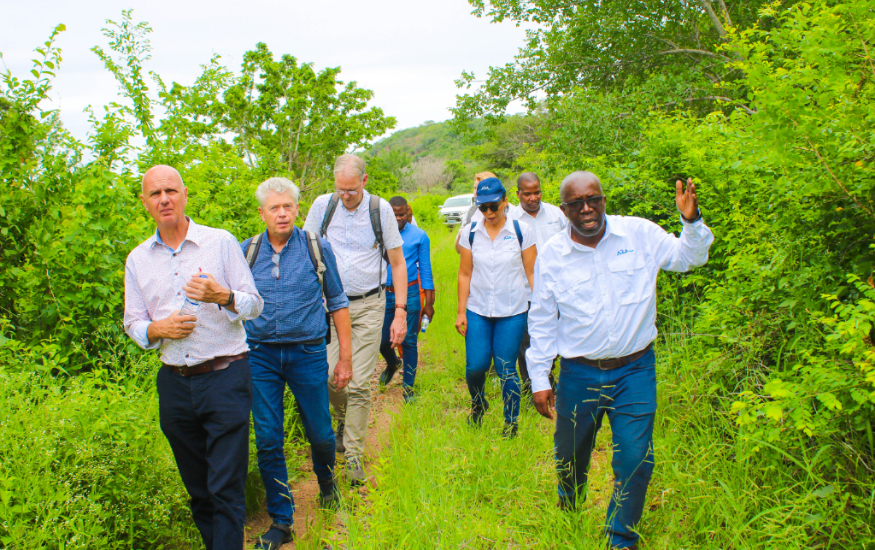
The ceremony took place during a work visit by a DWA delegation in January, providing insights into infrastructure management and activities of ARA Sul and the SASB. The delegation learned more about the activities being developed by these 2 partners with the support of the Blue Deal. After this visit, they gained a deeper understanding of the challenges and the measures undertaken for water quality control, flood and drought risk management, sanitation, and climate change adaptation.

DWA delegation visits Mozambique for the Blue Deal programme

In January 2024, a delegation from Dutch Water Authorities (DWA) visited Mozambique to witness the progress of the Blue Deal partnership in the country. This visit marked a crucial milestone in strengthening water management and climate change mitigation efforts in the country. By fostering partnerships and sharing knowledge, countries can work together to develop sustainable water management solutions for the benefit of present and future generations.

Visit to ARA Sul Infrastructures

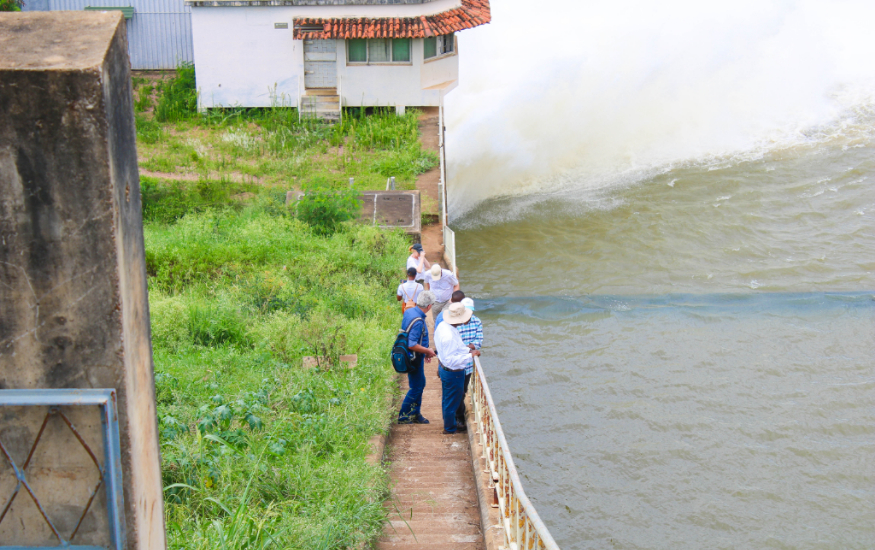
On January 16, the delegation had the opportunity to explore the Goba telemetry station and the Pequenos Libombos Dam. The visit to these 2 infrastructures shed light on the challenges faced by ARA Sul when working with regional entities and the adjustments needed to respond to climate change.
The flaws in the regional agreements between Mozambique, Eswatini and South Africa, inconsistent data sharing (particularly during drought and rainy seasons), and limited resources were identified as primary hurdles towards sustainable water management in the region. It is evident that the Blue Deal programme’s support, alongside organisations and conferences such as REMCO and INMACOM, can play a pivotal role in strengthening the cooperation between the 3 countries and ensure reliable flood and drought risk management.

Visit to ARA Sul headquarters

On January 17, the DWA delegation engaged in a meeting with ARA Sul’s management team. This water authority is actively involved in various topics within the partnership, such as water quality management, flood risk management (including dike management and early warning systems), groundwater modelling, and licensing of water users. Through ARA Sul and the other partners, the Mozambican partnership draws attention to the need for proactive measures to mitigate the devastating impact of floods in the country.

Signing of MoUs

On January 18, the Mozambican partnership celebrated the signing of the Memoranda of Understanding (MoUs) for Phase 2 of the Blue Deal programme. This MoU solidifies the commitment of all parties involved to continue working together towards water-related challenges and climate resilience.

Meeting with the Mozambican Minister of Public Works, Housing and Water Resources

In order to reinforce the Dutch support for Mozambique in water management, sanitation, and climate change issues, the DWA delegation had a meeting with the Mozambican Minister of Public Works, Housing and Water Resources (Carlos Mesquita), the Ambassador of the Kingdom of the Netherlands to Mozambique (Elsbeth Akkerman), and the First Secretary for Water and Sanitation of the Dutch embassy in Mozambique (Ivo van Haren). This meeting highlighted the shared vision of both nations in addressing critical water management issues and reaffirmed the Dutch commitment to provide technical expertise, financial aid, and capacity-building support to Mozambique.

Impact of climate change and sea level rise in Beira

The delegation’s work visit concluded with their travel to Beira, where they worked with the Municipality of Beira. Through the SASB (Beira Autonomous Sanitation Service), the partnership is assisting the Municipality of Beira in addressing issues concerning the operation and maintenance of the drainage system and cleaning of the urban canals. These actions are of great importance at a time in which the city is severely affected by the impacts of climate change and sea level rise.

The Blue Deal partnership is facilitating a continuous exchange of knowledge between the 2 countries that started almost 10 years ago through the partnership of the Dutch water authority Hunze en Aas with the Municipality of Beira.

Blue Deal workshop on nature-based solutions during IWA Kigali

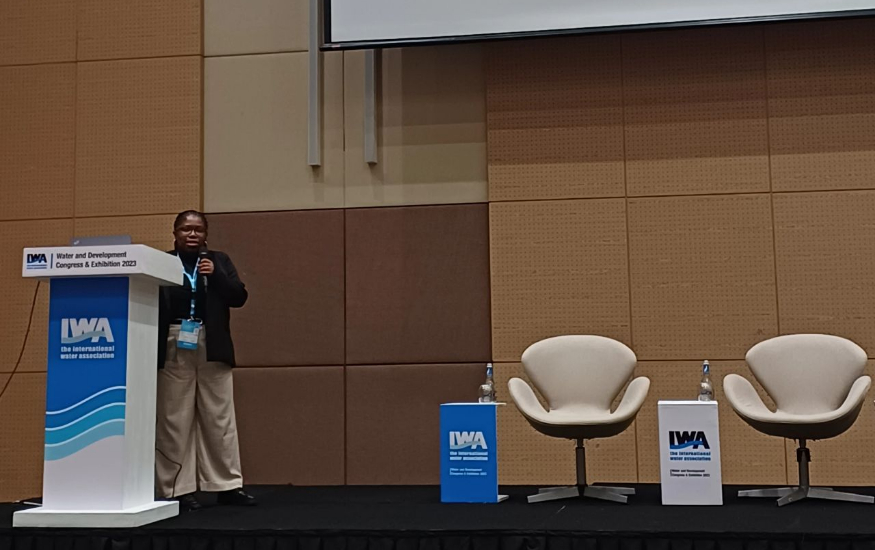
On December 11, 2023, the Blue Deal organised a workshop about scaling up nature-based solutions during the congress of the International Water Association (IWA) in Kigali, Rwanda.

The aim of the session was to further explore upscaling of nature-based solutions (NbS), and to discuss with the participants how to secure inclusive sustainability of NbS. In the partnerships, the Blue Deal pays a lot of attention to this topic, since it is one of the important ways to work on climate adaptation, which is one of the crosscutting themes of the Blue Deal.

What are nature-based solutions?

NbS for water management are approaches that work with, rather than against, natural systems to manage water resources and ensure social inclusion. The solutions are designed to enhance the ability of natural ecosystems to store and purify water, while also providing a range of co-benefits, such as biodiversity conservation, carbon sequestration and improved livelihoods.

Main takeaways

The session emphasised on important criteria for long-lasting scaling of these solutions. The Blue Deal, together with the NWB Fund, aims to promote NbS to improve sustainable water management and improve the quality of water resources worldwide. In the workshop several international experts, mainly working in Africa on water management projects, participated. A main takeaway participants mentioned was better knowledge on how to scale up NbS and to improve the communication on the quantitative benefits and results to the political class and community.

Blue Deal continues its work in conflict areas

Through the Blue Deal, Dutch Water Authorities works in 15 countries worldwide. Even in countries where intense conflicts sometimes arise. Like now in the Palestinian Territories, Mali, Ethiopia, and Burkina Faso. How and why does the Blue Deal continue to operate there? Water expert Frank Tibben says: "We continue to collaborate to improve access to sufficient, clean, and safe water. In good times and in bad."

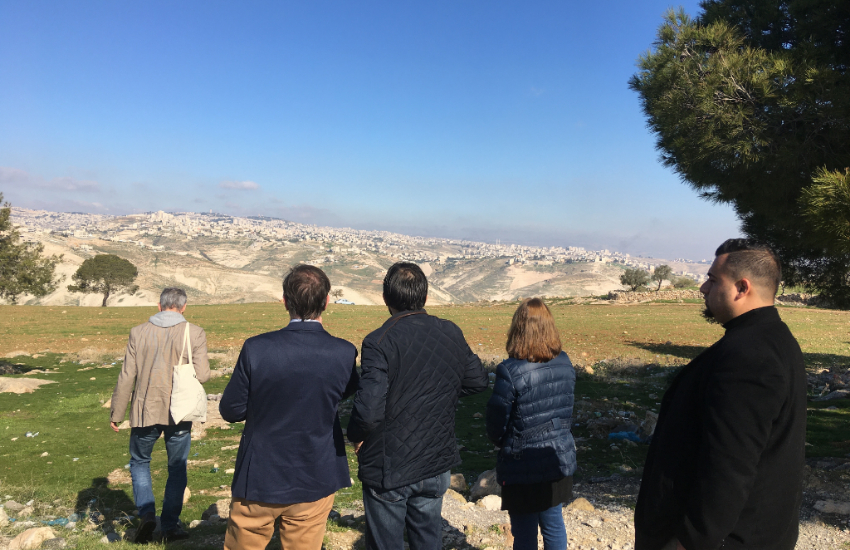
5 people overlook the West Bank from a distance

“Can I travel safely to and from my home? Will I still see my family again after this training?” These are questions Duaa Matar asks herself before deciding to travel to the Netherlands for training at the end of November 2023. Matar is a Palestinian woman working as a Young Expert Professional (Yepper) for the Blue Deal. She lives and works in the West Bank, in the Palestinian Territories.

The interview takes place in a coffee shop in The Hague, the day before she heads back home. A surreal experience as she talks about the war situation in her country. “It’s like I stood outside of reality for 2 weeks. I felt guilty for not being in my homeland. Physically I was here, but mentally I was at home.”

Political situation has changed

The Blue Deal is the international programme of the 21 Dutch water authorities, the Dutch ministries of Foreign Affairs and Infrastructure and Water Management, and water managers worldwide. The goal: to improve access to clean, sufficient, and safe water for 20 million people worldwide. That’s why the Blue Deal has formed 17 partnerships with water managers in 15 countries.

“In some of these countries, the political situation looked different when we started with the Blue Deal,” explains Frank Tibben. He is responsible for collective intelligence and strategic relationships at World Waternet, which works for the Blue Deal on behalf of the Dutch water authority Amstel, Gooi en Vecht. Some of the areas they work for in the Blue Deal, include conflict regions. Tibben also serves as the partnership manager for the Blue Deal in the Palestinian Territories.

Good and bad times

He continues: “We don’t construct infrastructure ourselves; we’re not an engineering firm or contractor. We support local water managers in carrying out their tasks. We do this through knowledge exchange in line with the Sustainable Development Goals (SDGs) of the United Nations. Dutch and local colleagues work in a hybrid manner, with short visits to the country or to the Netherlands as needed. This makes us flexible and allows us to continue, even when conflict arises. The work then often becomes more digital.”

“Within the Blue Deal, we form partnerships until 2030. A lot can happen in such a long period, positively or negatively. We continue to collaborate to improve access to sufficient, clean, and safe water. In good times and in bad,” says Tibben.

Long-term commitment

“Of course, sometimes I wonder: couldn’t we achieve much more in other, safer areas?” says Luzette Kroon. She is board member of the Association of Dutch Water Authorities and is responsible for the international portfolio and chair of the Blue Deal. “But that also means throwing away what we’ve built and abandoning our principles. We operate on the principle of long-term commitment. It’s precisely because of that long-term commitment that we can achieve things. That’s what makes us powerful.”

Pilots

How does the work of the Blue Deal continue in conflict regions? Matar talks about a pilot in Salfit, a city in the West Bank. “A smart system has been created here for monitoring water levels. We can remotely read and adjust the water level. This means the engineer in this area no longer needs to visit the location. It is a relief, because it is currently an unsafe region near Israeli settlements.” The pilot started 3 months before the outbreak of renewed violence.

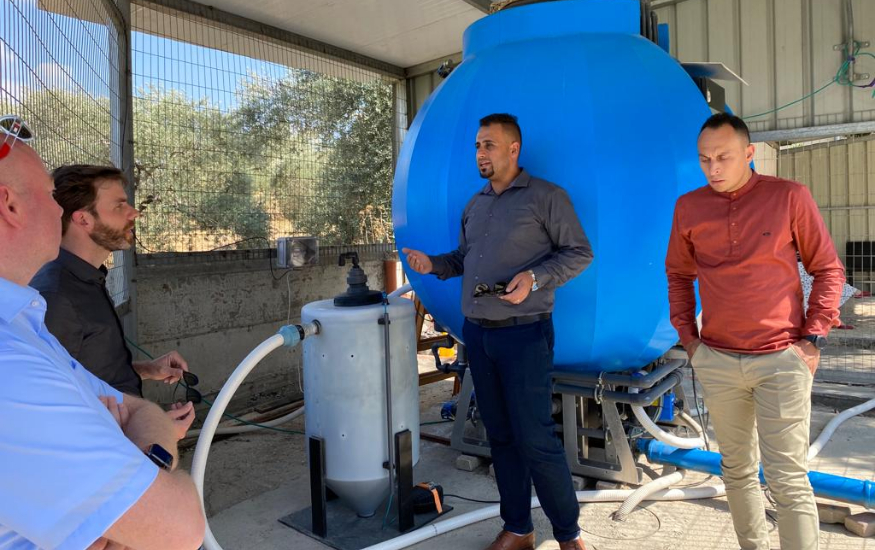
Another example is the pilot with 3 BluElephants in the cities of Salfit and Halhul in the West Bank. These are mobile, decentralised purification plants that purify wastewater for reuse. Now that Palestinian colleagues in the West Bank can no longer safely travel to and from work, these installations ensure that wastewater continues to be purified.

A pilot with 3 BluElephants ensures that wastewater continues to be purified.

Working in neighbouring countries

In other conflict-affected countries, the Blue Deal also seeks creative solutions. Much of this involves thinking along and providing advice. From a distance. Tibben says: “It helps if the Dutch colleagues have already visited the locations and partners. Last year, for example, we were involved in Ethiopia in the construction of a wetland, a natural water buffer for wastewater treatment. This makes it easier for us in the Netherlands to provide digital support for the monitoring of the wetland and the construction of new wetlands.”

Other options are that Dutch and local colleagues meet in a safe neighbouring country. Or that local colleagues come to the Netherlands.

Continuous support

The Blue Deal team in the Netherlands and the team in the West Bank speak weekly. Digitally, which works well thanks to the experiences from the COVID-19 period. Matar says: “Our colleagues from the Netherlands provide us with continuous support. Every week, we assess what is realistic. We even made plans for 2024, although we don’t know exactly how the situation will develop.” Tibben adds: “Especially in difficult times, the long-term Blue Deal partnership focuses on sustainable water management.”

Kroon says: “In conflict areas, water management is so necessary. We work on solutions that fit the local context, focusing on local people. With the Blue Deal, we contribute to a bit of stability. The fact that our partner water authorities are still functioning indicates that our work is meaningful. As long as we achieve sustainable impact, we continue our work.”

This article originally appeared in magazine ‘Het Waterschap’. Read the original article in Dutch.

New steps towards Green Drop Certification South Africa

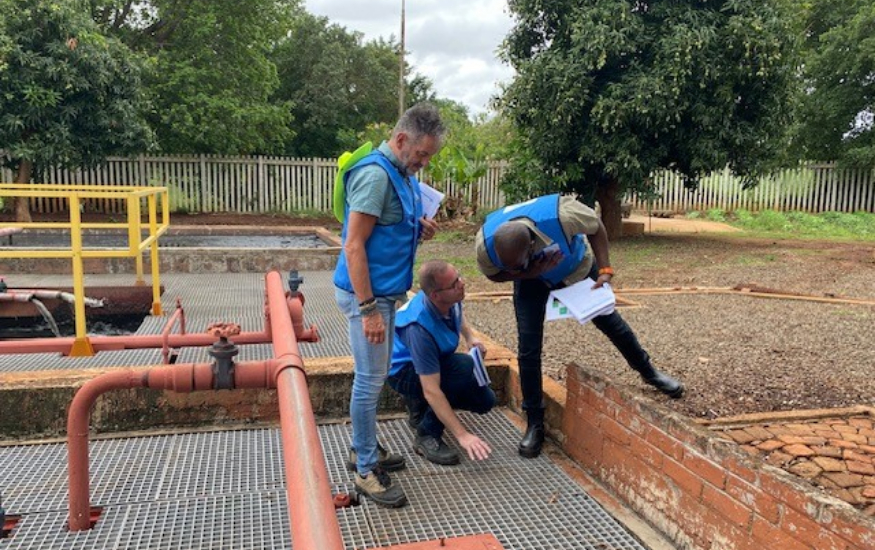
A recent important chapter unfolded for the Blue Deal Crocodile River Partnership during the November 2023 work visit in Mpumalanga, South Africa, emphasising sustainable wastewater treatment.

During this work visit, the Blue Deal Crocodile River Memorandum of Understanding “Oversight Committee” was formally established, and its inaugural meeting was hosted on 16 November. The Oversight Committee is comprised of the heads of all partner institutions that are signatories to the Blue Deal Crocodile River Memorandum of Understanding. This newly established committee creates a platform where the progress made by the partnership is formerly reported to the Heads of partner institutions. This latest development is also significant progress in ensuring buy-in and support for the Blue Deal Crocodile River Partnership programme by the leadership of the partner institutions. In the future, the meetings of the Oversight Committee will sit annually to appraise the progress made by the Blue Deal Crocodile River Partnership programme.

Deeply valued

The support from the Head of Department (HOD) at the Department of Cooperative Governance and Traditional Affairs (CoGTA) is deeply valued. The HOD CoGTA has accepted the role of Chairing the newly established Oversight Committee. His guidance and support directly assisted in the hosting of the committee’s inaugural meeting.

Progress

During the inaugural meeting, each task team reported progress through the lense of the Department of Water and Sanitation’s Green Drop certification for the participating wastewater treatment plants. The Water Quality and Data-sharing Task Team presented a detailed examination of wastewater treatment plant discharge, emphasising the need for thorough data compliance and as to how the same would improve Green Drop scoring. Communication and intergovernmental relations Task Team reported significant strides, with a recognisable partnership logo symbolising its growing presence. The Technical Capacitation and Wastewater Treatment Works Optimisation Task Team set stretching targets for annual improvements in Green Drop scoring such as to ensure Green Drop certification by 2030. The Business Planning and Finances Task Team highlighted the key importance of business planning and finance in support of enabling wastewater treatment plants performance, and hence Green Drop certification.

Ring-fencing municipal budgets

Projections anticipate significant Green Drop Score improvements across the various wastewater treatment plants locations of the partner Municipalities (Mbombela LM, Nkomazi LM, and Emakhazeni LM), emphasising the partnership’s concerted efforts. A key recommendation proposed and adopted by the Blue Deal Crocodile River Partnership is to establish ring-fencing of municipal budgets for the respective wastewater treatment plants, and most especially as regards operation and maintenance.

Who is your buddy?

Internationally, the collaboration includes a peer learning buddy-approach for exchanging wastewater treatment expertise and experiences between Dutch and South African wastewater treatment plants’ superintendents. The partnership’s “buddying” is embarking on a structured programme of collective peer learning, fostering a dynamic environment of reciprocal exchange both amongst South African Blue Deal municipalities, and also internationally with the Dutch Water Authorities.

Unwavering commitment is crucial

In conclusion, all parties have agreed that whilst early indications are that progress is promising, unwavering commitment is crucial. The Blue Deal Crocodile River Partnership Oversight Committee will serve as a sentinel, providing an accounting platform for annual feedback and progress reporting to signatories of the Memorandum of Understanding.

Vechtstromen & Eswatini sign Phase 2 Blue Deal

Early November the agreement for collaboration was signed between the Netherlands and Eswatini to continue Blue Deal into Phase 2.

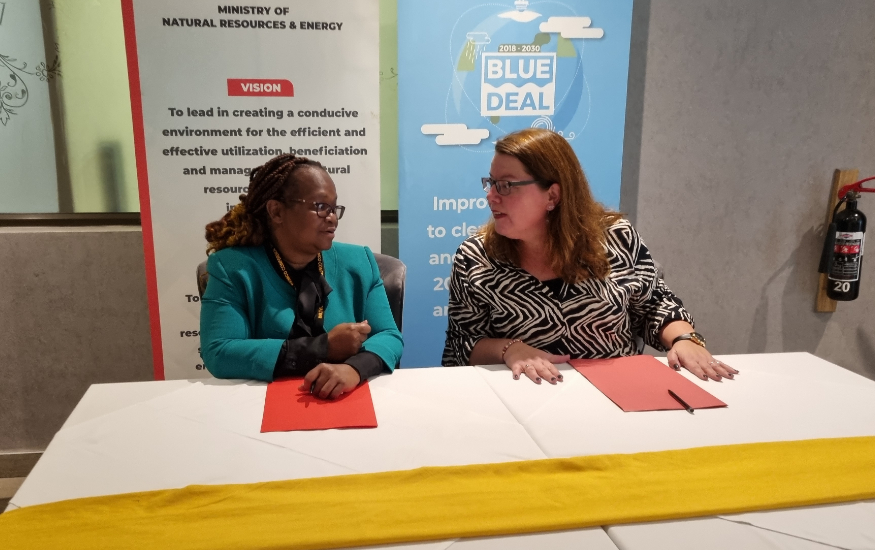
Ms. Dlamini (left) and Ms. Hemmers sign the agreement.

In Eswatini it was Ms. Hemmers, member of the executive board of Dutch water authority Vechtstromen, and Ms. Dlamini, Principle Secretary of the Ministry of Natural Resources & Energy, who placed their signatures on the document. “Collaboration in Eswatini starts with a smile and a good start is half the job, as we say in the Netherlands”, according to Ms Hemmers.

Blue Deal makes the wheel stronger

It is due to climate change that both countries have to deal with more and more similar problems such as drought, heavy rains, heatwaves and floods. Ms Hemmers: “Thanks to the Blue Deal we don’t have to reinvent the wheel over and over again. Instead, we are enabling each other and we are making the wheel stronger. We do this by learning from each other and creating new solutions together.”

5 catchment areas, 1 operational organisation

The Blue Deal project in Eswatini assists in the decentralisation of water resource management from the Ministry to the local water authorities. Eswatini has 5 river basins that each have their own boards. These 5 boards have decided to combine the work in one operational organisation for more efficiency and better effective execution of operations. This is the Joint River Basin Authorities Project Board and the direct partner of the Blue Deal cooperation.

DWA Network Day

On November 27, Dutch Water Authorities (DWA) organised the DWA Network Day in Driebergen, with the central theme 'Water Knows No Boundaries.'

DWA Network Day

DWA coordinator Piebe Hoeksma opened the day with a plenary conversation with Luzette Kroon, board member of the Association of DWA. After a presentation by former Chief of the Defence Staff Tom Middendorp and the presentation of the NWB Award, there were theme sessions on the 4 main DWA themes: knowledge exchange, Europe, international projects/Blue Deal, and attractive employment. Approximately 120 employees, administrators, and foreign coordinators from within and outside the water authorities were present.

Importance of International Cooperation

“The water authorities are the least known government entities, but they enjoy the greatest trust,” Kroon opens her conversation. “80 percent of the Dutch trust that the water authorities keep our country, which is partly below sea level, dry. With Bureau Brussels, our representation in Europe, we also have a significant influence on Brussels policy. The international community is eager to learn from us. But we also face significant challenges, such as long periods of drought, extreme rainfall, and water pollution. These challenges are global: climate change is here, and it pays no attention to national borders. That’s why international cooperation is crucial, especially in the field of climate adaptation.”

Water at the Core of Sustainable Development Goals

Kroon is pleased that this year saw the first United Nations water conference. “This demonstrates that both the subject of water and international cooperation are high on the administrative agendas. The question now is: how do we ensure that this remains the case? I believe by continuing to emphasize the urgency. The Sustainable Development Goals mean nothing without water. International work also has significant added value for the water authorities it makes us more attractive as an employer.”

Water, Both Friend and Foe

The second keynote speaker has an impressive curriculum vitae: Tom Middendorp led the army for 38 years, was the first to put the climate on the agenda at Defence, and wrote the book Climate General, translated into five languages. “In the Netherlands, water is both our greatest friend and enemy at the same time,” he states in his presentation. “The economy owes much to our favourable location near water. At the same time, water is our greatest threat. Adaptation is in our genes due to these extremes.”

Reducing Water Dependency

Middendorp emphasizes our increasing dependence on water. “Look at production: a sheet of A4 paper requires a whopping 10 liters of water, and a T-shirt requires 4000 liters. And the demand for water continues to grow, partly due to population growth and our living standards. At the same time, water supply is decreasing due to increasingly longer periods of drought. We must reduce our water footprint and dependence on water through circularity: better reuse.”

Tensions Due to (Water) Scarcity

During his work abroad, Middendorp saw how scarcity of essential resources causes tensions between population groups. “Water scarcity causes conflicts and forces people to move. Through this phenomenon, I saw the connection between climate and security. Because climate change is closely related to water: to food shortages and the livability of areas. At Defense, I therefore put climate on the agenda and linked it to security.”

Giving Room to Innovation

“To resist increasingly extreme weather, we must collaborate,” says Middendorp. “We must give room to innovation, create a knowledge ecosystem, and collaborate across borders. The solution to these new water challenges lies in our innovation and adaptability.”

NWB Award 2023

The morning programme concluded with the presentation of the NWB Award 2023, the prize for the most compelling video about international water authorities work. After showing the shortlist, Luzette Kroon, as chair of the NWB Fund, announced the winner: ‘A strategic alliance for water conservation in the Chira Valley’ from Blue Deal Peru. They win €5000 for further research and an interview in Het Waterschap, the magazine of the Association of DWA. Kroon: “The videos provide a good insight into our work and show how many people are involved in international water authorities projects.”

Watch the video submissions for the NWB Award

Theme Sessions: Knowledge Sharing and Europe After the lunch break and networking opportunities, there were two rounds of theme sessions on the agenda. In each round, participants could join one of the four topics. In the Knowledge Sharing theme session, Petra Goessen, foreign coordinator at Dutch water authority Hollands Noorderkwartier, sought ideas for acquiring more knowledge from abroad. In the Europe theme session, Luc Kronenberg and Noa Hartog, lobbyists in Brussels on behalf of Vewin and the Association of DWA, explained what the Union does in Brussels and how the European Union operates.

Attractive Employment and International Projects

In the Attractive Employment theme session, Frank Tibben (intelligence manager at World Waternet) and Anne Maaike Koeneman (policy advisor international cooperation at Dutch water authority Drents Overijsselse Delta) showed why internationally oriented water experts choose water authorities as employers. In the Blue Deal/international projects theme session, Marion Wierda, programme manager at the NWB Fund, highlighted various international projects of the water authorities.

Blue Dragon Viet Nam

The final work visit with training week on Resilient Cities and the Blue Dragon Day took place on November 10.

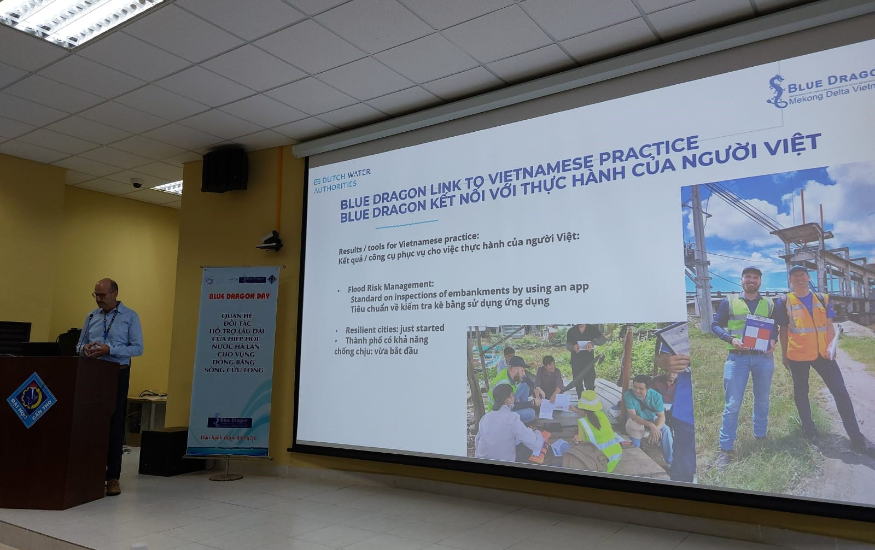
Presentation screen and person behind lecturere

Training Week on resilient cities

The latest addition to the Blue Dragon programme is a new pool focusing on climate adaptation. In the inaugural week from 6 to 9 November, the pool concentrated on:

  • Explaining the importance of cooperation in climate-adaptive measures
  • Outlining the concept of climate adaptation
  • Describing the systematics of climate adaptation
  • Identifying the necessary data collection from a given area

The training was conducted by Mrs. Anet Lablans and Ms. Denise Winters both from water authority Hollands Noorderkwartier. The usual field trip during the week was spent in the city of Rach Gia. The participants were requested to photograph locations where flooding during heavy rainfall may occur.

The first Blue Dragon Day

In the morning of Friday 10th November at the meeting hall of the Research Laboratories Complex (RLC) Building, Can Tho University, the Blue Dragon Programme and Can Tho University organised the first Blue Dragon Day. This event, a highlight of the Blue Dragon Programme, revolves around the “Partnership for long-term assistance of Dutch Water Authorities in Mekong Delta Vietnam”.

We had the honor of welcoming distinguished delegates:

  • Mr. Willem Timmerman, First Secretary, The Netherlands Embassy in Vietnam
  • Mr. Vương Viết Hưng, Vice Director of Integrated Climate Resilience and Sustainable Livelihoods Mekong Delta Project Management Board, Central Project Office (CPO), Ministry of Agriculture and Rural Development
  • Mr. Dang Ngoc Giao, Vice Director of the Department of Agriculture and Rural Development of Hau Giang
  • Prof. Dr. Tran Ngoc Hai, Vice Rector of Can Tho University
  • Assoc. Prof. Dr. Van Pham Dang Tri, Director of DRAGON-Mekong Institute, Can Tho University

Other delegates were several lecturers and students of Can Tho University and representatives from Departments of Agriculture and Rural Development, Departments of Environment and Natural Resources, Departments of Construction, and Departments of Planning and Investment from provinces in the Mekong Delta.

The Delegates of Blue Dragon Day

The meeting provided a valuable opportunity for our partners to share their activities and experiences during Phase 1. Plans for Phase 2 were presented and discussed, including the expansion of the programme to other provinces in the Mekong Delta. Dynamic discussion sessions yielded valuable insights for Phase 2, and intent for cooperation was received from a new provinces of the Mekong Delta.