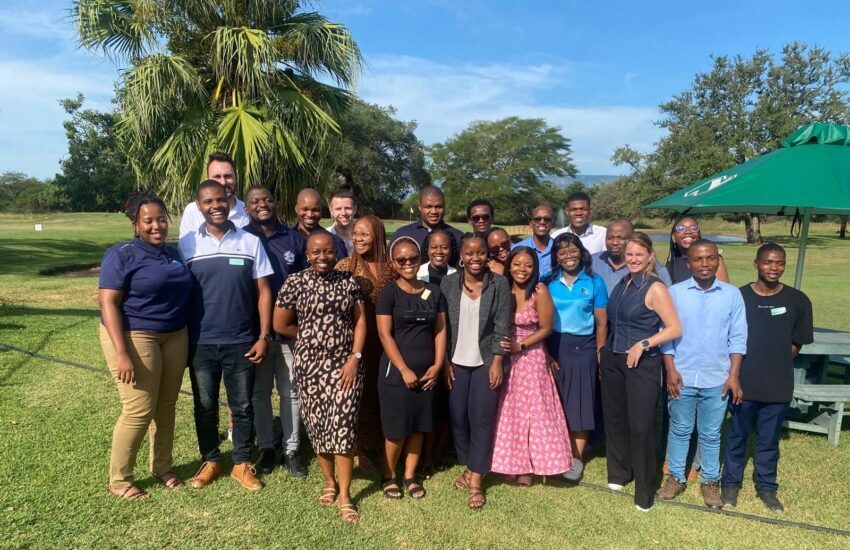
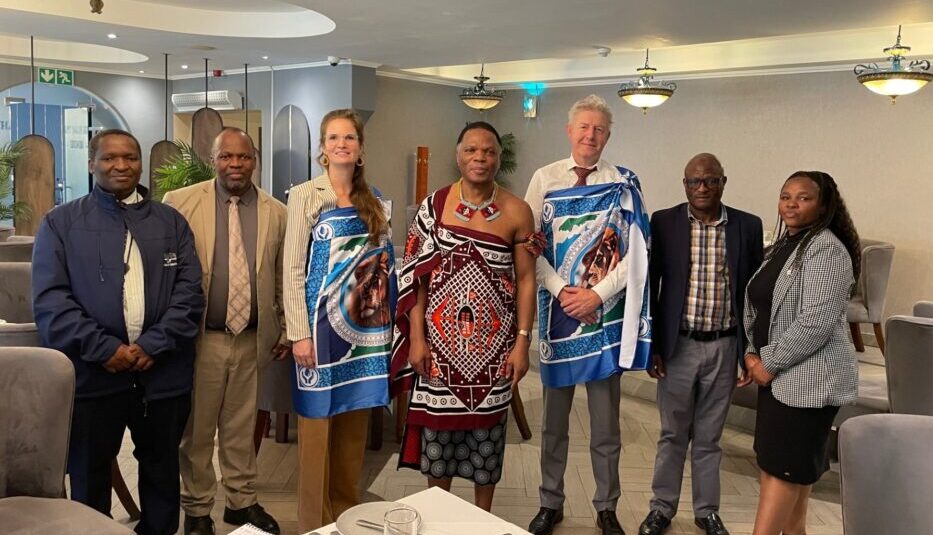
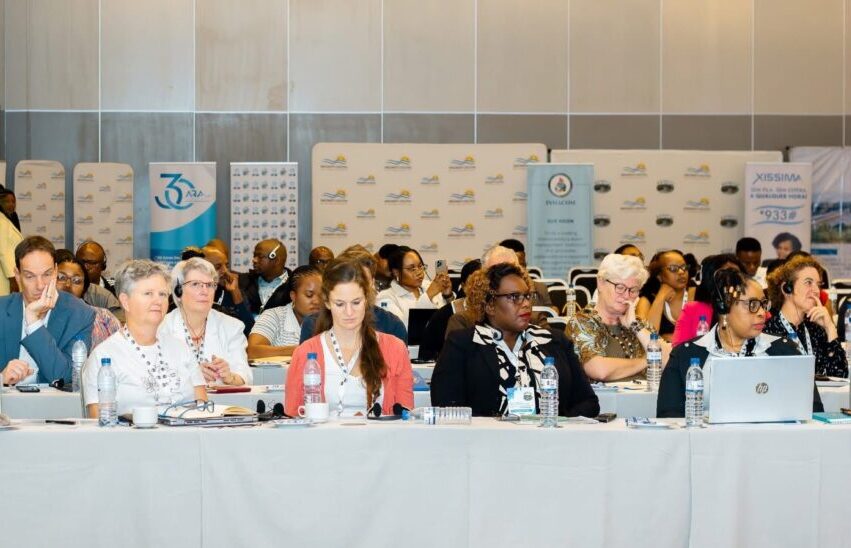
In April and May of 2026, four separate teams from the Dutch Water Authorities (DWA) visited Mozambique as part of the ongoing Blue Deal programme. Together, they covered the whole country, working side by side with the Mozambican Water Authorities (ARAs) and the National Directorate of Water Resources (DNGRH).
Each team focused on a specific theme: long-term programme planning, water quality and licensing, asset management, and urban drainage. Here’s an overview of what each working visit delivered.
Planning for the next phase (2027–2030)
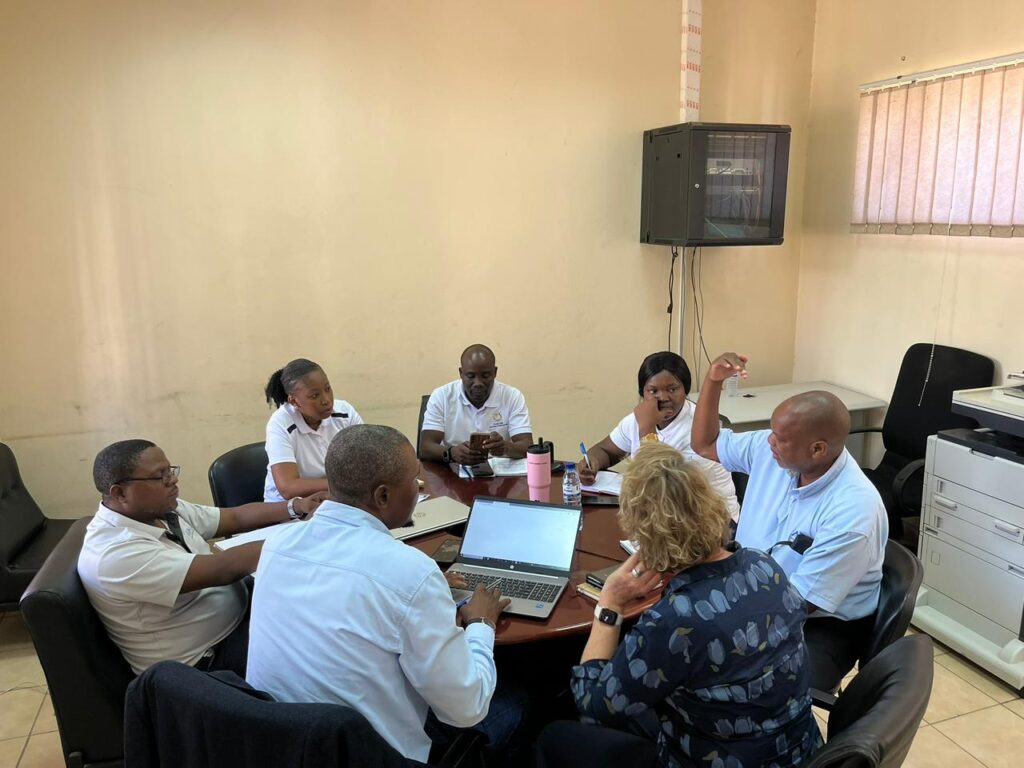
A team consisting of Marijke Jaarsma, Nila Taminiau, Oscar van Zanten and Germain Bakker visited ARA Norte, ARA Centro and ARA Sul to gather input for the Multi-Annual Plan (MAP) for the next phase of the Blue Deal programme. The plan introduces a shift from working with “components” to “tracks”, each focused on clear outcomes such as improved data management or more effective water licensing.
At each location, the team facilitated interactive workshops in which ARA staff identified priorities, realistic targets and the activities needed to reach them by 2030. Engagement was strong at all three locations.
Planning for the next phase with ARA staff
In Maputo, the visit concluded during Mozambican Women’s Day celebrations, offering a memorable moment as DWA colleagues joined the festivities.
A draft Multi-Annual Plan will be discussed during a partnership meeting in July or August.
Water quality and licensing workshop
Bert Jager and Robert Boonstra focused on water quality regulation, licensing and the enforcement of effluent discharge—one of the most complex issues in Mozambique’s water sector.
In Maputo, a two-day workshop at DNGRH brought together staff from all ARAs, DNGRH and partner organisations. Participants exchanged experiences on implementing Decree 52/2023, which governs effluent discharge standards, and discussed gaps in current licensing and enforcement practices.
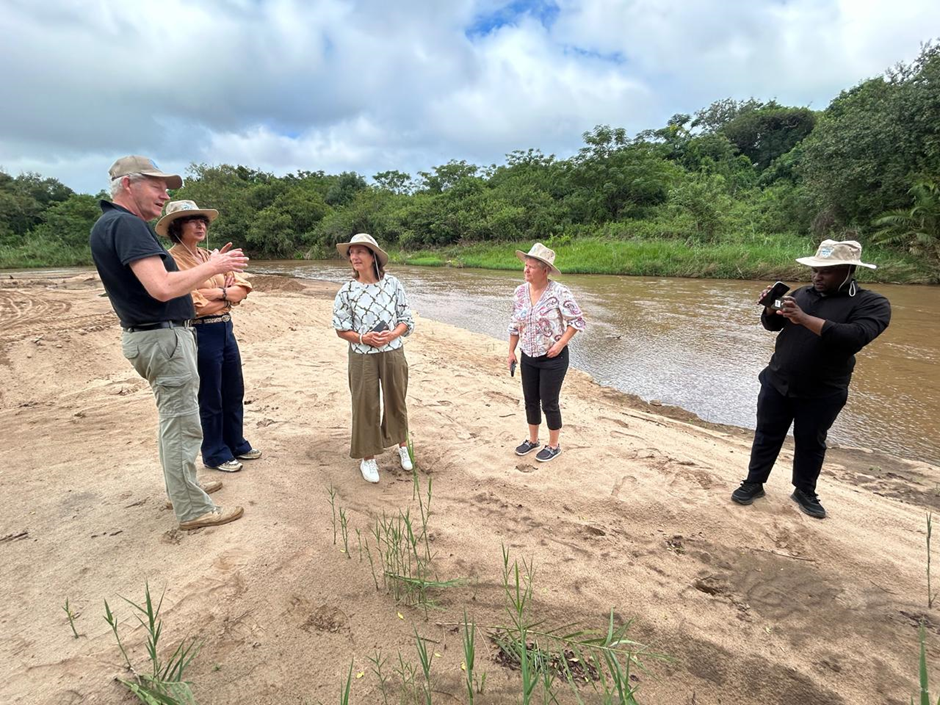
The team then travelled to Nampula to meet ARA Norte and partners to explore the creation of a taskforce to address the impacts of artisanal gold mining upstream of Murrupula, which is causing sedimentation and water quality issues. A field visit to the mining area provided valuable first-hand insights.
ARA Norte will temporarily lead this taskforce, with support from the Blue Deal programme.
Urban drainage and aquatic plant control in Beira
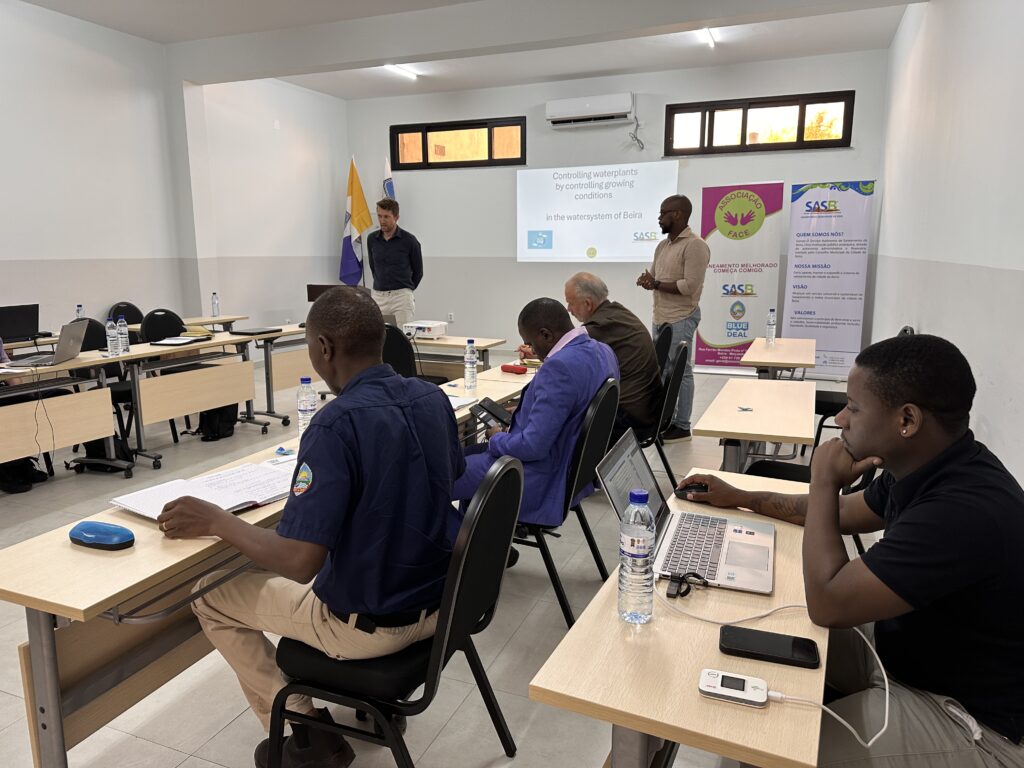
Another DWA team visited Beira to collaborate with SASB (the Beira Autonomous Sanitation Unit) and the NGO FACE.
Ytzen Faber, Martin Bos and Jan den Besten focused on practical challenges in managing Beira’s urban drainage system, which faces ongoing pressure from flooding, solid waste and invasive aquatic plants.
A working session with Dutch water expert Ytzen Faber and NGO FACE and SASB Beira.
The team attended a community meeting in the Inhamizua neighbourhood, where a short play highlighting the risks of emptying pit latrines into drainage channels attracted strong public engagement.
FACE is now developing a proposal for floating barriers to capture waste before it clogs drainage infrastructure, building on an earlier Red Cross pilot. SASB presented its mapping of the city’s canal network and outlined plans for ditch cleaning ahead of the 2026–2027 rainy season.
A dedicated workshop explored two approaches to controlling aquatic plant growth in retention basins: raising water levels to limit reed growth and introducing controlled seawater inflow during dry periods. This resulted in three pilot proposals for canals and basins across the city.
Asset management training
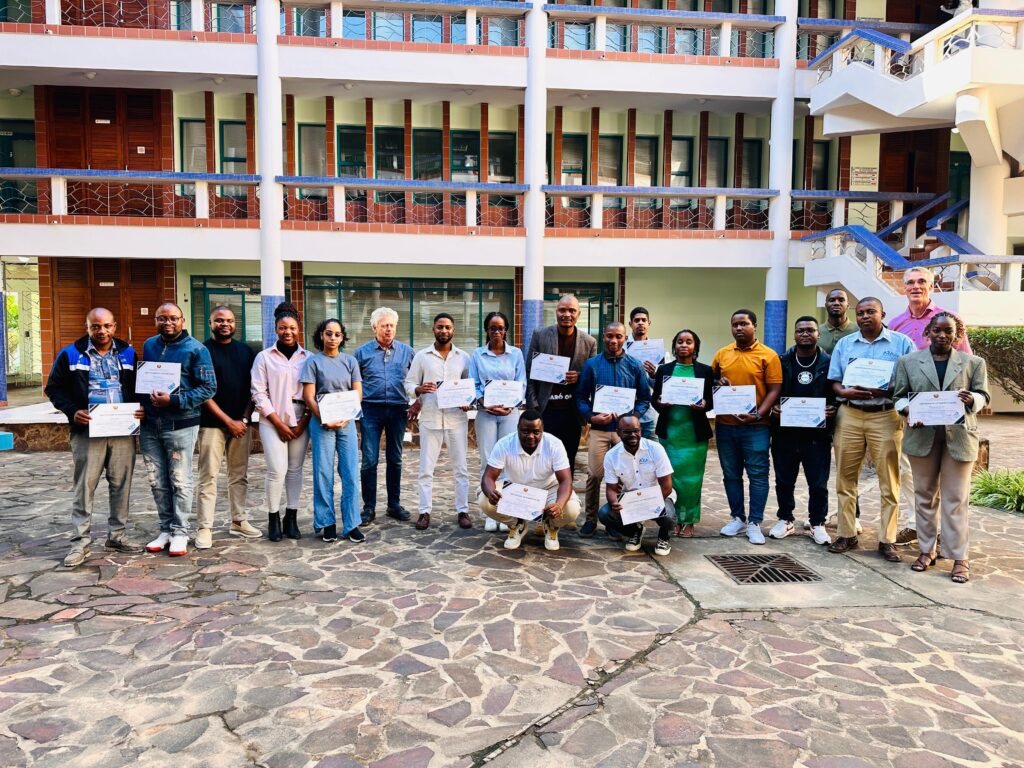
In Maputo, a four-day asset management training took place at DNGRH, bringing together participants from ARA Norte, ARA Centro, ARA Sul, DNGRH and ISPS.
Asset management focuses on planning and maintaining water infrastructure—such as dikes, small dams and canals—in a structured, data-driven way that balances costs, risks and performance over time.
The participants of the Asset Management training
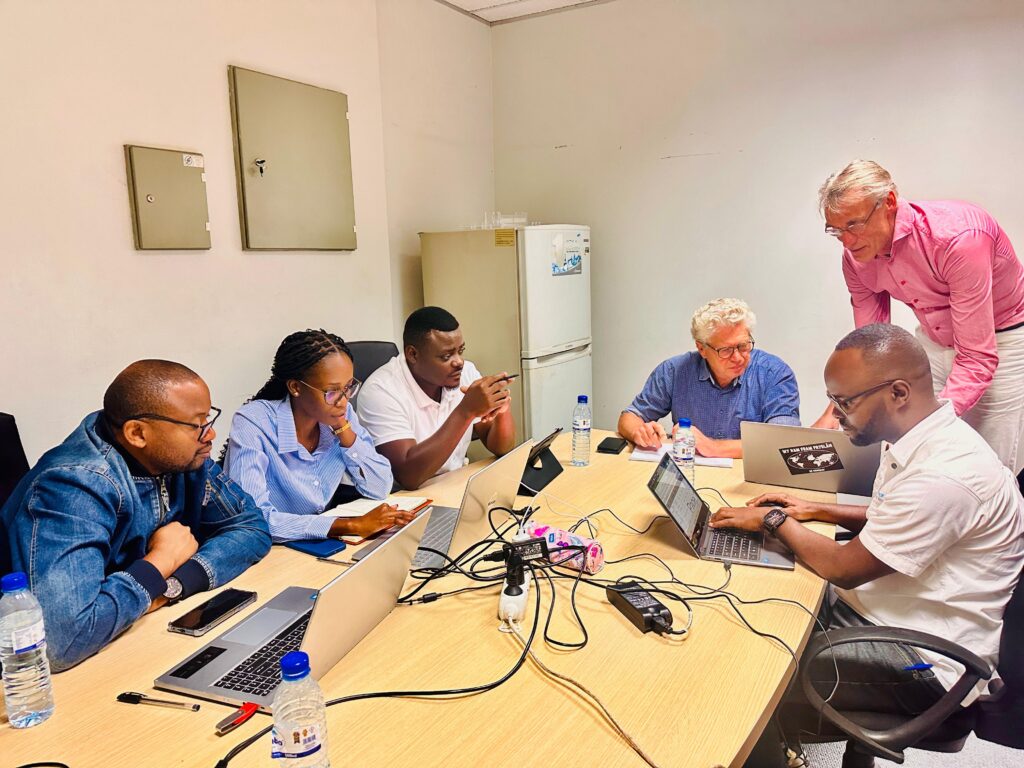
Trainers Pier Schaper and Jan den Besten introduced the core principles before participants worked in mixed groups to develop initial Operation & Maintenance (O&M) plans for small dams within each ARA.
These draft plans will be further refined and validated. At the same time, the ARAs are developing a tool to collect and store small dam inspection data via tablet or phone, synchronising it with a central cloud database.
Dutch and Mozambican partners collaborate during the session
Common threads and next steps
While the four working visits addressed different themes, several shared priorities emerged: the need for a functional national water database, stronger coordination between institutions, and a clear pathway for sustainable progress beyond the Blue Deal programme, which concludes in 2030.
Next steps already underway include a HydroNET training in June, a hydrometry blended learning programme from August to October, continued licensing reforms with DNGRH, and a partnership meeting in July or August to agree on priorities for the 2027–2030 Multi-Annual Plan.
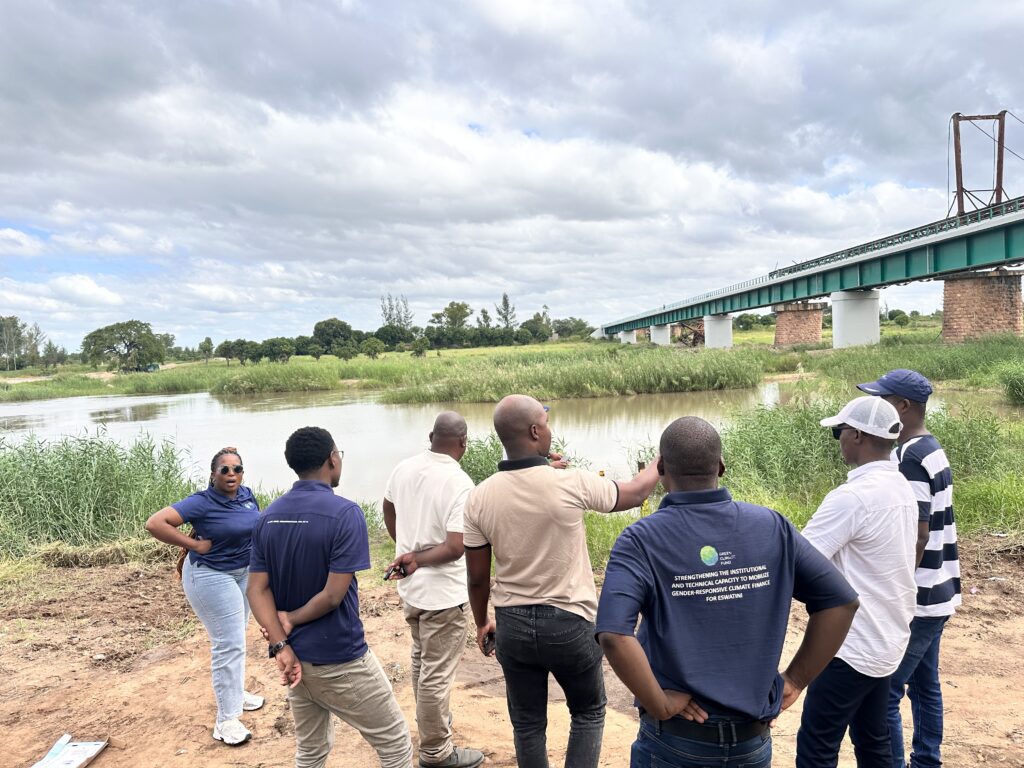
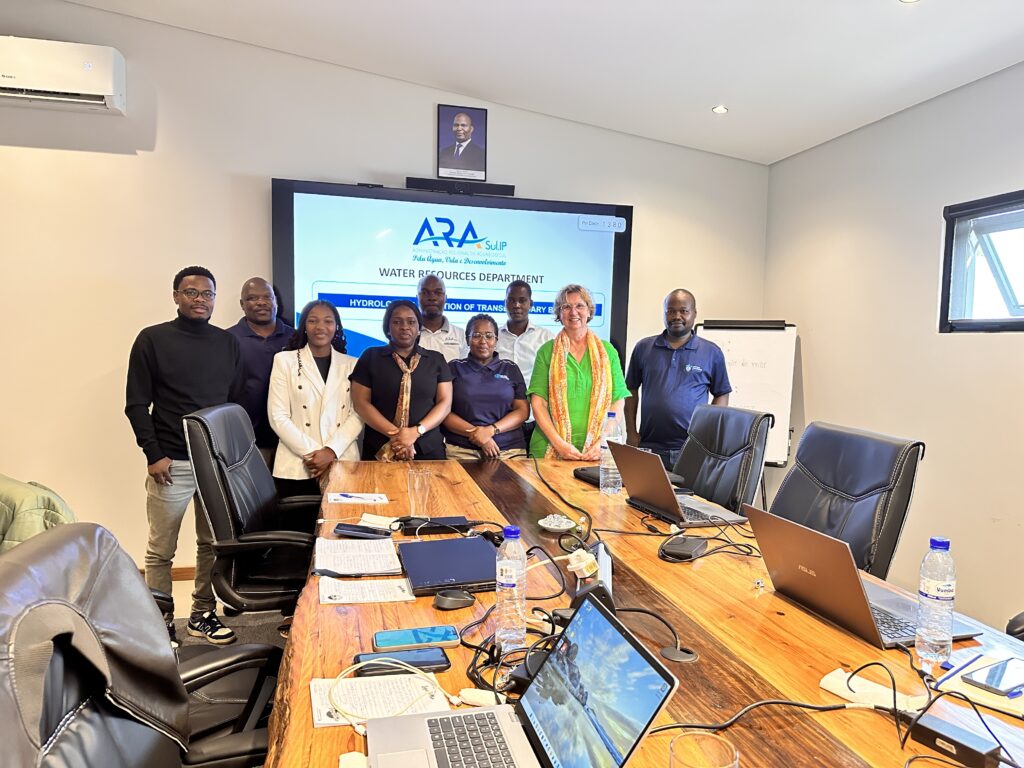
At the end of April, technical staff from ARA-Sul, IP (Mozambique) and JRBA (Eswatini) came together to address the challenges posed by the transboundary Umbeluzi River, in an initiative facilitated by the Blue Deal Mozambique and Eswatini programmes.
The Blue Deal teams from Mozambique and Eswatini came together to address the challenges posed by the Umbulezi river
The meeting focused on exchanging experiences and best practices in hydroclimatological monitoring systems, while strengthening technical and institutional capacities in hydrological data management and response mechanisms to extreme events. This is increasingly important as climate variability intensifies and severe hydrometeorological events occur more frequently.
Reinforcing regional transboundary cooperation
The meeting focused on exchanging experiences and best practices in hydroclimatological monitoring systems, while strengthening technical and institutional capacities in hydrological data management and response mechanisms to extreme events. This is increasingly important as climate variability intensifies and severe hydrometeorological events occur more frequently.
This meeting forms part of the second phase of both Blue Deal programmes, which also support initiatives such as the REMCO conferences, the GLOW project, and communities of practice (CoP) aimed at the integrated and sustainable management of shared watercourses.
The first session of this cooperation focused on assessing the current state of hydroclimatic monitoring networks in the Umbeluzi Basin. It identified key operational challenges, as well as the need to rehabilitate and modernise priority monitoring stations to enable joint data collection.
Team members of the Blue Deal Eswatini and Mozambique partnerships exchange knowledge during their meeting
Participants also explored opportunities to improve interoperability of the HydroNET platform and to strengthen data-sharing mechanisms between the two institutions.
In addition, the session laid the foundations for developing a joint action plan, including priority intervention areas, institutional responsibilities and the next steps for implementing agreed activities.
The agreements reached are expected to contribute to more efficient water management in both countries, with a particular impact in the Maputo region, where the Umbeluzi River serves as both a vital water supply source and an area prone to flooding.
In this blog, our regional Blue Deal partner Tegenu Zerfu Tsige shares his experiences during a visit with Dutch partner experts to the Afar region in January 2026, offering a vivid account of local realities, challenges and experiences.
“The morning sun had just begun to rise, yet its heat already pressed heavily on us as we crossed the shimmering plains of the Lower Awash. A newly constructed road led us toward Asayita and Afambo. Clean, quiet and safe, cutting through a landscape that has never been simple. Every few kilometers, the terrain revealed silent markers of its past: vast plains shaped by violent flash floods, heatwaves trembling above the earth, isolated dome‑shaped wooden houses standing defiantly against the emptiness, and a horizon so open it seemed to carry the region’s long history of struggle, resilience, and hope.
Here, water is never simply water, it is a force, a memory, a fear, and at times, an absence that lingers in the air like a ghost.
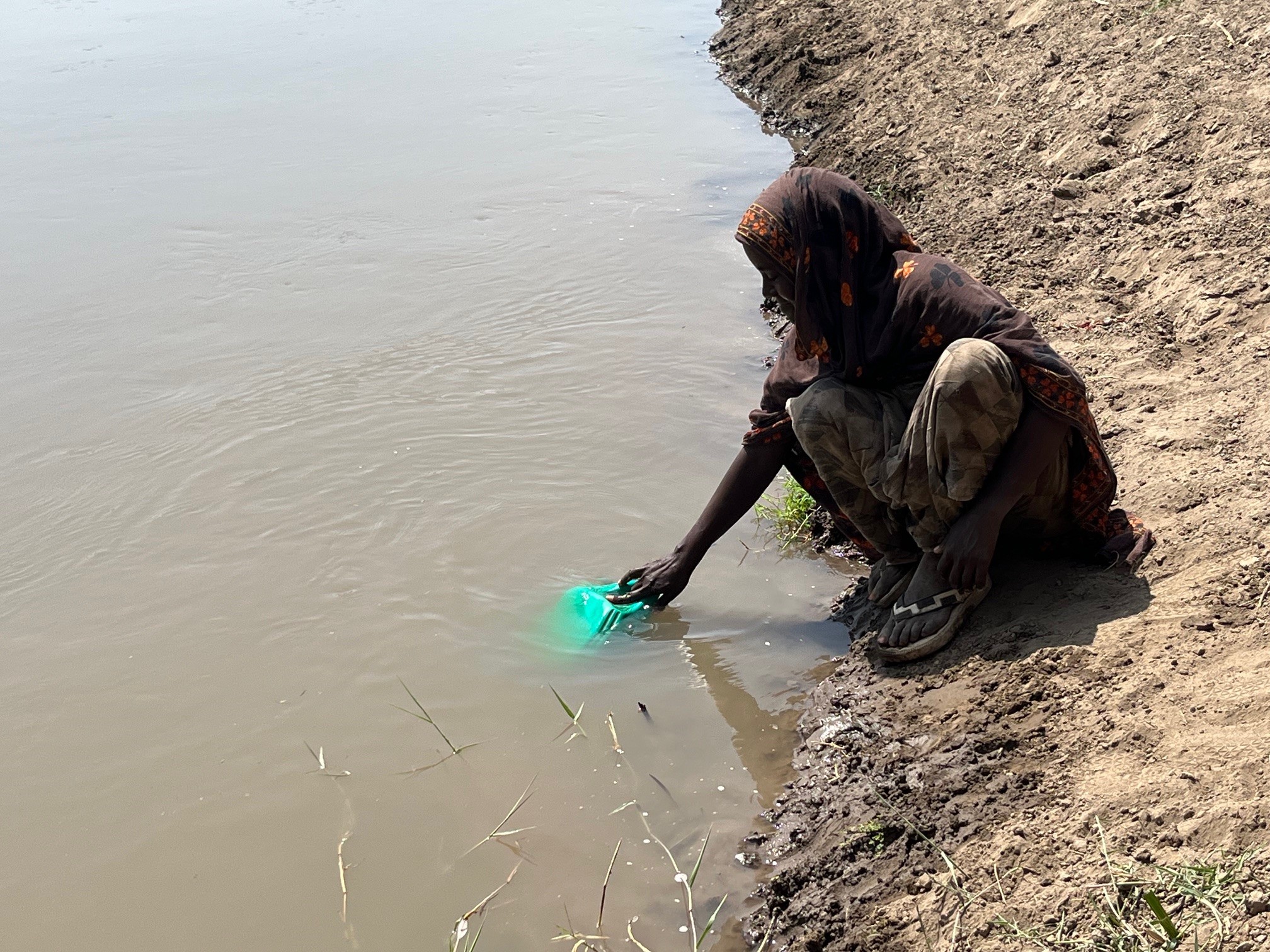
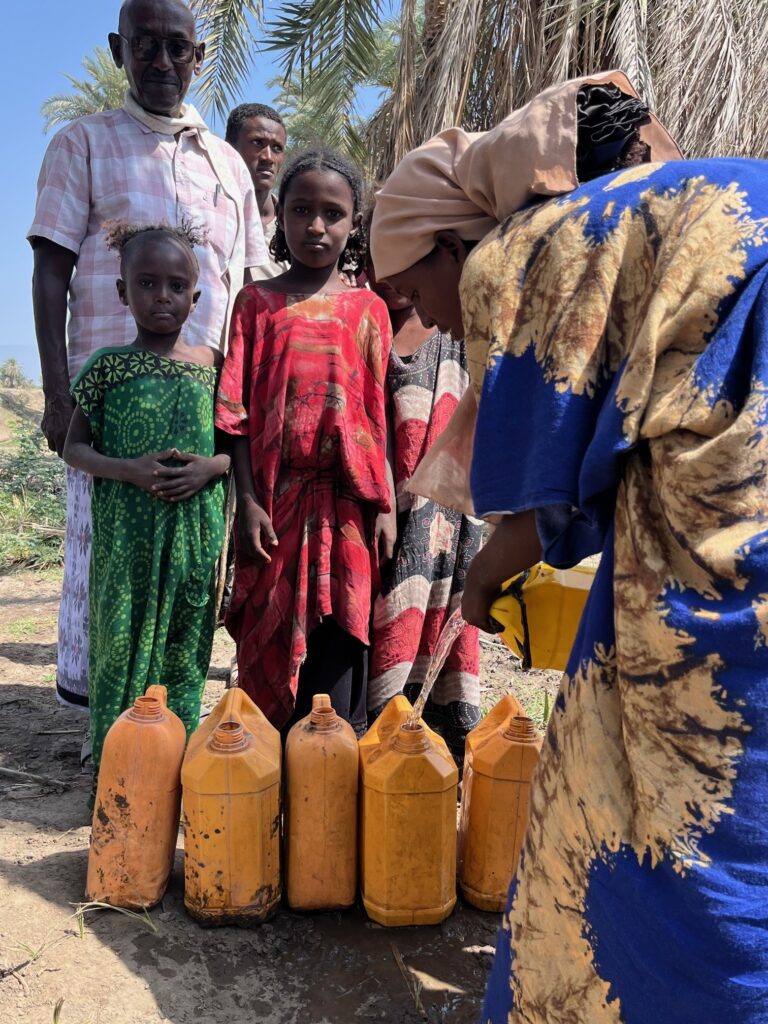
A woman fetches water for domestic use
Afambo & Asayita: where water is both life and a threat
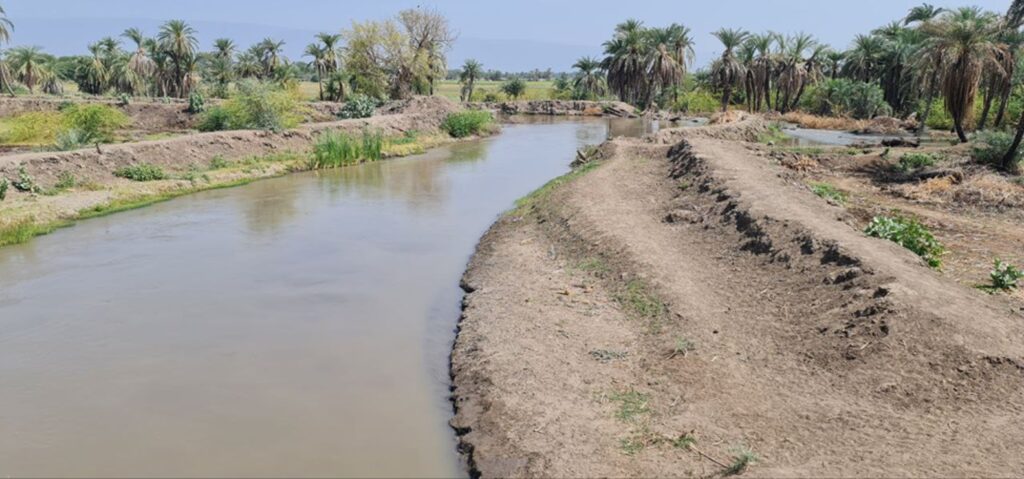
Travelling toward Afambo, near the end of Awash River, the Awash river lies perfectly still. The scene appears peaceful, almost gentle, but the driver who is part of the community, quickly reminds us how deceptive that calm can be.
“This river does not warn twice,” he murmurs, his eyes fixed on the water. “It rises like an angry guest and leaves like a thief.”
The driver explains that floods arrive without warning, rushing over fields and homes with a violent force, only to disappear again and then leave months of drought. These communities live in a constant state of tension and uncertainty, never sure whether to prepare for too much water, or too little.
Along the riverbanks, we see clear signs of years of intervention: dredged channels deepened beyond their natural form, dikes repeatedly patched, and flow‑control structures intended to protect but quietly reshaping the river’s behavior. These works can reduce flooding temporarily, but they also disconnect the river from its flood plain, accelerate sediment movement, and sharpen hydraulic drought for smallholders downstream.
Further along these fields, we recognise more issues:
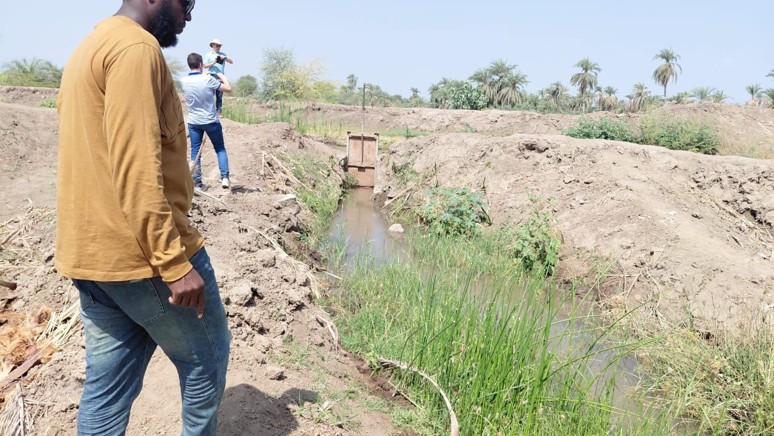
A poorly located diversion gate
diversion points built in the wrong place
poorly aligned and weakened dikes
unmeasured abstractions pulling water unpredictably
salt crusting over waterlogged soils
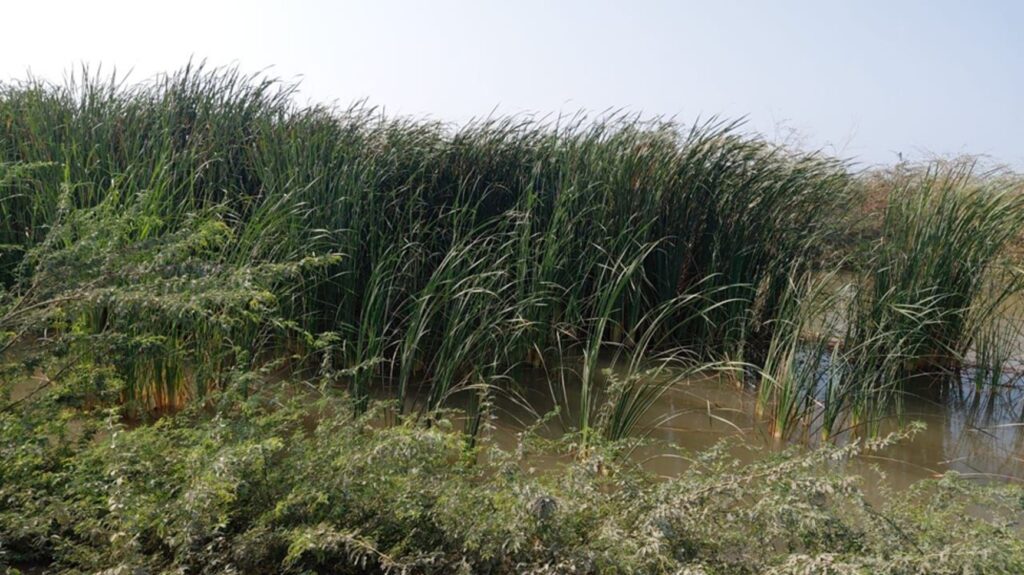
invasive weeds claiming canals
One elder pointed toward the sluggish river and said softly: “Hydraulic drought is not when water is gone. It is when water passes you, but refuses to work for you.” His words capture the contradiction: water visibly flowing past, yet most irrigation blocks remain unable to access it.
A traditional governance system
As we continue our conversation, another dimension of this region emerges: not defined by terrain, but by people and their social fabric. Within the Afar community, clan structures operate under a governance system that is seldom formally recognised by outsiders, yet it functions with remarkable coherence and authority.
A newly built dike in Assiyta Woreda
At the heart of this system is maa’da, the Afar customary law. It is not written in any document or codified in legal texts; instead, it lives in collective memory, shared responsibility, and the wisdom of elders. These elders, carrying decades of lived experience, serve as custodians of justice and social order. Their decisions, shaped by deep cultural understanding, guide community life in ways that external observers often overlook.
We learned how responsibilities are structured with quiet clarity:
Makaban: the elder – Respected not for his title, but for wisdom, fairness and age – Leads negotiations, directs labour, and holds the moral authority of the clan.
Fi’ima: the middle generation – Trusted middle-aged men who enforce decisions, organise communal work and act as intermediaries between the elder generation and the youth.
Ukubala : the youth The strength of the system. They reinforce dikes, clear canals, patrol grazing boundaries, and mobilize immediately when the river threatens to break its banks.
No written protocol exists, yet the system is efficient: the Makaban speaks. The Fi’ima relay the message. Household clusters mobilise within hours. If a dispute arises over water, grazing, canal access, or boundaries, everyone gathers beneath a tree. Memory, precedent, and negotiation guide the conversation. Honour carries more weight than punishment.
“A rule written on paper can be torn,” an elder said. “A rule written in the mind cannot be erased.”
Girls waiting to fetch water from the bank filtration
Discussions beneath the palm tree and a newly built dike
Also today, we gather beneath the shade of an old palm tree, beside a newly constructed but already eroded dike. Near us, a young girl bends down to collect water for her household. The ground around her is dusty, the dike crumbling at its edges a reminder of both the river’s force and the community’s ongoing struggle to protect their land.
As I stood there observing, I began asking simple questions: Who built this structure? Why was it built this way? What does it mean for the people who rely on it? These questions open a door. Slowly at first, then with growing intensity, concerns begin to surface. The elders, who had been listening quietly, eventually stepped forward more direct, more emotional, and unmistakably frustrated.
They explain that a technical study was conducted, machinery mobilised, and a contractor brought in. But all of it happened without genuine consultation in the community. The process overlooked the very people who depend on the river and the dike for their survival. “They finished the work and left,” one elder said. “Then the river broke through. And when the water came, we were the ones who had to fix it with our own hands, with our own governance system, with whatever materials we could gather.”
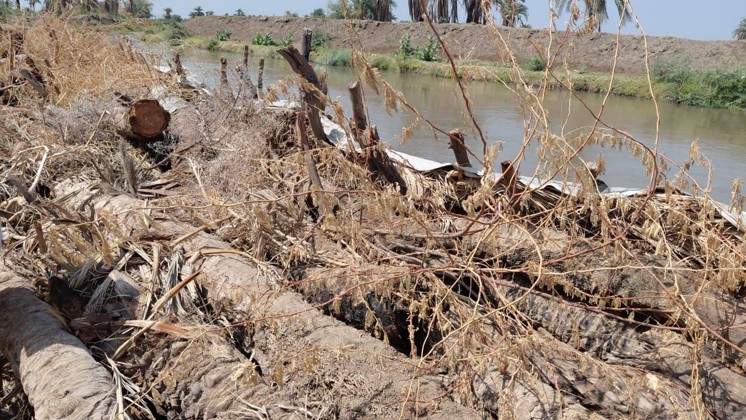
Despite limited resources, the community came into action. They rebuilt what they could: using old palm trunks as support columns, weaving palm leaves, gathering soil, organising labor through their clan system. They showed us how they even construct infiltration wells near the riverbank simple structures that cool and filter water for drinking when the river runs too muddy to use.
“We can do it,” another elder said. “But the river’s power is sometimes beyond our capacity. Still, we work. We organise ourselves. We don’t wait.”
A dike, maintained by the local community
He pauses, looking toward the damaged fields. When the river last breached the dike, it destroyed 120 hectares of land fields that families depended on. Then he adds quietly, “It would be better if our voices were truly heard. We are the beneficiaries. We live here. Sustainable dikes require our knowledge, our experience, our involvement.”
Later, another elder summarises it in a single sentence that captured the spirit of the community:
“If we wait for others, the river will move before they do. So we stand with our hands, our shovels, and our unity.”
Toward the silent edge of Awash and beyond
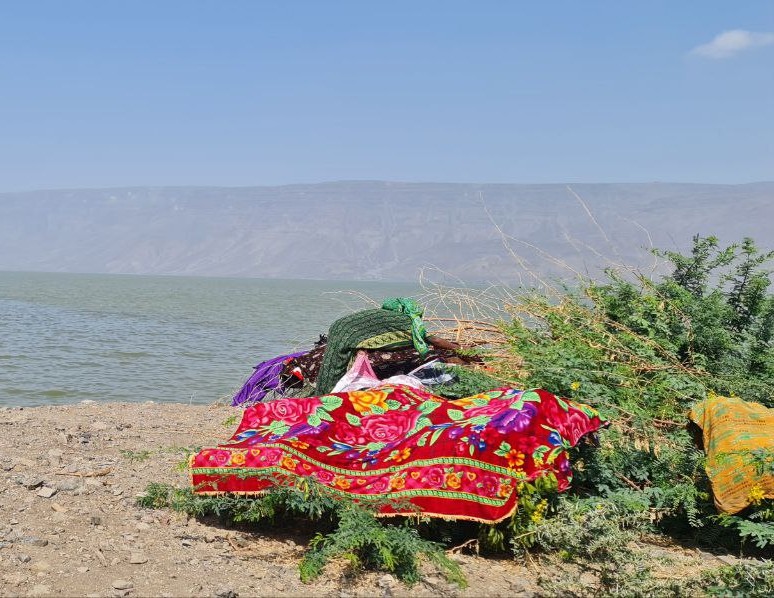
Later in the afternoon, our journey takes us further east, toward the far end of the Awash river where its long course empties into Lake Gemeri. The noise of the world slowly fades behind us. The wind settled. We see a vast wetland system that feels almost untouched. Tall grass sways. Birds hop, whistle, and dance between the reeds. Children splash near the shore, washing clothes and cooling themselves under the soft light. The entire setting feels like a healthy ecological pocket, an environment where water, land, and human life still move in harmony.
Lake Gemeri, where the Awash river ends, with a vast mountain range as a backdrop
Toward the Djibouti border where two countries meet
As we drive east near the Djibouti border, the elders point out riverbeds that had flowed decades earlier, but are now dry and silent. The terrain itself tells the stories, quiet but full of clues about past hydrological forces. Reaching the border feels like arriving at a natural T‑junction where two sisterly countries meet, connected by boundaries and shared history and intertwined livelihoods. The land here carries a peculiar stillness, yet the landscape speaks volumes about what once was and what could return if ecological systems are preserved and cross‑border cooperation strengthened.
A gesture of hospitality
On our return from the trip, the Woreda Water and Irrigation Head honours us with a warm and dignified lunch. The genuine and respectful and inclusive hospitality, beautifully accommodated both Muslim and Christian customs around the same table. It was more than a meal; it was a cultural bridge, a symbol of unity and shared purpose.
From the eroded dikes maintained through local governance, to the peaceful wetlands of Lake Gemeri, to the striking silence of the Djibouti border every place revealed something deeper. It showed how water shapes lives, cultures, economies, and ecosystems. And how communities, even with limited tools, hold centuries of knowledge about adapting, surviving, and sustaining their environment.
Day 2. A landscape of opportunity and challenge: the Dubti–Tendaho corridor
As we continued our journey through the Dubti–Tendaho area, the landscape opened into a wide expanse of plains—fertile land once shaped by the Awash River’s seasonal floods, now increasingly transformed for modern irrigation. The Tendaho Dam, standing upstream, offers immense potential: stabilizing flows, supporting wheat production for national programs, and enabling large-scale commercial agriculture. Well,‑organized settlements stretch along the plains, inhabited by both local Afar communities and technical staff working in the sugar estate. Compared to the downstream basin, this area feels more developed equipped with irrigation infrastructure, accessible roads, and visible signs of agricultural ambition.
But the picture is not without its complexities. Salinity patches shimmer on some fields, a warning of long-term soil stress. Market chains remain uncertain, and many farmers worry whether the available water will be enough once the entire command area becomes fully cultivated. Downstream users raise similar concerns: how will dam releases be managed, how will maintenance be ensured, and what happens during peak flood months when the river challenges even the most carefully engineered systems?
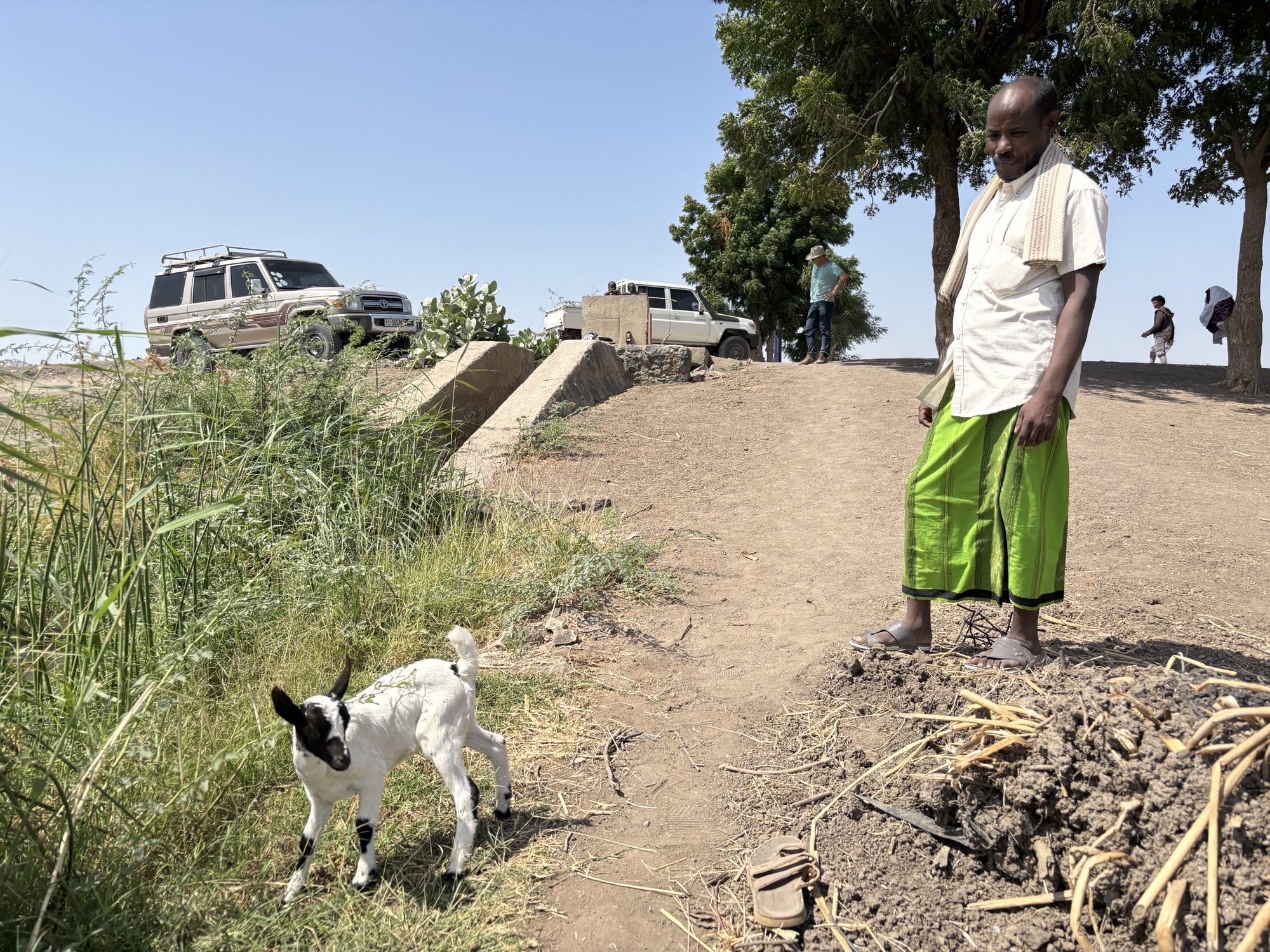
A man and his young goat along the roadside, a typical sight in daily rural life
Along the roadside, we encountered a man carrying a tiny goat only a few weeks old tucked in the crook of his arm, heading to the market. The sight startled my Dutch colleagues, yet for the locals it was an ordinary expression of daily life, resilience, and livelihood strategies rooted in pastoral culture.
The Woreda office head, proud of the region’s potential, walked us through the area with great enthusiasm. He emphasized that with proper water administration, Dubti could become a model of modernized agriculture in the Awash Basin. We observed aqueducts, concrete turnouts, and well-designed irrigation structures—evidence of thoughtful engineering. Yet many secondary canals were clogged with weeds, and silt had begun to accumulate in key distribution points. Water allocation remained inconsistent, and communication between upstream operators, district technicians, and water users was often fragmented.
The weeds are claiming the canals
“For now, the water is enough,” one technician explained, “because much of the irrigable land is still idle. But once everything becomes active, water stress will be inevitable.” His words reinforced the urgency: this is precisely the time to establish a strong, coordinated water administration system—one capable of balancing demand, measuring abstraction, planning releases, and protecting both upstream and downstream users.
The Dubti–Tendaho corridor stands at a crossroads. Its potential is undeniable, but so are its risks. And as we drove onward, past fields of wheat, over canals lined with grass, and through communities carrying both hope and uncertainty, it became clear that the future of this landscape will depend not only on infrastructure, but on governance, communication, and a shared commitment to sustaining the river that runs through them all.
A basin at a crossroads
Across the basin, evidence of stress within the environment was impossible to miss:
uncontrolled abstraction
unpredictable floods
longer dry spells
rapid irrigation expansion
land‑use change
Challenges now coexist with opportunities: invasive species spreading, salinity quietly expanding, grazing lands shrinking, yet markets opening, knowledge growing, and communities adapting in real time.
Everything seen, heard, and felt in these two days settled deep in the hearts of the team members. Heading into the workshop in Semera, all carried dust on their shoes – and the voices of the people in their minds.
The Semera workshop
When the participants entered the Yangudi International Hotel for a workshop to discuss the issues they had witnessed during their field visit, the atmosphere felt heavy with responsibility, yet earnest and quietly hopeful, as if everyone sensed that the next hours could shape the basin’s future. Around the room, familiar faces carried their own stories: the Branch Office Head whose eyes reflected years of navigating the basin’s pressures, Afar Bureau officials standing firm in their determination to advocate for their communities, and the Dutch water experts, humbled by the realities they had witnessed during the field visit, now ready to listen, learn, and to navigate collaboration points. This wasn’t a meeting, it was a crossroads.
Partnership manager Rens Huisman opened with the message that set the tone: “Fair share for all”, the motto of the Blue Deal Awash Partnership in water allocation and an aspiration carried from the fields into the conference hall.
As each partner spoke, the room shifted from presentations to confessions, confessions of gaps, of failures, of the collective desire to do better: That data was missing. That institutions were overstretched. That customary law held wisdom regulators had yet to honor. That downstream voices had remained too quiet for too long.
Yet beneath those confessions was something powerful: a shared willingness to rebuild trust, to learn from mistakes, and to move forward together. And as groups formed around tables, the energy transformed. Maps were spread out, markers uncapped, hands animated. The fatigue of travel and long field days melted into lively argument and laughter.
One group spoke passionately about building IWUAs – “not as paperwork, but as bridges between conflict and cooperation.”
Another debated the need for real-time monitoring—“data means nothing unless the farmer understands what it means for tomorrow’s irrigation.”
A third group dreamed of universities stepping into the heart of basin issues -“because knowledge must stand shoulder-to-shoulder with communities.”
Slowly, the chaos turned into clarity:
From data to integration
From voices to inclusion
From institutions to collaboration
The basin’s story, once fragmented, began to weave itself into a shared narrative.
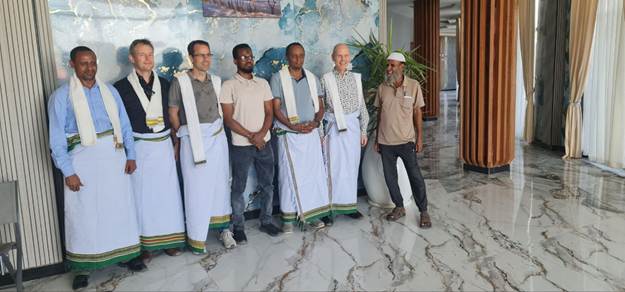
A Moment That Became a Memory As the workshop drew to a close, an unexpected moment unfolded. Officials from the Afar Water and Energy Bureau stepped forward carrying beautifully folded traditional Afar cultural clothes. When they placed the garments on the Dutch team embroidered, warm, symbolic the reception space fell silent.No slide, no graph, no report could have spoken louder. It was a gesture that meant:
“You have walked our land. You have listened to our people. Now you are part of our story.”
In that moment, the partnership transcended technical roles. It became human. A commitment sealed not by signatures, but by respect.
The team in Afar cultural cloth
What the basin needs now: recommendations emerging from the journey
The conversations with elders, officials, irrigators, pastoralists, and technical staff made one message unmistakably clear: sustainable water allocation cannot be engineered from an office desk alone. It must be built from the ground up through understanding, coordination, trust, and shared responsibility.
The basin now needs:
A deeper understanding of the whole system: Not just hydrology, but the social, economic, and cultural systems that shape water decisions. Both natural flow processes and human‑made dynamics must be understood together, not separately. Clear mapping of users and institutions: Who takes water, where, when, and under what rules? Without clarity, fairness becomes impossible and conflict becomes inevitable. A governance system built on connection, not competition: Formal and informal systems must not stand in parallel lines. They must intertwine, share information, and build a collaborative culture from basin to kebele. Recognition of customary governance: Systems like maa’da are not informal gaps in governance they are functioning structures that guide daily life. Any water‑allocation system that ignores them will fail before it begins. Bridges between clan structures and formal IWUAs: These two systems do not have to compete. In fact, the basin’s stability relies on them connecting, coordinating, and reinforcing one another. Transparent communication on Tendaho Dam releases and administration: Communities repeatedly raised concerns about unpredictable flows. Clear, timely, and open communication must become standard practice. Reliable measurement at abstraction points: Without accurate data, there can be no planning, no fairness, and no accountability. Protection of ecological flows and pastoral grazing zones: Wetlands, lakes, and floodplains provide life far beyond their borders. Protecting them is not optional—it is foundational for long‑term sustainability. Climate smart agriculture and livelihood improvement
*Many thanks to Tegenu Zerfu, Regional programme manager in the Blue Deal Ethiopia Awash partnership, for sharing his story.*
This March, Blue Deal Eswatini had the honour of hosting two Dutch Ambassadors in the Kingdom of Eswatini. Although Eswatini falls under the jurisdiction of the Netherlands Embassy in South Africa, the Netherlands Embassy in Mozambique also actively follows developments in the country because of the importance of transboundary water management for Mozambique. As a result, Blue Deal Eswatini benefits from the engagement of both Embassies.
Blue Deal Eswatini with the Dutch Ambassadors to South Africa and Mozambique
Mrs Joanne Doornewaard, Dutch ambassador to South Africa, and Mrs Elsbeth Akkerman, Dutch ambassador to Mozambique, travelled to Eswatini to learn more about the goals, progress, and partnerships of Blue Deal Eswatini.
Launch of a new transboundary programme
In addition a programme was launched by INMACOM to strengthen transboundary water cooperaton with data sharing, improving institutional capacity and sharing knowledge on droughts, floods and climate change. INMACOM stands for the Incomati and Maputo Watercourse Commission. It is a transboundary organisation for water management in South Africa, Eswatini and Mozambique to manage the water resources of the Incomati and Maputo River Basins at planning level. It launched their component of the VUNWE programme “Vitalizing, Unifying, Neighbouring Water Management Empowerment” which is facilitated by a consortium of five regional and international water organisations led by IHE Delft and financially supported by the Netherlands Embassy in Mozambique. The two Ambassadors, together with the Commissionor of INMACOM launched the programme by pooring water in a calabash.
Field visit: from monitoring to irrigation
Blue Deal Eswatini guided the ambassadors to several key sites demonstrating transboundary water management in action. They visited:
a monitoring station on the Mbuluzi River, essential for providing timely inflow data to Mozambique
a distribution point where water from the Komati River is allocated to sugar plantations
a pumping station that supplies water to irrigation sprinklers in the fields
Throughout the visit, discussions focused on the roles of the Joint River Basin Authorities, Irrigation Districts and the Ministry of Natural Resources and Energy, as well as opportunities for further collaboration within the VUNWE programme. With all Eswatini’s rivers flowing into either South Africa or Mozambique, transboundary cooperation remains central to sustainable water management.
We look back on a highly valuable visit and look forward to further strengthening our partnerships.
From ambassadors’ engagement to the next generation: Wetskills Eswatini
Strengthening cooperation across borders also means investing in the next generation of water professionals. This month, Blue Deal Eswatini, together with the Joint River Basin Authorities (JRBA), also proudly hosted the first-ever Wetskills Challenge in Eswatini.
The Wetskills participants from Eswatini, South Africa and the Netherlands
This two‑week programme brought together young professionals from Eswatini, South Africa and the Netherlands to work on real-life water challenges. Supported by experts from KOBWA, the Mbuluzi Ecosystem Restoration Project, UNESWA, and INMACOM, participants explored cases focused on:
Building trust and payment culture for sustainable water services
Institutional alignment in water allocation and land use
Innovative financing for climate resilience
Through teamwork and intercultural exchange, participants demonstrated that innovation in water management is not tied to one nation, but emerges from collective energy and collaboration across boundaries.
The first Wetskills Eswatini was intense, inspiring and joyful. Participants arrived as individuals, worked as a united group, and left as connected water professionals who will continue contributing to the sector wherever their paths lead.
At the beginning of November, the 8th REMCO – the three-country conference on River and Environmental Management Cooperation – took place in Maputo, Mozambique. Hosted by our water colleagues in Mozambique, REMCO is a powerful regional platform for co-learning, innovation, and inclusive decision-making.
More than 150 participants from Mozambique, Eswatini, and South Africa – the countries that share the Incomati-Maputo river basin – came together to strengthen resilience and governance in transboundary water management. Alongside the regional water authorities, Dutch and German water partners also joined the discussions, underlining the international commitment to sustainable water solutions. (See our earlier news on the Remco conference)
Blue Deal Eswatini’s Celine de Visser and Herbert Bos receive a ‘Kanga’ during a meeting with Eswatini’s Minister of Natural Resources and Energy, together with his Under Secretary, Advisor and Legal representatives
Blue Deal Eswatini: Building Capacity and Collaboration
The following week, Blue Deal Eswatini travelled west to continue the work on knowledge exchange, transboundary water management, capacity building, organisational development, and stakeholder participation.
A key message during this visit: all end users of surface and groundwater must contribute to the work of the water authorities. This principle is implemented together with the Joint River Basin Authorities (JRBA) Project Board – the central organisation coordinating five regional water authorities. Contributions are based on capacity and benefit: small farmers pay little, large companies pay more.
At the same time, the sector faces the challenge of becoming more efficient – having to “do more activities with the same number of people.” We had the privilege of discussing this challenge and necessity with the Minister of Natural Resources and Energy, HRH Prince Lonkhokhela, who honoured us by personally presenting a traditional Kanga as a token of appreciation (see picture).
Next Steps for Organisational Optimisation
During the visit, meetings were also held with the JRBA board and staff, where the team engaged in fruitful discussions with the working committee about the need for and next steps in optimising the organisation of the water sector. This was concluded by providing feedback to JRBA management to prepare follow-up actions together with the Blue Deal.
Looking ahead
In the coming years, the cross-border component of cooperation between South Africa, Eswatini, and Mozambique will become increasingly important. Strengthening governance, improving efficiency, and ensuring inclusive participation will remain at the heart of this collaboration.
This week, the 8th International REMCO Conference is taking place in Maputo, Mozambique. The event brings together over 150 participants from Mozambique, Eswatini, and South Africa - three countries that share the Incomati–Maputo basin - to strengthen resilience and governance in transboundary water management.
REMCO conference 2025
At the heart of REMCO lies the technical and operational exchange between the three catchment management authorities:
ARA-Sul IP (Administração Regional de Águas do Sul – Mozambique)
JRBA-PB (Joint River Basin Authorities Project Board – Eswatini)
IUCMA (Inkomati-Usuthu Catchment Management Agency – South Africa)
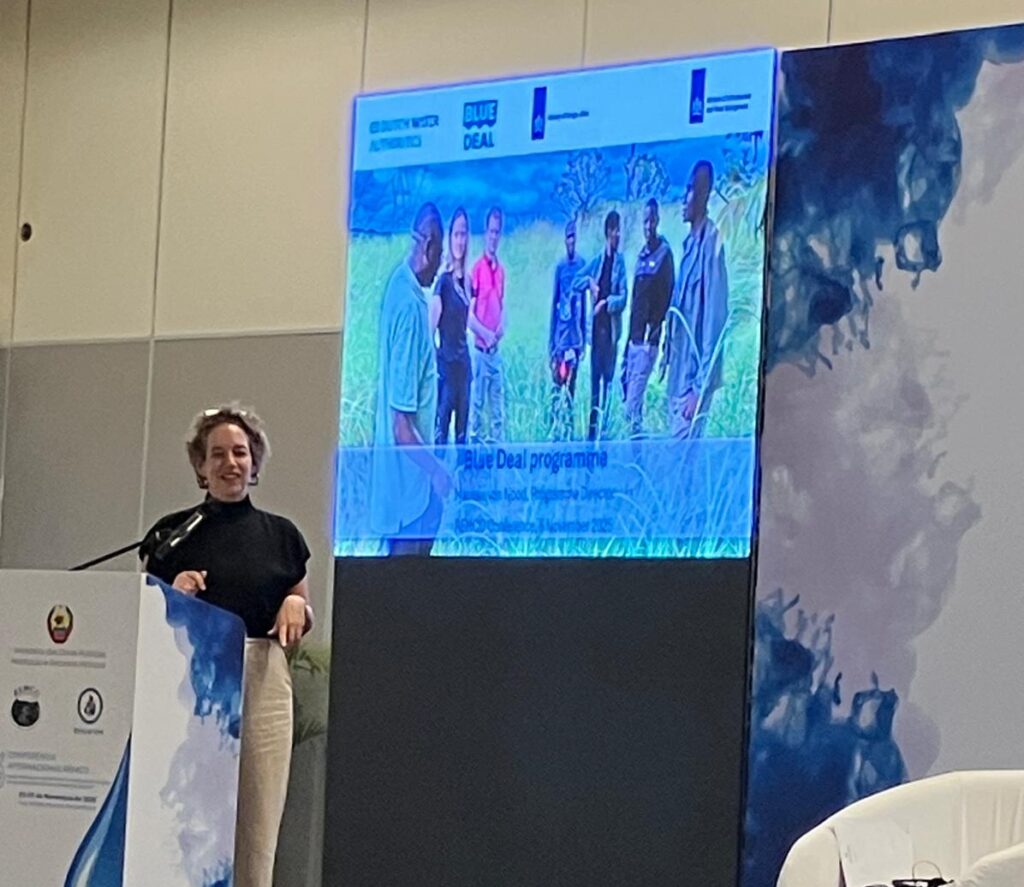
Marieke van Nood presents at the REMCO conference
Together, they collaborate on real-world water management challenges, such as:
Improving flood early warning systems, especially after the flash floods in the Incomati Basin in 2023
Implementing equitable water pricing
Sharing hydrological data and models to improve forecasting and preparedness
Jointly developing cross-border projects that benefit local communities
Blue Deal’s role
The Blue Deal partnerships in Eswatini, Mozambique, and South Africa actively support these authorities on these topics. During the conference, they facilitated knowledge exchange, helped shape discussions and committed to following up on the agreements made. Blue Deal’s Ethiopia Awash partnership also joined the conference, sharing key insights during a discussion on Basin Information Systems. This makes REMCO a powerful regional platform for co-learning, innovation, and inclusive decision-making.
Spotlight on inclusion
To support the topic of inclusive decision-making, the first day of the conference centered around women and youth in water management. Climate and water-related challenges often have the greatest impact on vulnerable people and the communities they live in. Tanah Meijers, Focal Point of Social Inclusion within the Blue Deal, emphasised that these individuals should not only be seen as stakeholders in solutions, but should be actively engaged as partners in designing those practical solutions.
As highlighted by Marieke van Nood, Blue Deal’s Programme Manager during her speech on the final day of the conference: “Together, we make transboundary water management practical and operational. And that is key for a future-proof Incomati – Maputo river basin”.
Water and food are deeply interconnected. Without reliable access to clean and sufficient water, food production cannot thrive. Across the world, climate change, population growth, and competing water demands increasingly disrupt this balance. Sustainable water management is therefore the foundation for long-term food security.
The Blue Deal programme consists of partnerships between Dutch Water Authorities and regional water institutions in 15 countries and works to restore and maintain this crucial water balance. By strengthening regional water authorities and supporting integrated water resource management (IWRM), the Blue Deal contributes to fair, efficient and sustainable use for both people and nature.
While food security is not the primary goal of the programme, many partnerships contribute directly or indirectly to more resilient agricultural systems. Through smarter irrigation, fair water allocation, and ecosystem restoration, we help improve water stability, boost agricultural productivity, and strengthen rural livelihoods.
Four Pillars of Water and Food Security
The Blue Deal contributes to food security through four interconnected pillars that together ensure a balanced and resilient water system:
Insights in the water system and availability: Water quality and quantity monitoring, water balance modelling
Increasing water availability & reliability: Water allocation plans, implementing water retention measures (often Nature-based)
Access & inclusion – ensuring equitable water distribution and strengthening participation of (smallholder) farmers, women, and marginalised groups.
By working together on these pillars, the Blue Deal promotes the establishment of a sustainable balance between water use for agriculture, ecosystems, cities and (rural) communities. In this special news item, we highlight inspiring work in Burkina Faso, Peru and Eswatini – where Blue Deal initiatives are making a tangible impact on the water-food nexus.
Burkina Faso: Inclusion, Gender Equality, and Nature-Based Water Solutions
In Burkina Faso, the Blue Deal partnership and the complementary ECDD–GIRE programme jointly promote social inclusion, gender equality, and sustainable water management to enhance food security.
Pictured:The project in Burkina Faso supports local farmers and women empowerment
Empowering Farmers and Women – The project operates across five water regions, supporting local water committees and agricultural cooperatives to organise farmers around equitable irrigation access. Women, often key contributors to rural economies, are empowered through capacity building and participation in water management.
Climate-Resilient Water Infrastructure – The programme rehabilitates reservoirs and applies erosion-control measures such as sand traps, hedges, and reforestation. These protect farmland, improve soil moisture, and increase productivity.
Nature-Based Solutions for Soil Fertility – Business cases for Nature-Based Solutions (NbS) are being developed to scale sustainable land management and agroforestry. In 2023, interventions with Fertilizer Trees covered 48 hectares, improving soil fertility and moisture retention.
Peru: smart irrigation and capacity building
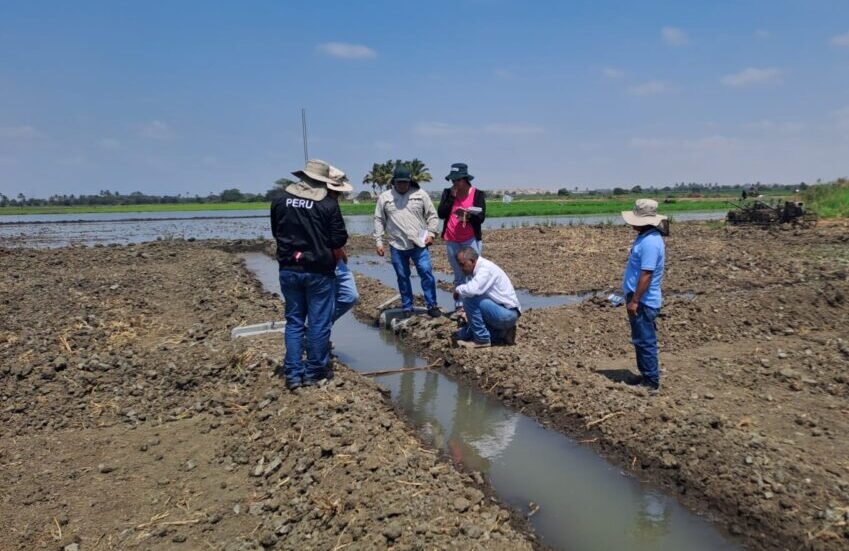
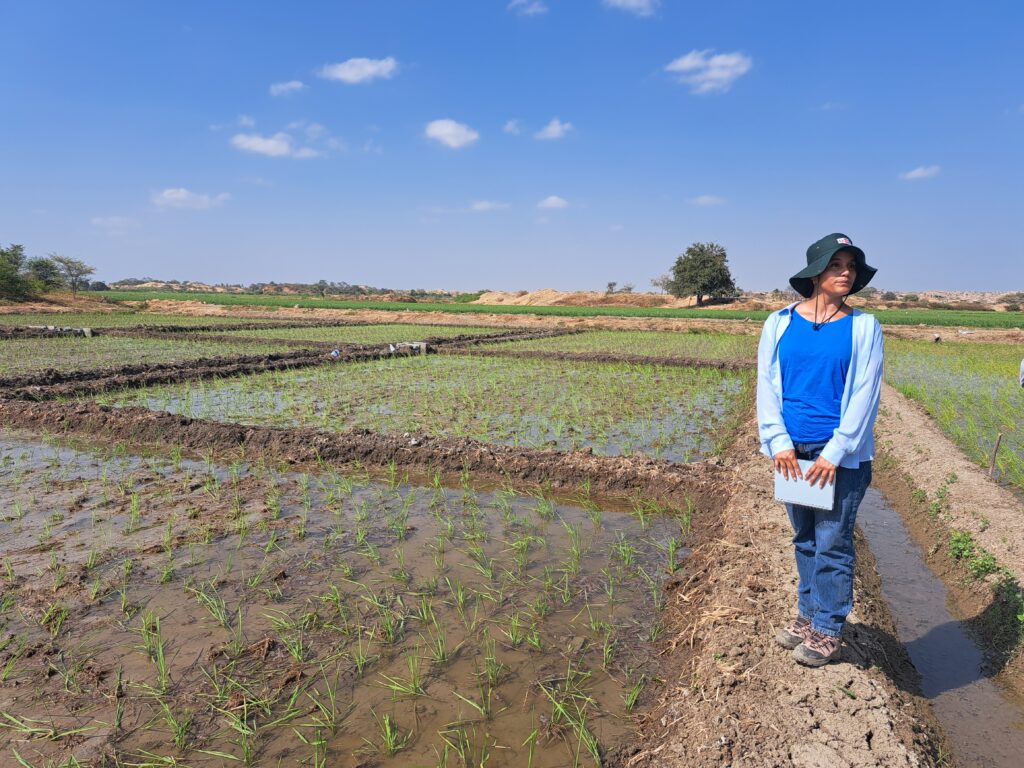
In northern Peru, agriculture, particularly rice cultivation, depends heavily on irrigation, making it vulnerable to drought and inefficient water use. The Blue Deal partnership focuses on climate adaptation and innovation in water management to strengthen food security.
Pictured:Rice study in Piura, Peru
Optimising Water use for Rice Production: Research in the Piura region shows that water use for rice can be reduced even increasing yields. In 2025, the National Water Authority (ANA), the National Agrarian Institute (INIA), and local universities are guiding young researchers to standardize efficient irrigation volumes in the Chira Valley.
In the valley 12000 hectares of rice cultivation are irrigated with 17000 m3/ha/agricultural season. According to the research the new estimated volume is 14000 m3/ha/agricultural season. This represents a water saving of 36 million of m3 per agriculture season and considering that in the Chira valley two seasons are carried out, this will be 72 million m3 per year, with a yield increase of 12%!
Capacity Building and Research: Blue Deal’s scholarship programme supports local researchers and disseminates evidence-based irrigation strategies to farmer organisations, ensuring widespread adoption.
Supporting Ecosystem Services – Collaboration with the Dutch organisation Farm Tree provides technical advice on water retention and reforestation in the highlands of Piura. The partnership also delivers online training on flood prevention and catchment management to help protect downstream banana, lemon and mango farmers plots in Piura and Tumbes.
Pictured:Rice field study in Piura, Peru
Eswatini: Financing innovation and water efficiency for small farmers
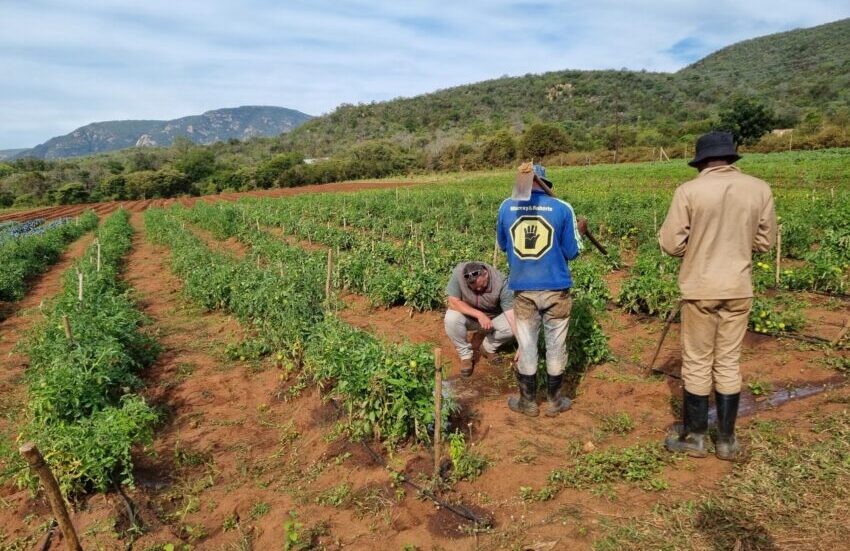
In Eswatini, agriculture is highly vulnerable to droughts. The Blue Deal partnership focuses on improving water efficiency and financial access for smallholder farmers, in order to enhance the resilience to climate change.
Pictured:Drip irrigation project in Eswatini
Drip Irrigation for Small Farmers – KIWI climate experts work with small-scale farmers in the Lomati River Basin to introduce drip-irrigation systems that significantly reduce water consumption while maintaining or increasing yields.
Financing for Poverty Reduction – The partnership developed a bankable proposal to support small farmers in the Lomati Basin, approved by the national government. In collaboration with the Eswatini Development Agency, it ensures that smallholders have access to the financial resources needed to adopt water-efficient technologies sustainably.
Data-Driven Agricultural Planning – In 2024, a land-use mapping exercise using satellite imagery and farmer surveys provided essential data for better irrigation planning and alignment with water availability.
Building a Resilient Water-Food Nexus
Across these partnerships, the Blue Deal demonstrates that strengthening water authorities and involving local communities in decision-making are key to achieving both water security and food security. By promoting efficient irrigation, equitable water allocation, gender inclusion, and nature-based restoration, the programme helps restore the essential balance between water, agriculture, and ecosystems.
Each country’s approach reflects local realities, but the shared lesson is clear: sustainable food systems depend on strong water governance. Through the Blue Deal, water authorities and communities worldwide are improving access to water for agriculture, ensuring that future generations can continue to rely on it for life and livelihoods.
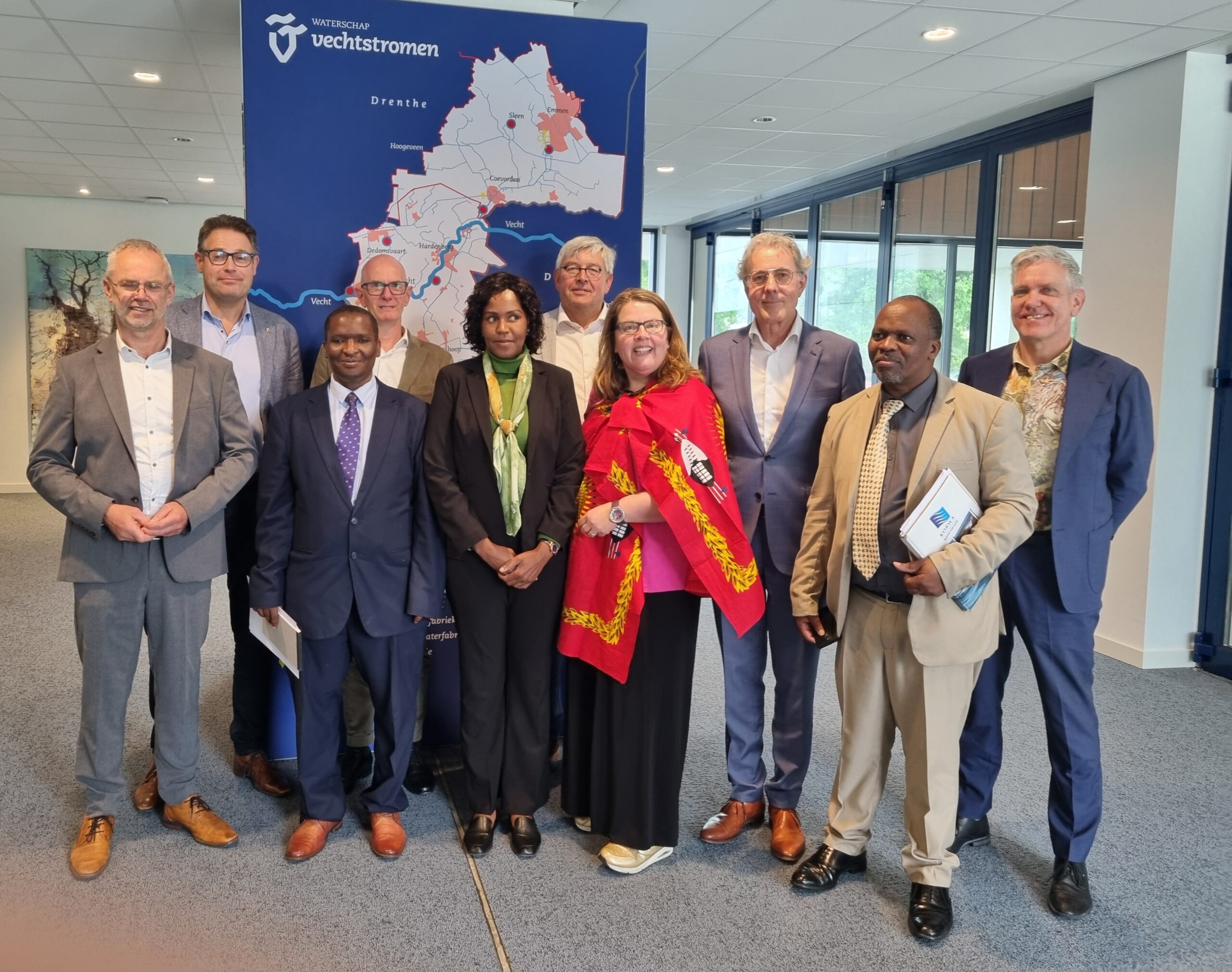
In early summer, Blue Deal Eswatini welcomed a delegation from the Ministry of Natural Resources and Energy (MNRE) of Eswatini to the Netherlands. The delegation included Ms Mbingo (Principal Secretary), Mr Nxumalo (Under Secretary), and Mr Khoza (Director of the Department of Water Affairs).
The aim of this working visit was to exchange knowledge on the Dutch system of decentralised, multi-level water governance. We also presented the High-Level Dialogue sessions to the Ministry representatives. Two sessions were already held with key stakeholders in the water sector in Eswatini on strengthening water governance to support integrated water resource management (IWRM), climate resilience, and social inclusion. In the upcoming third session, a promising perspective will be presented, along with initial steps for implementation.
Pictured: The delegation from the Eswatini Ministry visit Waterschap Vechtstromen
Valuable exchanges at the Dutch Water Authorities The week began at Waterschap Vechtstromen, where the delegation engaged in a lively exchange with the entire executive board of the water authority. Both parties shared their experiences and challenges around drought management, an issue that is becoming increasingly pressing in both the Netherlands and Eswatini. The discussion proved fruitful for everyone involved.
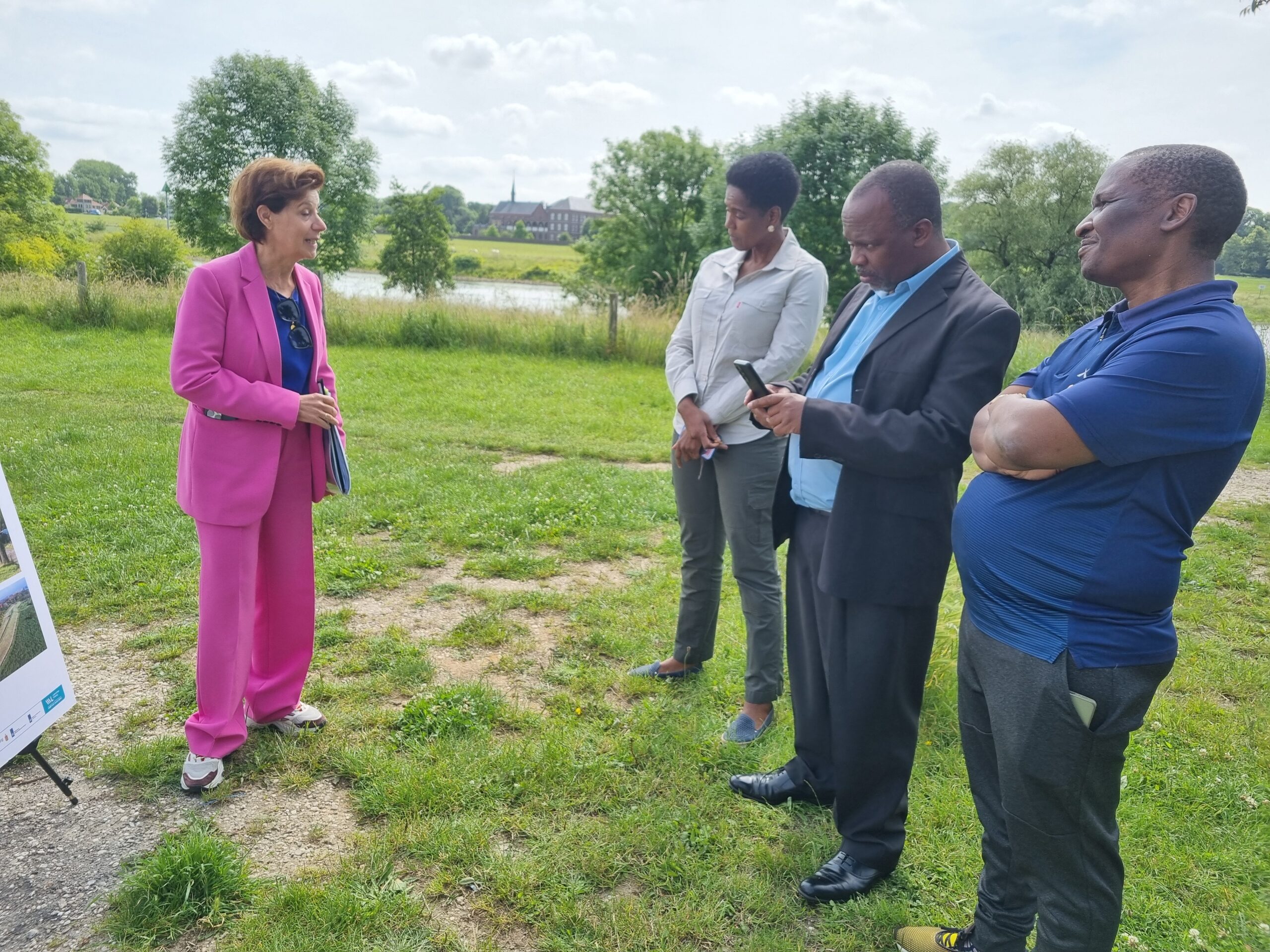
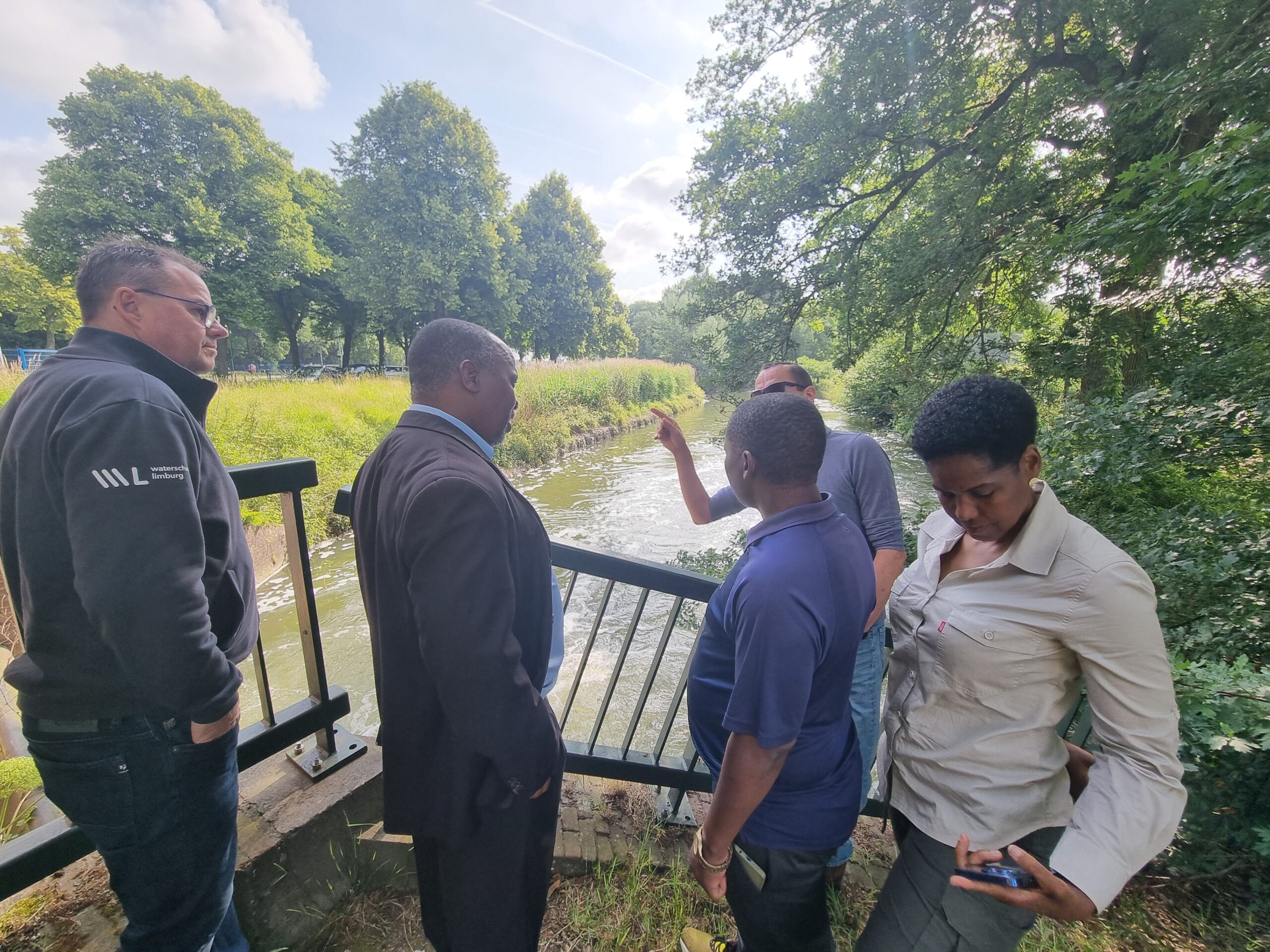
Next, the delegation visited Waterschap Limburg, where they explored the importance of clearly defined roles, responsibilities, and mandates – especially when multiple organisations operate in the same area. The visitors also had a close look at the flood early warning systems in place at the water authority’s office.
The visit continued to The Hague, where the delegation met with the Delta Commissioner’s office. Here, the conversation expanded to global water governance challenges, recognising that many issues faced in the Netherlands are also relevant in Eswatini and southern Africa.
In addition, the delegation met with Blue Deal Programme Management and participated in an in-depth session on the governance of water management led by Professor Herman Havekes of the University of Utrecht.
Pictured:The Environmental manager of Waterschap Limburg presents to Ms. Mbingo, Mr. Khoza and Mr. Nxumalo from Eswatini
Promising news: water pricingproposal accepted Following this visit focused on mutual learning and collaboration in water governance, we received promising news: the Ministry accepted the proposal for water pricing and initiated the next steps for national implementation in Eswatini. This marks a significant step toward improved integrated water resource management (IWRM) and financial sustainability for safe, clean, and sufficient water in Eswatini.
Pictured: A field visit in Waterschap Limburg
Background information: Blue Deal Eswatini At the request of MNRE, the Blue Deal has executed the assignment of the High-Level Dialogues in order to get the proper input for the revision of the National Water Act. During 2024 and 2025 there have been interviews and intensive multi day working sessions with key stakeholders in Eswatini, after which Blue Deal Eswatini was requested to produce an action-oriented proposal for a feasible and realistic structure of the operational IWRM chain in the country. The analyses and results have been shared with all key stakeholders in the water sector and will get follow up.
Manage Consent
To provide the best experiences, we use technologies like cookies to store and/or access device information. Consenting to these technologies will allow us to process data such as browsing behavior or unique IDs on this site. Not consenting or withdrawing consent, may adversely affect certain features and functions.
Functional
Always active
The technical storage or access is strictly necessary for the legitimate purpose of enabling the use of a specific service explicitly requested by the subscriber or user, or for the sole purpose of carrying out the transmission of a communication over an electronic communications network.
Preferences
The technical storage or access is necessary for the legitimate purpose of storing preferences that are not requested by the subscriber or user.
Statistics
The technical storage or access that is used exclusively for statistical purposes.The technical storage or access that is used exclusively for anonymous statistical purposes. Without a subpoena, voluntary compliance on the part of your Internet Service Provider, or additional records from a third party, information stored or retrieved for this purpose alone cannot usually be used to identify you.
Marketing
The technical storage or access is required to create user profiles to send advertising, or to track the user on a website or across several websites for similar marketing purposes.