Blue Deal South Africa at the WISA conference

From 28 till 30 September 2022 the Biennial Conference of WISA, the Water Institute of Southern Africa, took place in Sandton-Johannesburg, South Africa. At the conference there was a presentation about the Blue Deal.
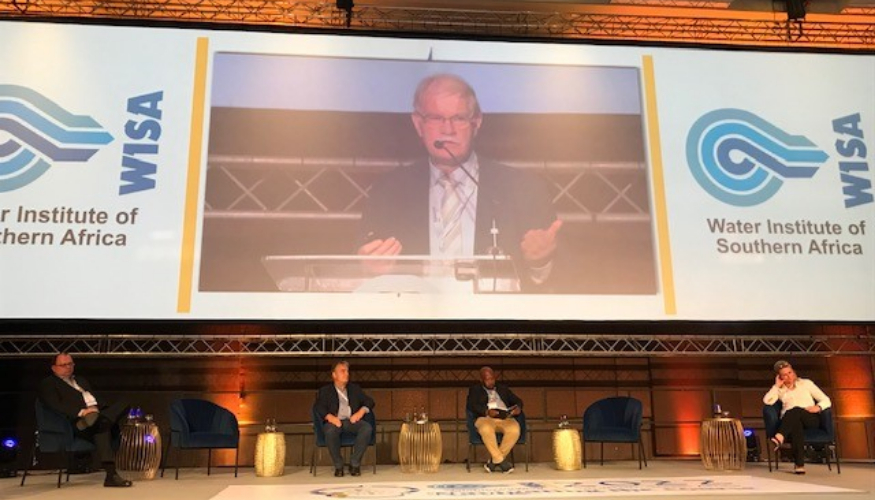
A man is seen on a large screen, while other people are sitting on the stage in front of the screen
Hans Waals, chief executive of Blue Deal South Africa, speaks at the WISA conference.

During the WISA conference delegations from countries all over the southern part of Africa come together to share their challenges and insights. Both Dutch and South African members of the Blue Deal partnership in South Africa visited the conference.

Looking backward and forward

In a 2-hour session the Blue Deal programme was presented: the Dutch-South African partnership, the successes and the lessons learnt of the first phase (2019-2022) and the conclusions drawn at the end of the first phase. One insight came back in all presentations: the challenges in the projects are not so much technical as organisational, e.g. a lot can be gained by more cooperation and institutional alignment.

What happpens after 2030?

Afterwards there was a vivid discussion with the visitors of the workshop. Amongst other issues the question was raised what is going to happen after the end of the Blue Deal Programme in 2030. How to ensure that the results are sustainable? Visitors brought forward the idea that, by that time, South Africa should have built its own Blue Deal programme. With the goal to create partnerships with several other countries to further improve the water management. That would truly be a longlasting outcome of the Blue Deal programme.
A clean river starts with me, today!

The South African Blue Deal partnership's Vredefort Dome project has been quite successful in the past year. A Blue Deal delegation from the Netherlands visited this project in September and found out that most agreements from the previous visit had been fulfilled.

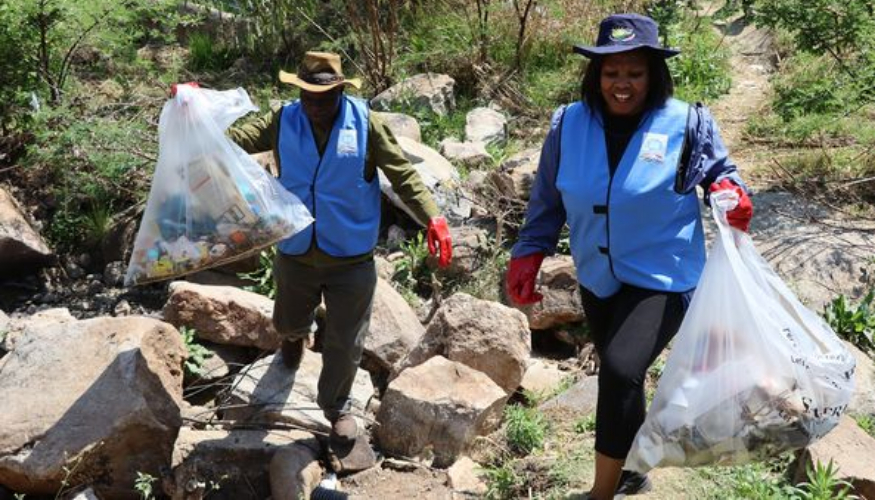
The South African project manager Dr. Konanani Khorommbi and the Executive Mayor of Ngwathe Victoria De Beer-Mthombeni leading a cleaning campaign.

The April 2022 work visit had agreed on improvements to the Waste Water Treatment Work at Parys. Pumps would be replaced and generators repaired, so during periods of load shedding (without power) there would be fewer spills of sewage water.

Mayor of Ngwathe calls for action, action, action

The Mayor of the municipality Ngwathe, Victoria De Beer-Mthombeni, was present during a clean-up campaign organised as part of the World Clean Up Day. More than 20 large rubbish bags of dirt were collected in 2 hours. A community awareness event was also organised in which the mayor gave an impassioned speech that something really needs to be done and that the municipality and community need to do it together. That really helps in making progress. Her approach is: “No more plans, but action, action, action.” The slogan for the campaign is: “A clean river starts with me, TODAY!” Blue Deal plays an important and visible role in this campaign as a brand name and driving force.

Vredefort Dome at the WISA conference

From 28 tot 30 September 2022 the Biennial Conference of WISA, the Water Institute of Southern Africa, took place in Sandton, South Africa. In a 2-hour session the Blue Deal programme was presented, including all the projects in South Africa. Progress on the Vredefort Dome project in phase 1 was also discussed. In addition, attention was paid to the preparation of Phase 2 of this project. An approach was chosen in which technical aspects, stakeholder involvement and monitoring (and communication) are leading. For each subject, 1 main objective will be described in Phase 2 and each objective will have a maximum of 5 key actions. The intention is that all further activities will be clustered under these objectives.

T+S+M = clean river

People often ask for a short description of the approach. The Blue Deal partnership chose to present it in a mathematical equation: Technical + Stakeholder + Monitoring = Clean River. This was presented during the WISA conference. It was discussed after the presentations. People said that they were missing the F of finance in the equation. The Blue Deal does not bring in large investments, but it can support to use the available money differently. For example by extending the technical lifespan by organising good operation and maintenance.

Turning water hyacinth into useful products

The 19th of July was a day of celebration for 11 women in Blesbokspruit, South Africa. After a training of 6 or 12 weeks they finished their training in entrepreneurship from the Thekga company. The women have been trained to make useful products out of the harvested water hyacinth.

The Blesbokspruit project is part of the Blue Deal partnership in South Africa. The objective of this project is to improve the water quality and thereby restore the ecological status of the wetland. The project aims to improve quality of the water in the Vaal river area, which millions of people depend on.

From threat to opportunity

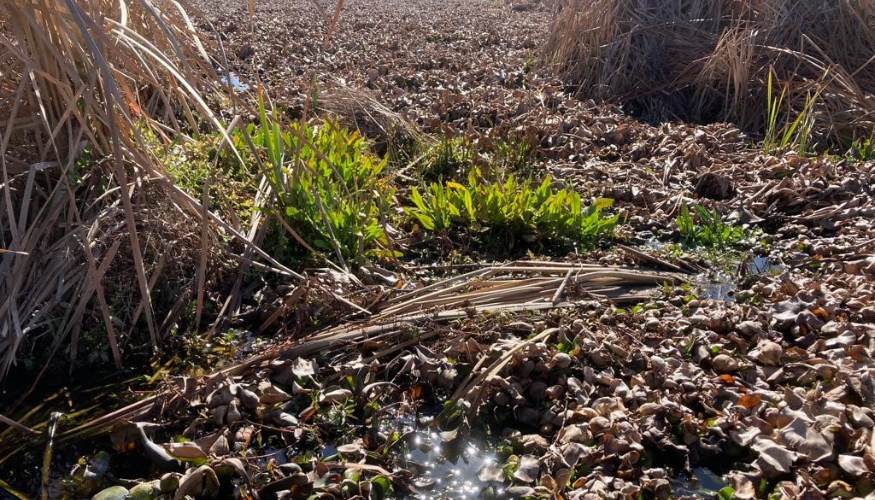
The use of the water hyacinth for the production of articles and home decoration is an interesting example of how a threat can be changed in an opportunity. The water hyacinth is one of the invasive species that blossom as a result of the bad water quality in many locations in South Africa. The water hyacinth gets removed by hand and by machines. There are also plans to use the water hyacinth on a wider scale for biobased products because there is plenty of it. When a water hyacinth plant blooms, the seeds will stay in the ground for 20 years, which means it is a difficult specie to eradicate.

Blesbokspruit work visit

The celebration of the graduates was part of the program of the Blesbokspruit work visit in July 2022. Other important parts of the visit were:

  • the preparation of the signing of the Memorandum of Understanding with all the stakeholders in September 2022;
  • the evaluation of the results and lessons learned of the first phase of this Blue Deal partnership;
  • the preparation for Phase 2 of the Blue Deal programme;
  • the selection of a new Young Expert for a traineeship programme of 2 years;
  • the alignment of the water quality goals, activities and planning.

Drought lessons from Cape Town

South Africans deal with water issues in a very special way. We can learn a lot from them, says Hans Waals, chief executive of the Blue Deal partnership in South Africa.

“It is not where you start, but how high you aim that matters for success.” These words from Nelson Mandela fit perfectly with the ambitious goals of the Blue Deal: to help 20 million people in 14 different countries to have clean, sufficient and safe water.
Strategic consultant at the Dutch water authority Hollandse Delta Hans Waals is chief executive of the Blue Deal partnership in South Africa.

As such, Waals knows how severe the consequences of drought can be. “Like in Cape Town 6 years ago. The city was at a serious risk of running out of water altogether. To avert this catastrophe the city council and water authority started to warn the people. By continuously informing them of the consequences, they succeeded in bringing down household water consumption by more than halve. They did not go from 100 to 0 overnight. They reduced consumption in stages. But they made it. Day zero never came, but it was a close call.”

“Over the years, we have built a good water network in South Africa,” Waals says. “Our contribution is aimed at improving water quality and water availability. We do this, for example, by training managers and maintenance people of sewage treatment plants.”

In South Africa, there are very large differences between the various ethnic groups, Waals goes on. “These are also reflected in the distribution of water. 60 per cent of the available freshwater goes to agriculture and 95 per cent of that goes to rich white farmers. Because of South Africa’s past, other groups have been put at a disadvantage. They do not have the knowledge to stand up for themselves. So stakeholder empowerment and levelling the playing field are very important.”

That is why the South Africans have found a clever way of involving stakeholders in their water management. And the Netherlands can learn a lot from this, says Waals.
“So water authorities organize a meeting 4 times a year, where all stakeholder groups come together and explain what their interests are. Together, they then decide what needs to be done. In this way, they get to know each other and understand each other’s situation better.”

“I once experienced a session like that about the drought in Kwazulu Natal. There were no acute problems yet, but there was the prospect of them. Instead of quarreling about a solution, both industry and agriculture as well as the people of Kwazulu Natal agreed to reduce their water consumption straightaway, so there would be more water left for the really dry period. All groups agreed, voluntarily. I think that’s amazing.”

Crocodile River project back on track

In November 2021 the Dutch team was finally able to meet their colleagues from the Blue Deal partnership in South Africa again. They visited the Crocodile River Project. The project is now ready to start again.

In the Blue Deal Crocodile River Project, the Dutch Water Authorities and South African partners work together with the objective to improve the quality of the Crocodile River.

Because of COVID-19 the project collaboration went on only via digital meetings. And few will deny, this was sometimes quite a challenge. Due to this, the project came to a halt. Fortunately, in November 2021 it was possible for the team to meet each other live again, which was very inspiring. Now the project is back on track.

Buhle Shongwe, technician Water Demand & Conservation: “We want to grab each and every opportunity, so we’re excited to be working once again with you.”

Threatening water hyacinth turns out to be a business opportunity in South Africa

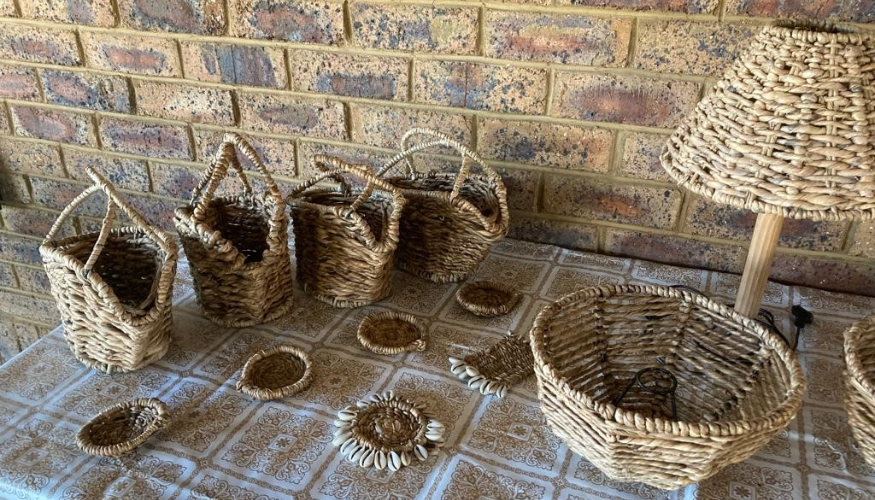
The suffocating water hyacinth is a threat to water quality and biodiversity in South Africa. Together with the residents of Blesbokspruit, South Africa, the Blue Deal partners turned this threat into a business opportunity.

Residents weave beautiful baskets, lampshades and even armchairs from the dried plants and sell them. Watch how they do this in this short video.

Celebrating 10 years of cross-border cooperation in southern Africa

Regional water managers in the Netherlands, Germany, eSwatini, Mozambique and South Africa have been sharing experiences for ten years now. What binds them is how you work together in border regions.

From 17-19 November, the lustrum took place at the River and Environmental Management Cooperation in South Africa. Problems such as drought, flooding, climate change and women empowerment were discussed. The Deputy Minister of South Africa endorsed the importance of seeking solutions in the Blue Deal partnerships.

Lecture: solutions for complex water problems

The KIWI learning programme recently organised a lecture by professor Guy Alaerts about the unruly nature of international water management and solutions for complex water problems.

Water managers worldwide are looking for integrated solutions for complex water problems. Major investments are often required to become climate proof, but finding financing is difficult. Water managers and financial institutions do not know where to find each other and converting globally available financing into concrete projects on a large scale is difficult. Watch the lecture below. The lecture is in Dutch, but can be viewed with subtitles.

Community involvement in South Africa

More than 200 participants took part in the webinar on community involvement in South Africa on 21th April 2021. Various stakeholders in the field of water use, water resources and water resources met online to discuss water scarcity and community involvement in South Africa.

The webinar presentation by Ms. T. Sigwaza, who represented the national central South African government, highlighted how important she finds community involvement in issues related to water resource management. Water users, water sources and water supplies come together as interests in a context of water scarcity.

View the webinar on community involvement

Water challenges

The Umgeni River is strategically the most important in the KwaZulu Natal province in South Africa. The river system is faced with a myriad of challenges, including alien and invasive plants, riverside erosion, streamside cultivation, agricultural effluent releases, sewage and factory discharge, unlawful dumping, illegal sand mining and broad-spectrum pollution. Fortunately, several people and organizations are confronting these challenging issues.

Community project

The Duzi Umgeni Conservation Trust made a video about their work to shape community involvement with the Amanzi Ethu Nobuntu project. A group is working on cleaning up the riverbed, removing invasive plants from the river and carrying out small-scale repairs to the sewage systems.

Video of the Amanzi Ethu Nobuntu project in South Africa

Study: water management knowledge exchange

TU Delft and Erasmus University, in collaboration with Dutch Water Authorities, have launched a study into water management knowledge exchange. The universities are investigating which lessons the Dutch regional water authorities take abroad.

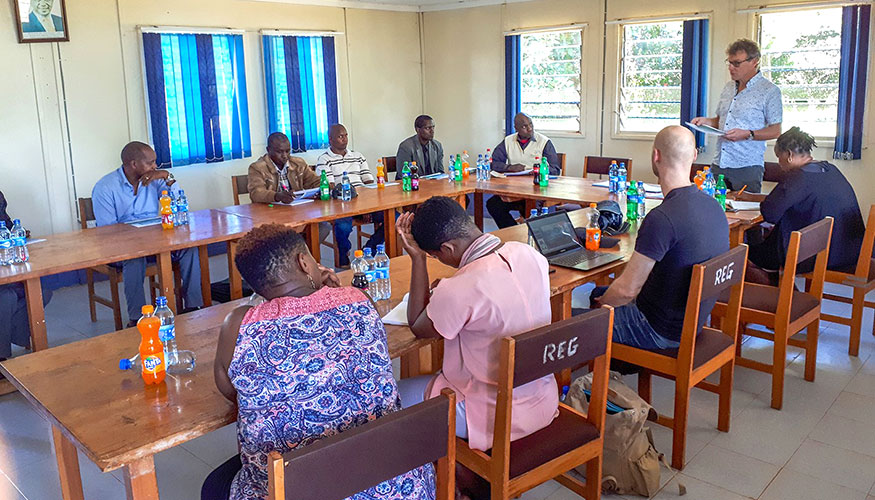
Meeting room with people seated at tables for a traning session. One man is stood, giving a presentation.
Dutch Water Authorities and local partners attending a training session.

As part of the study into water management knowledge exchange university researchers are looking at the lessons learned at an individual level, group level and organisational level. The aim is to find out exactly what effect these lessons have on organisations.

Questionnaire

A questionnaire is sent out via the Dutch Water Authorities foreign coordinators. It is hoped that insight can be gained into the possibilities and limiting factors of international knowledge sharing.

More on Dutch Water Authorities and knowledge exchange