During the Tackling Floods work visit in March 2026, Water Authority Limburg in Roermond welcomed Dutch and Romanian partners for an important next step in their collaboration.
While previous exchanges largely focused on sharing knowledge, this visit marked a clear shift towards deepening relationships and turning ideas into practical action. Particular attention was given to advancing three joint projects and strengthening stakeholder engagement.
The work visit brought together experts from several Dutch water authorities, Romanian water authorities and Dutch knowledge institutes (IVK). The opening session highlighted the importance of international cooperation within the Blue Deal programme. By pooling knowledge and experience, partners are better equipped to tackle a shared challenge: improving protection against (flash) floods.
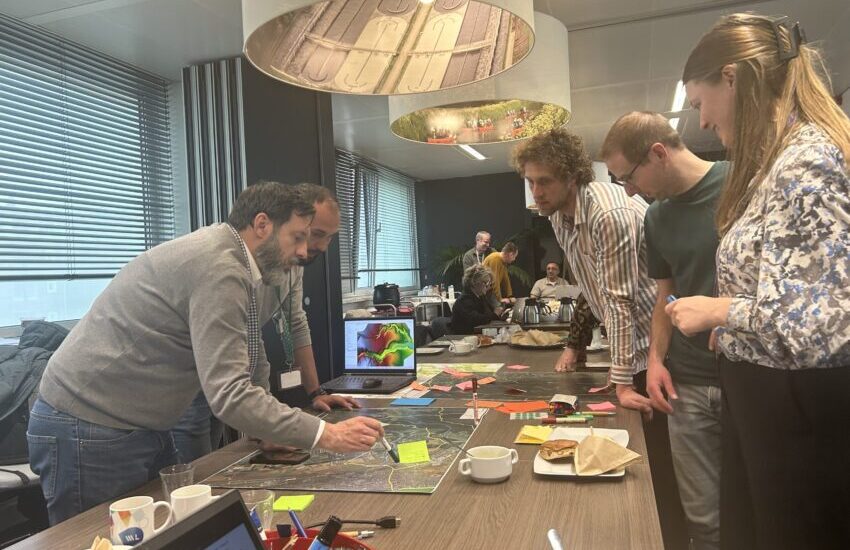
The Dutch and Romanian water experts work on the topic of floodsin Roermond
From knowledge to action
Throughout the week, participants worked on three case studies in Romania: the Nigel River, a damaged dam near Măgura, and flooding issues around a railway underpass in Bacău.
Technical sessions and field visits in South Limburg provided both inspiration and practical insights. Participants explored how Nature-Based Solutions, such as restoring natural river processes, can be combined with more traditional engineering measures. The focus noticeably shifted from exploring possibilities to shaping concrete next steps.
For both the Nigel River and the damaged dam, partners agreed to initiate feasibility studies. Early sketches of potential measures were developed and will be elaborated into technical designs in the next phase. Step by step, the collaboration is beginning to deliver tangible outcomes.
Putting stakeholders at the centre
Another key theme during the work visit was stakeholder management. Dedicated sessions focused on how to involve stakeholders more effectively, including local authorities, landowners and users of the area. Together, participants worked on:
updating stakeholder analyses, including SWOT assessments,
defining tailored strategies for different stakeholder groups,
and planning concrete actions such as meetings and site visits.
Discussions made clear that strong stakeholder engagement can make or break a project. Limited cooperation from landowners and regulatory constraints around infrastructure remain real challenges. At the same time, active involvement of local decision-makers – such as mayors – can help unlock progress and build momentum.
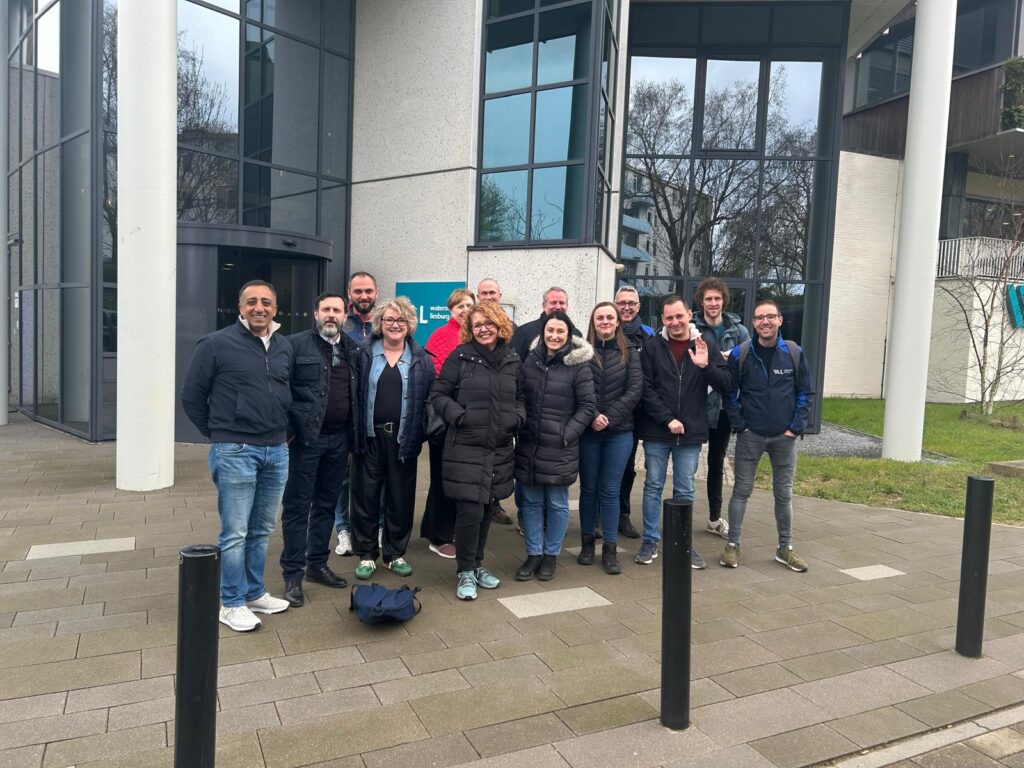
The Romanian experts visit to the Dutch water authority Limburg
Building towards the next phase
Beyond technical discussions, the work visit also strengthened the partnership between all involved. A set of clear follow-up actions has been agreed, ranging from further technical analyses and deeper exploration of Nature-Based Solutions to enhanced knowledge exchange, stakeholder strategies and identifying funding opportunities within European programmes.
In the coming months, partners will focus on carrying out feasibility studies, refining designs and engaging stakeholders on the ground. The collaboration will continue in September 2026 with a follow-up meeting in Bacău, Romania, where progress will be reviewed and new steps will be defined.
This work visit marks a clear shift in the partnership: from learning to doing, from exploring ideas to shaping real solutions. An important step towards more resilient and sustainable approaches to flood risk management.
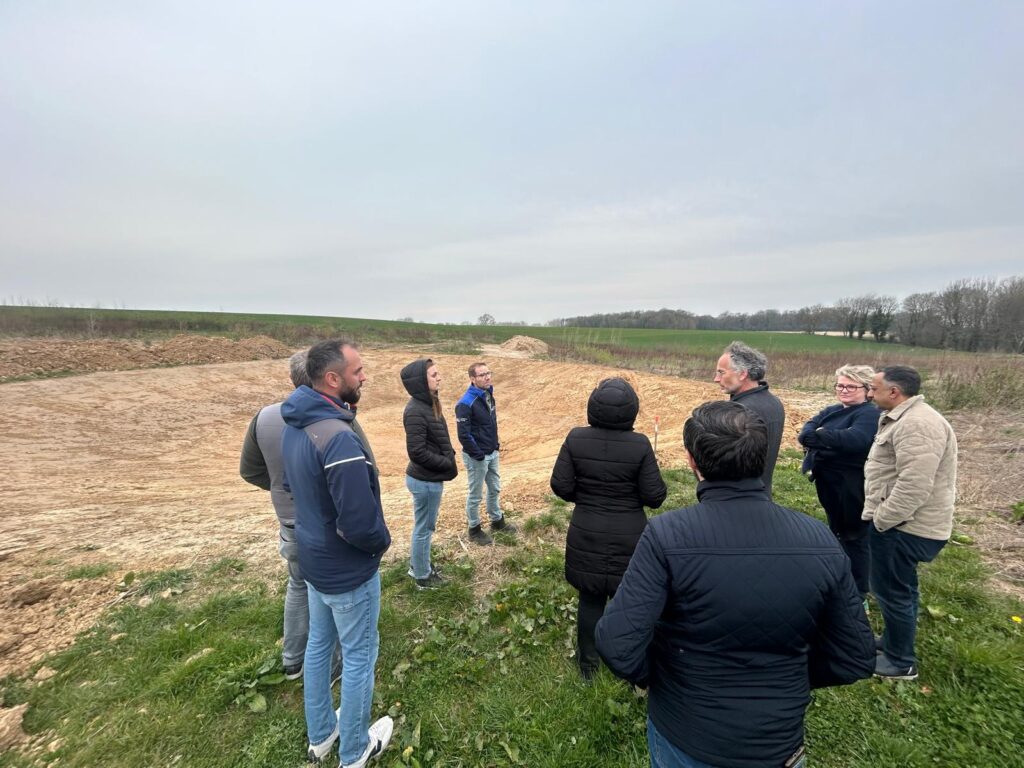
Visiting a non-permanent reservoir (Nature-based Solutions) in Limburg with the delegation
From October 2025 to March 2026, an independent consortium of IRC and MDF carried out the Midterm Review (MtR) of the Blue Deal programme. A Midterm Review takes place halfway through a programme cycle and assesses whether the work is on track, what progress has been made, and where adjustments are needed to ensure long‑term success.
The review for Phase 2a (2023–2025) examined all seventeen partnerships and the programme as a whole. Its findings offer a clear picture of the Blue Deal’s achievements so far, as well as concrete guidance for strengthening the programme in the years ahead.
The key conclusions and recommendations have been summarised in a two‑page leaflet, which is now available:
The Blue Deal programme team would like to thank everyone who contributed to the Midterm Review. Your time, insights, and willingness to share experiences from across the partnerships made this review possible. Your input plays a crucial role in shaping the direction of the Blue Deal as we move into the next and final phase of the programme.
This March, Blue Deal Eswatini had the honour of hosting two Dutch Ambassadors in the Kingdom of Eswatini. Although Eswatini falls under the jurisdiction of the Netherlands Embassy in South Africa, the Netherlands Embassy in Mozambique also actively follows developments in the country because of the importance of transboundary water management for Mozambique. As a result, Blue Deal Eswatini benefits from the engagement of both Embassies.
Blue Deal Eswatini with the Dutch Ambassadors to South Africa and Mozambique
Mrs Joanne Doornewaard, Dutch ambassador to South Africa, and Mrs Elsbeth Akkerman, Dutch ambassador to Mozambique, travelled to Eswatini to learn more about the goals, progress, and partnerships of Blue Deal Eswatini.
Launch of a new transboundary programme
In addition a programme was launched by INMACOM to strengthen transboundary water cooperaton with data sharing, improving institutional capacity and sharing knowledge on droughts, floods and climate change. INMACOM stands for the Incomati and Maputo Watercourse Commission. It is a transboundary organisation for water management in South Africa, Eswatini and Mozambique to manage the water resources of the Incomati and Maputo River Basins at planning level. It launched their component of the VUNWE programme “Vitalizing, Unifying, Neighbouring Water Management Empowerment” which is facilitated by a consortium of five regional and international water organisations led by IHE Delft and financially supported by the Netherlands Embassy in Mozambique. The two Ambassadors, together with the Commissionor of INMACOM launched the programme by pooring water in a calabash.
Field visit: from monitoring to irrigation
Blue Deal Eswatini guided the ambassadors to several key sites demonstrating transboundary water management in action. They visited:
a monitoring station on the Mbuluzi River, essential for providing timely inflow data to Mozambique
a distribution point where water from the Komati River is allocated to sugar plantations
a pumping station that supplies water to irrigation sprinklers in the fields
Throughout the visit, discussions focused on the roles of the Joint River Basin Authorities, Irrigation Districts and the Ministry of Natural Resources and Energy, as well as opportunities for further collaboration within the VUNWE programme. With all Eswatini’s rivers flowing into either South Africa or Mozambique, transboundary cooperation remains central to sustainable water management.
We look back on a highly valuable visit and look forward to further strengthening our partnerships.
From ambassadors’ engagement to the next generation: Wetskills Eswatini
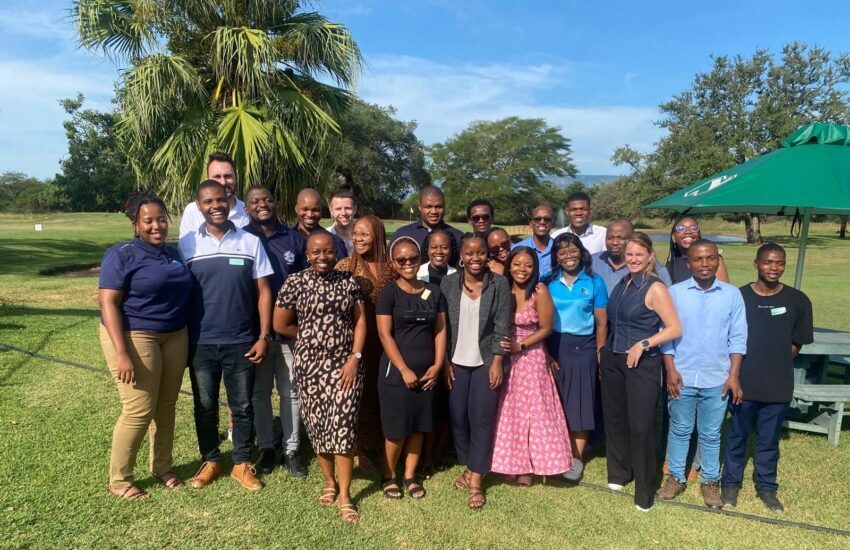
Strengthening cooperation across borders also means investing in the next generation of water professionals. This month, Blue Deal Eswatini, together with the Joint River Basin Authorities (JRBA), also proudly hosted the first-ever Wetskills Challenge in Eswatini.
The Wetskills participants from Eswatini, South Africa and the Netherlands
This two‑week programme brought together young professionals from Eswatini, South Africa and the Netherlands to work on real-life water challenges. Supported by experts from KOBWA, the Mbuluzi Ecosystem Restoration Project, UNESWA, and INMACOM, participants explored cases focused on:
Building trust and payment culture for sustainable water services
Institutional alignment in water allocation and land use
Innovative financing for climate resilience
Through teamwork and intercultural exchange, participants demonstrated that innovation in water management is not tied to one nation, but emerges from collective energy and collaboration across boundaries.
The first Wetskills Eswatini was intense, inspiring and joyful. Participants arrived as individuals, worked as a united group, and left as connected water professionals who will continue contributing to the sector wherever their paths lead.
In March 2026, Blue Dragon Vietnam carried out a GIS training together with Can Tho University and also conducted a fact-finding mission on clean water in An Giang province.
GIS training for Mekong Delta provinces
GIS training for Mekong Delta provinces
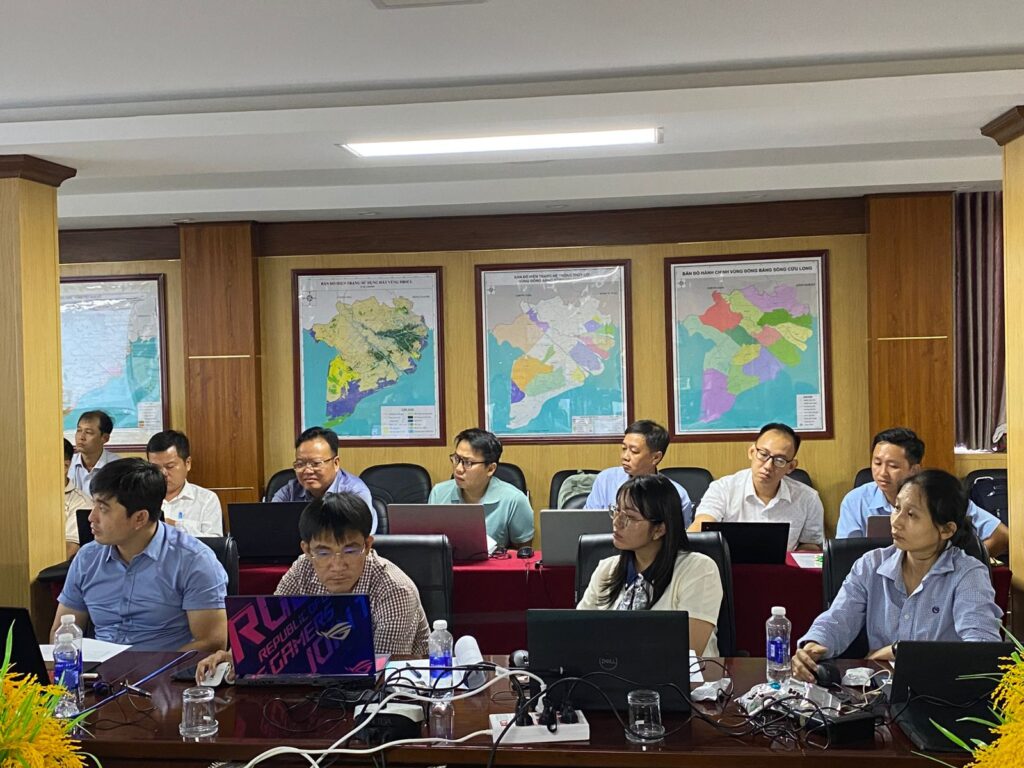
The expert pool on Geographic Information System (GIS) executed its seventh week of training in the first week of March 2026. The 7th week focused on identifying agricultural land use using remote sensing.
Mrs. Petra Hulsman (Water Authority De Stichtse Rijnlanden) and Mr. Rob van Ede (Water Authority Rivierenland) conducted the training in cooperation with the Can Tho University. All provinces of the Mekong Delta take part in this training.
Factfinding mission on clean water
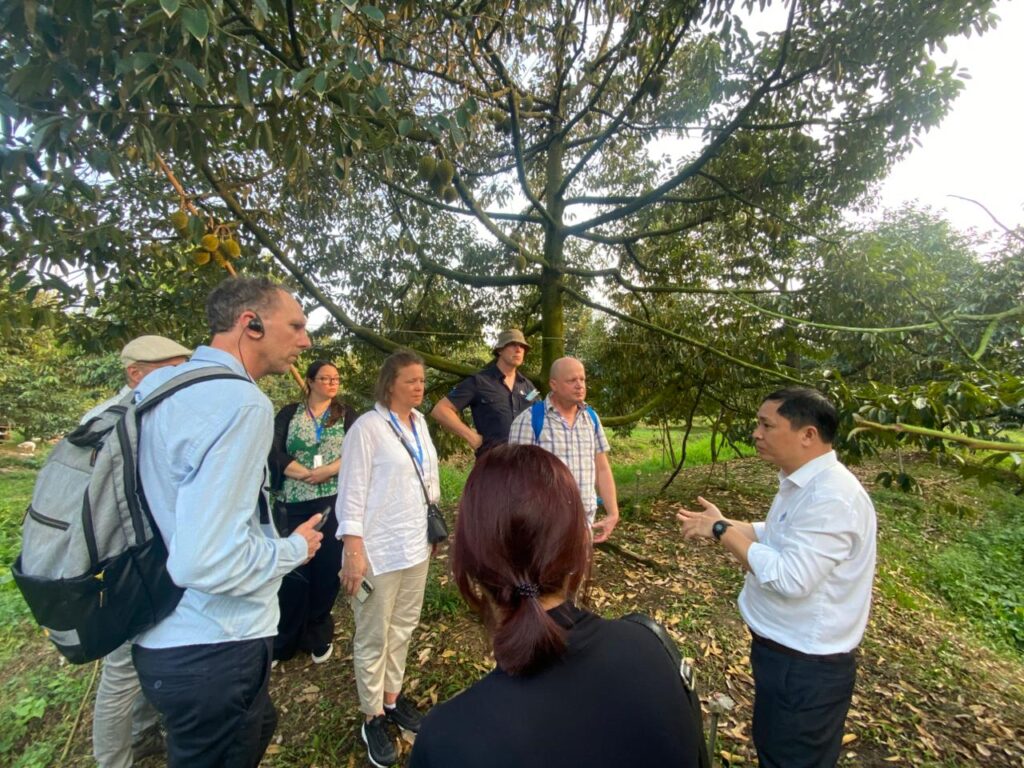
During the second week of March the two trainers of the training pool on wastewater treatment and the 2 Dutch KIWI participants conducted a factfinding mission in An Giang province and Can Tho city in the Mekong Delta. KIWI participants are professionals from the Dutch water authorities who spend two years deepening their knowledge of climate adaptation, project development, and environmental management. They combine intensive learning sessions with hands-on experience in international projects, such as that of Blue Deal in Vietnam.
Together with the partnership managers and the provincial partners existing wastewater treatment plants were visited and options for training discussed. The KIWI’s focussed on clean water by visiting possible rural locations in both provinces for a possible pilot project on rural wastewater treatment, rainwater storage and awareness raising regarding garbage disposal in surface waters.
Together they will draft a training programme and possible options for a pilot project.
Fact-finding mission on clean water in An Giang province and Can Tho city in the Mekong Delta.
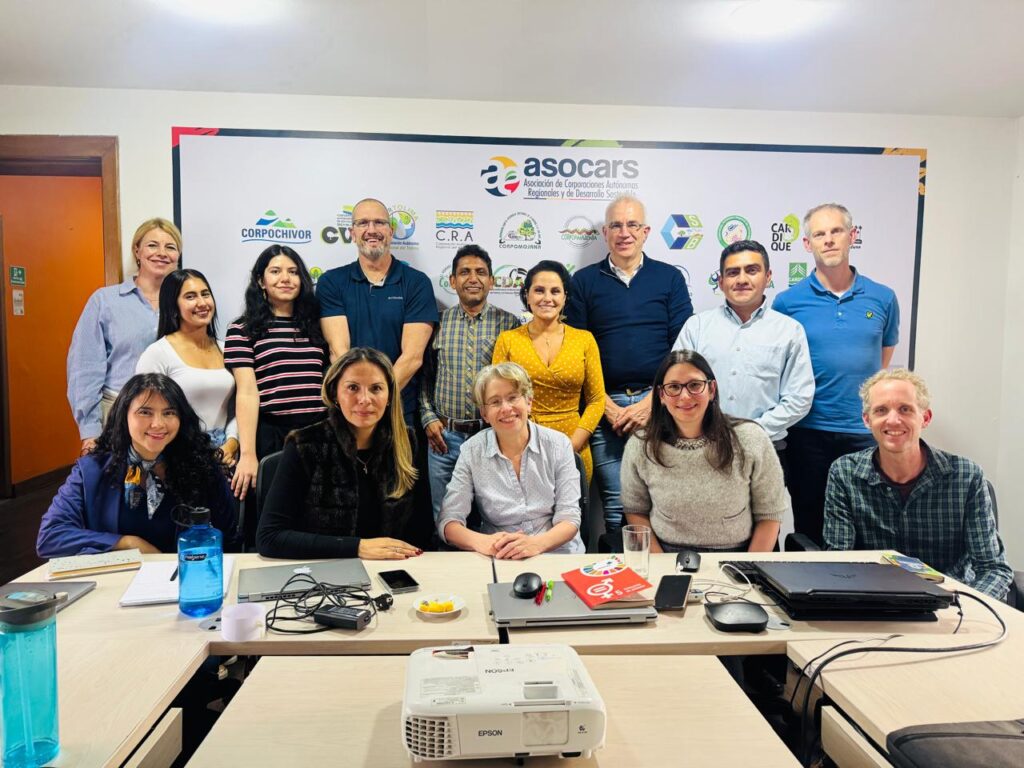
In 2026, the Blue Deal Colombia partnership - also known as InspirAgua - are deepening collaboration on water governance through river planning, wastewater management, knowledge exchange, and multi-year strategic initiatives, marking a year of intensive cooperation and learning.
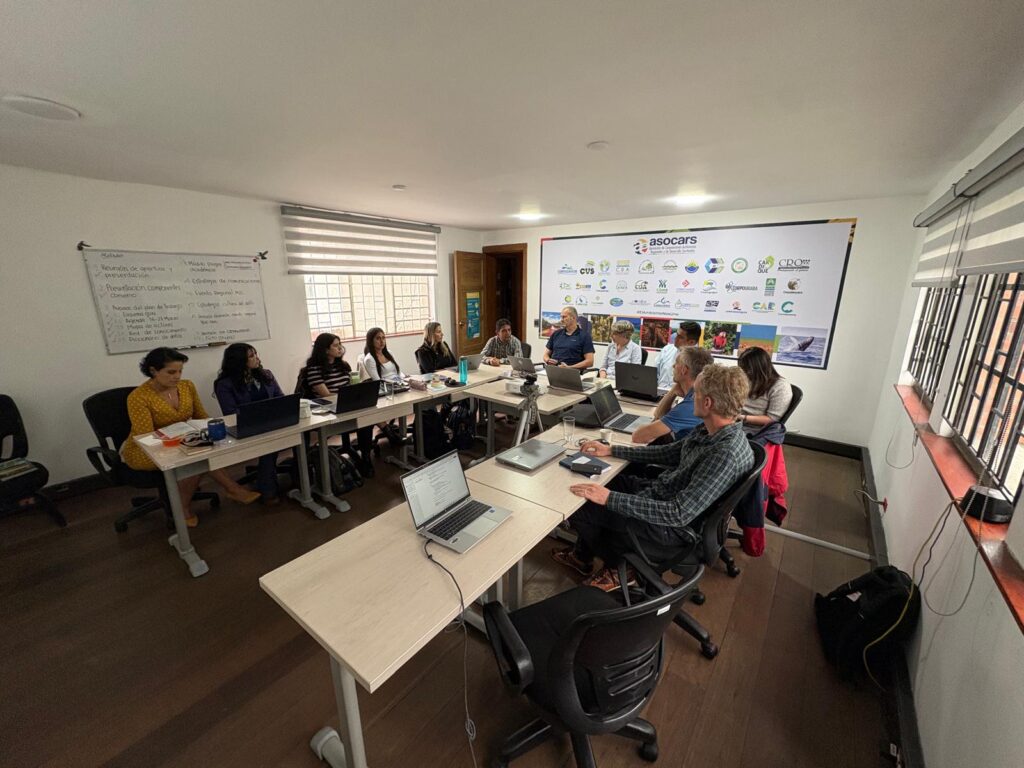
As part of the current working visit, Colombian umbrella organization ASOCARS, environmental authority Cormagdalena, and InspirAgua are meeting up to strengthen their collaboration
2026 is shaping up to be a dynamic year of collaboration between Colombia and the Netherlands. Not only in water governance, but also in celebrating 200 years of diplomatic relations.
Since March 16, a working visit is taking place. Dutch water experts are working in five Colombian regions on river planning, wastewater treatment, monitoring, crisis management, and strengthening knowledge networks.
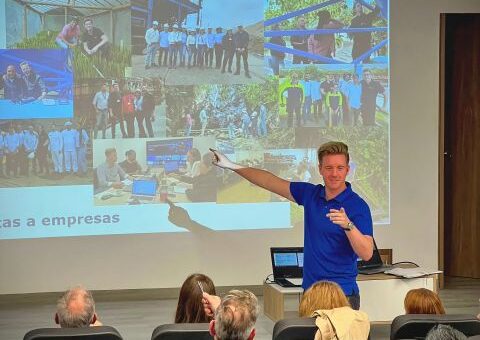
Within the topic of wastewater treatment: Dutch expert Andras Koops during the kick-off for a new wastewater knowledge network led by ASOCARS and hosted by Aguas de Manizales. During the presentation, Andras shared practical experiences, with a focus on risks to the environment and opportunities to use licensing, monitoring and enforcement more effectively as a policy instrument.
Additional exchange visits will follow in July and October, and in September a Colombian delegation travels to the Netherlands to explore integrated river‑basin planning.
A major focus this year is developing the InspirAgua multi‑year plan for the period 2027–2030, which is also the final phase of the Blue Deal programme.
During the current mission, partners are sharing their ambitions for the next phase, helping align long‑term goals and deepen cooperation across organisations and government levels.
As part of the ambition to strengthen these regional collaborations, a small group of Dutch and Colombian representatives will travel to Argentina in May 2026, where they will be working with Blue Deal Argentina on a multi-year plan that also explores cross-border opportunities. During the same trip, a 3-day knowledge exchange on data sharing and information utilisation will take place, in which Blue Deal Peru will also participate.
In short: 2026 looks to be a year full of activity, learning, and strengthened collaboration within and across the Blue Deal programmes.
From 21 February to 2 March 2026, a Dutch Water Authorities expert team visited northern Peru to work with regional partners on strengthening water governance and building climate‑resilient water systems. Through hands‑on training, field visits, and strategic dialogue, the mission helped deepen technical skills, foster collaboration, and support more inclusive decision‑making in the Chira–Piura and Tumbes basins.
Visiting the wastewater treatment plant
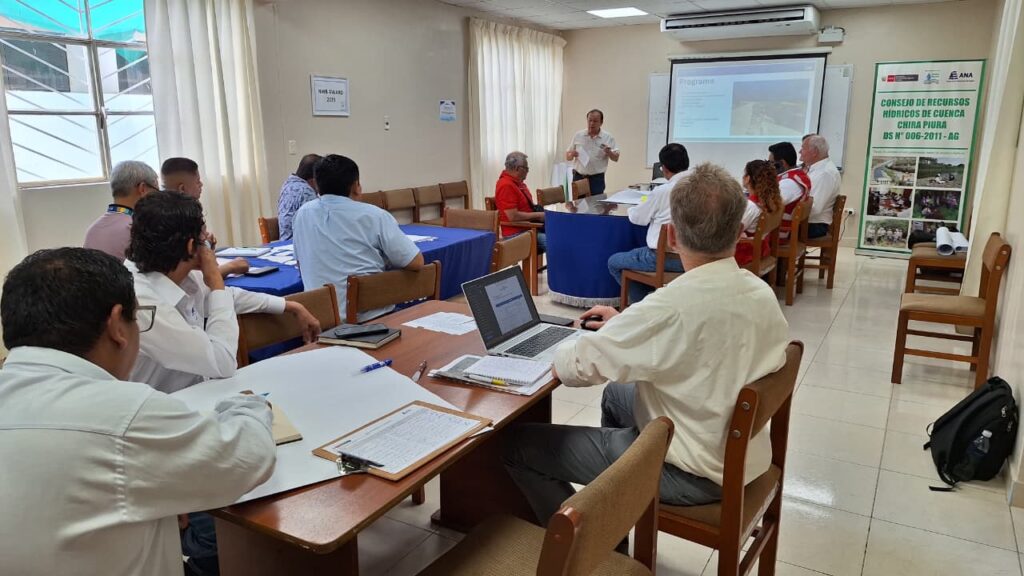
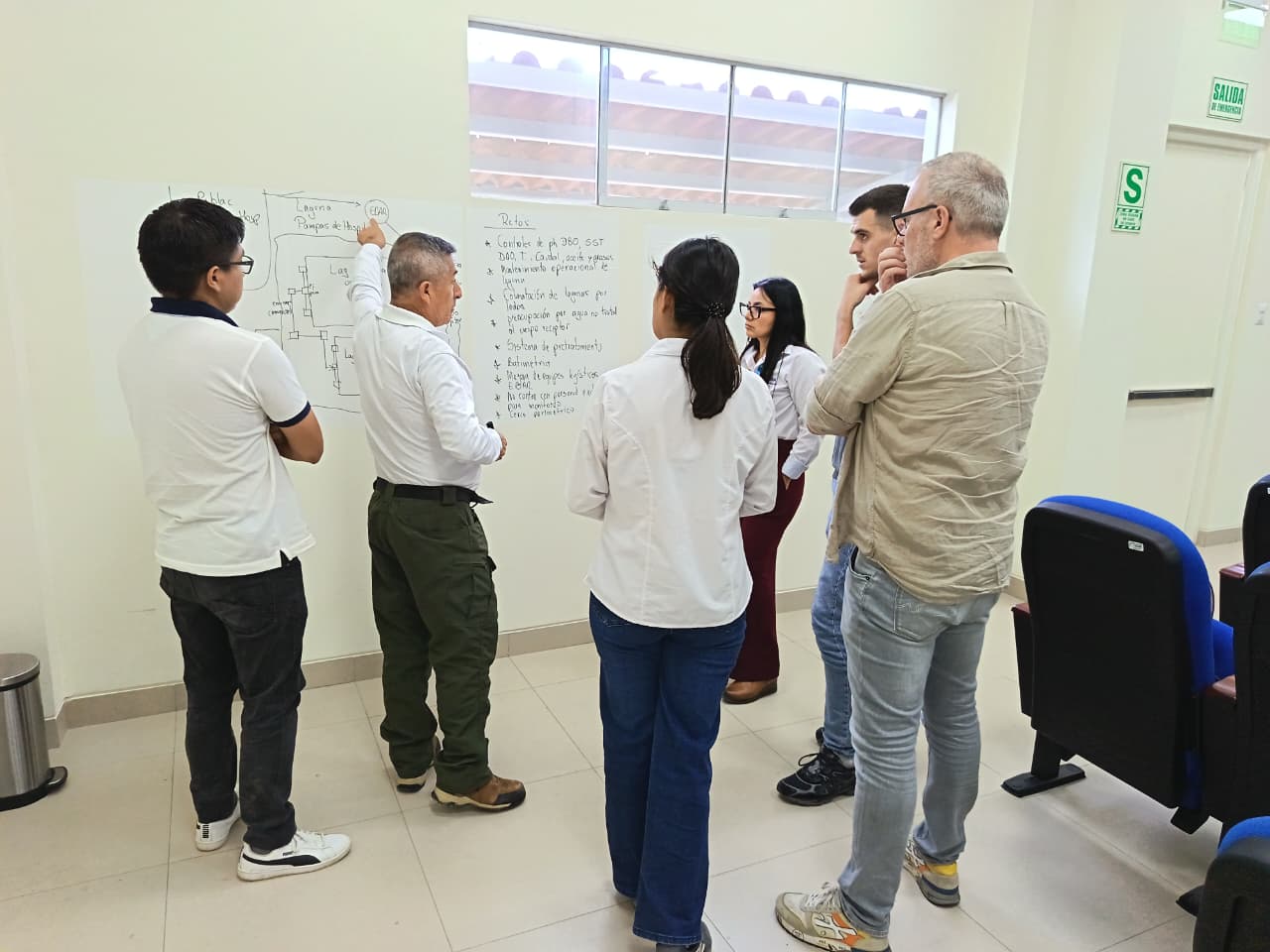
Blue Deal Peru has kicked off its working visits for 2026. From 21 February to 2 March, professionals from the Dutch Water Authorities (DWA) carried out an intensive technical working visit to Peru, alongside partners from the CRHC Chira-Piura and CRHC Tumbes of the National Water Authority (ANA). Together with key organisations in both regions, they explored instruments and case studies to strengthen water governance, drawing inspiration from examples of inclusive and effective decision-making structures.
Water safety workshops
During this visit, the DWA teams focused on the project’s priority themes:
Hydrological modelling workshops using the W-Flow tool: These support the local monitoring teams in applying tools for estimating water availability and better river basin planning.
Wastewater treatment training: Operators of wastewater treatment facilities enhanced their operational capacity and environmental performance.
Stakeholder analysis workshops on flood management: Teams discussed prevention strategies and organisational capacities in both the Tumbes and Chira-Piura basins.
Climate change adaptation exchanges: Opportunities were explored to strengthen resilience and implement sustainable interventions at the regional level.
This insightful visit marks the start of a promising year for Blue Deal Peru, reinforcing collaboration, strengthening institutions, and promoting more resilient watersheds across northern Peru.
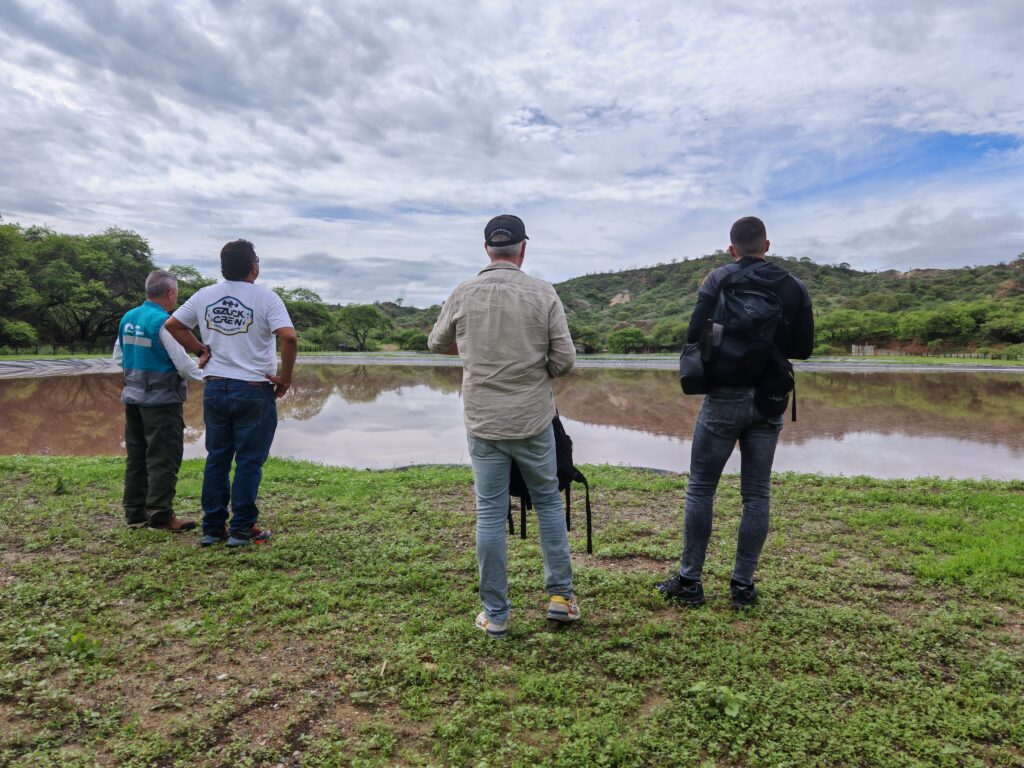
Field visits were conducted in collaboration with ANA, as well as the KIWI and YEP programmes, allowing teams to observe challenges and opportunities directly in the river basins.
The working visit also included coordination meetings in Lima to align actions with ANA and the Dutch Embassy in Peru.
The Dutch and Peruvian experts during the WWTP workshop
It was a busy week marked by learning, collaboration and a shared commitment: to move towards more sustainable and resilient water systems.
The Blue Deal Ethiopia (Abbay) team recently returned from a working visit to Ethiopia. It was a week of strengthening partnerships, advancing water and wastewater programmes, delivering trainings, and signing a new MoU to support long-term sector development in Ethiopia Abbay.
Note: This article was recently published on the World Waternet website.
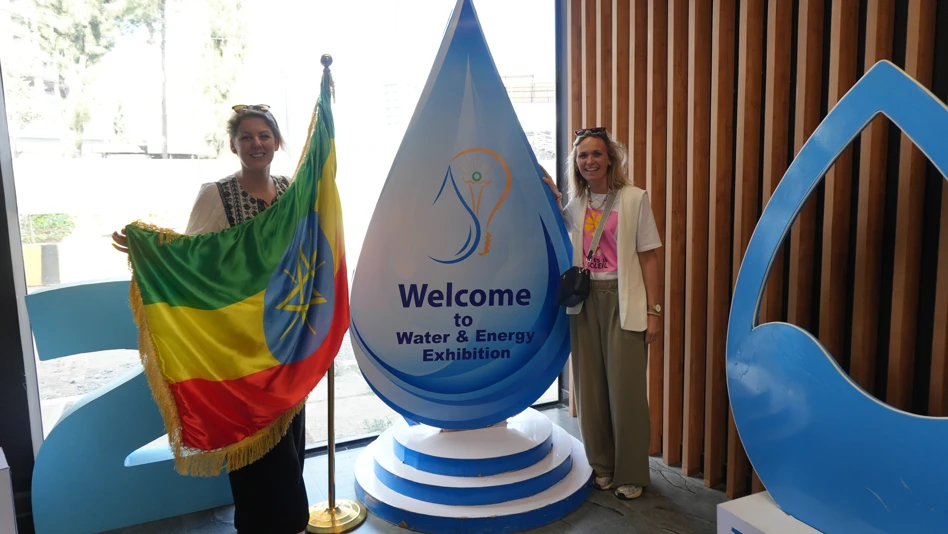
Mir and Marjolein at Water and Land Exhibition in Ethiopia
The sun was barely up when our team stepped into the buzzing streets of Addis Ababa. Taxi horns, morning laughter, and a week full of plans ahead. We came to connect, train, and build together with our Ethiopian partners in three programmes and with one new Memorandum of Understanding. Below you find a short look behind the scenes, from the Abbay Basin to Adama, and a national step forward with the Ethiopian Urban Water and Sanitation Federation.
Blue Deal Abbay, continuing with a new Partnership Manager
We welcomed our new Blue Deal Abbay Partnership Manager, Stefan de Wildt from Water board Amstel, Gooi and Vecht (AGV). Together with David Koenders from water board Holland Noorderkwartier (HHNK) and the Abbay Basin Administration Office (ABAO), the team reviewed the 2026 annual plan, aligned on monitoring and data needs, and prepared next steps for a realistic upscaling plan for the coming years. The week included joint planning between the Ethiopian and the Dutch technical teams and focused sessions on stakeholder engagement. The atmosphere was open, practical, and focused on results.
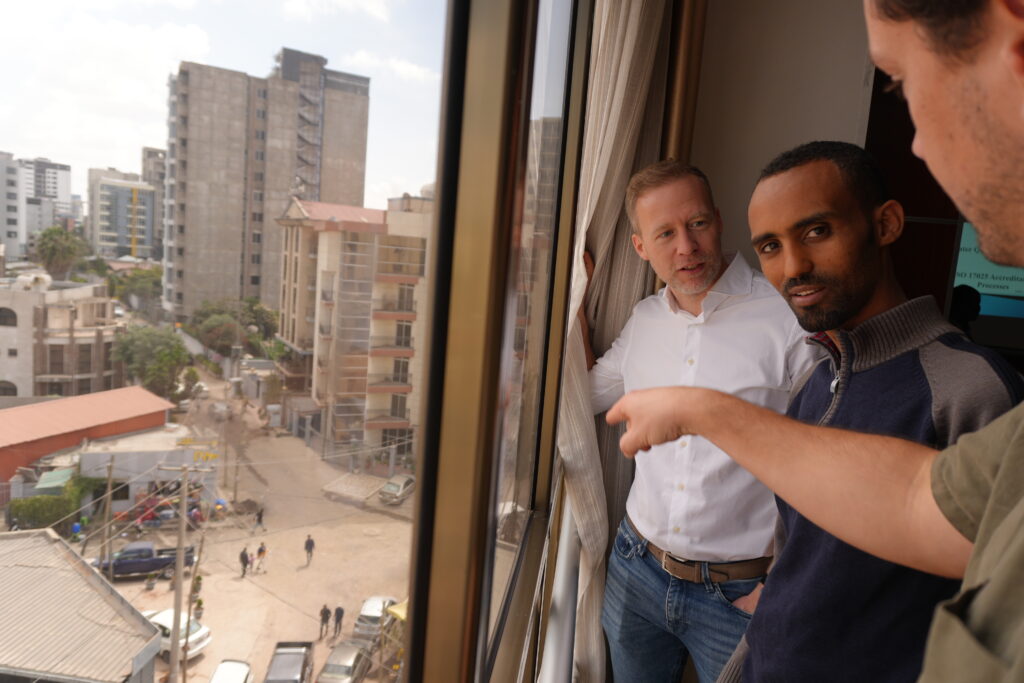
Stefan de Wildt-Bewuketu Abebe and David Koenders looking into streets of Addis Ababa
Blue Deal Wastewater in Adama, improving wetland performance
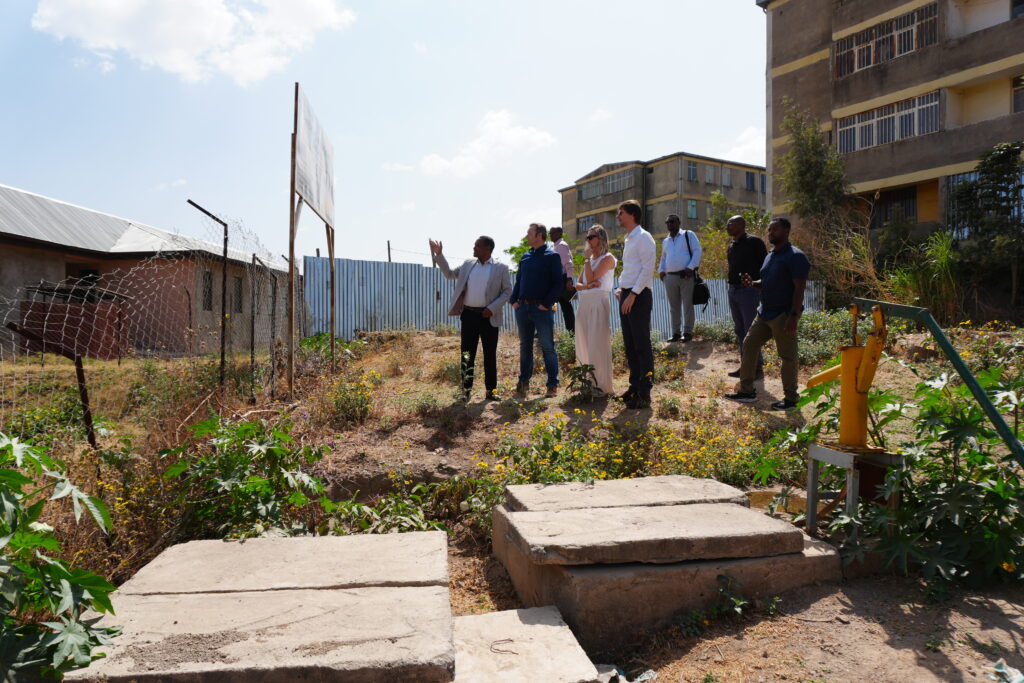
In Adama, Richard Oudhuis stepped in the wastewater partnership. Together with Adama, Shashemene en Hawassa Water Utility, we ran a joint workshop on performance, then visited the constructed wetland for wastewater. On site, we stood with utility staff and community leaders by the broken pipeline that should spread inflow across the wetland. We agreed on the repair steps and the plan to monitor results before any expansion to new housing blocks together with the BBBC our local partner. It’s important to keep the orange Canna lilies wet for continuous growth. A functioning wetland reduces health risks, improves local water quality, and gives the utility a cost-effective tool to treat wastewater.
The Adama Water Utility team
Update on the wetland project
BRIGHT project, connecting knowledge with the Water and Land Resource Center
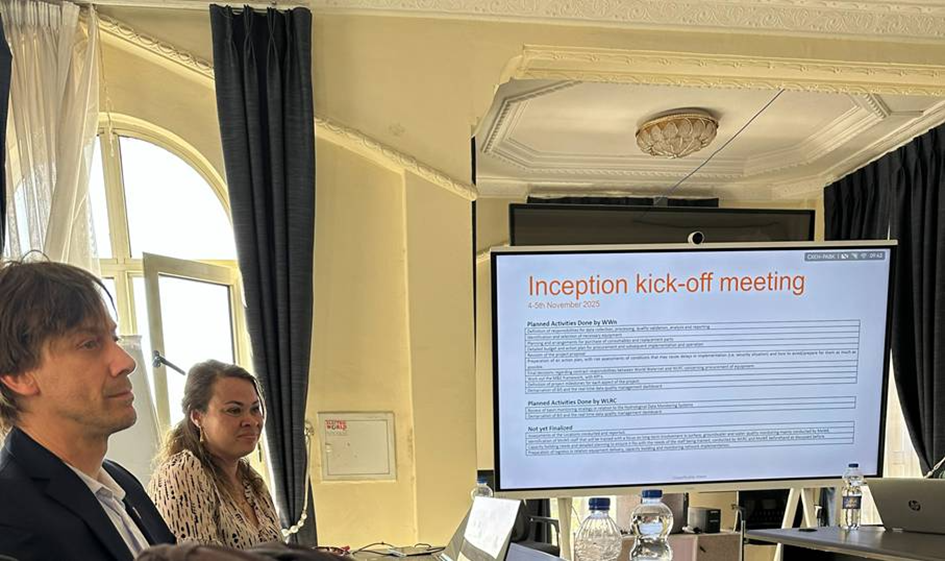
At the same time, Joy Pengel and Maarten Wensing met with partners in the BRIGHT project, including the Water and Land Resource Center (WLRC). The talks explored how better data, practical tools, and local expertise can support future monitoring systems, and how BRIGHT can link with Blue Deal where useful. These conversations help both teams test what works best in the Ethiopian context. Better data and clear roles support safer decisions during storms, faster reporting, and a stronger link between research and daily utility operations.
Inception phase of BRIGHT with project leader Joy Pengel and Maarten Wensing
Communication training, stories that speed up collaboration
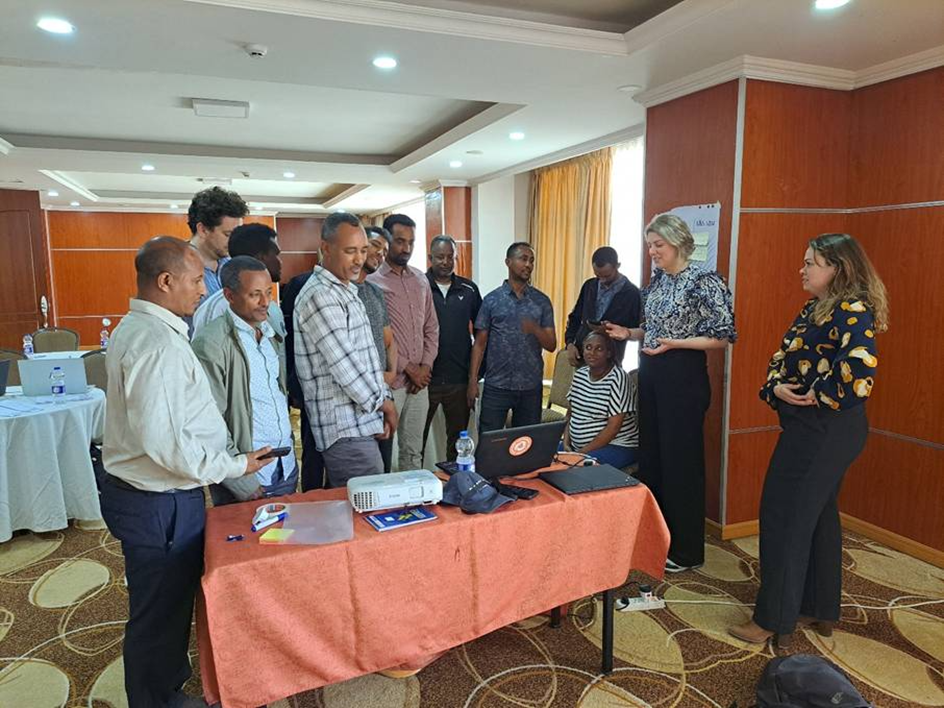
Our Corporate Communications colleague, Mir Verkaaik, gave a hands-on training on strong and consistent communication. The session began with the basics of identity, showing how knowing who you are as an organisation shapes how you act and how others see you. The team also explored how to adapt messages for different audiences and why this helps create real impact. After this, the group moved into practice. From planning, writing scripts, filming, acting to editing. The Abbay team was up for it!
Mir Verkaaik giving the communications impact training, reviewing the impact video’s together.
A new step forward, signing the MoU with the Urban Water & Sanitation Federation (EUWSF)
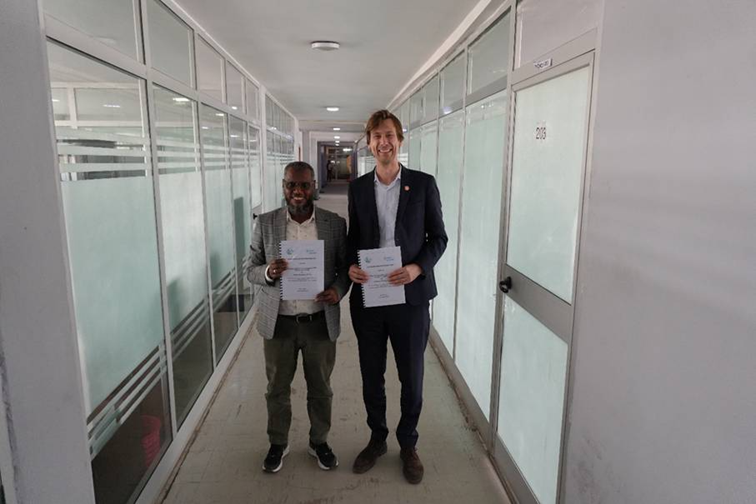
The week ended at the Ministry of Water and Energy (MoWE), where World Waternet and the Ethiopian Urban Water and Sanitation Federation signed a new Memorandum of Understanding. The MoU is a result of the Blue Deal partnership Ethiopia Wastewater Management and focuses on peer learning, capacity building, and technical support for urban utilities throughout Ethiopia. The new collaboration involves scaling up the knowledge exchange platform with wastewater treatment utilities so that more utilities can join. In this way, we are contributing to the national strengthening of the Ethiopian water sector, in line with our social mission. The collaboration provides an opportunity to share expertise from Amsterdam more widely and to learn from challenges in faster, more complex environments.
Maarten Wensing Regional Director signing the MOU with Mr. Muktar Ahmed DG of the Utility Federation
A new office in Addis Ababa
During the visit, the team also stopped by the new World Waternet office hosted within MoWE, a promising base for closer day to day collaboration. The space is still being set up, but it already strengthens our presence in Ethiopia and makes coordination with national partners faster and more direct. Two computer screens donated by the Amstel, Gooi and Vecht Water Authority were brought from Amsterdam and handed over to our local colleagues, Semachew and Joy, who will use the office to support both the Blue Deal Wastewater programme and the BRIGHT project.
Marjolein Weijers en Semachew Miskir at the new Blue Deal / World Waternet office in Addis Ababa
Looking ahead
New faces joined, new plans took shape, and new connections were built. In the coming months we will keep working with our Ethiopian partners to improve monitoring, pilot nature-based solutions, strengthen utilities, and share stories that show the impact of this work. If you want to follow the Blue Deal ethiopia abbay progress , check out the World Waternet website!
A day full of inspiration, new insights, stories, encounters. During the Dutch Water Authorities’ Network Day on 23 March, the water authorities gathered at Villa Jongerius in Utrecht to reflect on the importance of international work. The full breadth of this work, from governance to the power of communities and the future of water management, came together just one day after World Water Day.
Setting the course in a changing world
The day began with a meeting for water authority executives, chaired by Luzette Kroon, Board Member International of the Dutch Water Authorities. Two external experts shared their views on the changing international context. Ben Bekkering (former Head of the Permanent Military Representation to NATO and Senior Associate at the Clingendael Institute) outlined how geopolitical relations are shifting. Conflicts, climate change and pressure on water resources are increasing the need for collaboration. He emphasised that stability and water management are becoming ever more intertwined.
Next, Renske Steenbergen (Deputy Director, VNG International) offered insights into how municipalities and water authorities work together internationally. She reflected on how we can organise international work so that it aligns with our core tasks while remaining agile in a rapidly changing world. The morning concluded with a discussion on how both experts’ pitches could feed into the continuing development of the DWA vision.
Plenary programme: from drinkable rivers to global cooperation
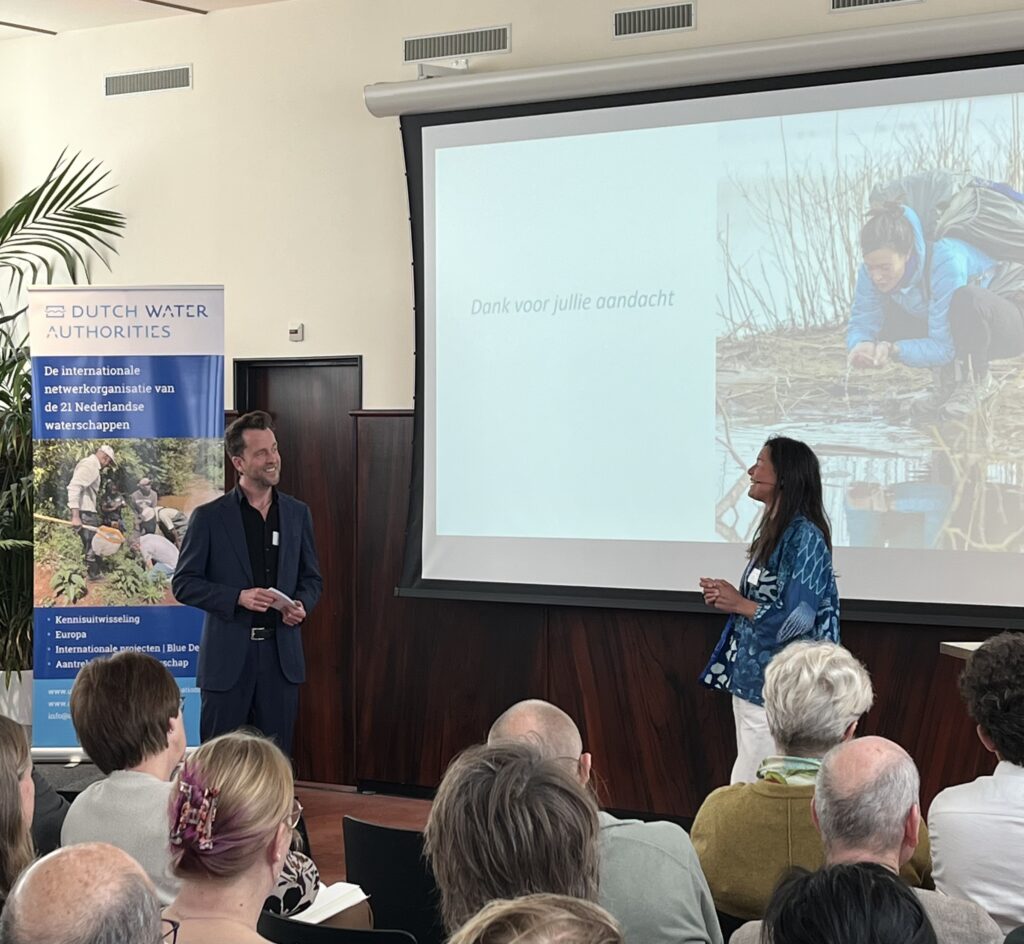
DWA Coordinator and host Piebe Hoeksma interviews Li An Phoa
Moderator and DWA Coordinator Piebe Hoeksma opened the plenary session with around 150 participants, followed by a reflection from Luzette Kroon on an intensive international year. Currently, more than 250 Dutch water authority professionals are involved in international water projects. It’s clear that the European context is increasingly embedded in the DNA of the water authorities, and water is and remains internationally relevant.
The Dutch water authorities have much to offer their international partners. A strong example from the past year was the European Week of Regions and Cities in Brussels, where 18 water authorities were represented. Another highlight was Stockholm World Water Week, which provided an excellent platform to showcase our international water partnerships, with both local partners and Blue Deal colleagues contributing to key sessions. Looking ahead, the UN Water Conference in December 2026 will offer yet another opportunity to present DWA’s expertise on the global stage. Luzette Kroon emphasised that water resilience and climate adaptation will remain core priorities for the water authorities in 2026.
Li An Phoa: Drinkable Rivers: small steps matter
With calm and conviction, Li An Phoa took the audience along on her river walks across the world. Her goal: to restore rivers to such a state that their water becomes safely drinkable again and ecosystems remain healthy. In 2018, Phoa walked 1,061 km along the River Meuse – from source to sea – to raise awareness about water quality. Later journeys included the Scheldt, the Thames and the Danube, amongst others. Initiatives have also arisen along the Vecht, Berkel and Amstel river basins.
“From residents and farmers to mayors – everyone loves water and wants drinkable rivers. Make drinkable rivers the indicator for granting permits,” Phoa suggested. Rather than monitoring how polluted water is, she suggested: “Turn it around – wouldn’t that be much more powerful?”
Her presentation was an inspirational reminder highlighting how local knowledge, communities and long-term partnerships form the foundation of healthy ecosystems.
Blue Deal impact – cooperation that makes a difference
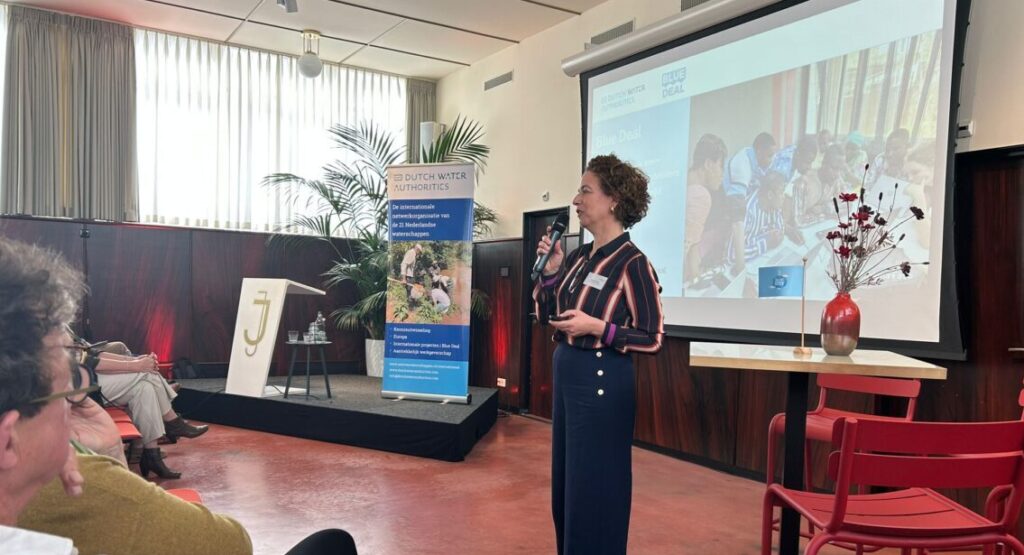
Marieke van Nood shares examples of Blue Deal impact
Blue Deal Programme Manager Marieke van Nood was a fitting next speaker, as Li An’s stories closely align with the core of the water authorities’ international work in the Blue Deal programme: cross‑border cooperation, good governance and strong local engagement as the foundation for sustainable water management. Marieke highlighted several Blue Deal partnerships in Kenya, Ethiopia, Argentina and Ghana, demonstrating that involving local users is essential for achieving impact on the ground. “Blue Deal results are strongest when local users and communities not only participate, but truly have a role and a platform.” From enforcing water abstraction rules in Kenya to engaging farmers as co‑water managers in Argentina: everywhere the same principle applies – local ownership works.
NWB Fund – 20 years of investing in international water work
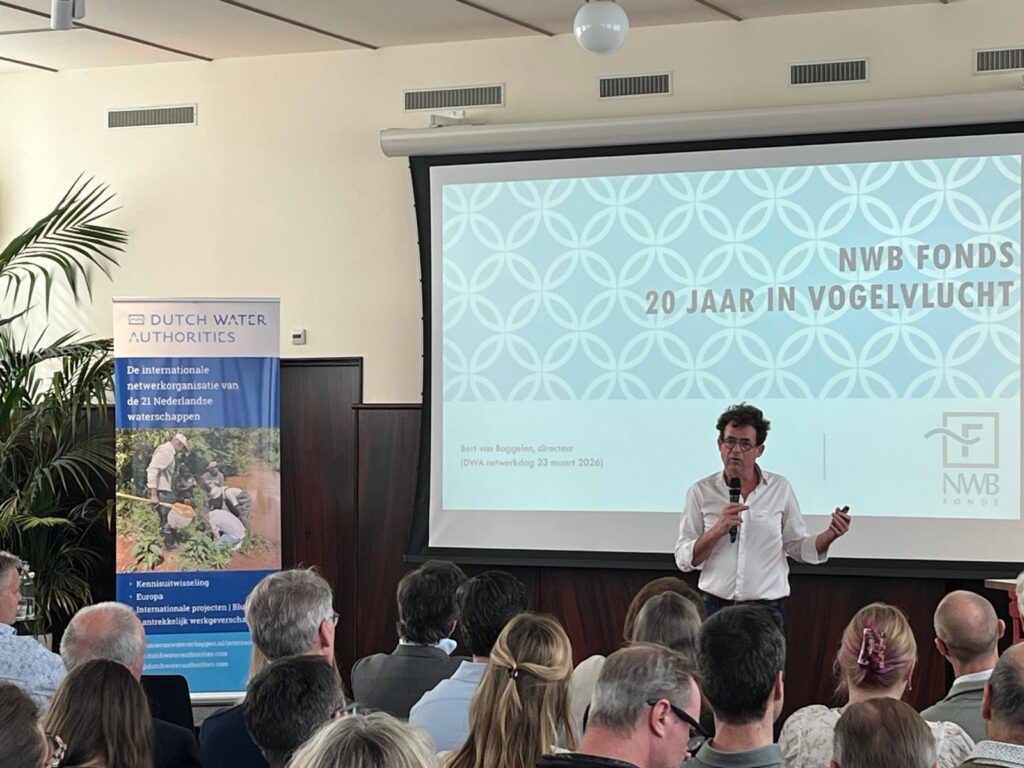
Finally, Bert van Boggelen reflected on 20 years of the NWB Fund. Established to enable international cooperation by the water authorities, the fund invests more than €800,000 annually in Blue Deal projects, with a focus on climate adaptation and social inclusion. It has laid the foundation for many long‑standing partnerships. Participants of the day already received their next invite for the upcoming anniversary event in October, at which they will also give out the annual NWB Award.
Bert van Boggelen reflected on the 20 year anniversaryof the NWB Fund
Break‑out sessions: from Europe to the food–water nexus
In the afternoon, participants spread across four interactive breakout sessions, each with its own angle but united by one central theme: how do we strengthen our international effectiveness going forward?
The Food–Water nexus (Blue Deal)
A session on the crucial relationship between water management and food production, with practical examples from Dutch organisations such as Netherlands Food Partnership, Holland Greentech, Practica Foundation, ECCD-Gire and Blue Deal Peru. Participants had the opportunity to join the discussion in the ‘fish bowl’. A key insight: moving from insight to action requires collaboration between water authorities, individual farmers, knowledge institutions and private partners, and a flexible approach, taking into consideration climate extremes.
Social inclusion and co‑creation (Blue Deal)
Led by Liliane Geerling (Partners for Water) and Blue Deal Social Inclusion focal point Tanah Meijers, this session showed how projects become stronger and more sustainable when local communities are engaged from the start. Examples from Africa and Latin America illustrated how participation from all levels and stakeholders leads to better management and broader support. Participants were given a co-creation assignment to put what they learned into practice.
What’s happening in Europe (Bureau Brussels)
Bureau Brussels representatives Jan van der Steen and Annelle van der Wel gave an update on European legislation, new funding opportunities and the growing need for cross‑border coordination. It was a reminder that Brussels is part of all water authority work and inspiring for everyone working at the intersection of policy and implementation.
The European Knowledge Agenda
How can we organise and share our knowledge more effectively within Europe? Led by Paul van den Berg (Hoogheemraadschap Hollands Noorderkwartier) and Marina Gatón González-Anleo (Waterschap Zuiderzeeland), this interactive session addressed data, monitoring, knowledge exchange and the role of water authorities in European research programmes.
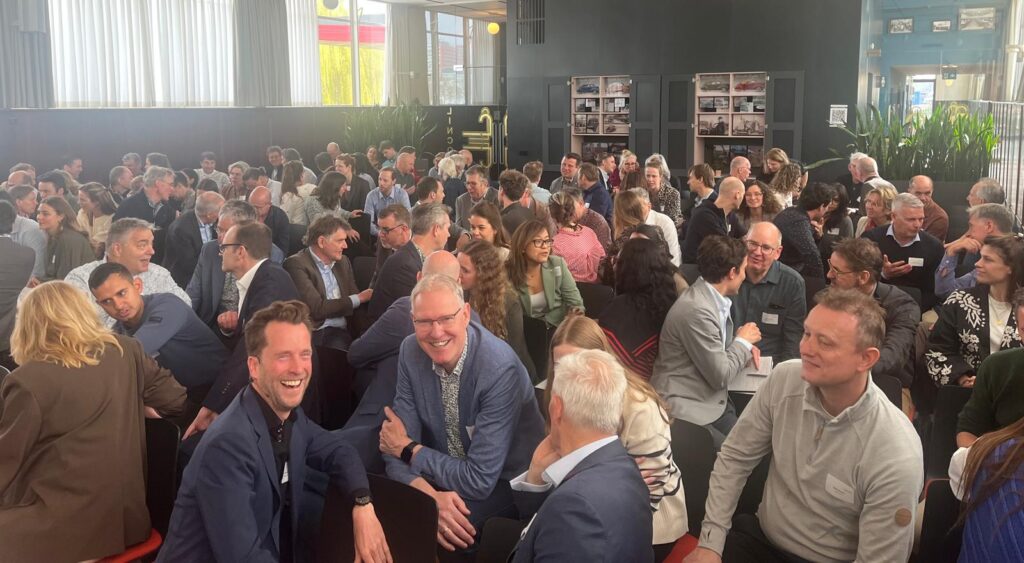
During sessions and breaks, the day offered plenty of opportunity to exchange experiences with other water professionals
Stronger together as we look ahead
The DWA Network Day 2026 once again demonstrated how rich, diverse and meaningful the international work of the Dutch water authorities is, and how important it is to exchange experiences and learn from each other. From geopolitical insights to river walks, from governance to community action – the work of Dutch water professionals makes a global difference, and has the potential to scale its impact further.
In October 2025, three experts from Waterschap Rivierenland visited Bamako to support ANGESEM in strengthening its operational and organisational management.
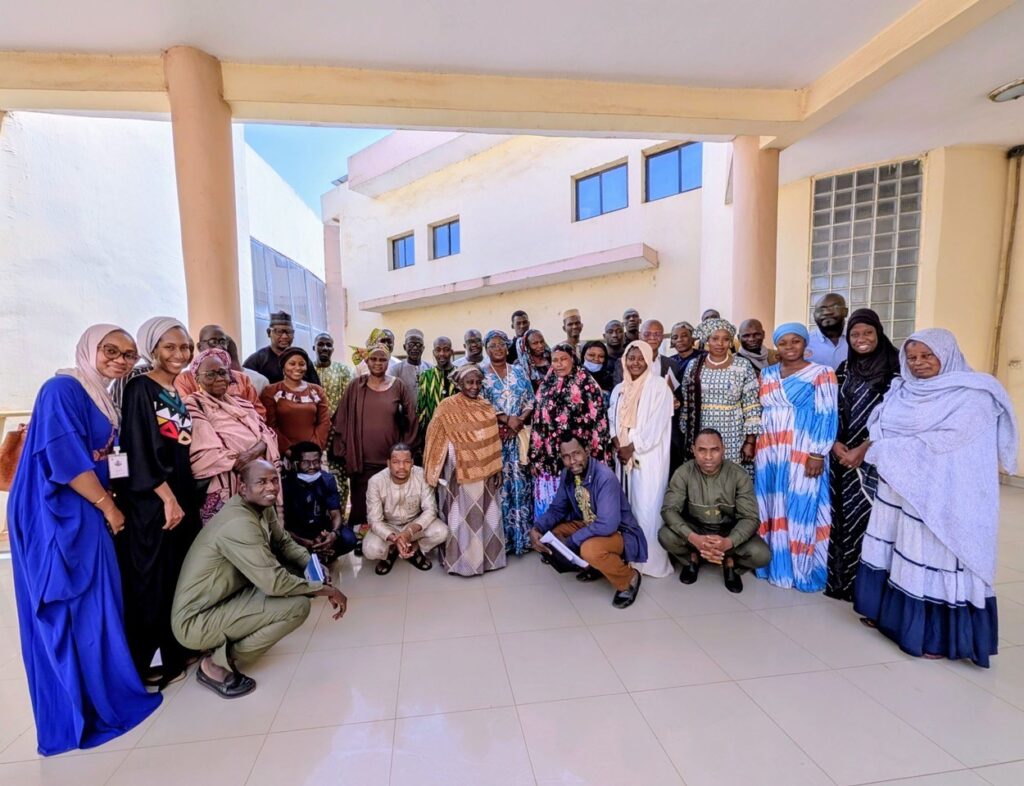
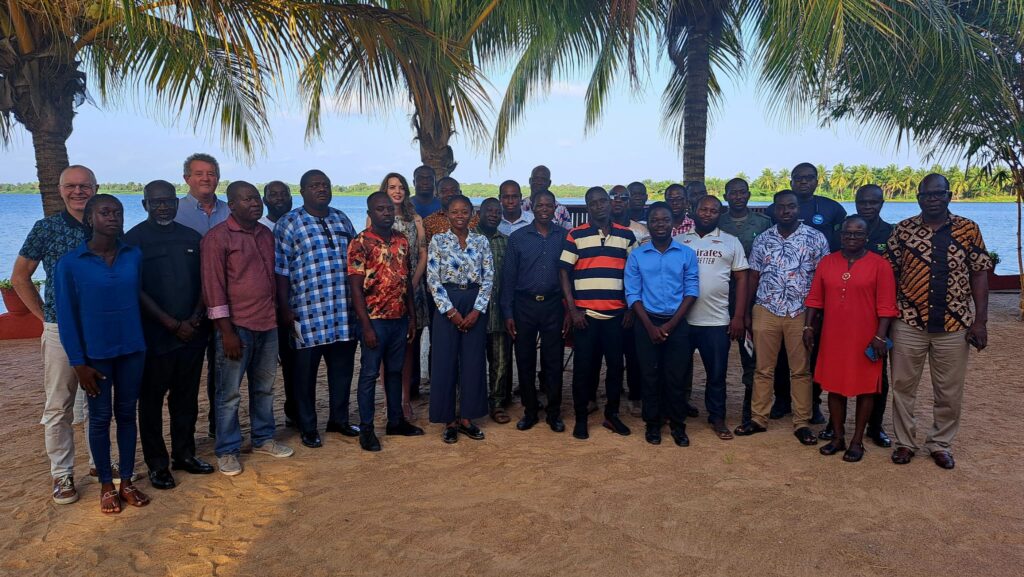
Group photo ANGESEM
Through an interactive workshop, ANGESEM staff reflected together on the organisation’s values, teamwork, and leadership practices, with the goal of turning shared principles into concrete actions in daily work. The exchanges encouraged dialogue, mutual understanding, and team cohesion.
The workshop was enriched by the participation of a global SNV manager, who shared practical examples of values-based leadership. The mission also included discussions on future priorities and plans for 2026, helping set the direction for continued collaboration between the Blue Deal and ANGESEM.
This initiative marks an important step toward stronger, more effective management at ANGESEM, contributing to better public services and sustainable water management in Mali.
Cleaner dyeing for a healthier Niger river
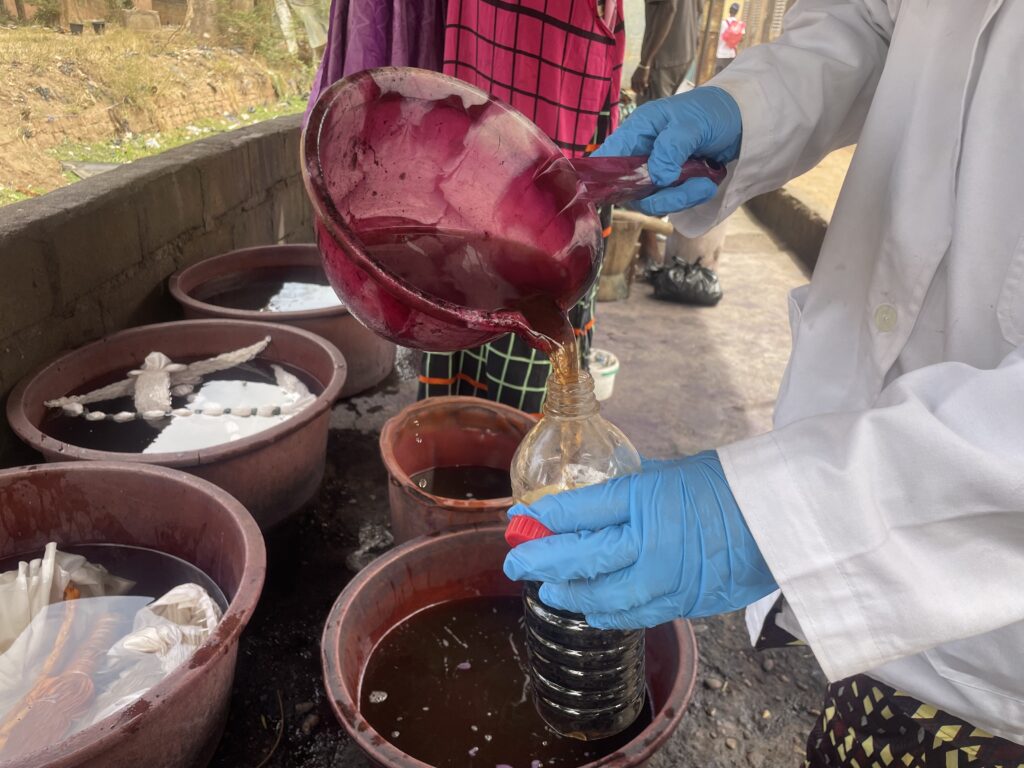
Artisanal dyeing is an important source of income in Bamako, Mali, especially for women. However, wastewater from dyeing activities is often discharged directly into the environment, contributing to pollution of the Niger River.
To address this challenge, the “Teinturerie” Pilot Project was launched by ANGESEM, in partnership with the Blue Deal programme, the Dutch Water Authorities, and SNV Mali. The initiative is financially supported by the Netherlands Enterprise Agency (RVO) and NWB Fund.
The Teinturerie project aims for environmental friendly approaches to managing wastewater from the dyeing factories.
The project works to reduce pollution, promote simple and sustainable wastewater treatment solutions such as helophytes, and support dyeing communities in adopting better environmental and hygiene practices. Field activities included mapping dyeing sites across Bamako, identifying pilot locations, and holding participatory workshops with dyers, local authorities, and technical partners.
In addition to the technical aspects of treating the polluted wastewater from the dyeing activities, the project also focuses on including the female entrepreneurs in the pilot. It is important that the entrepreneurs are involved in finding solutions that are sustainable from both the economic , social and environmental perspectives.
Entrepreneurial women at the heart of wastewater treatment from artisanal dyeing
Early 2026, female entrepreneurs attended a workshop as part of the “Teinturerie” Project to raise awareness and get engagement for this project, a spin-off of the Blue Deal activities in Bamako.
They shared water quality data results from ANGESEM’s laboratory highlighting the environmental and health impacts of untreated dyeing wastewater. Participants also learned about environmental regulations, their responsibilities, and the penalties for non-compliance. The session was highly participatory with dyers exchanging practices, suggesting solutions, and helping shape a future best practice manual while also discussing the project’s business plan.
What stood out most? Behind every dyeing basin are courageous women feeding families, creating jobs, and supporting the local economy. This was a strong first step in the collaborative approach of safeguarding traditional practices while preserving the environment and human health.
The NWB Fund has approved a €24,500 financing request from Blue Deal Ghana to launch a hydrological restoration pilot in the Songor region of southeast Ghana. The initiative marks a significant step toward large-scale mangrove recovery and climate-resilient water management under the international Blue Deal partnership.
Restoring a degraded ecosystem
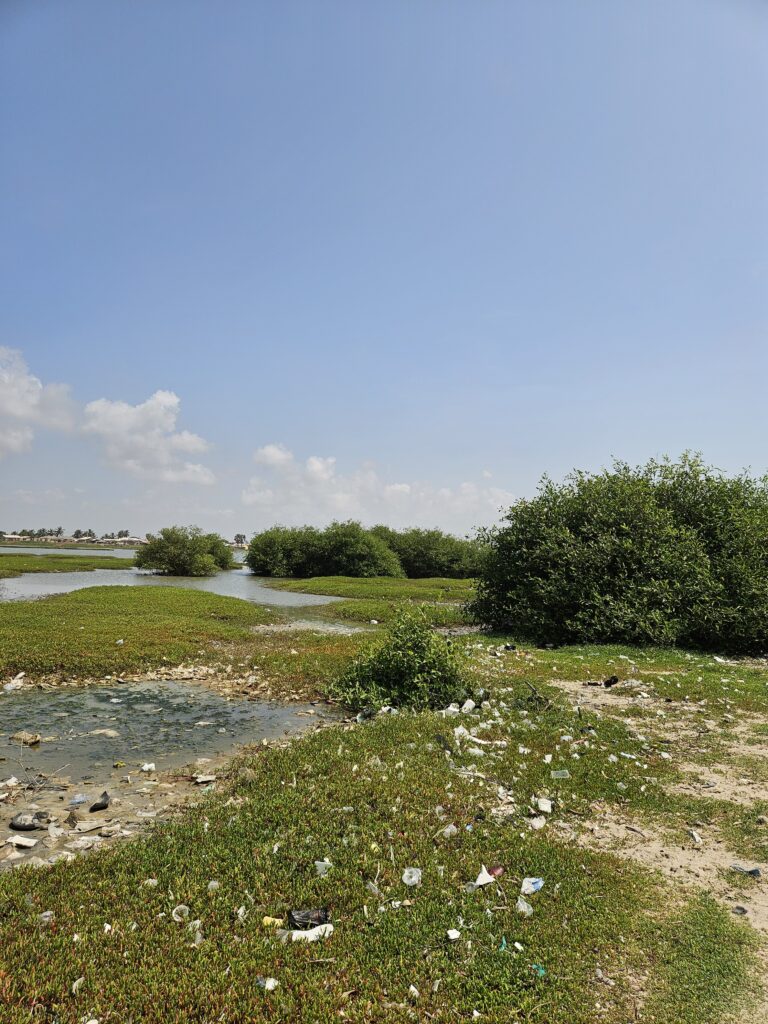
The project focuses on the Luhuese Creek, a 13-kilometer watercourse within the Songor Ramsar Site and UNESCO Biosphere Reserve. Years of sedimentation, growth of vegetation and blockages have severely restricted freshwater flow to the Songor Lagoon, leading to rising salinity, declining water quality and loss of biodiversity including the loss of mangroves.
Ecological restorationwill be done in the Luhuese Creek within the Songor Ramsar Site
Ground-truthing carried out at the end of 2025 confirmed that the creek is “severely silted along its entire length,” making hydrological recovery essential for ecological restoration and community livelihoods. The pilot will mechanically dredge the waterway, stabilise its banks, and improve water quality through continuous monitoring.
Linking nature restoration to climate finance
Once freshwater flow is restored, the area is set for the recovery of roughly 800 hectares of mangroves, a critical ecosystem for biodiversity, coastal protection and carbon storage.
The first 200 hectares will be planted during the pilot phase. The remaining expansion is planned to be financed through a new Blue Carbon Credit business model, enabling long-term funding for both restoration and maintenance activities.
Strong local ownership
Ghana’s Water Resources Commission is the local partner in Ghana
The project is led locally by Ghana’s Water Resources Commission (WRC), supported by community structures organised through the CREMA method for participatory landscape governance. Twenty-seven surrounding communities stand to benefit from improvements in fisheries, freshwater availability and sustainable income opportunities linked to forestry and carbon credits.
A scalable blueprint
The pilot contributes to the broader goals of the Blue Deal: improving water security for 20 million people worldwide. Lessons learned in Songor will be shared with Ghanaian institutions and can be applied to similar degraded mangrove systems in Keta, Avita and other regions across Africa and Southeast Asia.
The project also provides innovative insights for the Netherlands, especially regarding landscape governance, community collaboration and the development of carbon-based financing models.
NWB Fund gives green light
Following review on 18 February 2026, the NWB Fund’s program committee approved the financing request. With this decision, the pilot can begin in March 2026, led by a local contractor under WRC supervision. Mangrove planting will follow in April, with monitoring continuing throughout 2026.
The approval marks a major milestone in building a climate-resilient, community-supported and financially sustainable restoration strategy for the Songor region.
Manage Consent
To provide the best experiences, we use technologies like cookies to store and/or access device information. Consenting to these technologies will allow us to process data such as browsing behavior or unique IDs on this site. Not consenting or withdrawing consent, may adversely affect certain features and functions.
Functional
Always active
The technical storage or access is strictly necessary for the legitimate purpose of enabling the use of a specific service explicitly requested by the subscriber or user, or for the sole purpose of carrying out the transmission of a communication over an electronic communications network.
Preferences
The technical storage or access is necessary for the legitimate purpose of storing preferences that are not requested by the subscriber or user.
Statistics
The technical storage or access that is used exclusively for statistical purposes.The technical storage or access that is used exclusively for anonymous statistical purposes. Without a subpoena, voluntary compliance on the part of your Internet Service Provider, or additional records from a third party, information stored or retrieved for this purpose alone cannot usually be used to identify you.
Marketing
The technical storage or access is required to create user profiles to send advertising, or to track the user on a website or across several websites for similar marketing purposes.