Through local eyes: stories from the Awash basin in Ethiopia

In this blog, our regional Blue Deal partner Tegenu Zerfu Tsige shares his experiences during a visit with Dutch partner experts to the Afar region in January 2026, offering a vivid account of local realities, challenges and experiences.

“The morning sun had just begun to rise, yet its heat already pressed heavily on us as we crossed the shimmering plains of the Lower Awash. A newly constructed road led us toward Asayita and Afambo. Clean, quiet and safe, cutting through a landscape that has never been simple. Every few kilometers, the terrain revealed silent markers of its past: vast plains shaped by violent flash floods, heatwaves trembling above the earth, isolated dome‑shaped wooden houses standing defiantly against the emptiness, and a horizon so open it seemed to carry the region’s long history of struggle, resilience, and hope.

Here, water is never simply water, it is a force, a memory, a fear, and at times, an absence that lingers in the air like a ghost.
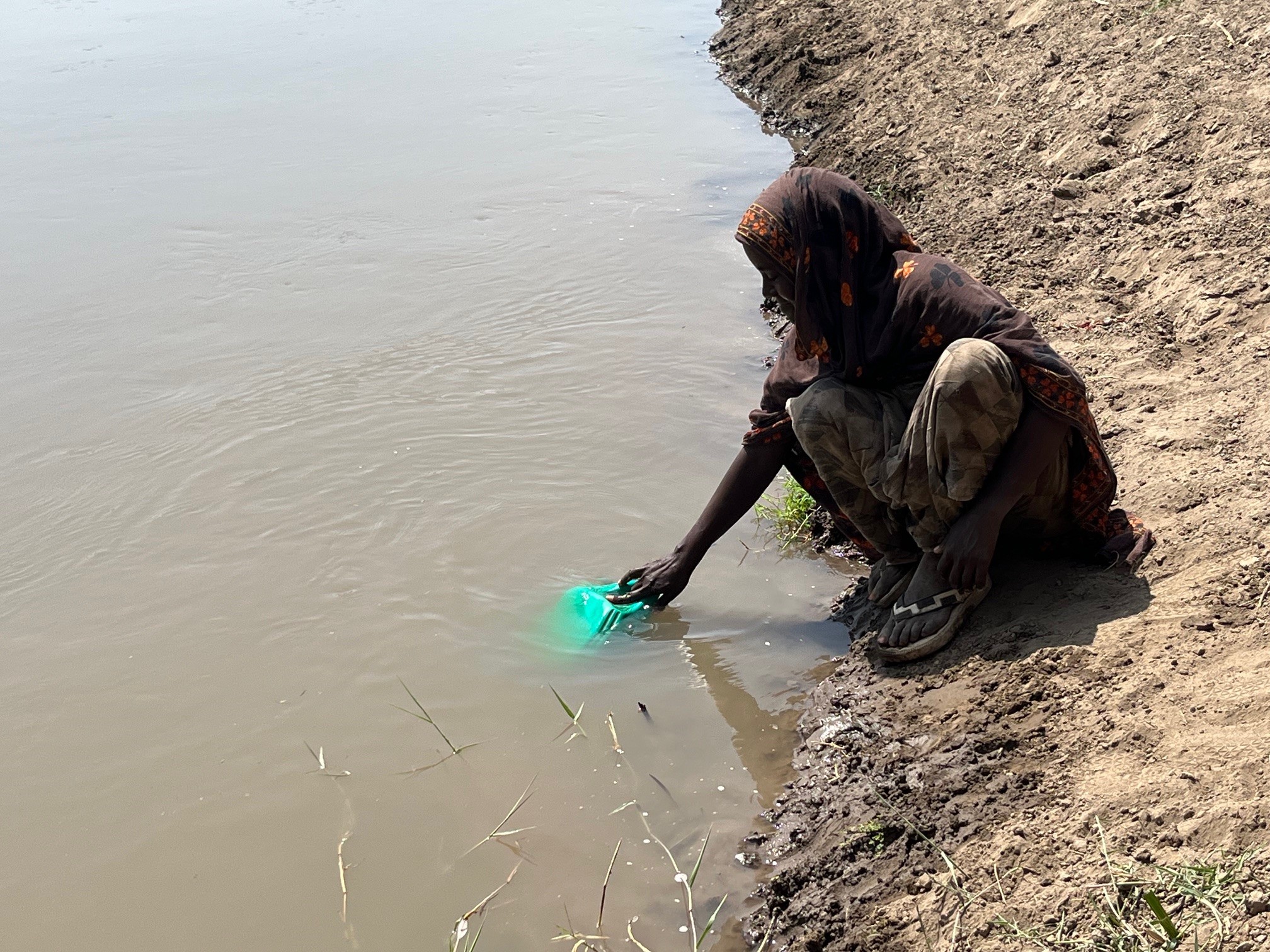
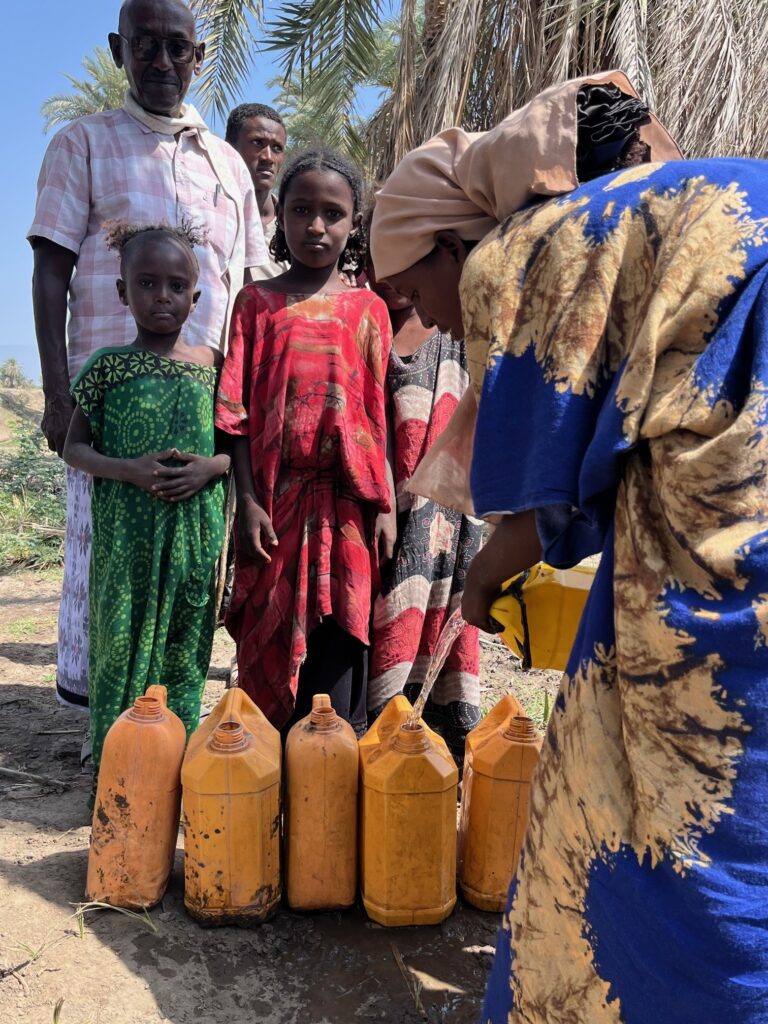
A woman fetches water for domestic use

Afambo & Asayita: where water is both life and a threat

Travelling toward Afambo, near the end of Awash River, the Awash river lies perfectly still. The scene appears peaceful, almost gentle, but the driver who is part of the community, quickly reminds us how deceptive that calm can be.

“This river does not warn twice,” he murmurs, his eyes fixed on the water. “It rises like an angry guest and leaves like a thief.”

The driver explains that floods arrive without warning, rushing over fields and homes with a violent force, only to disappear again and then leave months of drought. These communities live in a constant state of tension and uncertainty, never sure whether to prepare for too much water, or too little.

Along the riverbanks, we see clear signs of years of intervention: dredged channels deepened beyond their natural form, dikes repeatedly patched, and flow‑control structures intended to protect but quietly reshaping the river’s behavior. These works can reduce flooding temporarily, but they also disconnect the river from its flood plain, accelerate sediment movement, and sharpen hydraulic drought for smallholders downstream.

Further along these fields, we recognise more issues:
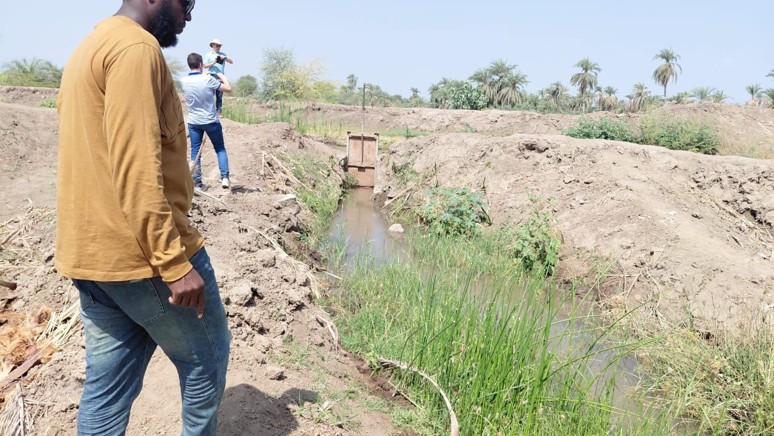
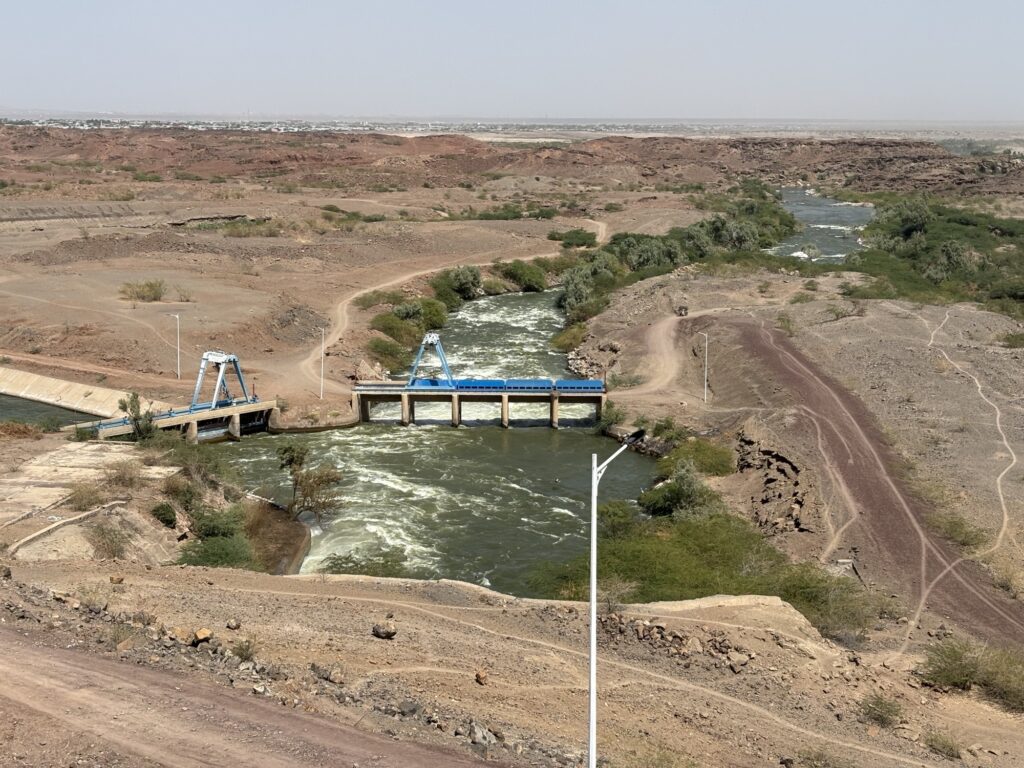
A poorly located diversion gate
  • diversion points built in the wrong place
  • poorly aligned and weakened dikes
  • unmeasured abstractions pulling water unpredictably
  • salt crusting over waterlogged soils
  • invasive weeds claiming canals

One elder pointed toward the sluggish river and said softly: “Hydraulic drought is not when water is gone. It is when water passes you, but refuses to work for you.” His words capture the contradiction: water visibly flowing past, yet most irrigation blocks remain unable to access it.

A traditional governance system

As we continue our conversation, another dimension of this region emerges: not defined by terrain, but by people and their social fabric. Within the Afar community, clan structures operate under a governance system that is seldom formally recognised by outsiders, yet it functions with remarkable coherence and authority.
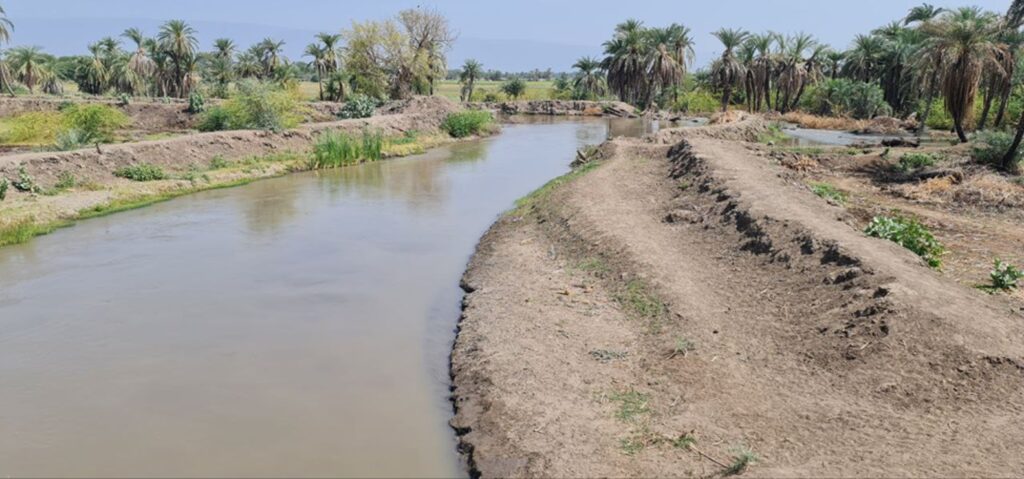
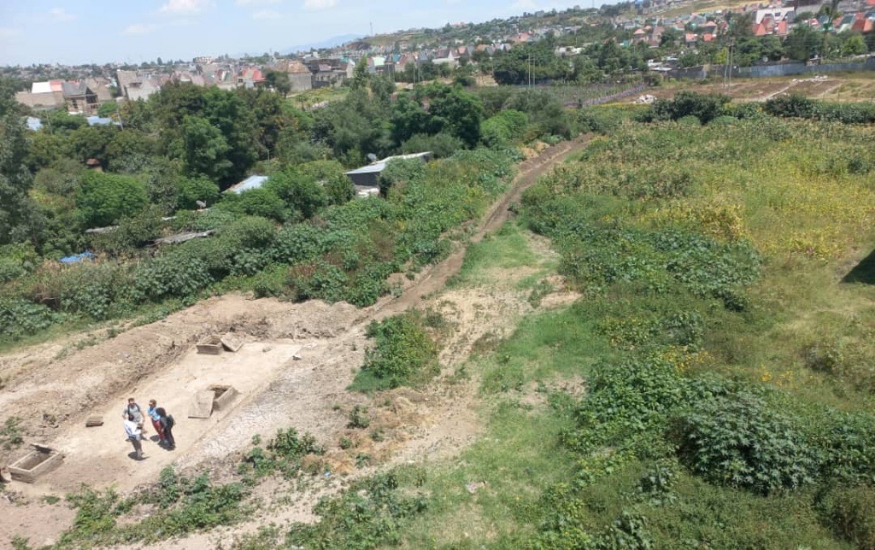
A newly built dike in Assiyta Woreda

At the heart of this system is maa’da, the Afar customary law. It is not written in any document or codified in legal texts; instead, it lives in collective memory, shared responsibility, and the wisdom of elders. These elders, carrying decades of lived experience, serve as custodians of justice and social order. Their decisions, shaped by deep cultural understanding, guide community life in ways that external observers often overlook.

We learned how responsibilities are structured with quiet clarity:

Makaban: the elder
– Respected not for his title, but for wisdom, fairness and age
– Leads negotiations, directs labour, and holds the moral authority of the clan.

Fi’ima: the middle generation
– Trusted middle-aged men who enforce decisions, organise communal work and act as intermediaries between the elder generation and the youth.

Ukubala : the youth
The strength of the system. They reinforce dikes, clear canals, patrol grazing boundaries, and mobilize immediately when the river threatens to break its banks.

No written protocol exists, yet the system is efficient: the Makaban speaks. The Fi’ima relay the message. Household clusters mobilise within hours. If a dispute arises over water, grazing, canal access, or boundaries, everyone gathers beneath a tree. Memory, precedent, and negotiation guide the conversation. Honour carries more weight than punishment.

A rule written on paper can be torn,” an elder said. “A rule written in the mind cannot be erased.

Girls waiting to fetch water from the bank filtration

Discussions beneath the palm tree and a newly built dike

Also today, we gather beneath the shade of an old palm tree, beside a newly constructed but already eroded dike. Near us, a young girl bends down to collect water for her household. The ground around her is dusty, the dike crumbling at its edges a reminder of both the river’s force and the community’s ongoing struggle to protect their land.

As I stood there observing, I began asking simple questions: Who built this structure? Why was it built this way? What does it mean for the people who rely on it? These questions open a door. Slowly at first, then with growing intensity, concerns begin to surface. The elders, who had been listening quietly, eventually stepped forward more direct, more emotional, and unmistakably frustrated.

They explain that a technical study was conducted, machinery mobilised, and a contractor brought in. But all of it happened without genuine consultation in the community. The process overlooked the very people who depend on the river and the dike for their survival. “They finished the work and left,” one elder said. “Then the river broke through. And when the water came, we were the ones who had to fix it with our own hands, with our own governance system, with whatever materials we could gather.”

Despite limited resources, the community came into action. They rebuilt what they could: using old palm trunks as support columns, weaving palm leaves, gathering soil, organising labor through their clan system. They showed us how they even construct infiltration wells near the riverbank simple structures that cool and filter water for drinking when the river runs too muddy to use.

“We can do it,” another elder said. “But the river’s power is sometimes beyond our capacity. Still, we work. We organise ourselves. We don’t wait.”
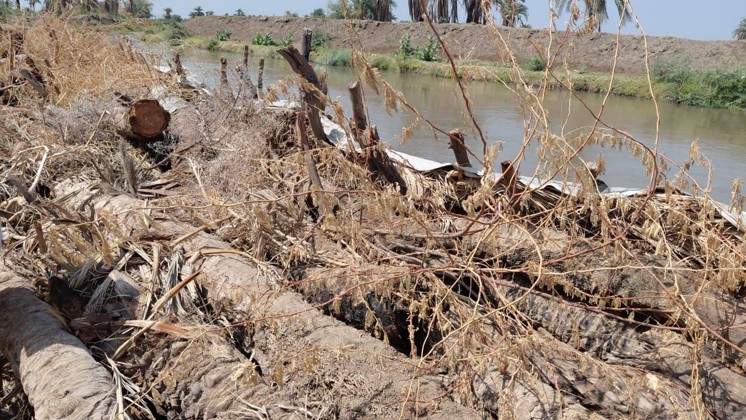
A dike, maintained by the local community

He pauses, looking toward the damaged fields. When the river last breached the dike, it destroyed 120 hectares of land fields that families depended on. Then he adds quietly, “It would be better if our voices were truly heard. We are the beneficiaries. We live here. Sustainable dikes require our knowledge, our experience, our involvement.”

Later, another elder summarises it in a single sentence that captured the spirit of the community:

“If we wait for others, the river will move before they do. So we stand with our hands, our shovels, and our unity.”

Toward the silent edge of Awash and beyond

Later in the afternoon, our journey takes us further east, toward the far end of the Awash river where its long course empties into Lake Gemeri. The noise of the world slowly fades behind us. The wind settled. We see a vast wetland system that feels almost untouched. Tall grass sways. Birds hop, whistle, and dance between the reeds. Children splash near the shore, washing clothes and cooling themselves under the soft light. The entire setting feels like a healthy ecological pocket, an environment where water, land, and human life still move in harmony.
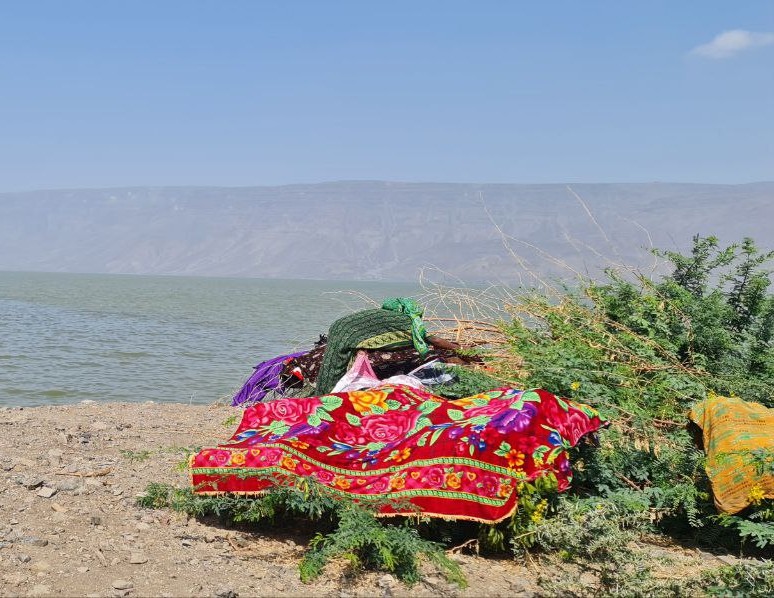
Lake Gemeri, where the Awash river ends, with a vast mountain range as a backdrop

Toward the Djibouti border where two countries meet

As we drive east near the Djibouti border, the elders point out riverbeds that had flowed decades earlier, but are now dry and silent. The terrain itself tells the stories, quiet but full of clues about past hydrological forces. Reaching the border feels like arriving at a natural T‑junction where two sisterly countries meet, connected by boundaries and shared history and intertwined livelihoods. The land here carries a peculiar stillness, yet the landscape speaks volumes about what once was and what could return if ecological systems are preserved and cross‑border cooperation strengthened.

A gesture of hospitality

On our return from the trip, the Woreda Water and Irrigation Head honours us with a warm and dignified lunch. The genuine and respectful and inclusive hospitality, beautifully accommodated both Muslim and Christian customs around the same table. It was more than a meal; it was a cultural bridge, a symbol of unity and shared purpose.

From the eroded dikes maintained through local governance, to the peaceful wetlands of Lake Gemeri, to the striking silence of the Djibouti border every place revealed something deeper. It showed how water shapes lives, cultures, economies, and ecosystems. And how communities, even with limited tools, hold centuries of knowledge about adapting, surviving, and sustaining their environment.

Day 2. A landscape of opportunity and challenge: the Dubti–Tendaho corridor

As we continued our journey through the Dubti–Tendaho area, the landscape opened into a wide expanse of plains—fertile land once shaped by the Awash River’s seasonal floods, now increasingly transformed for modern irrigation. The Tendaho Dam, standing upstream, offers immense potential: stabilizing flows, supporting wheat production for national programs, and enabling large-scale commercial agriculture. Well,‑organized settlements stretch along the plains, inhabited by both local Afar communities and technical staff working in the sugar estate. Compared to the downstream basin, this area feels more developed equipped with irrigation infrastructure, accessible roads, and visible signs of agricultural ambition.

But the picture is not without its complexities. Salinity patches shimmer on some fields, a warning of long-term soil stress. Market chains remain uncertain, and many farmers worry whether the available water will be enough once the entire command area becomes fully cultivated. Downstream users raise similar concerns: how will dam releases be managed, how will maintenance be ensured, and what happens during peak flood months when the river challenges even the most carefully engineered systems?
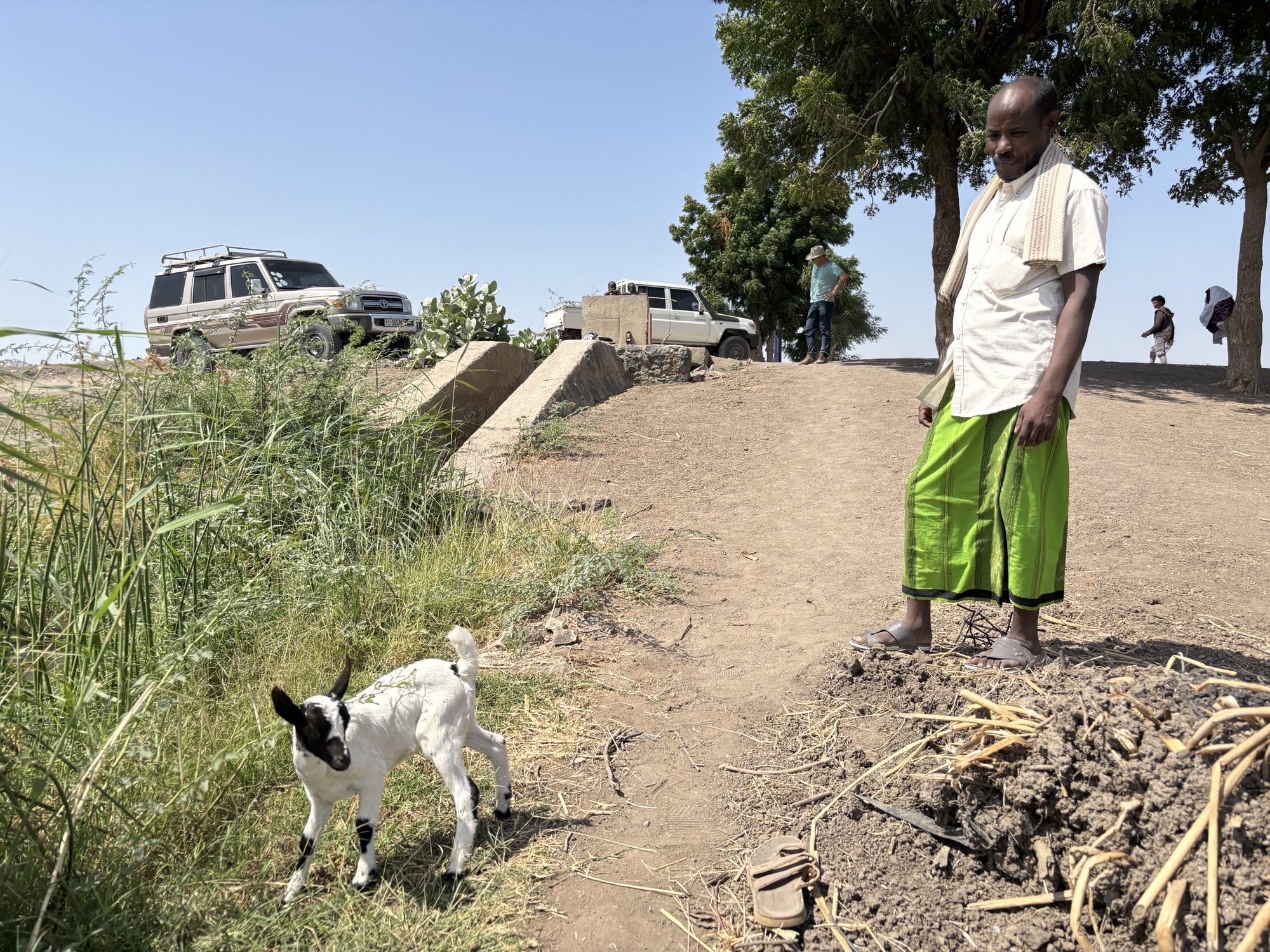
A man and his young goat along the roadside, a typical sight in daily rural life

Along the roadside, we encountered a man carrying a tiny goat only a few weeks old tucked in the crook of his arm, heading to the market. The sight startled my Dutch colleagues, yet for the locals it was an ordinary expression of daily life, resilience, and livelihood strategies rooted in pastoral culture.

The Woreda office head, proud of the region’s potential, walked us through the area with great enthusiasm. He emphasized that with proper water administration, Dubti could become a model of modernized agriculture in the Awash Basin. We observed aqueducts, concrete turnouts, and well-designed irrigation structures—evidence of thoughtful engineering. Yet many secondary canals were clogged with weeds, and silt had begun to accumulate in key distribution points. Water allocation remained inconsistent, and communication between upstream operators, district technicians, and water users was often fragmented.
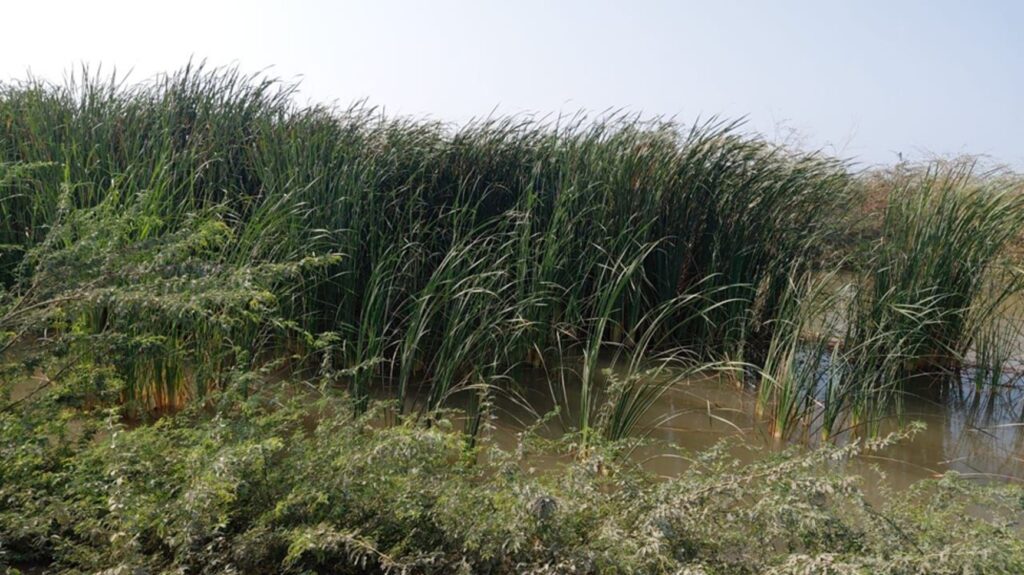
The weeds are claiming the canals

“For now, the water is enough,” one technician explained, “because much of the irrigable land is still idle. But once everything becomes active, water stress will be inevitable.” His words reinforced the urgency: this is precisely the time to establish a strong, coordinated water administration system—one capable of balancing demand, measuring abstraction, planning releases, and protecting both upstream and downstream users.

The Dubti–Tendaho corridor stands at a crossroads. Its potential is undeniable, but so are its risks. And as we drove onward, past fields of wheat, over canals lined with grass, and through communities carrying both hope and uncertainty, it became clear that the future of this landscape will depend not only on infrastructure, but on governance, communication, and a shared commitment to sustaining the river that runs through them all.

A basin at a crossroads

Across the basin, evidence of stress within the environment was impossible to miss:

  • uncontrolled abstraction
  • unpredictable floods
  • longer dry spells
  • rapid irrigation expansion
  • land‑use change

Challenges now coexist with opportunities: invasive species spreading, salinity quietly expanding, grazing lands shrinking, yet markets opening, knowledge growing, and communities adapting in real time.

Everything seen, heard, and felt in these two days settled deep in the hearts of the team members.
Heading into the workshop in Semera, all carried dust on their shoes – and the voices of the people in their minds.

The Semera workshop

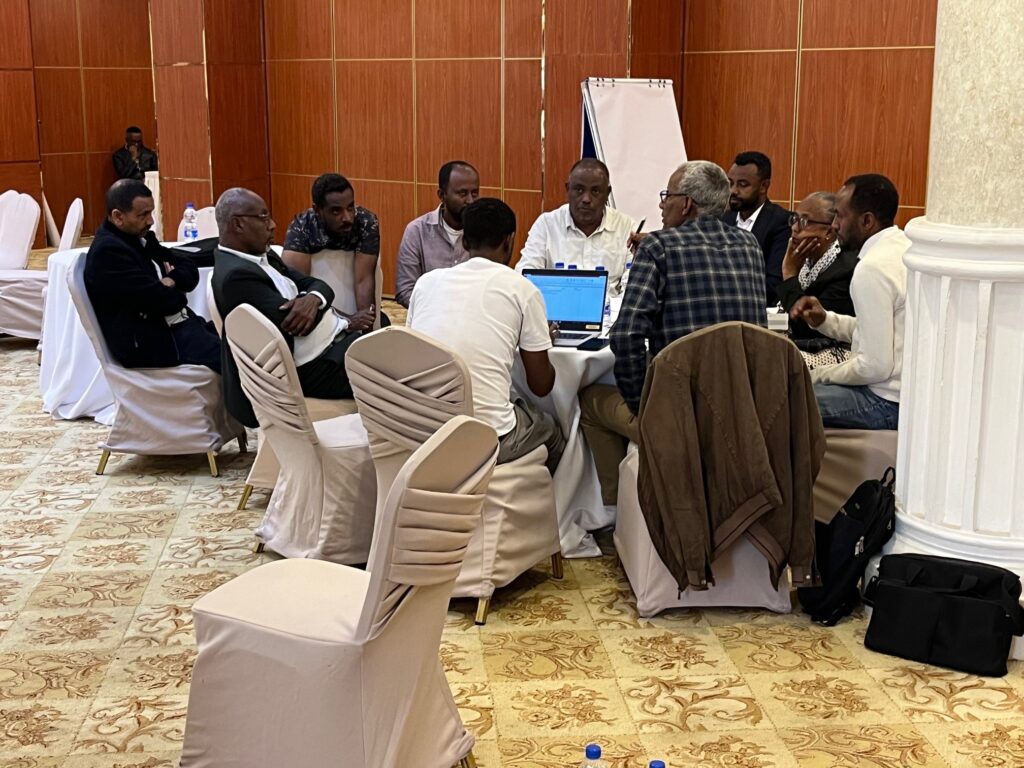
When the participants entered the Yangudi International Hotel for a workshop to discuss the issues they had witnessed during their field visit, the atmosphere felt heavy with responsibility, yet earnest and quietly hopeful, as if everyone sensed that the next hours could shape the basin’s future. Around the room, familiar faces carried their own stories: the Branch Office Head whose eyes reflected years of navigating the basin’s pressures, Afar Bureau officials standing firm in their determination to advocate for their communities, and the Dutch water experts, humbled by the realities they had witnessed during the field visit, now ready to listen, learn, and to navigate collaboration points. This wasn’t a meeting, it was a crossroads.

Partnership manager Rens Huisman opened with the message that set the tone: “Fair share for all”, the motto of the Blue Deal Awash Partnership in water allocation and an aspiration carried from the fields into the conference hall.

As each partner spoke, the room shifted from presentations to confessions, confessions of gaps, of failures, of the collective desire to do better: That data was missing. That institutions were overstretched. That customary law held wisdom regulators had yet to honor. That downstream voices had remained too quiet for too long.

Yet beneath those confessions was something powerful: a shared willingness to rebuild trust, to learn from mistakes, and to move forward together. And as groups formed around tables, the energy transformed. Maps were spread out, markers uncapped, hands animated. The fatigue of travel and long field days melted into lively argument and laughter.

One group spoke passionately about building IWUAs – “not as paperwork, but as bridges between conflict and cooperation.”

Another debated the need for real-time monitoring—“data means nothing unless the farmer understands what it means for tomorrow’s irrigation.”

A third group dreamed of universities stepping into the heart of basin issues -“because knowledge must stand shoulder-to-shoulder with communities.”

Slowly, the chaos turned into clarity:

  • From data to integration
  • From voices to inclusion
  • From institutions to collaboration

The basin’s story, once fragmented, began to weave itself into a shared narrative.

A Moment That Became a Memory
As the workshop drew to a close, an unexpected moment unfolded. Officials from the Afar Water and Energy Bureau stepped forward carrying beautifully folded traditional Afar cultural clothes. When they placed the garments on the Dutch team embroidered, warm, symbolic the reception space fell silent.No slide, no graph, no report could have spoken louder.
It was a gesture that meant:

“You have walked our land. You have listened to our people. Now you are part of our story.”

In that moment, the partnership transcended technical roles. It became human. A commitment sealed not by signatures, but by respect.
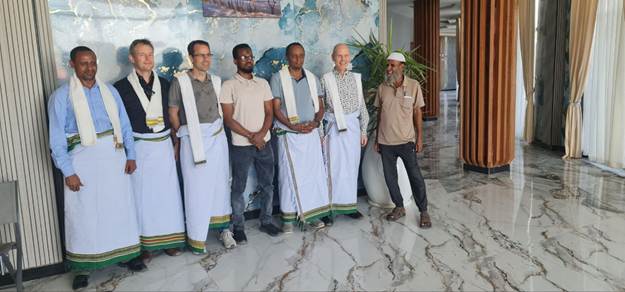
The team in Afar cultural cloth

What the basin needs now: recommendations emerging from the journey

The conversations with elders, officials, irrigators, pastoralists, and technical staff made one message unmistakably clear: sustainable water allocation cannot be engineered from an office desk alone. It must be built from the ground up through understanding, coordination, trust, and shared responsibility.

The basin now needs:

A deeper understanding of the whole system: Not just hydrology, but the social, economic, and cultural systems that shape water decisions. Both natural flow processes and human‑made dynamics must be understood together, not separately.
Clear mapping of users and institutions: Who takes water, where, when, and under what rules? Without clarity, fairness becomes impossible and conflict becomes inevitable.
A governance system built on connection, not competition: Formal and informal systems must not stand in parallel lines. They must intertwine, share information, and build a collaborative culture from basin to kebele.
Recognition of customary governance: Systems like maa’da are not informal gaps in governance they are functioning structures that guide daily life. Any water‑allocation system that ignores them will fail before it begins.
Bridges between clan structures and formal IWUAs: These two systems do not have to compete. In fact, the basin’s stability relies on them connecting, coordinating, and reinforcing one another.
Transparent communication on Tendaho Dam releases and administration: Communities repeatedly raised concerns about unpredictable flows. Clear, timely, and open communication must become standard practice.
Reliable measurement at abstraction points: Without accurate data, there can be no planning, no fairness, and no accountability.
Protection of ecological flows and pastoral grazing zones: Wetlands, lakes, and floodplains provide life far beyond their borders. Protecting them is not optional—it is foundational for long‑term sustainability.
Climate smart agriculture and livelihood improvement

A week of connection and new energy in Ethiopia

The Blue Deal Ethiopia (Abbay) team recently returned from a working visit to Ethiopia. It was a week of strengthening partnerships, advancing water and wastewater programmes, delivering trainings, and signing a new MoU to support long-term sector development in Ethiopia Abbay. Note: This article was recently published on the World Waternet website.

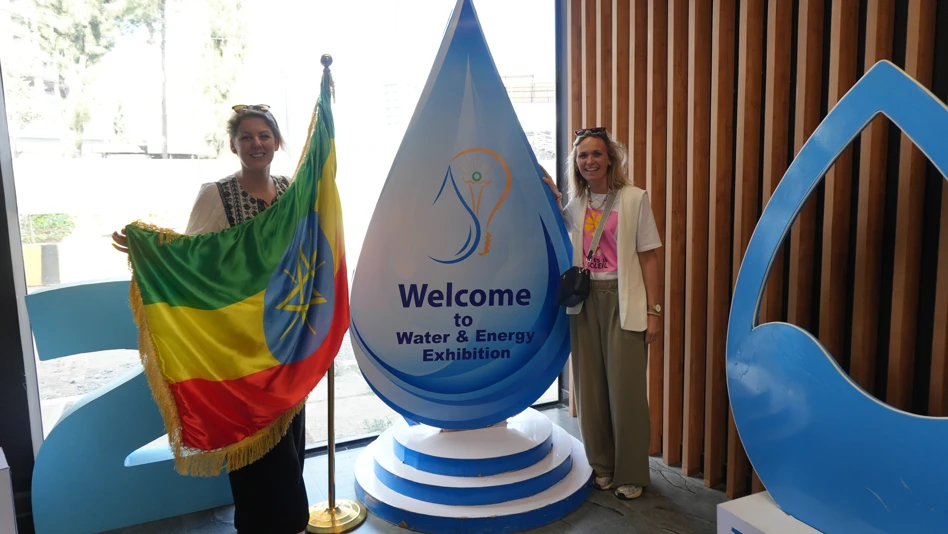
Mir and Marjolein at Water and Land Exhibition in Ethiopia

The sun was barely up when our team stepped into the buzzing streets of Addis Ababa. Taxi horns, morning laughter, and a week full of plans ahead. We came to connect, train, and build together with our Ethiopian partners in three programmes and with one new Memorandum of Understanding. Below you find a short look behind the scenes, from the Abbay Basin to Adama, and a national step forward with the Ethiopian Urban Water and Sanitation Federation.

Blue Deal Abbay, continuing with a new Partnership Manager

We welcomed our new Blue Deal Abbay Partnership Manager, Stefan de Wildt from Water board Amstel, Gooi and Vecht (AGV). Together with David Koenders from water board Holland Noorderkwartier (HHNK) and the Abbay Basin Administration Office (ABAO), the team reviewed the 2026 annual plan, aligned on monitoring and data needs, and prepared next steps for a realistic upscaling plan for the coming years. The week included joint planning between the Ethiopian and  the Dutch technical teams and focused sessions on stakeholder engagement. The atmosphere was open, practical, and focused on results.

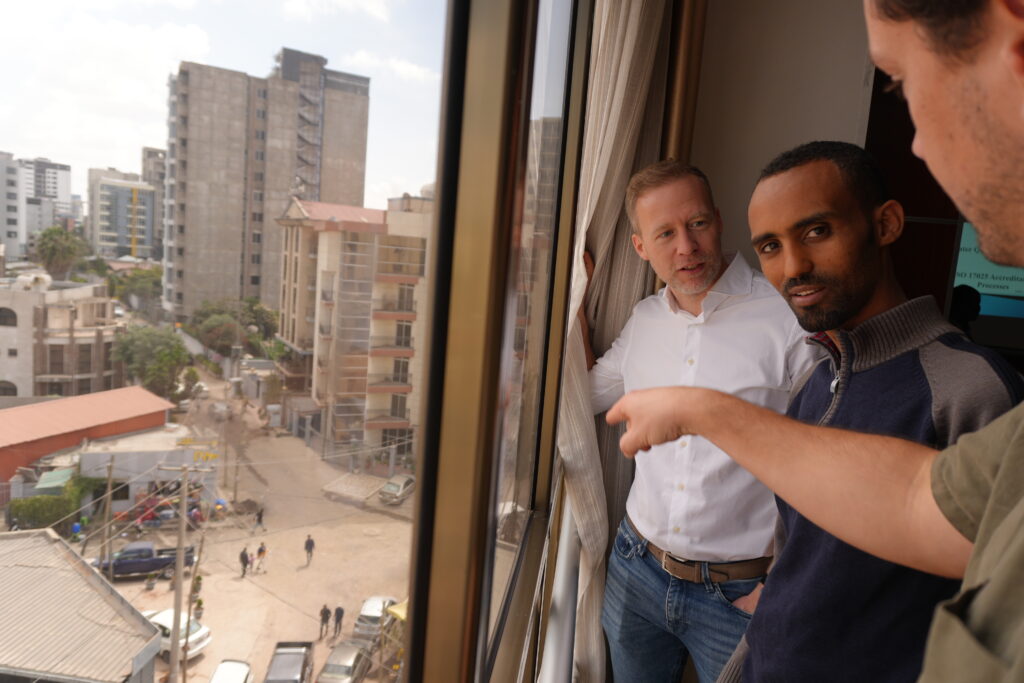
Stefan de Wildt-Bewuketu Abebe and David Koenders looking into streets of Addis Ababa

Blue Deal Wastewater in Adama, improving wetland performance

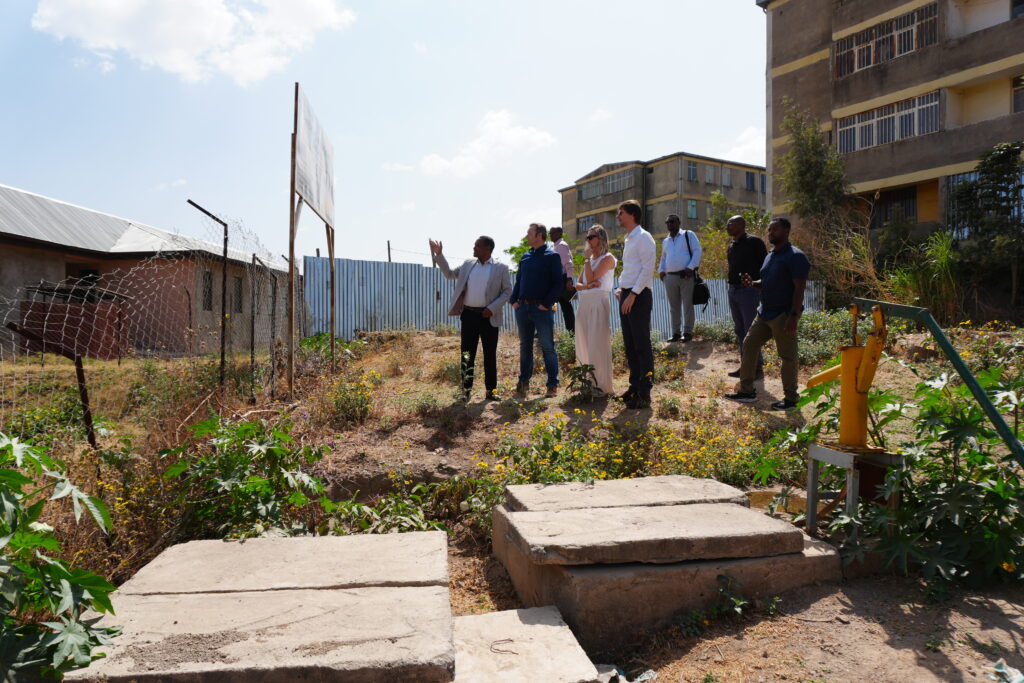
In Adama, Richard Oudhuis stepped in the wastewater partnership. Together with Adama, Shashemene en Hawassa Water Utility, we ran a joint workshop on performance, then visited the constructed wetland for wastewater. On site, we stood with utility staff and community leaders by the broken pipeline that should spread inflow across the wetland. We agreed on the repair steps and the plan to monitor results before any expansion to new housing blocks together with the BBBC our local partner. It’s important to keep the orange Canna lilies wet for continuous growth. A functioning wetland reduces health risks, improves local water quality, and gives the utility a cost-effective tool to treat wastewater.

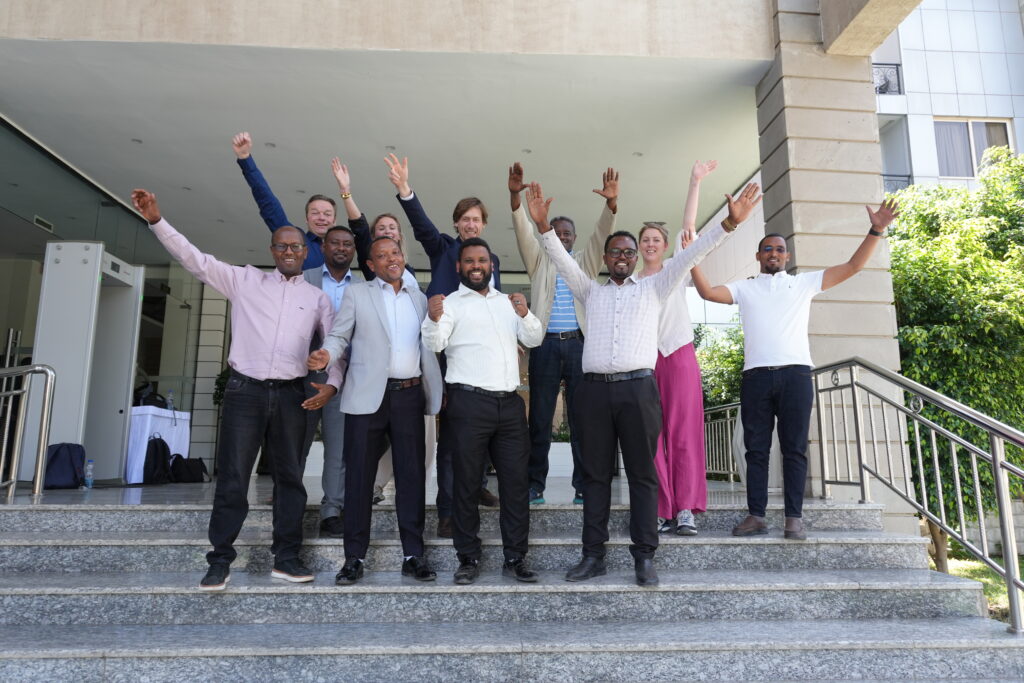
The Adama Water Utility team
Update on the wetland project

BRIGHT project, connecting knowledge with the Water and Land Resource Center

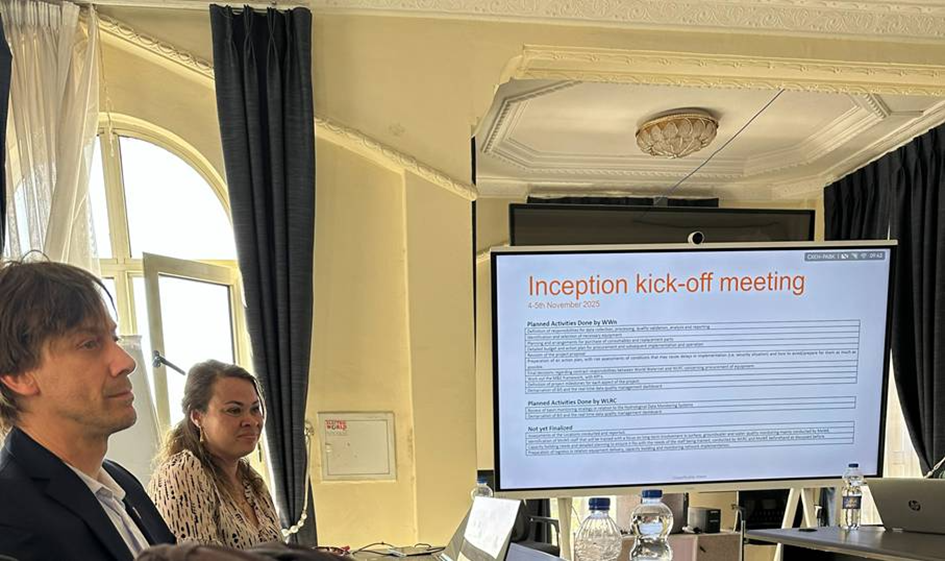
At the same time, Joy Pengel and Maarten Wensing met with partners in the BRIGHT project, including the Water and Land Resource Center (WLRC). The talks explored how better data, practical tools, and local expertise can support future monitoring systems, and how BRIGHT can link with Blue Deal where useful. These conversations help both teams test what works best in the Ethiopian context. Better data and clear roles support safer decisions during storms, faster reporting, and a stronger link between research and daily utility operations.

Inception phase of BRIGHT with project leader Joy Pengel and Maarten Wensing

Communication training, stories that speed up collaboration

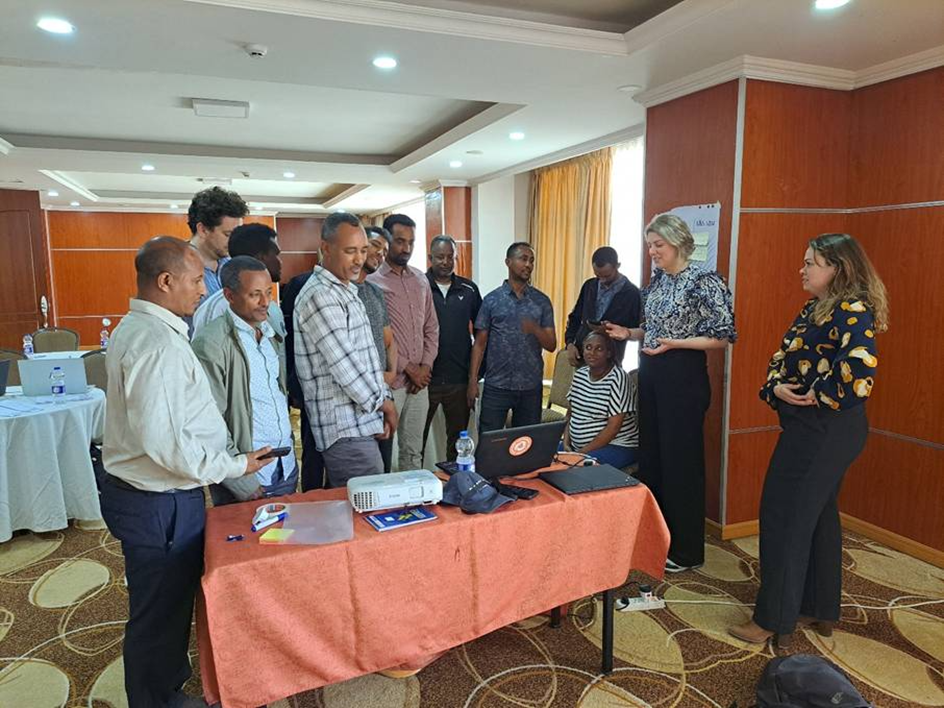
Our Corporate Communications colleague, Mir Verkaaik, gave a hands-on training on strong and consistent communication. The session began with the basics of identity, showing how knowing who you are as an organisation shapes how you act and how others see you. The team also explored how to adapt messages for different audiences and why this helps create real impact. After this, the group moved into practice. From planning, writing scripts, filming, acting to editing. The Abbay team was up for it!

Mir Verkaaik giving the communications impact training, reviewing the impact video’s together.

A new step forward, signing the MoU with the Urban Water & Sanitation Federation (EUWSF)

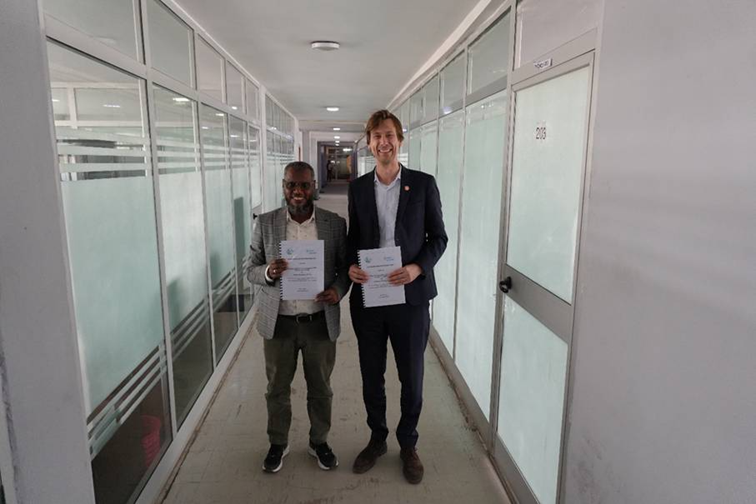
The week ended at the Ministry of Water and Energy (MoWE), where World Waternet and the Ethiopian Urban Water and Sanitation Federation signed a new Memorandum of Understanding. The MoU is a result of the Blue Deal partnership Ethiopia Wastewater Management and focuses on peer learning, capacity building, and technical support for urban utilities throughout Ethiopia. The new collaboration involves scaling up the knowledge exchange platform with wastewater treatment utilities so that more utilities can join. In this way, we are contributing to the national strengthening of the Ethiopian water sector, in line with our social mission. The collaboration provides an opportunity to share expertise from Amsterdam more widely and to learn from challenges in faster, more complex environments.

Maarten Wensing Regional Director signing the MOU with Mr. Muktar Ahmed DG of the Utility Federation

A new office in Addis Ababa

During the visit, the team also stopped by the new World Waternet office hosted within MoWE, a promising base for closer day to day collaboration. The space is still being set up, but it already strengthens our presence in Ethiopia and makes coordination with national partners faster and more direct. Two computer screens donated by the Amstel, Gooi and Vecht Water Authority were brought from Amsterdam and handed over to our local colleagues, Semachew and Joy, who will use the office to support both the Blue Deal Wastewater programme and the BRIGHT project.

Marjolein Weijers en Semachew Miskir at the new Blue Deal / World Waternet office in Addis Ababa

Looking ahead

New faces joined, new plans took shape, and new connections were built. In the coming months we will keep working with our Ethiopian partners to improve monitoring, pilot nature-based solutions, strengthen utilities, and share stories that show the impact of this work. If you want to follow the Blue Deal ethiopia abbay progress , check out the World Waternet website!

An inclusive approach towards climate-resilient water allocation in the Awash basin

At the end of January, members of the Blue Deal Ethiopia Awash project team travelled to Ethiopia for a working mission aimed at strengthening water governance in the Awash Basin. The Dutch team members were accompanied by their Ethiopian colleagues of the local Blue Deal Project Office. The visit included a three‑day field excursion to Samara and surrounding areas in the Afar Region, where the team met with representatives of farming communities and local government officials.

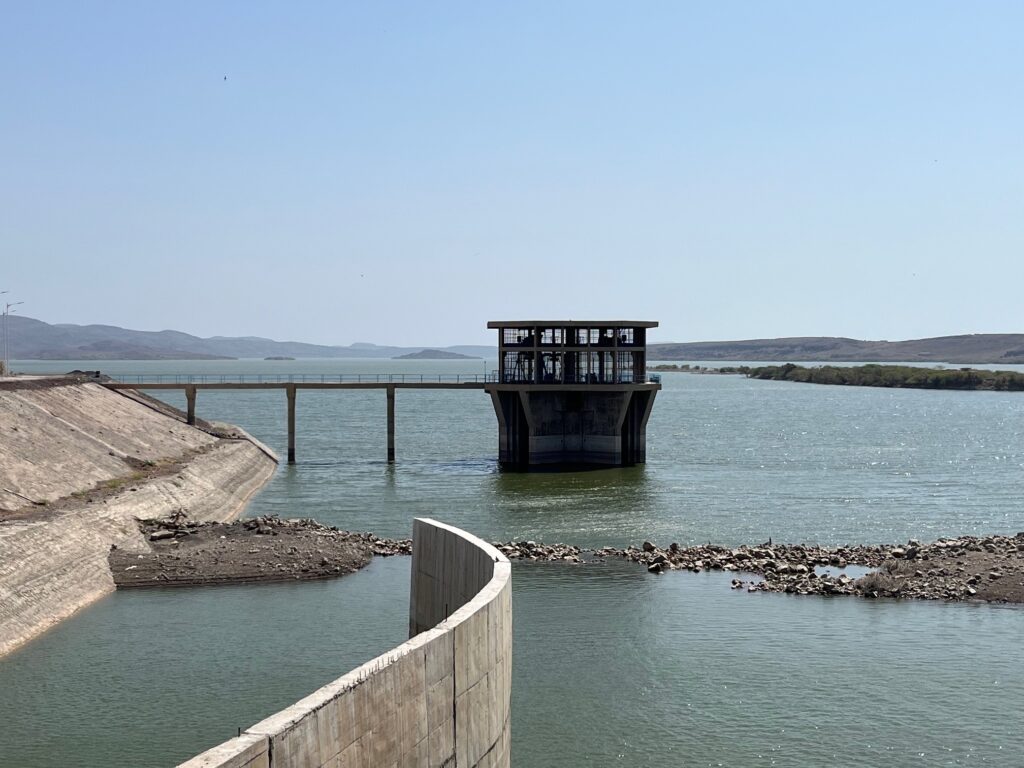
Lake Tendaho – a freshwater storage reservoir used for irrigation water allocation

During the field visit, the Awash River appeared calm. However, in the rainy season the river can rapidly transform into a violent current, flooding extensive areas of farmland. Due to climate change, such extreme events are occurring more frequently. When dykes breach, local residents often attempt to close the gaps themselves to protect their land and livelihoods.

The Awash River is the lifeline of the Afar Region, where agriculture is only possible through irrigation in this hot and arid landscape. In the dry season, water availability regularly falls short of the needs of all users. To address these challenges, the Ethiopian government aims to strengthen its policies for the distribution of irrigation water.

With support from the Dutch water authorities, Ethiopia has developed a water allocation planning process in recent years. Farmers and authorities in the Afar Region have expressed strong interest in applying this approach in their part of the Awash Basin. A workshop with local experts explored the steps needed to introduce water allocation planning in Afar.

The Awash river in the Afar region

Capacity building and prioritisation planning in Addis Ababa

Following their visit to Afar, the project team travelled to Addis Ababa to deliver a two‑day workshop on developing a methodological framework for a Socio-Economic Benefit Study. This study is required to underpin a prioritisation sequence for water users. In periods of drought, such a sequence guides how limited water resources are distributed among different user groups.

During the workshop sessions, participants worked together to create an initial methodology and test it using data collected during the visit. The next step involves refining the approach and applying it fully in a designated pilot area. High-level decision-makers have expressed their commitment to supporting this work, ensuring it can be taken forward in the coming years.

The workshop focused on validating the results of an extensive study into exclusion factors in water allocation planning experienced by both water users and authorities. Participants then jointly explored potential solutions and prioritised actions. These insights will be integrated into the water allocation planning project over the coming years, supporting the inclusion of the cross-cutting theme Social Inclusion within the Blue Deal programme.

The social inclusion workshop with local water users

Major validation workshop on a social inclusion pilot

The team also organised a large validation workshop in Addis Ababa for the Social Inclusion Pilot, funded by the NWB Fund. This workshop was well attended by around 65 participants. These included smallholder farmers, Irrigation Water User Associations, private investors, state farms, government-owned irrigation schemes, and representatives from federal, regional and local governments, both upstream and downstream. Universities, other Blue Deal partnerships and embassy programmes also took part.

Preparations for future work

The working visit concluded with preparatory activities for the KIWI assignment on e‑learning modules and discussions with Ethiopian partners on the preliminary findings of the Mid-term Review. These insights will contribute to the development of the Multi-Annual Plan 2027–2030.

Partnership manager Rens Huisman in front of the local Blue Deal partner office

From drought scenarios to inclusion: progress in Ethiopia’s water allocation process

Two key initiatives shaped the Ethiopia Awash partnership’s efforts in November: developing drought scenarios using the WEAP model and a study addressing barriers to social inclusion.

November was an active month for the Ethiopia Awash partnership, marked by several field visits and local workshops. Two key activities stood out: the use of WEAP models for drought scenarios and a social inclusion study, both carried out as part of our water allocation planning project.

Training on WEAP model for drought scenarios

During a field visit, the Dutch team trained our partners from the Ministry of Water and the Basin Authority in the use of the WEAP model. This was a follow up of an earlier training given last year, but this time the focus was on using the WEAP model for drought scenarios. Dutch Water Authorities’ experts Hidde Kats and Harmen van de Werfhorst then worked together with the partners to outline possible drought scenarios. These scenarios will be further developed, and an additional training will be planned to further refine the scenarios so they can be integrated into the water allocation plan.

DWA’s Hidde Kats with Ethiopian partners following the drought scenarios work sessions

Social Inclusion pilot: understanding barriers

For the Social Inclusion Pilot (supported by NWB Fund), we conducted surveys with around 125 (agricultural) water users and government representatives. This study provided valuable insights into the causes of exclusion, examples of which include a lack of information, lack of good representation, a lack of budget and a lack of understanding related to the water allocation planning process.

Sharing results and next steps

The initial results were shared by Dr. Melaku, one of the local consultants who worked on the study, during a validation workshop with various local authorities and water users. These results will be used to develop conclusions and recommendations for practical improvements.

Social Inclusion presentation given by expert Ethiopia Awash
Dr, Melaku, a consultant involved in the study, presents the outcomes of the Social Inclusion questionnaires to the water authorities

The response to the study has been very positive, recognising that the study can provide very useful and interesting insights to improve the water allocation process and make it more inclusive. The study will also support Blue Deal partners in implementing improvements in the annual water allocation planning cycle.

Blue Deal at the REMCO conference in Mozambique

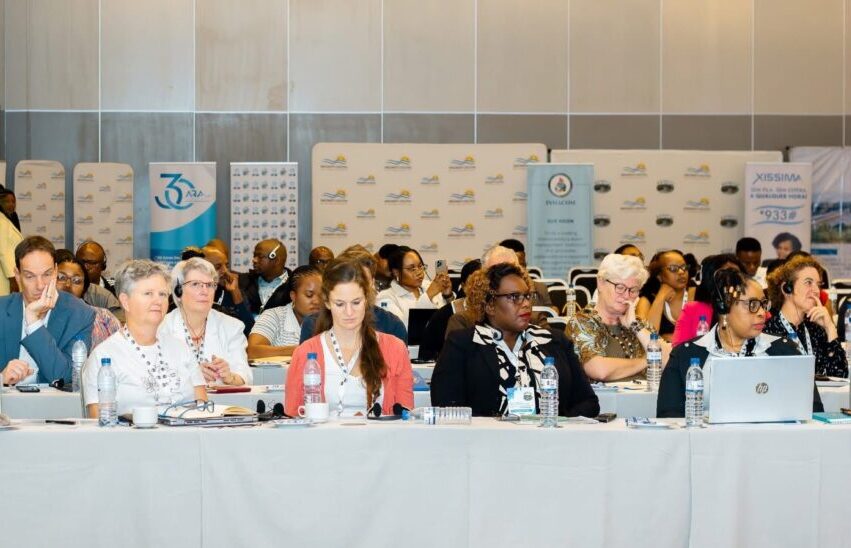
This week, the 8th International REMCO Conference is taking place in Maputo, Mozambique. The event brings together over 150 participants from Mozambique, Eswatini, and South Africa - three countries that share the Incomati–Maputo basin - to strengthen resilience and governance in transboundary water management.

group of people at the tabel attending the REMCO conference
REMCO conference 2025

At the heart of REMCO lies the technical and operational exchange between the three catchment management authorities: 

ARA-Sul IP (Administração Regional de Águas do Sul – Mozambique) 

JRBA-PB (Joint River Basin Authorities Project Board – Eswatini) 

IUCMA (Inkomati-Usuthu Catchment Management Agency – South Africa) 

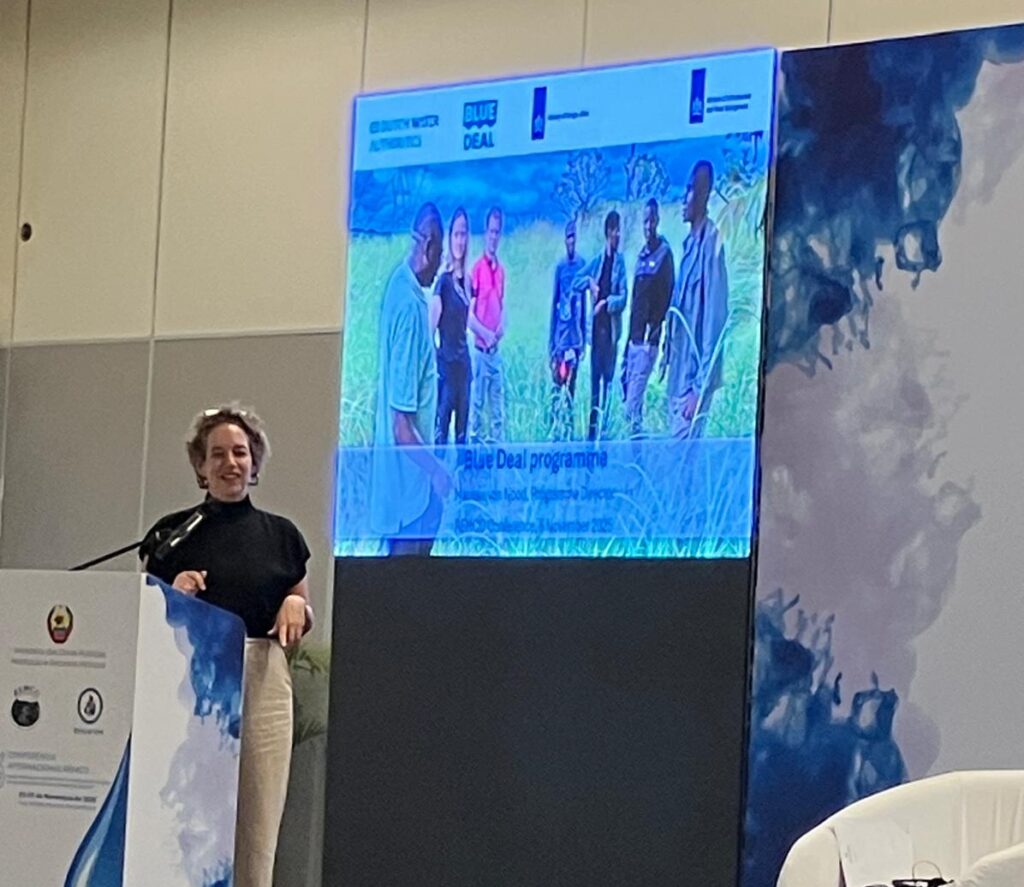
Marieke van Nood presents at REMCO
Marieke van Nood presents at the REMCO conference

Together, they collaborate on real-world water management challenges, such as: 

  • Improving flood early warning systems, especially after the flash floods in the Incomati Basin in 2023 
  • Implementing equitable water pricing 
  • Sharing hydrological data and models to improve forecasting and preparedness 
  • Jointly developing cross-border projects that benefit local communities 

Blue Deal’s role 

The Blue Deal partnerships in Eswatini, Mozambique, and South Africa actively support these authorities on these topics. During the conference, they facilitated knowledge exchange, helped shape discussions and committed to following up on the agreements made. Blue Deal’s Ethiopia Awash partnership also joined the conference, sharing key insights during a discussion on Basin Information Systems. This makes REMCO a powerful regional platform for co-learning, innovation, and inclusive decision-making. 

Spotlight on inclusion 

To support the topic of inclusive decision-making, the first day of the conference centered around women and youth in water management. Climate and water-related challenges often have the greatest impact on vulnerable people and the communities they live in. Tanah Meijers, Focal Point of Social Inclusion within the Blue Deal, emphasised that these individuals should not only be seen as stakeholders in solutions, but should be actively engaged as partners in designing those practical solutions. 

As highlighted by Marieke van Nood, Blue Deal’s Programme Manager during her speech on the final day of the conference: “Together, we make transboundary water management practical and operational. And that is key for a future-proof Incomati – Maputo river basin”. 

700 residents benefit from new wetland in Adama, Ethiopia

At the beginning of October, the city of Adama, Ethiopia, celebrated a major milestone: the inauguration of a newly constructed wetland. This initiative has improved the living conditions of 700 residents, offering enhanced safety, hygiene, and a cleaner environment.

The wetland – a natural alternative for wastewater treatment – contributes to public health and strengthens the local ecology in a sustainable way. This project was supported through additional funding from the NWB Fund for the Blue Deal Wastewater Ethiopia initiative.

Wastewater treatment vs. wetlands

In some countries, wastewater treatment facilities are scarce. An alternative is a wetland, which mimics natural processes to purify water. This approach, also known as constructed wetlands or helophyte filters, utilises plants, soil, and bacteria to remove pollutants from wastewater. The treated water can be pumped using a hand pump and reused for flushing toilets or watering vegetable gardens. Through the Blue Deal, World Waternet (of which the Dutch water authority Amstel, Gooi en Vecht is part of) is supporting Adama’s local water utility in monitoring the water quality, ensuring safe and responsible reuse by the community.

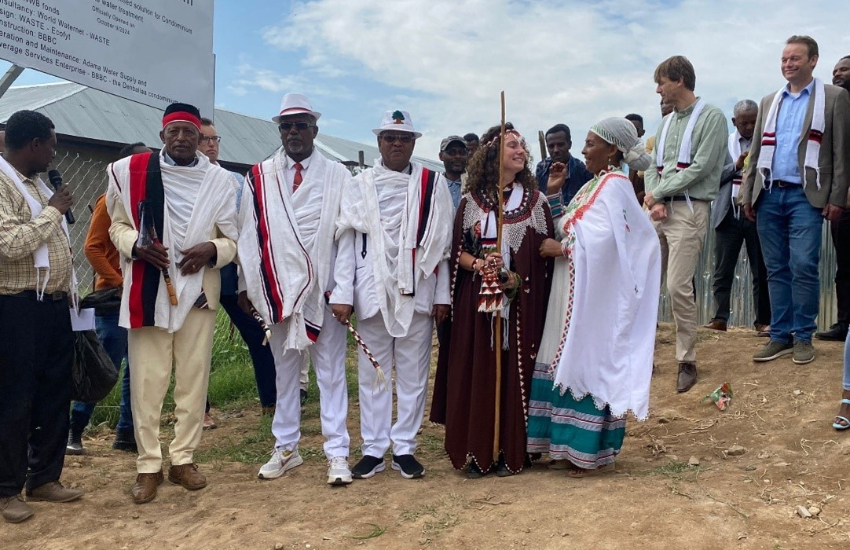
A blessed opening

The opening ceremony was blessed by the Abagadda, respected elders of the community, whose support symbolises strong local involvement. The State Minister of Water Supply and Sanitation, H.E. Dr Asfaw Dingamo, emphasised the importance of sanitation for effective water management: “Sanitation is a crucial component of the water cycle that must not be overlooked.” During the event, project leader Tanah Meijers was honoured with a new Oromo name, Bagatú, meaning ‘resourceful’.

A community-based solution

This project goes beyond being a nature-based solution; it is also a community-based solution. The residents of Denballaa were involved in the development of the wetland from the very beginning and will now manage it themselves. They will receive support from the Blue Deal partner, Adama Water Utility, ensuring long-term sustainability. By involving the community, the project fosters a sense of pride and responsibility among the residents.

Linking water management

Jelmer van Veen, First Secretary for Water Affairs at the Dutch Embassy in Ethiopia, underlined the importance of a holistic approach to water management: “We often focus on water supply, but sometimes forget what happens to wastewater. Untreated wastewater has significant consequences for health and the environment. Everything is interconnected.”

More wetlands in the future

World Waternet’s CEO Frodo van Oostveen thanked everyone for their perseverance and concluded the ceremony with an energetic message: “Next year, we hope to see the Dembela wetland flourishing. We aim to establish more wetlands in other cities. Today should be celebrated as Ethiopia’s Wetland Day, and I look forward to seeing you next year to share experiences from the Dembela wetland and celebrate the opening of a new one.”

Broad impact in Ethiopia

This project in Adama aligns with similar initiatives, such as those in Shashemene, where 2 wetlands were previously constructed by partners WASTE and BBBC. Blue Deal Wastewater, along with the Shashemene Water Utility, monitors water quality with wastewater specialists from (World) Waternet, the Municipality of Groningen, and Urk. Together, they ensure that wetlands become an integral part of the water utilities’ asset management.

Blue Deal Wastewater training in Ethiopia

In March, the Blue Deal Wastewater team visited Hawassa, Ethiopia, to provide 2 different trainings for our partners - the water utilities of Hawassa, Shashemene and Adama. It was an energetic week in which a lot has been discussed and a lot has been learned. From each utility, around 8 to 10 people were present. They were divided over the trainings according to their profession.

Asset Management and Shit Flow Diagram

The staff working on data and information management dived into 2 topics: Asset Management and Shit Flow Diagram. Richard Oudhuis, Maarten Strasters and Thijs van Osch provided a training focussed on how to work with software related to these topics.

To create a Shit Flow Diagram, using the SuSanA tool, creates insights on wastewater streams. Unsafe discharge can be better seen, and it is a handy tool to see how the wastewater streams flow. This then shows where the main areas of attention and improvement regarding unsafe wastewater discharge are.

For asset management, it was stressed how important it is to know your assets – because when you know what you have, you know what to work on! Using the M-water tool, it becomes easier to build an asset register, and keeping it up to date. On the last day of the training, the trainees went out to bring theory into practice and actually map some of their assets.

The overarching topic of improving data and information management is an important aspect of the Blue Deal Wastewater in Ethiopia, which comes back in multiple aspects. Following up on previous trainings, one trainee elaborated: “It is great to have a training on this topic from time to time, so I can ask questions which pop-up during work.” Having a long-term partnership like the Blue Deal, really shows it benefits.

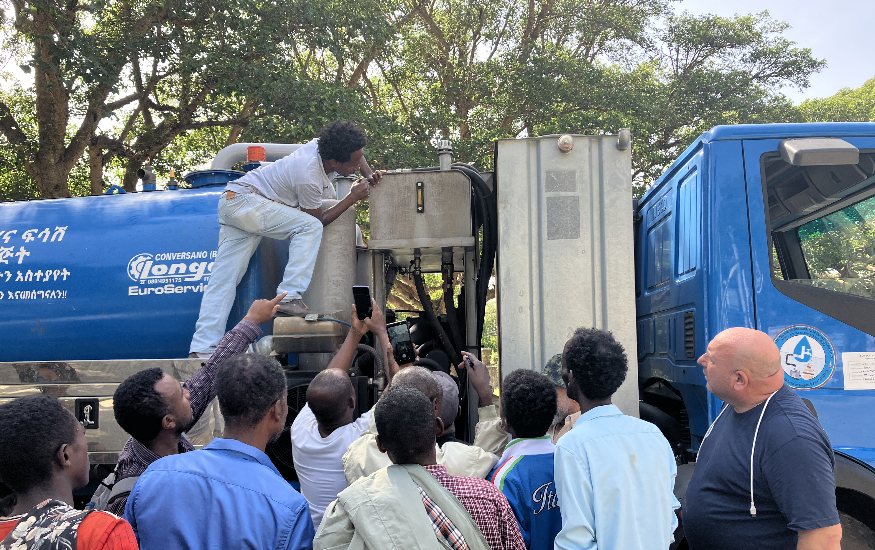
Operating Vacuum Trucks

For the vacuum truck operators, Volkert van der Keelen and Deler Abdulkarim shared their knowledge on the use of these trucks. There were many questions among the operators and drivers which could be discussed. It once again became clear that the Ethiopian colleagues are operating in a difficult context, in which they try their best to keep the streets clean of wastewater.

The utilities obtained the trucks they were using from a donor. However, they had never been trained properly. They were only instructed by going through the manual together with the trainers in a room. What made this training different is that it was an on-the-job training, where they could ask questions and try out things on the truck. The training focussed on the importance of:

  • Properly preparing the truck for operation
  • Safety while operating, for yourself, others, and the environment
  • Safely discharging the full tanks
  • Cleaning and maintenance of the trucks

One of the trainees said: “The training was really interactive and based on our needs. Besides, we not only learned from the trainers but also from each other and the other utilities.”

One noteworthy addition was having Yoseph Cherinet around. He translated the training on truck operation, and assisted in facilitating. This made the training even more effective.

Now, it is up to the utilities to incorporate the knowledge learned during the training!

Blue Deal Regional Meeting Africa

From 7 to 10 July, a Regional Meeting will take place in Kenya, gathering Blue Deal partnerships from 7 countries. This event serves as a follow-up to the Blue Deal Congress held in Amsterdam in June 2023.

A workshop during the Blue Deal Congress, where the idea for the regional meeting originated

Topics in Amsterdam were, among others, water pricing and nature-based solutions. During the meetings in this congress week, mutual exchange proved promising on a number of water themes. One thing in particular was shared among the participants: to further deepen these initial contacts, and to share and learn from each other’s experiences. The result is the Blue Deal Regional Meeting in Kenya.

Countries and themes

Kenya, Ghana, Burkina Faso, South Africa, Ethiopia, Mozambique, and Eswatini have indicated that they will participate in July 2024 in this Regional Blue Deal Meeting. Blue Deal Kenya is gracious enough to host the event in Mombasa. The following 3 issues will be part of the exchange:

  1. Water pricing
  2. Funding for water projects
  3. Funding and governance for nature-based solutions

Advantages of exchange

The partnerships participating in the event foresee many advantages of the exchange:

  • Facilitate the exchange of knowledge and best practices at the international level;
  • Discuss challenges of water management through intervision;
  • Explore the advantages of international cooperation;
  • Deepen and share insights on elevating the importance of water on the political agenda;
  • Strengthen the consortia of Blue Deal/Waterworx (a similar programme to the Blue Deal, initiated by the Dutch drinking water companies) and National Entities.

The regional meeting in Africa can also provide valuable input for the broader Blue Deal programme’s learning activities, such as the Communities of Practice.

Blue Deal continues its work in conflict areas

Through the Blue Deal, Dutch Water Authorities works in 15 countries worldwide. Even in countries where intense conflicts sometimes arise. Like now in the Palestinian Territories, Mali, Ethiopia, and Burkina Faso. How and why does the Blue Deal continue to operate there? Water expert Frank Tibben says: "We continue to collaborate to improve access to sufficient, clean, and safe water. In good times and in bad."

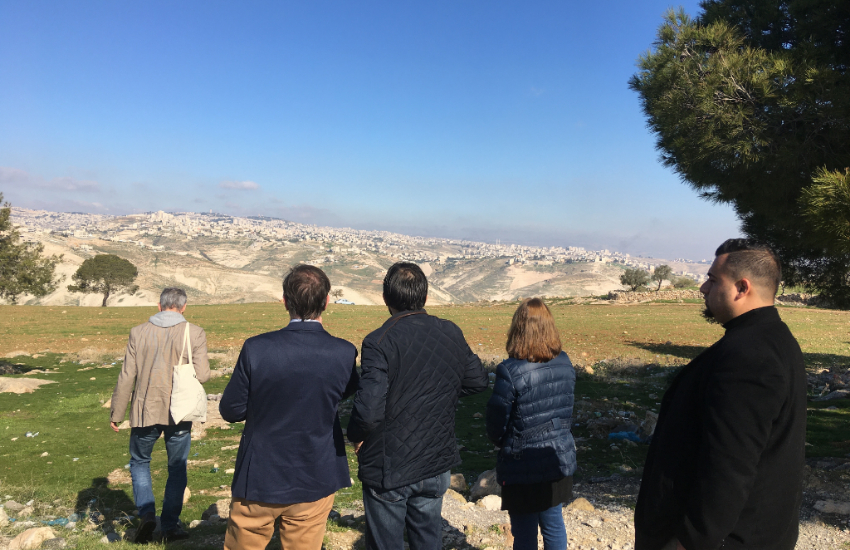
5 people overlook the West Bank from a distance

“Can I travel safely to and from my home? Will I still see my family again after this training?” These are questions Duaa Matar asks herself before deciding to travel to the Netherlands for training at the end of November 2023. Matar is a Palestinian woman working as a Young Expert Professional (Yepper) for the Blue Deal. She lives and works in the West Bank, in the Palestinian Territories.

The interview takes place in a coffee shop in The Hague, the day before she heads back home. A surreal experience as she talks about the war situation in her country. “It’s like I stood outside of reality for 2 weeks. I felt guilty for not being in my homeland. Physically I was here, but mentally I was at home.”

Political situation has changed

The Blue Deal is the international programme of the 21 Dutch water authorities, the Dutch ministries of Foreign Affairs and Infrastructure and Water Management, and water managers worldwide. The goal: to improve access to clean, sufficient, and safe water for 20 million people worldwide. That’s why the Blue Deal has formed 17 partnerships with water managers in 15 countries.

“In some of these countries, the political situation looked different when we started with the Blue Deal,” explains Frank Tibben. He is responsible for collective intelligence and strategic relationships at World Waternet, which works for the Blue Deal on behalf of the Dutch water authority Amstel, Gooi en Vecht. Some of the areas they work for in the Blue Deal, include conflict regions. Tibben also serves as the partnership manager for the Blue Deal in the Palestinian Territories.

Good and bad times

He continues: “We don’t construct infrastructure ourselves; we’re not an engineering firm or contractor. We support local water managers in carrying out their tasks. We do this through knowledge exchange in line with the Sustainable Development Goals (SDGs) of the United Nations. Dutch and local colleagues work in a hybrid manner, with short visits to the country or to the Netherlands as needed. This makes us flexible and allows us to continue, even when conflict arises. The work then often becomes more digital.”

“Within the Blue Deal, we form partnerships until 2030. A lot can happen in such a long period, positively or negatively. We continue to collaborate to improve access to sufficient, clean, and safe water. In good times and in bad,” says Tibben.

Long-term commitment

“Of course, sometimes I wonder: couldn’t we achieve much more in other, safer areas?” says Luzette Kroon. She is board member of the Association of Dutch Water Authorities and is responsible for the international portfolio and chair of the Blue Deal. “But that also means throwing away what we’ve built and abandoning our principles. We operate on the principle of long-term commitment. It’s precisely because of that long-term commitment that we can achieve things. That’s what makes us powerful.”

Pilots

How does the work of the Blue Deal continue in conflict regions? Matar talks about a pilot in Salfit, a city in the West Bank. “A smart system has been created here for monitoring water levels. We can remotely read and adjust the water level. This means the engineer in this area no longer needs to visit the location. It is a relief, because it is currently an unsafe region near Israeli settlements.” The pilot started 3 months before the outbreak of renewed violence.

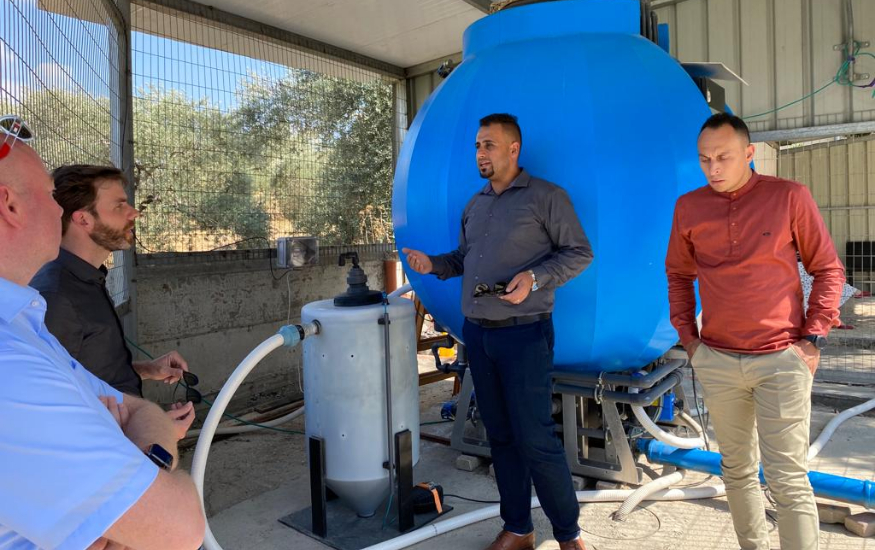
Another example is the pilot with 3 BluElephants in the cities of Salfit and Halhul in the West Bank. These are mobile, decentralised purification plants that purify wastewater for reuse. Now that Palestinian colleagues in the West Bank can no longer safely travel to and from work, these installations ensure that wastewater continues to be purified.

A pilot with 3 BluElephants ensures that wastewater continues to be purified.

Working in neighbouring countries

In other conflict-affected countries, the Blue Deal also seeks creative solutions. Much of this involves thinking along and providing advice. From a distance. Tibben says: “It helps if the Dutch colleagues have already visited the locations and partners. Last year, for example, we were involved in Ethiopia in the construction of a wetland, a natural water buffer for wastewater treatment. This makes it easier for us in the Netherlands to provide digital support for the monitoring of the wetland and the construction of new wetlands.”

Other options are that Dutch and local colleagues meet in a safe neighbouring country. Or that local colleagues come to the Netherlands.

Continuous support

The Blue Deal team in the Netherlands and the team in the West Bank speak weekly. Digitally, which works well thanks to the experiences from the COVID-19 period. Matar says: “Our colleagues from the Netherlands provide us with continuous support. Every week, we assess what is realistic. We even made plans for 2024, although we don’t know exactly how the situation will develop.” Tibben adds: “Especially in difficult times, the long-term Blue Deal partnership focuses on sustainable water management.”

Kroon says: “In conflict areas, water management is so necessary. We work on solutions that fit the local context, focusing on local people. With the Blue Deal, we contribute to a bit of stability. The fact that our partner water authorities are still functioning indicates that our work is meaningful. As long as we achieve sustainable impact, we continue our work.”

This article originally appeared in magazine ‘Het Waterschap’. Read the original article in Dutch.

Naturally improving waste water processing in Adama, Ethiopia

The city of Adama, like many other cities in Ethiopia, suffers from poor sanitation in the 'condominiums'. The Blue Deal partnership in the area is contributes to a Nature-Based Solution: constructed wetlands. So far, the partnership has created 2 wetlands in Shashemene and is now working on a new wetland in Adama. Read all about the project and watch a movie in which residents speak about what the wetlands mean to them.

The condominiums are construction projects with which the government is trying to accommodate the increasing group of people moving to the cities. These condominiums are not connected to the sewer network; the waste water is collected in septic tanks that are buried around the houses. These tanks must be emptied regularly by suction trucks so that they do not overflow.

However, the condominiums are often inhabited by Ethiopians who do not have much money. They often cannot afford the costs of having their septic tanks emptied. In practice, this causes the tanks to regularly overflow. Sewage flows between the houses – where children play – and leaks into nature and nearby lakes. The residents suffer from odours, health problems and see their environment deteriorate.

Plants and stones purify the waste water

There is a great need for a solution to this problem. Connecting these condominiums to the sewer network is a long-term process, and in the meantime, residents and the surrounding area have daily concerns due to the overflowing tanks. The Blue Deal partnership for Waste water in the cities of Shashemene, Adama and Hawassa, together with the NWB fund, contributes to a Nature Based Solution: constructed wetlands. Within such a constructed wetland, a septic tank is still used to collect ‘solid waste’, but the rest of the waste water flows through to a container in which a combination of specific local plants, stones and gravel is used to purify the waste water.

Watering crops or flushing toilets

After purification, this water cannot be drunk, but it does have other uses. The Blue Deal partnership helps monitor water quality so that it becomes clear what the water can be used for. This includes watering crops (at the root) or flushing toilets.

This way of collecting and purifying water ensures that the polluted water does not end up in nature. Another benefit is that wetlands are micro-ecosystems that increase biodiversity. They attract insects and birds, and also provide a cooler and greener environment in the middle of the hot city.

The benefits are diverse

In April, the team that will be working in Adama went to look at these wetlands. We spoke to residents of the condominiums in question about their experiences with the wetlands: what went well and what can be improved during the construction of the wetland in Adama? Both the residents of the condominiums and the municipality were very pleased with the effects of the constructed wetlands. These are:

  • Financial: The costs of emptying the septic tank in the past were high. After creating the wetlands, the tanks need to be emptied much less often. In addition, one of the plant species in the wetland (napier grass) can be harvested by residents to sell as animal feed.
  • Social: The problems of the overflowing septic tanks (odors, diseases) affected not only the residents of the condominiums themselves, but also those living in the lower areas where the dirty water flowed. Conflicts regularly arose about this. Since the wetlands were created, this no longer occurs.
  • Physical: Children used to play in the sewage from the overflowing tanks, which of course posed health risks. One of the interviewees says: “When I got my child, I knew I needed to leave this unhealthy place. Now, with the constructed wetland, I really don’t want to leave anymore.” A woman with asthma who had to leave her home because the bad air aggravated her illness was also able to return.
  • Environment: The wetlands not only make the environment cleaner, but also more beautiful and cooler. This is also contributed to by the fact that the money from the napier grass can be invested in improving the living environment: One of the interviewees says: “When I look out my window, I see beautiful flowers, which makes me so happy.”

Creating more wetlands

All these advantages ensure that the municipality, the water company and the residents of various condominiums in Adama are also very keen to get started with their own wetlands. With the support of the Blue Deal and the NWB fund, we are now working hard to realize this.