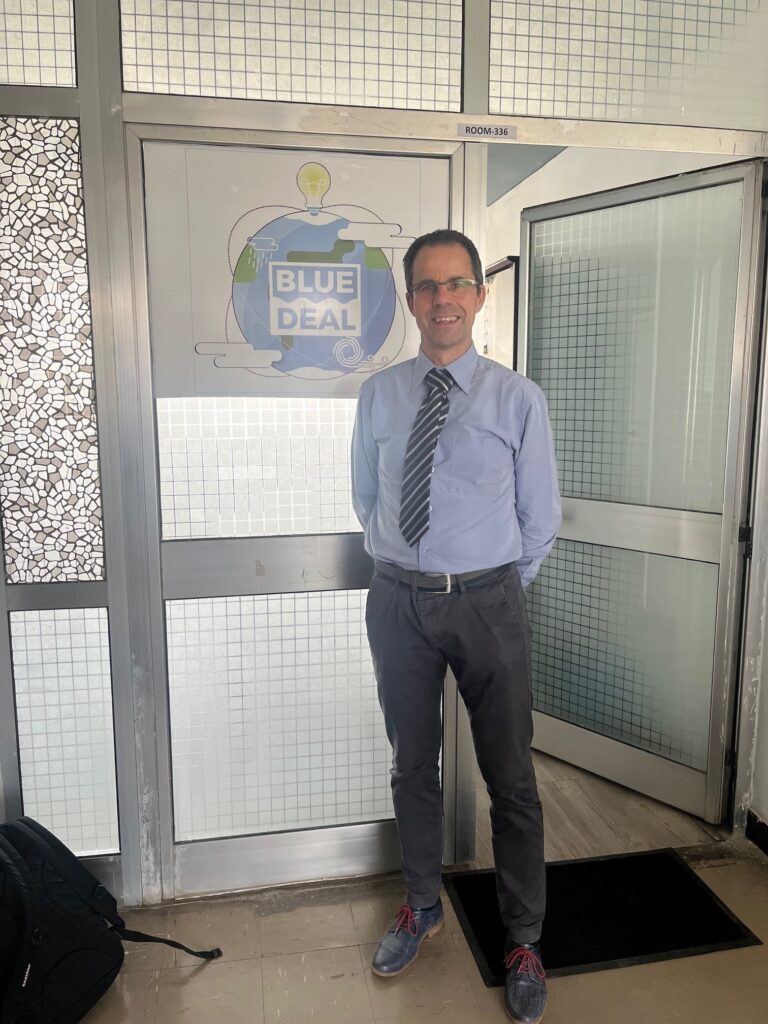
At the end of January, members of the Blue Deal Ethiopia Awash project team travelled to Ethiopia for a working mission aimed at strengthening water governance in the Awash Basin. The Dutch team members were accompanied by their Ethiopian colleagues of the local Blue Deal Project Office. The visit included a three‑day field excursion to Samara and surrounding areas in the Afar Region, where the team met with representatives of farming communities and local government officials.
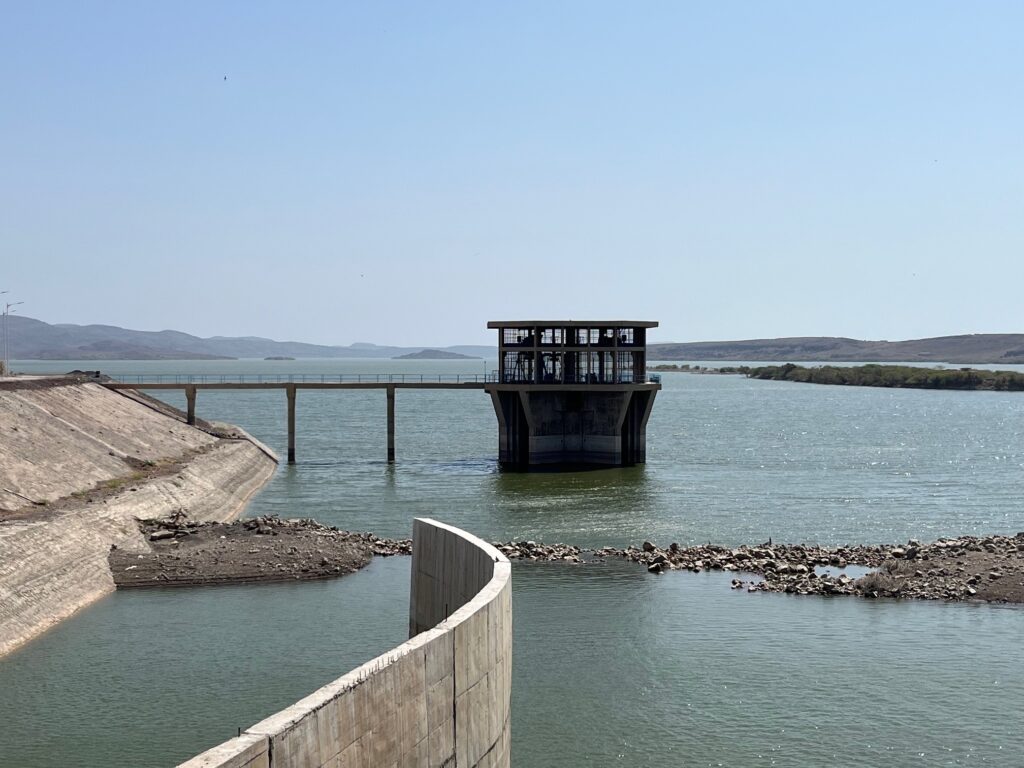
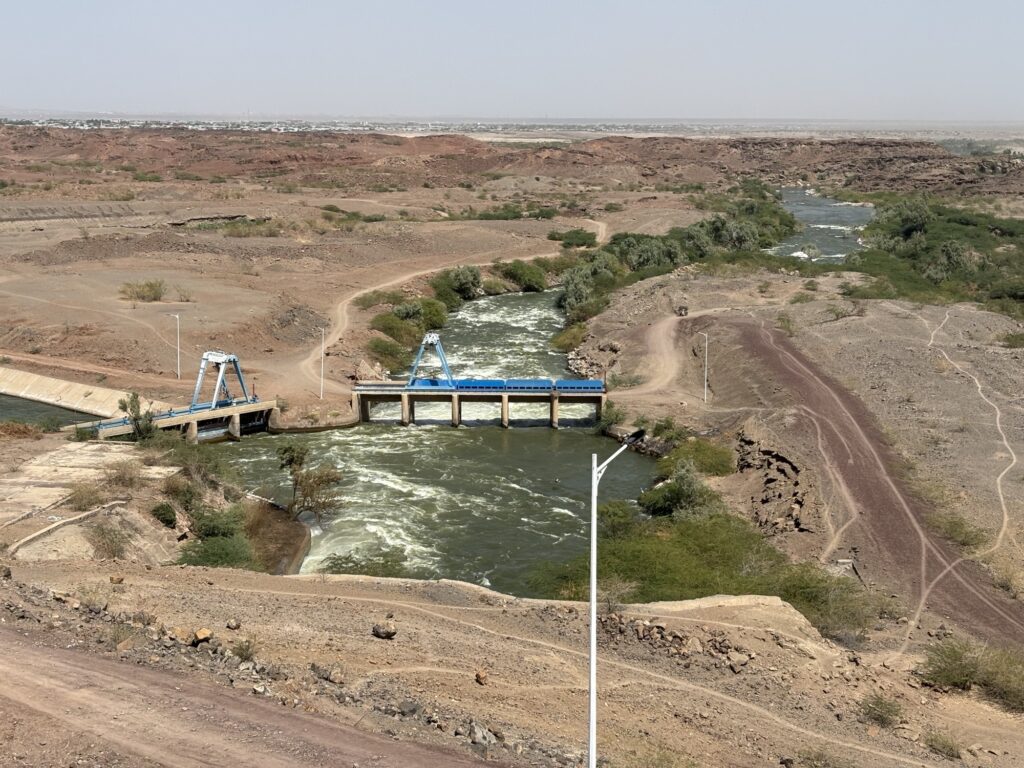
During the field visit, the Awash River appeared calm. However, in the rainy season the river can rapidly transform into a violent current, flooding extensive areas of farmland. Due to climate change, such extreme events are occurring more frequently. When dykes breach, local residents often attempt to close the gaps themselves to protect their land and livelihoods.
The Awash River is the lifeline of the Afar Region, where agriculture is only possible through irrigation in this hot and arid landscape. In the dry season, water availability regularly falls short of the needs of all users. To address these challenges, the Ethiopian government aims to strengthen its policies for the distribution of irrigation water.
With support from the Dutch water authorities, Ethiopia has developed a water allocation planning process in recent years. Farmers and authorities in the Afar Region have expressed strong interest in applying this approach in their part of the Awash Basin. A workshop with local experts explored the steps needed to introduce water allocation planning in Afar.
Capacity building and prioritisation planning in Addis Ababa
Following their visit to Afar, the project team travelled to Addis Ababa to deliver a two‑day workshop on developing a methodological framework for a Socio-Economic Benefit Study. This study is required to underpin a prioritisation sequence for water users. In periods of drought, such a sequence guides how limited water resources are distributed among different user groups.
During the workshop sessions, participants worked together to create an initial methodology and test it using data collected during the visit. The next step involves refining the approach and applying it fully in a designated pilot area. High-level decision-makers have expressed their commitment to supporting this work, ensuring it can be taken forward in the coming years.
The workshop focused on validating the results of an extensive study into exclusion factors in water allocation planning experienced by both water users and authorities. Participants then jointly explored potential solutions and prioritised actions. These insights will be integrated into the water allocation planning project over the coming years, supporting the inclusion of the cross-cutting theme Social Inclusion within the Blue Deal programme.
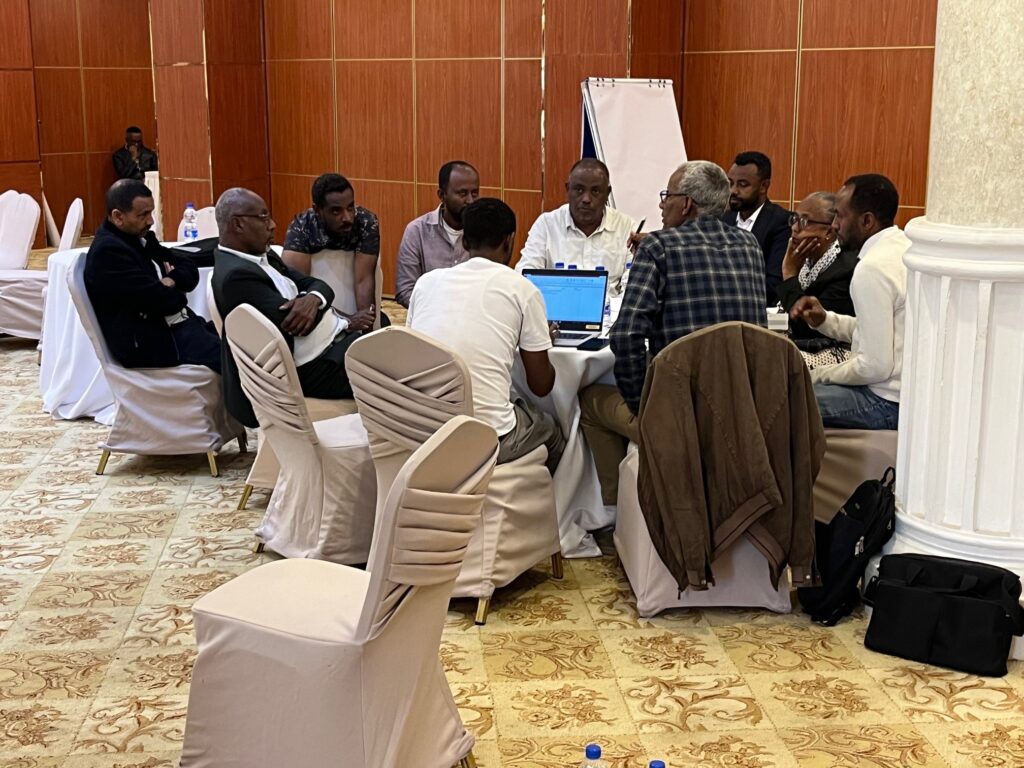
Major validation workshop on a social inclusion pilot
The team also organised a large validation workshop in Addis Ababa for the Social Inclusion Pilot, funded by the NWB Fund. This workshop was well attended by around 65 participants. These included smallholder farmers, Irrigation Water User Associations, private investors, state farms, government-owned irrigation schemes, and representatives from federal, regional and local governments, both upstream and downstream. Universities, other Blue Deal partnerships and embassy programmes also took part.
Preparations for future work
The working visit concluded with preparatory activities for the KIWI assignment on e‑learning modules and discussions with Ethiopian partners on the preliminary findings of the Mid-term Review. These insights will contribute to the development of the Multi-Annual Plan 2027–2030.