The Blue Deal partnership in the Palestinian territories has shown steady progress over the past year, continuing to strengthen water management practices despite operating in a highly complex and constrained environment. Working closely with the Palestinian Water Authority (PWA), Salfit Municipality and the Joint Service Council in North Hebron, the programme has focused on consolidating earlier achievements while building institutional capacity across the water sector.
Daily water and wastewater management practices have improved through hands-on collaboration between local and Dutch experts, with particular attention to strengthening data systems, enhancing operational performance and advancing wastewater solutions.
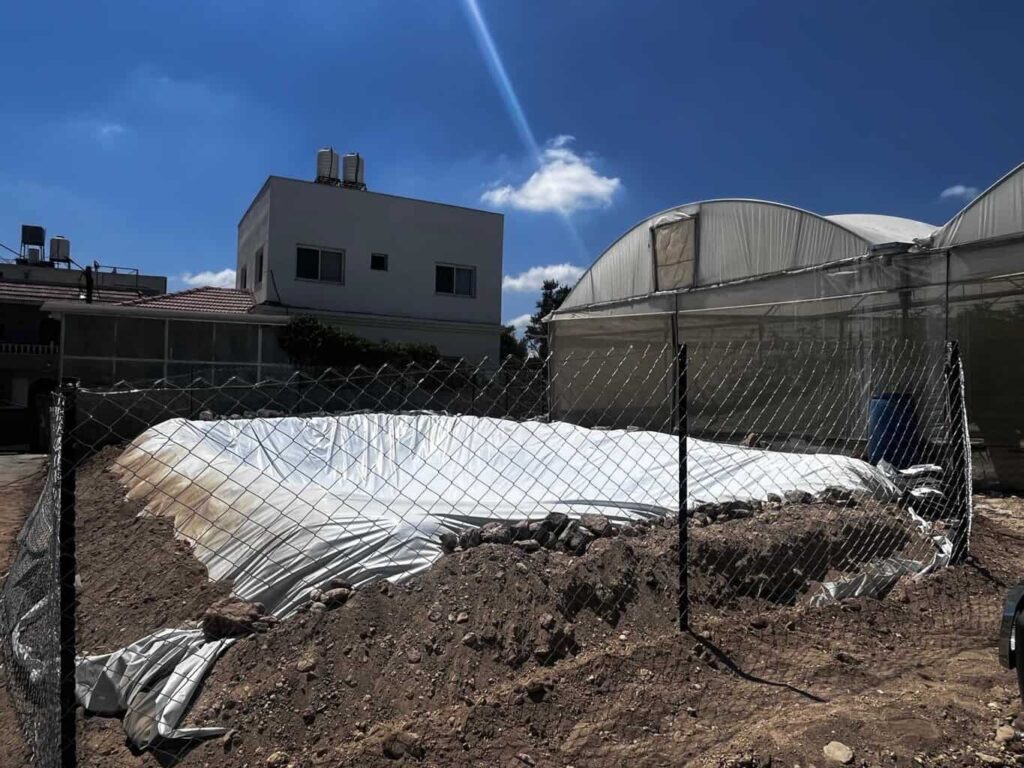
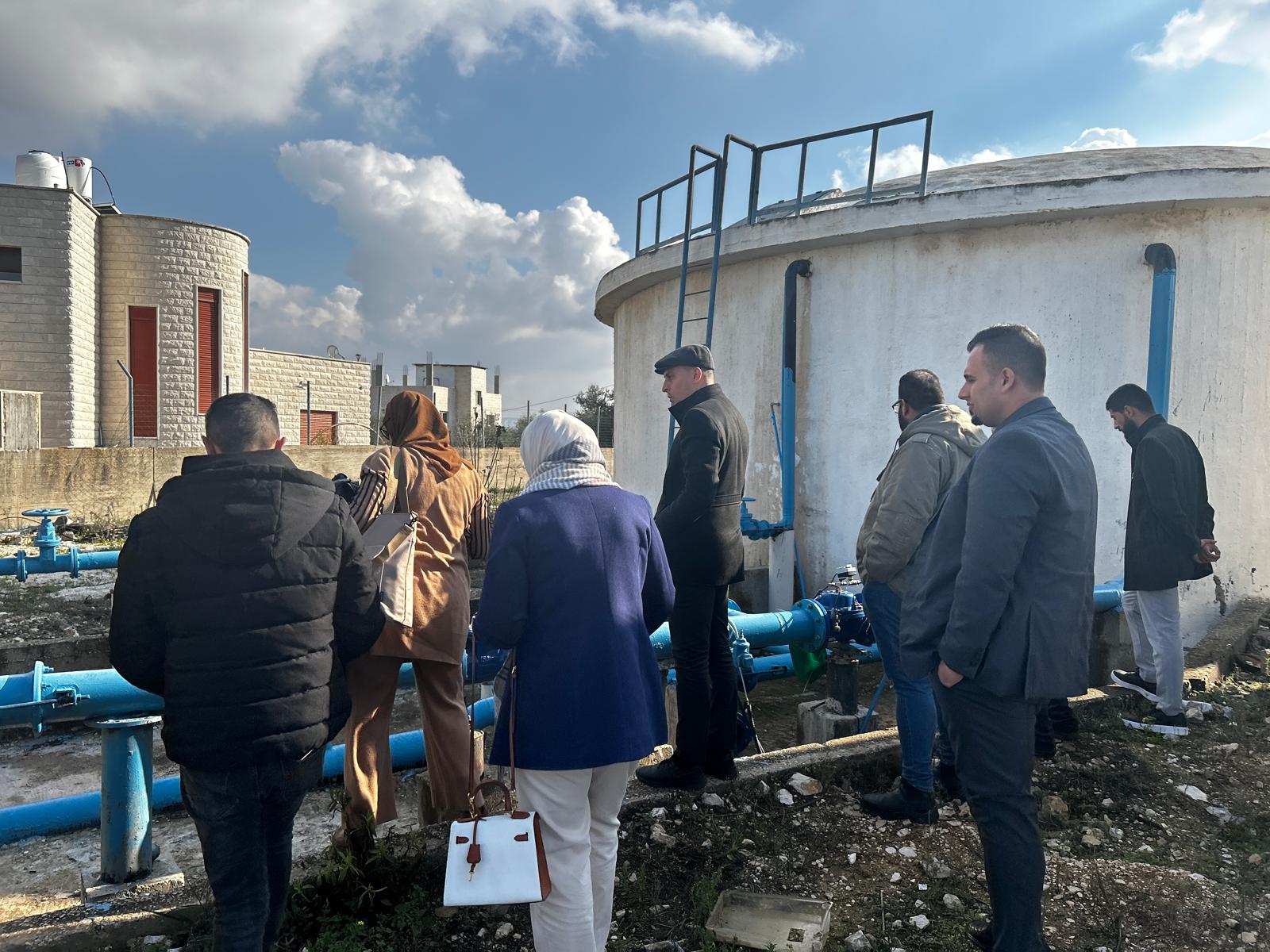
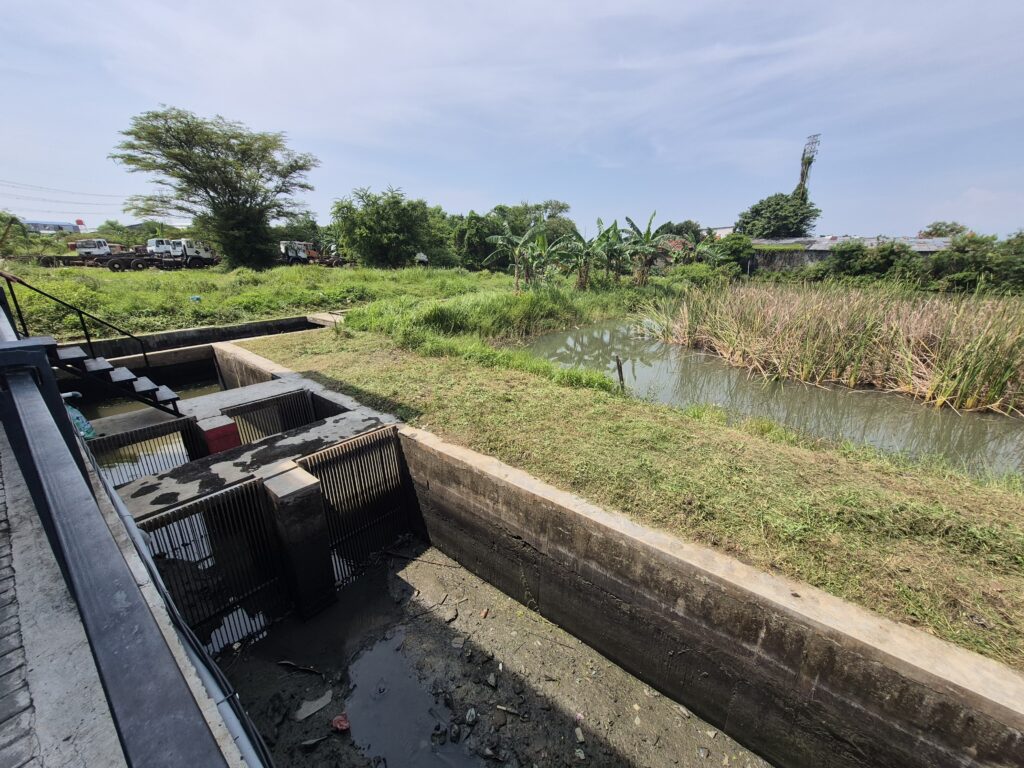
Concrete results on the ground underline this progress. For example, new rainwater harvesting infrastructure has been installed, capable of collecting around 100 m³ of water. In addition, peer-to-peer learning has been strengthened through exchange visits, including a visit by municipalities from North Hebron to Salfit to share knowledge and practical experiences.
A new rainwater harvesting collection point has been installed
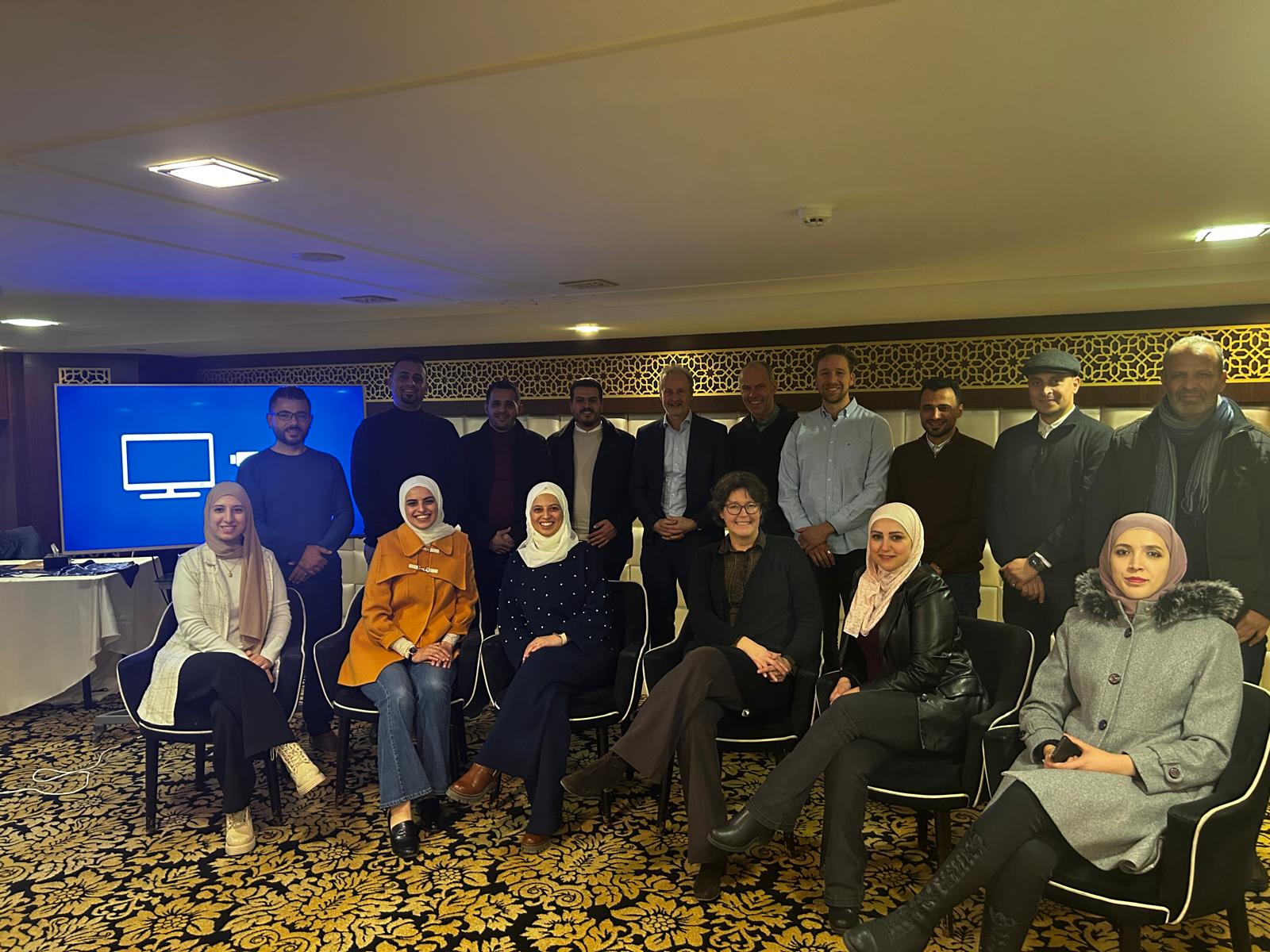
At the same time, the partnership has demonstrated resilience and adaptability in the face of ongoing challenges. Movement restrictions, limited access for international experts and the broader impacts of conflict have required more flexible ways of working. One notable adaptation has been the use of Jordan as an alternative location for missions and technical exchanges, ensuring continuity of activities while also opening up opportunities for regional cooperation with Jordanian partners.
An learning exchange visit in Salfit municipalities with the local partner team from North Hebron municipalities
These missions have addressed key themes such as rainwater harvesting, climate adaptation, asset management, cost recovery and the use of GIS systems, often in connection with the WaterWorx programme. This integrated approach is helping partners move from pilot initiatives towards more structured and sustainable improvements.
A technical exchange visit to Jordan to discuss rainwater harvesting, a water safety plan and climate adaptation plans
Climate change is adding further pressure to an already strained water system. Increasing water scarcity and more frequent flash flood risks highlight the urgency of strengthening resilience. While governance and management practices have improved to a basic level across many areas, the main challenge now lies in scaling up successful pilots and embedding them within institutions in a financially sustainable way.
Looking ahead, the partnership will focus on translating proven approaches into concrete investments, in close coordination with local and international stakeholders. Greater emphasis will be placed on embedding new systems, tools and knowledge in daily practice to ensure lasting impact. Climate adaptation will also play a more prominent role, with increased attention to water efficiency and resilience.
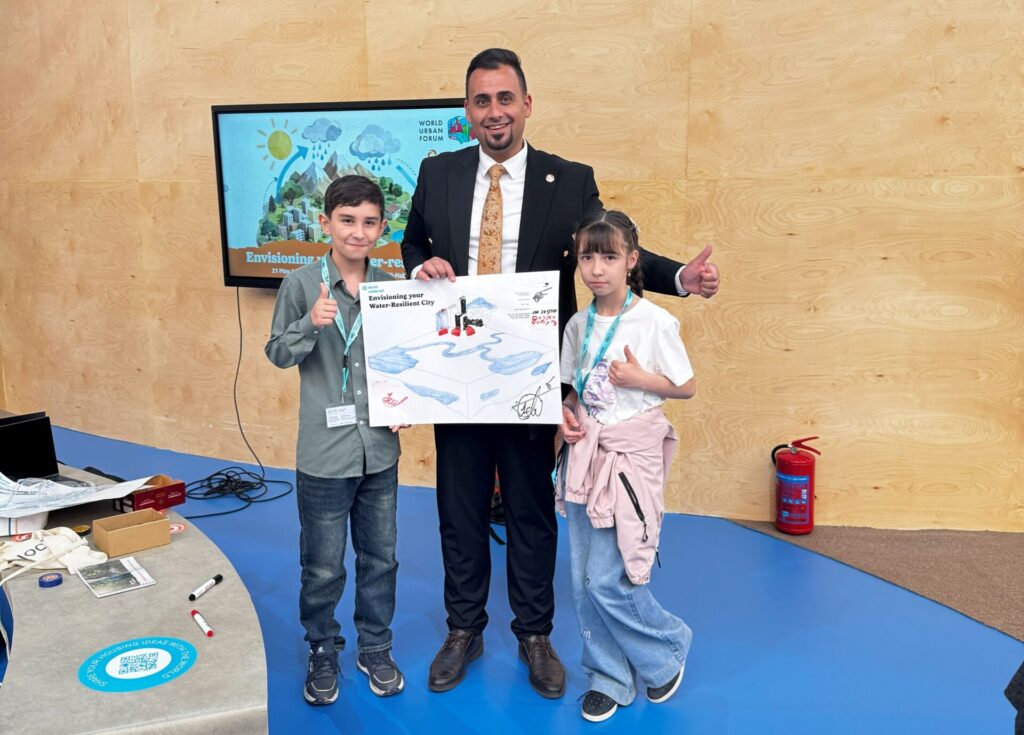
Loay Alatrash (Blue Deal Palestinian Territories) at the World Urban Forum in Baku
The partnership has also remained active on the international stage. During the World Urban Forum in Baku, a session on “envisioning your water-resilient city” brought together more than 50 participants, including children, youth, women, experts and citizens. The interactive session encouraged participants to place water at the centre of urban planning and future city design.
Through strong collaboration, local ownership and a continued focus on practical solutions, the Blue Deal partnership in the Palestinian territories is making meaningful progress towards sustainable and locally anchored water management – even under difficult circumstances.
From 20 to 23 April 2026, the Blue Dragon Programme (Blue Deal's Vietnam partnership), in collaboration with the Department of Agriculture and Environment of Can Tho City and the Can Tho Irrigation Department, successfully organised the fifth week of Pool 4 training on climate change adaptation.
The event brought together more than 20 officials from An Giang Province and Can Tho City, alongside students from Can Tho University. Technical guidance was provided by two experts from Hollands Noorderkwartier Water Authority, Mrs Anet Labans and Ms Denise Winters, as well as Dr Dinh Diep Anh Tuan from the Mekong Institute at Can Tho University.
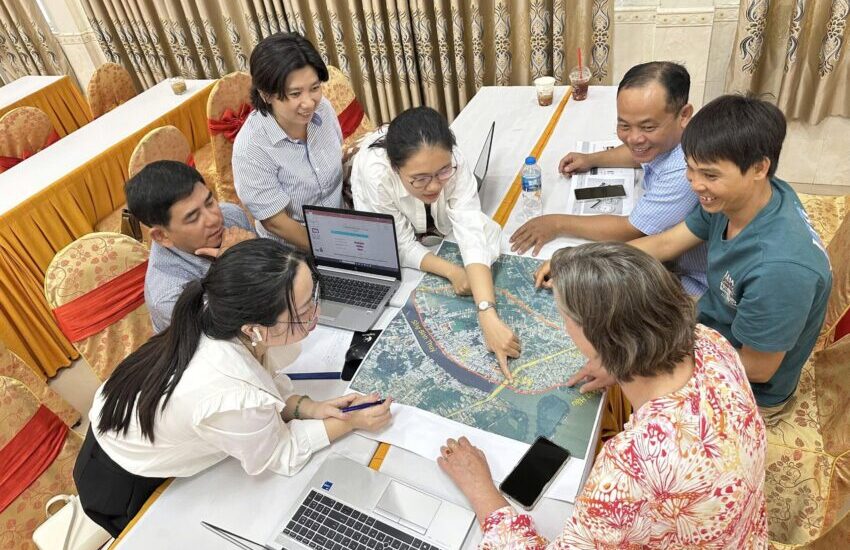
Vietnamese and Dutch water experts work together in the climate adaptation training
During this last week of training the Dutch experts synthesised the content of the previous four training weeks and shared practical lessons on resilient urban planning and Nature-based Solutions applied in the Netherlands. The programme also featured a presentation by Dr. Dinh Diep Anh Tuan on the urban flooding challenges facing Can Tho City, as well as an overview of the socio-economic context of Binh Thuy Ward, one of the city’s flood-prone areas.
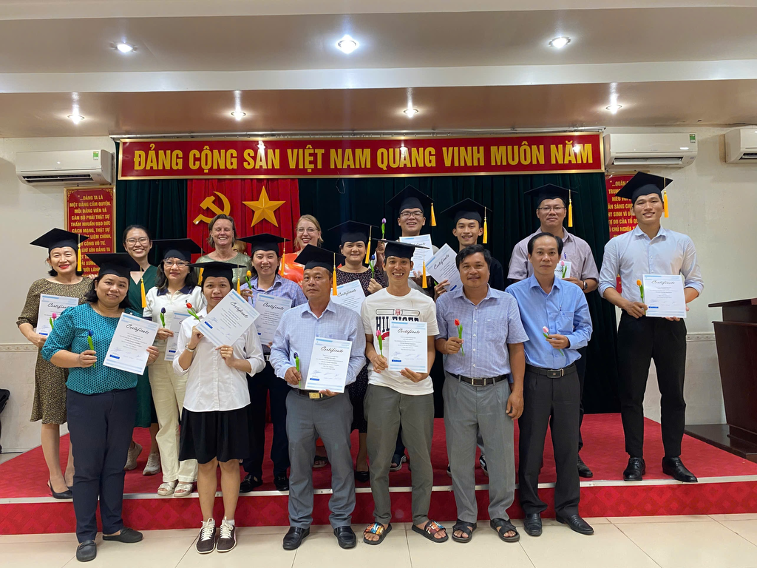
The group after completion of the training
The training programme concluded successfully, translating the expertise of Dutch and Vietnamese specialists into concrete outputs. The most significant results were detailed action plans to address land subsidence in the U Minh Thuong area of An Giang Province and an urban flood adaptation plan for Binh Thuy Ward in Can Tho City.
In addition, the event provided a valuable platform for collaboration and knowledge exchange between local authorities and technical experts, laying the groundwork for future cooperation on climate adaptation and resilience.
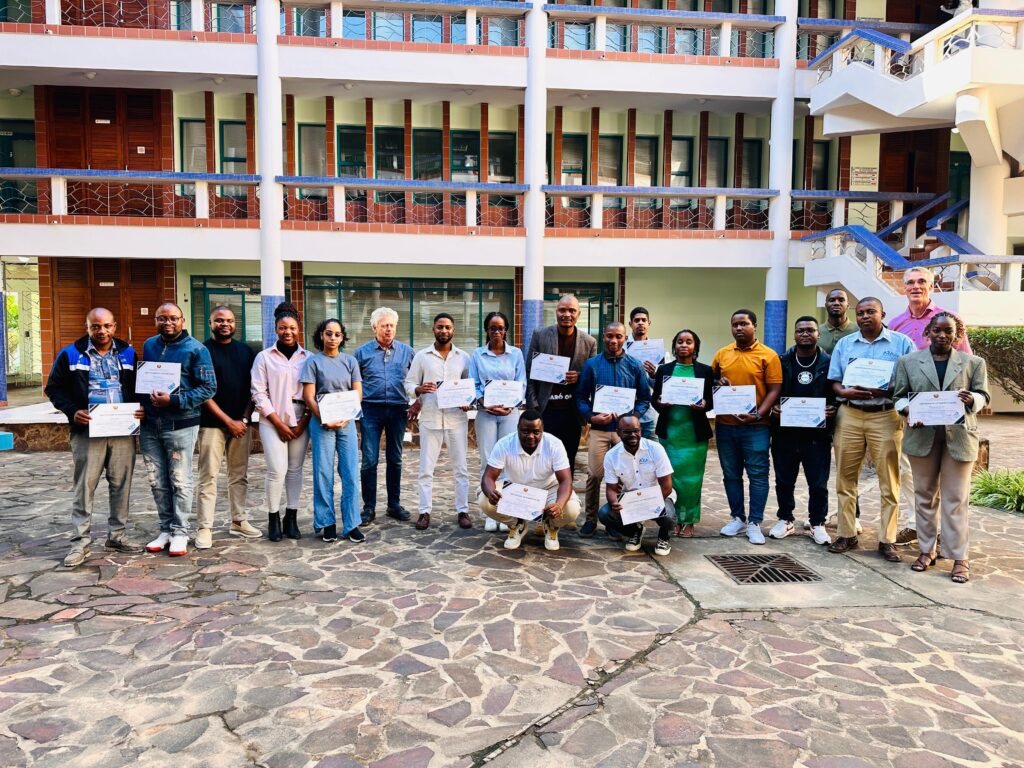
In April and May of 2026, four separate teams from the Dutch Water Authorities (DWA) visited Mozambique as part of the ongoing Blue Deal programme. Together, they covered the whole country, working side by side with the Mozambican Water Authorities (ARAs) and the National Directorate of Water Resources (DNGRH).
Each team focused on a specific theme: long-term programme planning, water quality and licensing, asset management, and urban drainage. Here’s an overview of what each working visit delivered.
Planning for the next phase (2027–2030)
A team consisting of Marijke Jaarsma, Nila Taminiau, Oscar van Zanten and Germain Bakker visited ARA Norte, ARA Centro and ARA Sul to gather input for the Multi-Annual Plan (MAP) for the next phase of the Blue Deal programme. The plan introduces a shift from working with “components” to “tracks”, each focused on clear outcomes such as improved data management or more effective water licensing.
At each location, the team facilitated interactive workshops in which ARA staff identified priorities, realistic targets and the activities needed to reach them by 2030. Engagement was strong at all three locations.
Planning for the next phase with ARA staff
In Maputo, the visit concluded during Mozambican Women’s Day celebrations, offering a memorable moment as DWA colleagues joined the festivities.
A draft Multi-Annual Plan will be discussed during a partnership meeting in July or August.
Water quality and licensing workshop
Bert Jager and Robert Boonstra focused on water quality regulation, licensing and the enforcement of effluent discharge—one of the most complex issues in Mozambique’s water sector.
In Maputo, a two-day workshop at DNGRH brought together staff from all ARAs, DNGRH and partner organisations. Participants exchanged experiences on implementing Decree 52/2023, which governs effluent discharge standards, and discussed gaps in current licensing and enforcement practices.
The team then travelled to Nampula to meet ARA Norte and partners to explore the creation of a taskforce to address the impacts of artisanal gold mining upstream of Murrupula, which is causing sedimentation and water quality issues. A field visit to the mining area provided valuable first-hand insights.
ARA Norte will temporarily lead this taskforce, with support from the Blue Deal programme.
Urban drainage and aquatic plant control in Beira
Another DWA team visited Beira to collaborate with SASB (the Beira Autonomous Sanitation Unit) and the NGO FACE.
Ytzen Faber, Martin Bos and Jan den Besten focused on practical challenges in managing Beira’s urban drainage system, which faces ongoing pressure from flooding, solid waste and invasive aquatic plants.
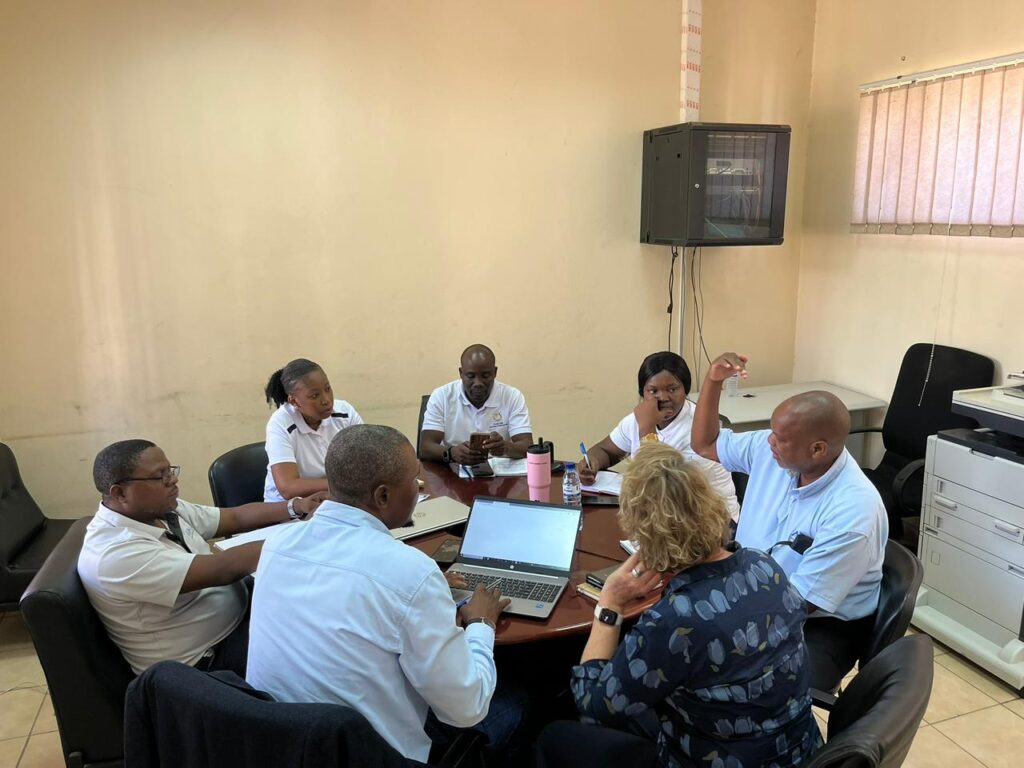
A working session with Dutch water expert Ytzen Faber and NGO FACE and SASB Beira.
The team attended a community meeting in the Inhamizua neighbourhood, where a short play highlighting the risks of emptying pit latrines into drainage channels attracted strong public engagement.
FACE is now developing a proposal for floating barriers to capture waste before it clogs drainage infrastructure, building on an earlier Red Cross pilot. SASB presented its mapping of the city’s canal network and outlined plans for ditch cleaning ahead of the 2026–2027 rainy season.
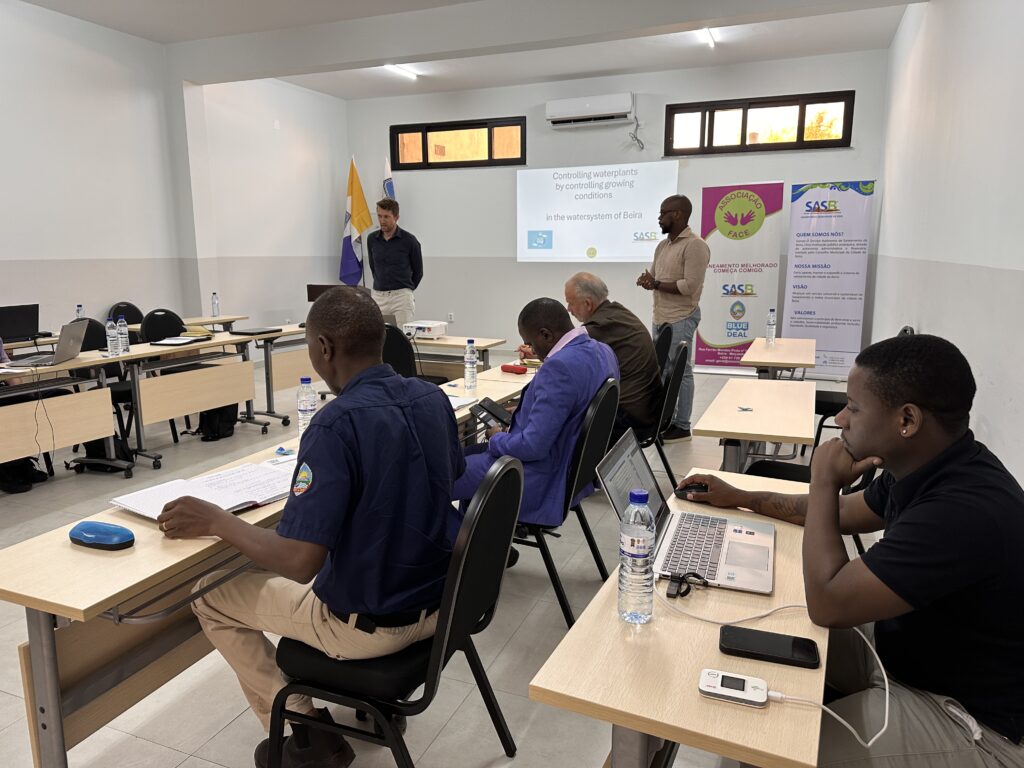
A dedicated workshop explored two approaches to controlling aquatic plant growth in retention basins: raising water levels to limit reed growth and introducing controlled seawater inflow during dry periods. This resulted in three pilot proposals for canals and basins across the city.
Asset management training
In Maputo, a four-day asset management training took place at DNGRH, bringing together participants from ARA Norte, ARA Centro, ARA Sul, DNGRH and ISPS.
Asset management focuses on planning and maintaining water infrastructure—such as dikes, small dams and canals—in a structured, data-driven way that balances costs, risks and performance over time.
The participants of the Asset Management training
Trainers Pier Schaper and Jan den Besten introduced the core principles before participants worked in mixed groups to develop initial Operation & Maintenance (O&M) plans for small dams within each ARA.
These draft plans will be further refined and validated. At the same time, the ARAs are developing a tool to collect and store small dam inspection data via tablet or phone, synchronising it with a central cloud database.
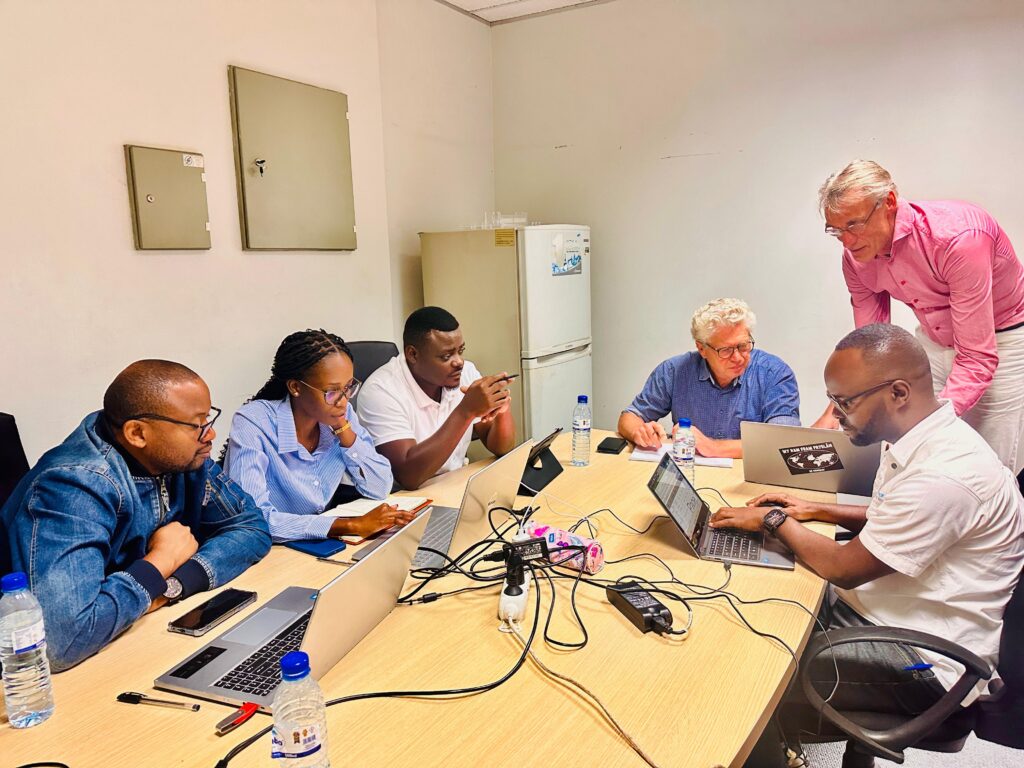
Dutch and Mozambican partners collaborate during the session
Common threads and next steps
While the four working visits addressed different themes, several shared priorities emerged: the need for a functional national water database, stronger coordination between institutions, and a clear pathway for sustainable progress beyond the Blue Deal programme, which concludes in 2030.
Next steps already underway include a HydroNET training in June, a hydrometry blended learning programme from August to October, continued licensing reforms with DNGRH, and a partnership meeting in July or August to agree on priorities for the 2027–2030 Multi-Annual Plan.
"Ce partenariat est sincère!” (This is a genuine partnership) With these words, Mr. Drissa Traoré, Technical Advisor to the Minister of Environment, Sanitation and Sustainable Development of Mali, closed a productive week of exchange and reflection on Friday 19 June.
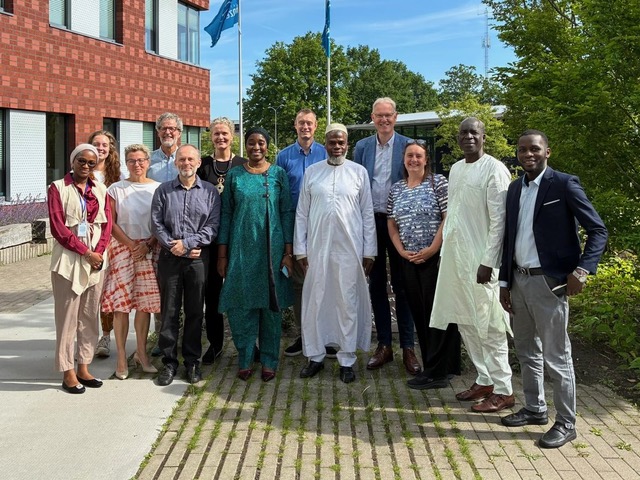
From 15 to 19 June, a high-level delegation from ANGESEM, led by Director-General Mrs Doussouba Doumbia, visited the Netherlands. Accompanied by Mr Drissa Traoré, Mr Moumouni Damango (Embassy of the Kingdom of the Netherlands in Bamako) and colleagues from SNV Mali, the delegation reviewed progress within the Blue Deal partnership, exchanged management experiences and explored opportunities to further strengthen collaboration with its Dutch partners.
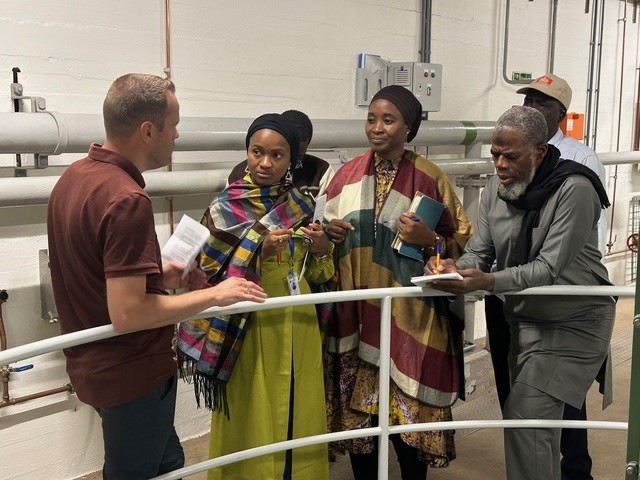
A site visit to the wastewater treatment plant of Noorderzijlvest
During meetings with the Blue Deal Office, the Ministry of Foreign Affairs, RVO and several Dutch water authorities, partners reflected on achievements to date. Alongside the expected results, it was positively noted that the Mali partnership has generated a range of additional outcomes. Notable examples include the mobilisation of additional funding from UNDP (approximately €170,000), the engagement of GIZ, strengthened regional cooperation with Blue Deal Burkina Faso, and increased external income for the laboratory.
The visit also provided valuable opportunities for peer-to-peer learning. Exchanges between Dutch water managers and the ANGESEM leadership proved particularly relevant. Discussions with the Secretary-Director and board member (“heemraad”) of Zuiderzeeland focused on the role of organisational values in water governance. Site visits to the wastewater treatment plant of Noorderzijlvest and the laboratory of Hunze en Aa’s sparked enthusiasm and offered practical inspiration for future application in Mali.
The delegation from Mali with Dutch partners at Hunze en Aa’s water authority
A key moment of the week was a strategic session at the offices of Water Authority Hunze en Aa’s, chaired by Geert-Jan ten Brink, ‘Dijkgraaf’ of Hunze en Aa’s water authority. Together with Dutch experts and partners, the Malian delegation explored the future of the partnership in an open and constructive dialogue. While the broader context remains complex and the outlook for external support requires careful navigation, partners demonstrated strong commitment and resilience. Hunze en Aa’s reaffirmed its support for the next phase, providing a solid basis to further engage partners and mobilise resources. Using the agreed vision on the way forward, the team will use this support of Hunze en Aa’s to engage additional partners and resources for the other topics and activities of the partnership.
Despite the challenges, the partnership continues to deliver tangible results and to build trust, knowledge and cooperation. As highlighted in the closing remarks of Mr. Drissa Traoré, this collaboration stands out as a truly genuine and forward-looking partnership.
Much has happened across Blue Deal Indonesia’s projects in the past quarter, with a strong focus on flood resilience through working visits in both Indonesia and the Netherlands.
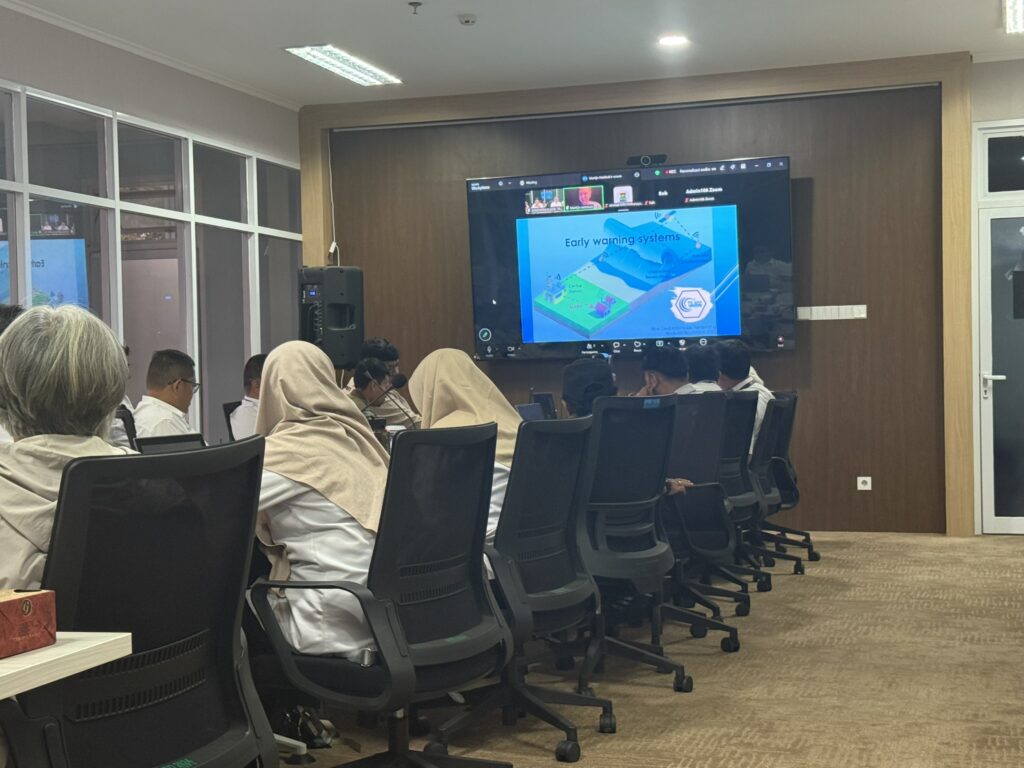
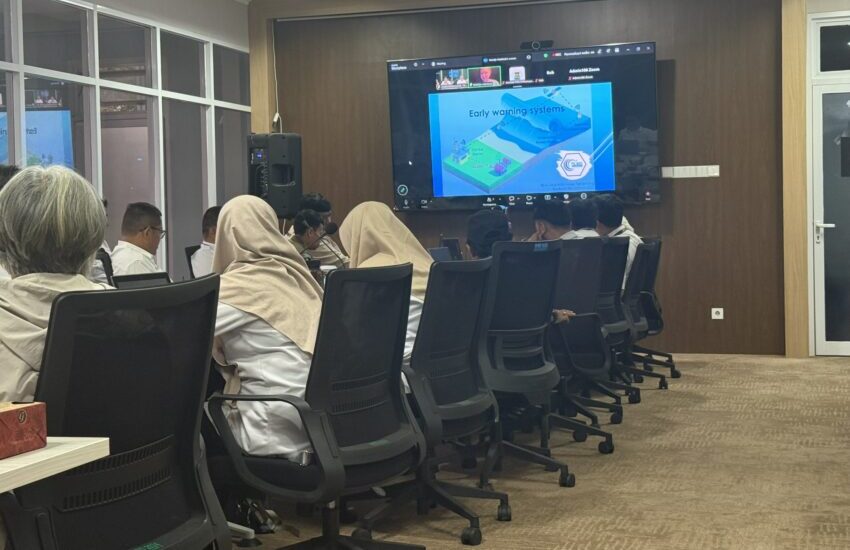
The workshop on early warning systems
Tangerang: an early warning systems workshop
During a working visit to Tangerang, the Blue Deal team organised a follow-up workshop on early warning systems, building on the previous session in November 2025. This topic is highly relevant, as rapid urbanisation, limited drainage capacity and increasing rainfall intensity contribute to frequent flooding and other water-related risks. Strengthening early warning systems is therefore essential to better anticipate and respond to these hazards, and to reduce impacts on communities and infrastructure.
Participants worked in groups to discuss their roles, responsibilities and needs in both preparation and emergency phases. The sessions highlighted gaps in coordination, communication and data sharing, while also identifying opportunities to strengthen collaboration between institutions.
The workshop showed that effective early warning systems require not only technical solutions, but also clear agreements, timely information exchange and well-defined responsibilities. It provided concrete next steps towards a more coordinated approach in the region.
Video: Tangerang workshop on Early Warning Systems
Education Program (social inclusion)
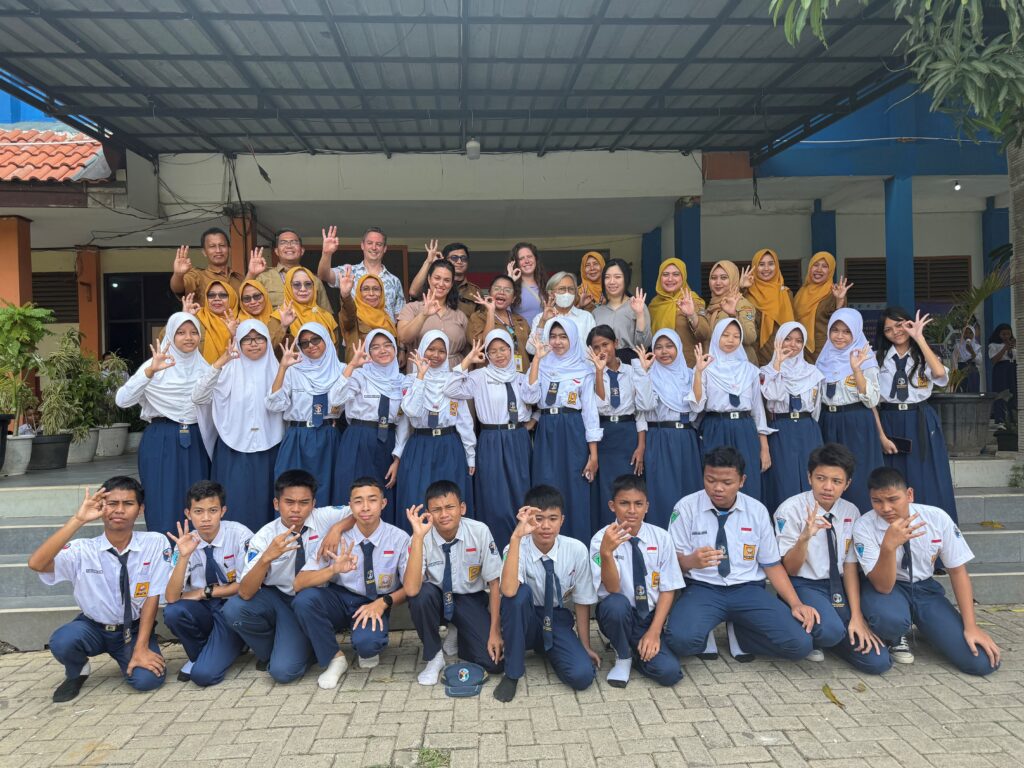
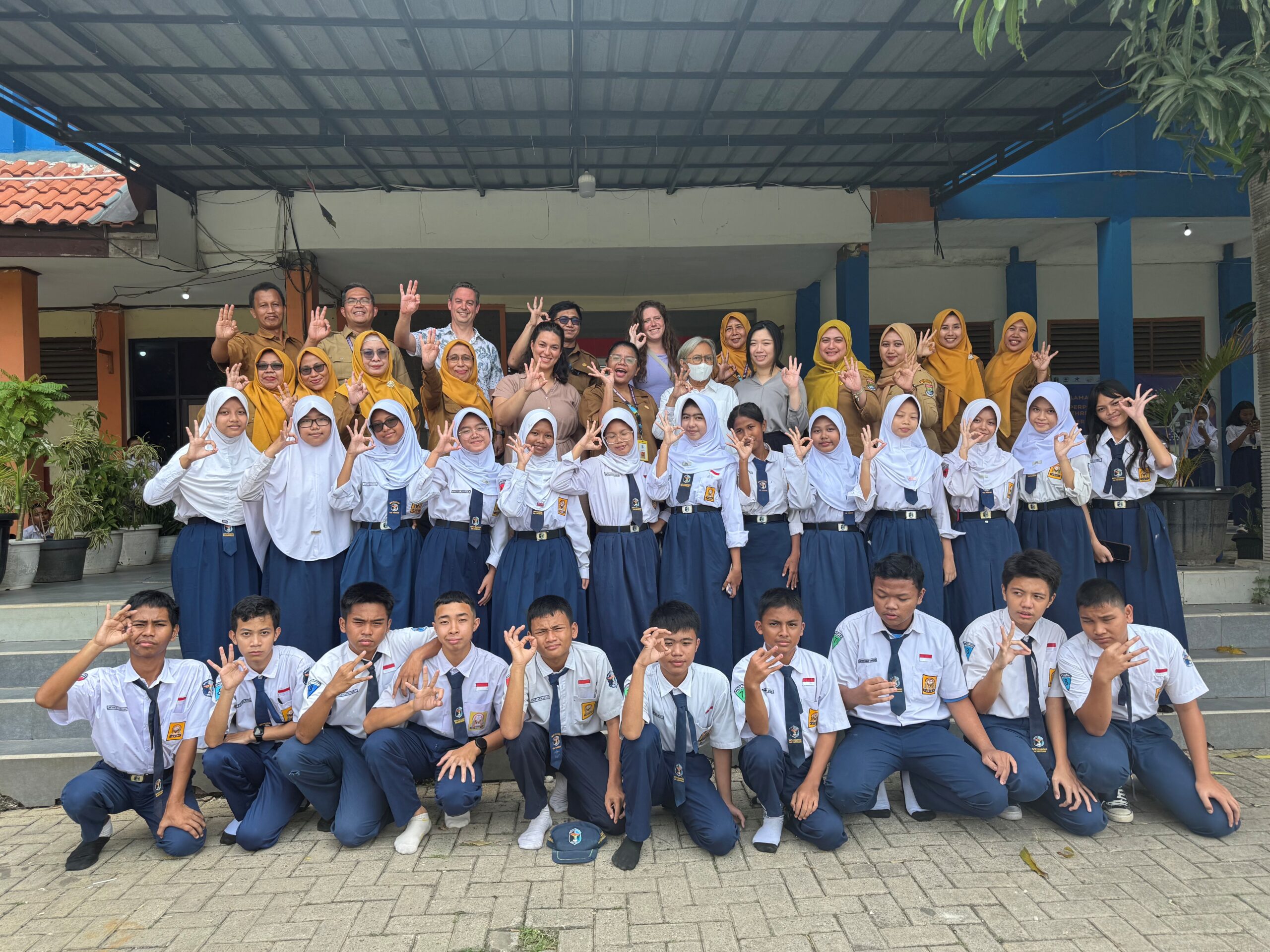
During the school visit to SMA Negeri 3 Pasar Kemis, located next to Situ Gelam (a small lake), the Blue Deal team gained insight into how flooding disrupts daily life and education. Each year, during the rainy season (between December and February), the school is flooded multiple times when Situ Gelam overflows. This results in temporary school closures, sometimes up to a week, preventing students from attending classes. This highlights not only the physical impact of flooding, but also its social consequences, particularly for equal access to education.
The students appreciated the interactive education session about flood resilience
An interactive session introduced students to the Dutch approach to living with water and the collaborative approach within the Blue Deal programme. Practical solutions, such as mobile flood barriers, were presented, to demonstrate how different measures can help reduce flood risks and protect communities.
A game on flood dilemmas encouraged students to explore the different perspectives and interests that come into play when making decisions about flood risk management. This highlighted that water management is not only a technical issue, but also a social one – where choices impact different groups in different ways.
The session contributed to greater awareness of social inclusion in water management. Students were encouraged to think about who is most affected by flooding – such as children, families with fewer resources, and nearby communities – and how solutions can be designed to be fair and inclusive. The visit showed that involving young people in these discussions is key to building a more resilient and socially inclusive future.
School visit and session on flood resilience
Field visits: reservoirs, irrigation and drought resilience
In April 2026, the Blue Deal team visited Trimulyo, an area heavily affected by flooding, land subsidence, and coastal challenges. The purpose of the visit was to gain a better understanding of the local situation and to explore potential solutions to improve the area’s resilience and livability. Together with local partners, they assessed current conditions and discussed daily challenges with local stakeholders, gaining an understanding of the impact of flooding and land subsidence on housing, infrastructure, and the communities.
The visit provided valuable insights into potential measures and interventions, such as improving water management, strengthening coastal protection, and identifying sustainable solutions that fit the local context. The visit marks an important step toward developing an integrated and future-proof approach for this vulnerable area. The insights gained in Trimulyo underscored the importance of combining technical solutions with a strong understanding of the social and spatial context.
The area Tremulyo is very prone to flooding
A pilot project will be developed with stakeholders to explore integrated and sustainable approaches for the area.
Tangerang: a water retention basin
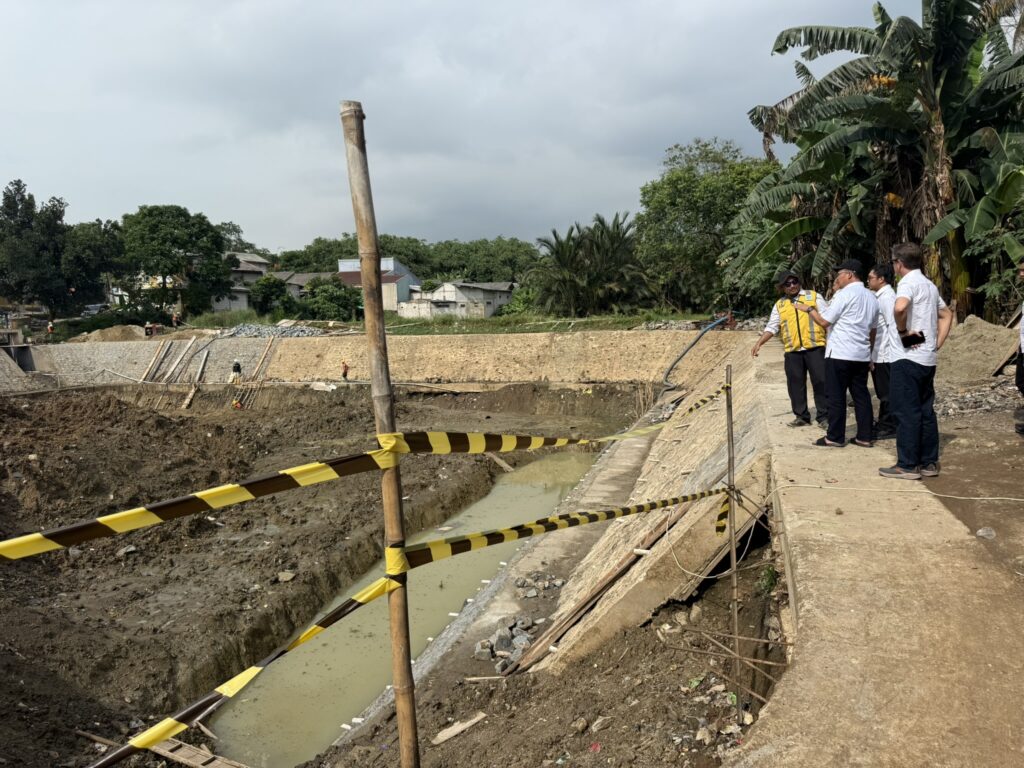
In Tangerang, a retention basin is currently being developed to help address flooding challenges in the region. A retention basin temporarily stores excess rainwater and river water during periods of heavy rainfall, reducing pressure on the drainage system and lowering the risk of flooding in surrounding neighbourhoods. Once completed, the project is expected to help at least 1000 residents experience less flooding and water-related disruption.
A field visit to the water basin
Our Blue Deal colleagues visited the site to exchange knowledge about the design, implementation, and challenges of this project. Field visits like these create valuable opportunities to share experiences and strengthen cooperation on climate adaptation and urban water management.
Indonesian delegation visit to the Netherlands
In June, a delegation from Indonesia visited the Netherlands for a week-long programme focused on knowledge exchange and strengthening collaboration within the Blue Deal. The visit combined strategic discussions with field visits, showcasing the Dutch approach to integrated and multi-layer flood risk management.
The programme started in Delft, followed by a visit to the Delfland Water Authority, where the Dutch approach to flood risk management was introduced and compared with the Indonesian context. Workshops throughout the week helped evaluate ongoing projects and define priorities for the next programme phase (2027–2030), while also building on insights gained during earlier IWRM training in Bandung.
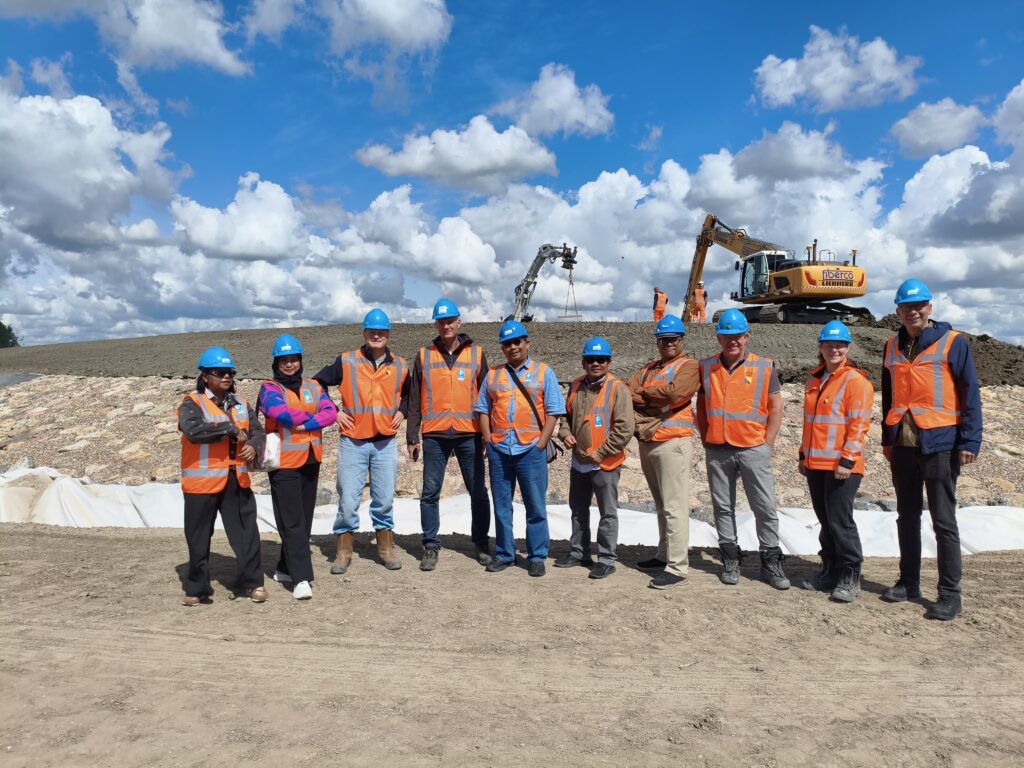
Midweek, the delegation travelled to Alkmaar, where they were welcomed by representatives of Hoogheemraadschap Hollands Noorderkwartier (HHNK). Sessions focused on governance and flood crisis management, complemented by a knowledge exchange on crisis response approaches in Indonesia. Field visits included a wastewater treatment plant in Heiloo, a pumping station, and demonstrations of innovative monitoring techniques such as drones, LiDAR and machine learning.
Further excursions highlighted Dutch water infrastructure in practice, including the Markermeerdijken dike reinforcement project, the pumping station Westerkogge, and coastal locations in Volendam, Hoorn and Egmond aan Zee. These visits illustrated approaches to coastal protection, nature-based solutions and long-term maintenance.
The Indonesian delegation during their field visit to Dutch water authorities
Overall, the programme provided practical insights into Dutch water management while strengthening partnerships and laying a solid foundation for the next phase of collaboration.
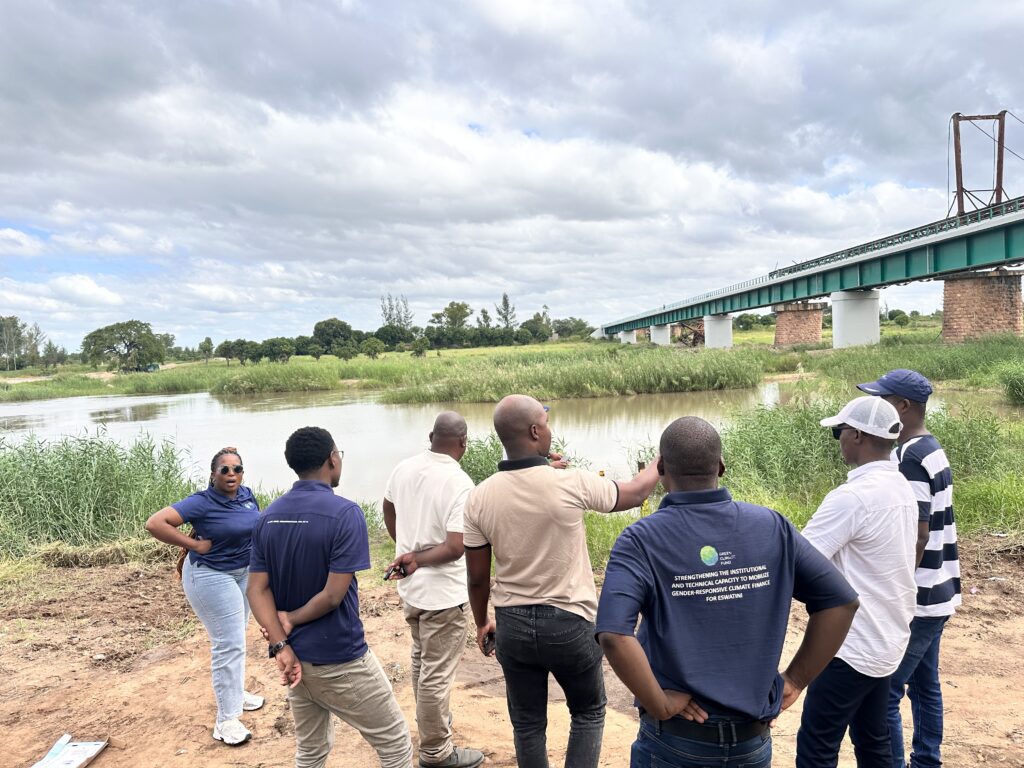
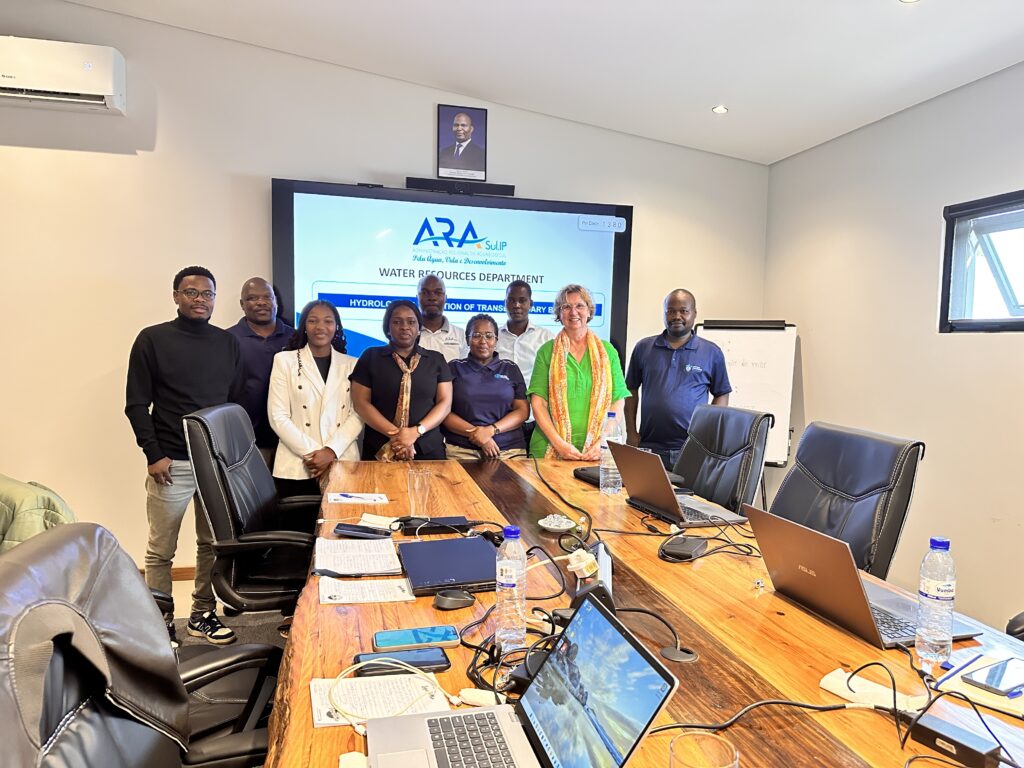
At the end of April, technical staff from ARA-Sul, IP (Mozambique) and JRBA (Eswatini) came together to address the challenges posed by the transboundary Umbeluzi River, in an initiative facilitated by the Blue Deal Mozambique and Eswatini programmes.
The Blue Deal teams from Mozambique and Eswatini came together to address the challenges posed by the Umbulezi river
The meeting focused on exchanging experiences and best practices in hydroclimatological monitoring systems, while strengthening technical and institutional capacities in hydrological data management and response mechanisms to extreme events. This is increasingly important as climate variability intensifies and severe hydrometeorological events occur more frequently.
Reinforcing regional transboundary cooperation
The meeting focused on exchanging experiences and best practices in hydroclimatological monitoring systems, while strengthening technical and institutional capacities in hydrological data management and response mechanisms to extreme events. This is increasingly important as climate variability intensifies and severe hydrometeorological events occur more frequently.
This meeting forms part of the second phase of both Blue Deal programmes, which also support initiatives such as the REMCO conferences, the GLOW project, and communities of practice (CoP) aimed at the integrated and sustainable management of shared watercourses.
The first session of this cooperation focused on assessing the current state of hydroclimatic monitoring networks in the Umbeluzi Basin. It identified key operational challenges, as well as the need to rehabilitate and modernise priority monitoring stations to enable joint data collection.
Team members of the Blue Deal Eswatini and Mozambique partnerships exchange knowledge during their meeting
Participants also explored opportunities to improve interoperability of the HydroNET platform and to strengthen data-sharing mechanisms between the two institutions.
In addition, the session laid the foundations for developing a joint action plan, including priority intervention areas, institutional responsibilities and the next steps for implementing agreed activities.
The agreements reached are expected to contribute to more efficient water management in both countries, with a particular impact in the Maputo region, where the Umbeluzi River serves as both a vital water supply source and an area prone to flooding.
The EU Water Operators’ Partnerships (EU-WOP) Programme - funded by the European Union and managed by the Global Water Operators’ Partnerships Alliance/UN-Habitat - has recently awarded 15 partnerships around the world under their “Emerging Window” phase. Following a rigorous and highly competitive application process, with submission rounds in November 2025 and February 2026, “Sustainable WOP Peru” was selected as one of the 15 awarded partnerships.
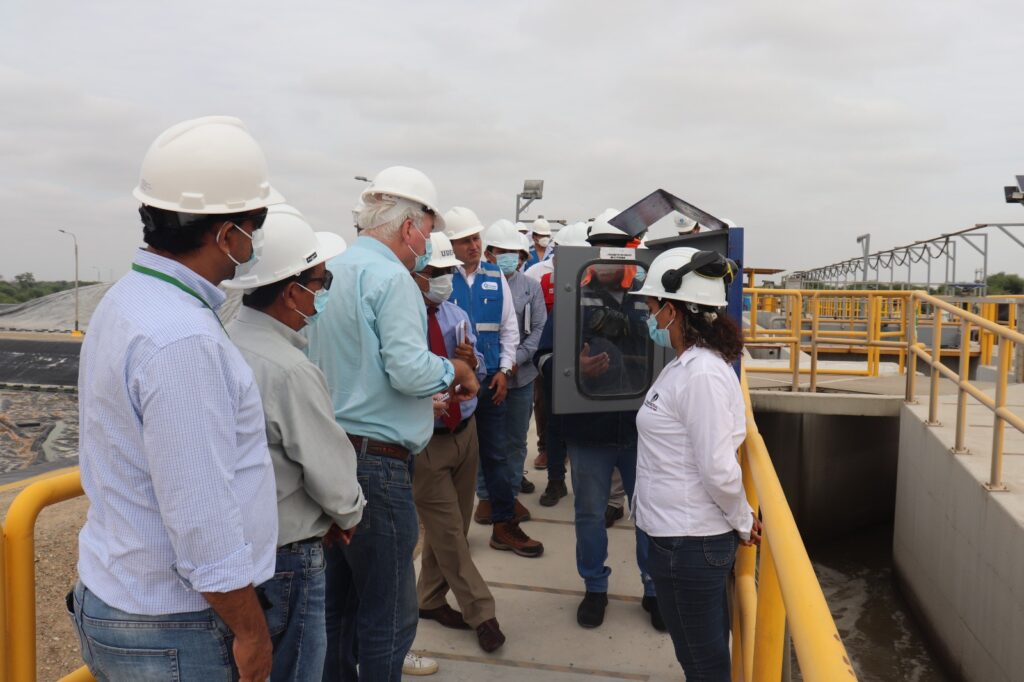
The Blue Deal Peru team during a work visit to a wastewater treatment facility
Building on years of collaboriation and trust established through the Blue Deal Peru partnership, this new programme will run until 2030. The proposal was written in collaboration with First Blue – Hezelburcht Group. A full list of awarded partnerships can be found on the EU-WOP | GWOPA website.
The partnership will focus on the Peruvian northern regions of Tumbes and Piura, ecologically vulnerable areas prone to El Niño, also priority areas within the Blue Deal partnership.
Sustainable WOP Peru aims to strengthen the operational, managerial and institutional capacities of EPS Grau in Piura and Agua Tumbes. In line with UN-SDG 6 and climate resilience principles, the programme aims to improve wastewater treatment systems, enhance environmental protection and thereby contribute to public health. Taking a human rights-based approach to ensure inclusive and sustainable sanitation, the partnership will actively engage communities and vulnerable groups living in the vicinity of wastewater treatment facilities.
As in the Blue Deal, the work will be implemented through peer-to-peer technical collaboration, joint assessments, tailor-made training and experience sharing to enhance knowledge and improving the wastewater treatment process and services.
The partnership will be coordinated by Dutch water authority Noorderzijlvest, and supported by other Dutch Water Authorities (DWA) currently participating in the Blue Deal partnership. TU-Delft and OTASS Peru will contribute as knowledge and institutional partners, respectively.
Recognising the experience and work of Dutch water authorities in Blue Deal Peru, and envisioning the potential impact combined with the EU WOP Programme, the Embassy of Peru in the Netherlands acts as the strategic partner and promotor of Sustainable WOP Peru.
This marks a new and exciting experience for the Blue Deal Peru team, and they look forward to the strong synergies that this new collaboration can bring, complementing the current and future work in Peru.
In this blog, our regional Blue Deal partner Tegenu Zerfu Tsige shares his experiences during a visit with Dutch partner experts to the Afar region in January 2026, offering a vivid account of local realities, challenges and experiences.
“The morning sun had just begun to rise, yet its heat already pressed heavily on us as we crossed the shimmering plains of the Lower Awash. A newly constructed road led us toward Asayita and Afambo. Clean, quiet and safe, cutting through a landscape that has never been simple. Every few kilometers, the terrain revealed silent markers of its past: vast plains shaped by violent flash floods, heatwaves trembling above the earth, isolated dome‑shaped wooden houses standing defiantly against the emptiness, and a horizon so open it seemed to carry the region’s long history of struggle, resilience, and hope.
Here, water is never simply water, it is a force, a memory, a fear, and at times, an absence that lingers in the air like a ghost.
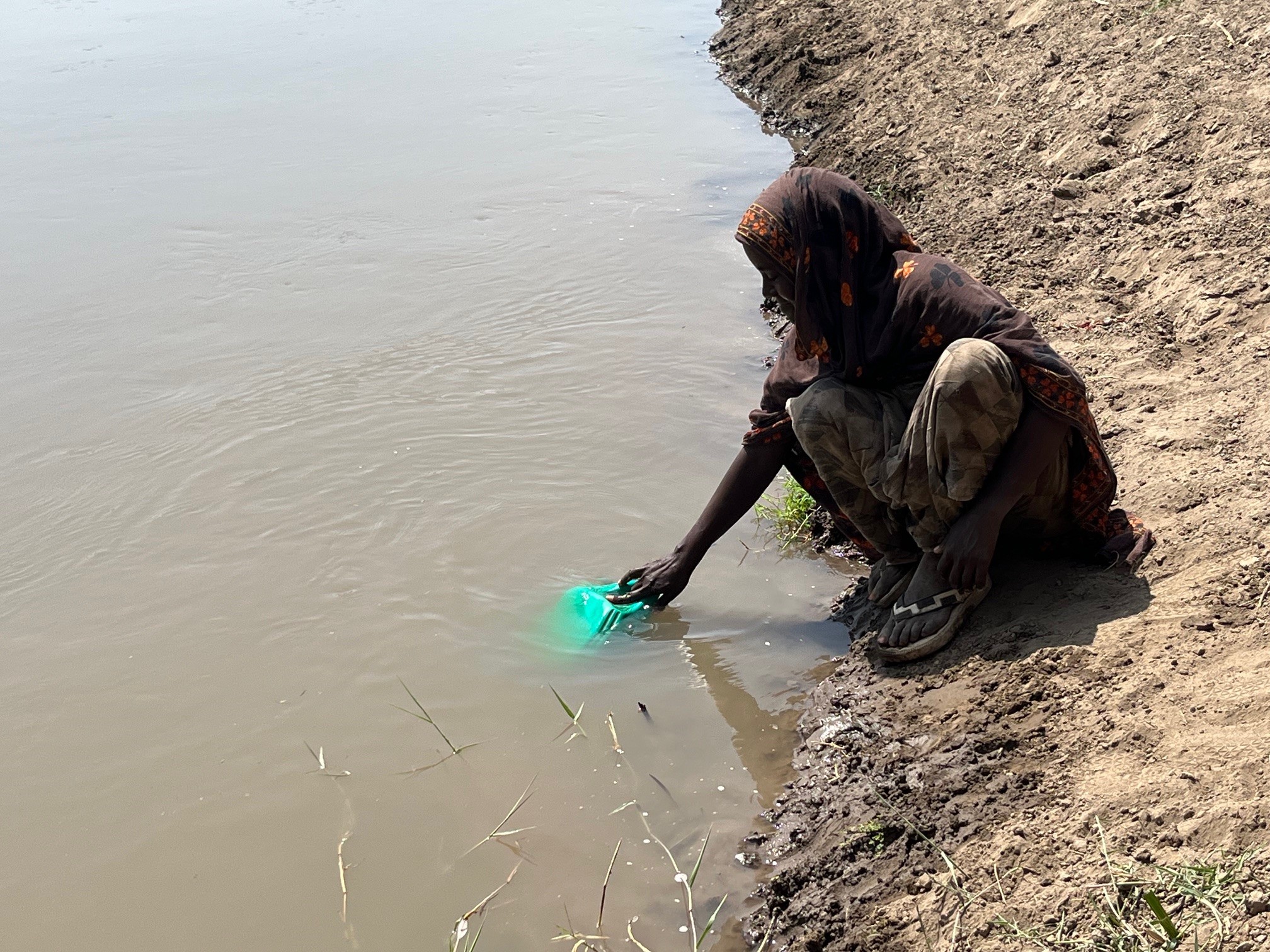
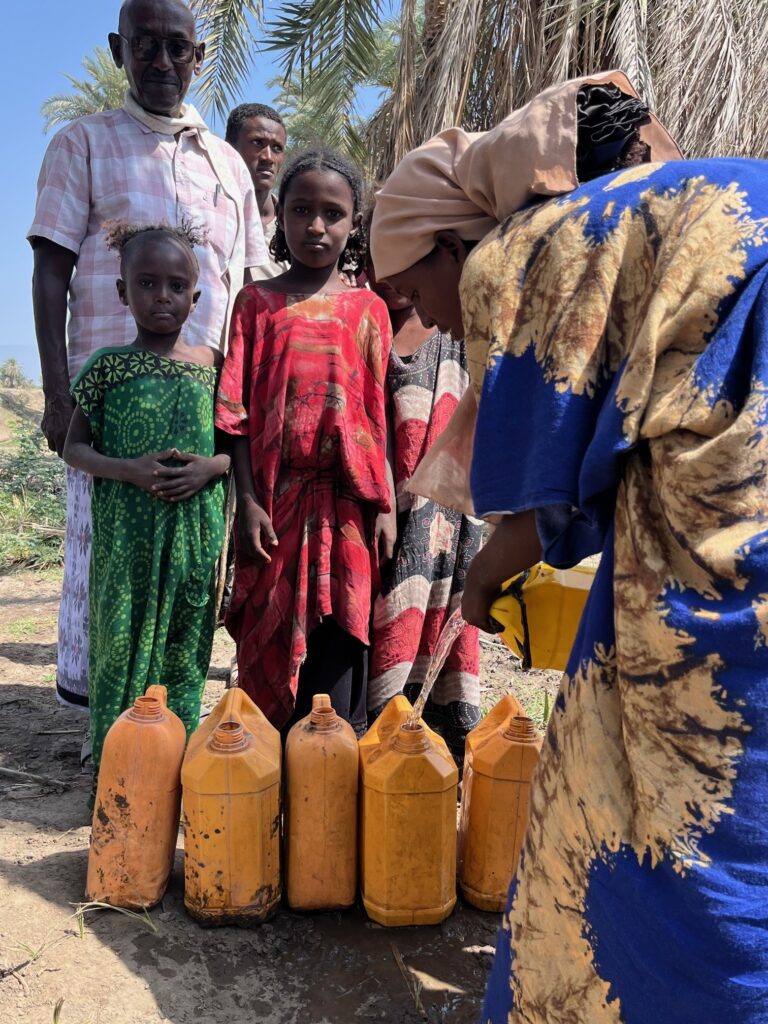
A woman fetches water for domestic use
Afambo & Asayita: where water is both life and a threat
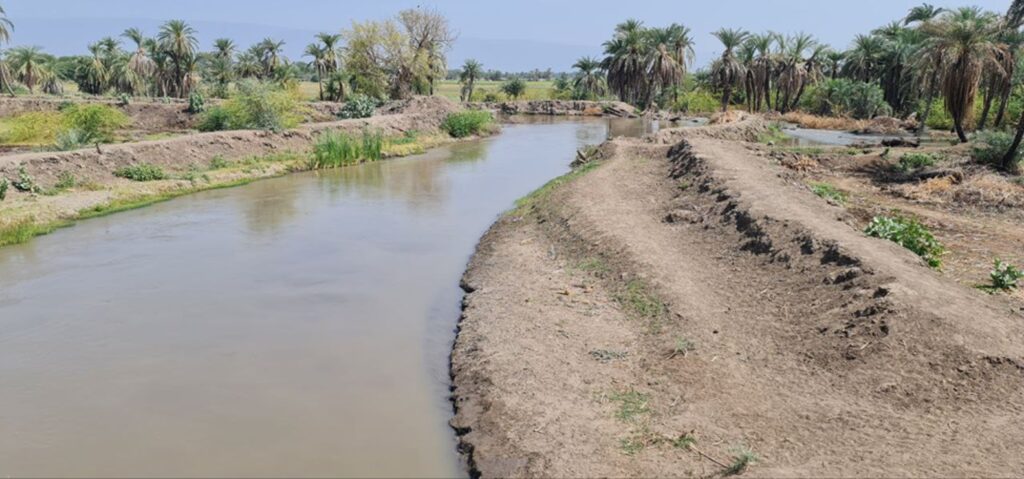
Travelling toward Afambo, near the end of Awash River, the Awash river lies perfectly still. The scene appears peaceful, almost gentle, but the driver who is part of the community, quickly reminds us how deceptive that calm can be.
“This river does not warn twice,” he murmurs, his eyes fixed on the water. “It rises like an angry guest and leaves like a thief.”
The driver explains that floods arrive without warning, rushing over fields and homes with a violent force, only to disappear again and then leave months of drought. These communities live in a constant state of tension and uncertainty, never sure whether to prepare for too much water, or too little.
Along the riverbanks, we see clear signs of years of intervention: dredged channels deepened beyond their natural form, dikes repeatedly patched, and flow‑control structures intended to protect but quietly reshaping the river’s behavior. These works can reduce flooding temporarily, but they also disconnect the river from its flood plain, accelerate sediment movement, and sharpen hydraulic drought for smallholders downstream.
Further along these fields, we recognise more issues:
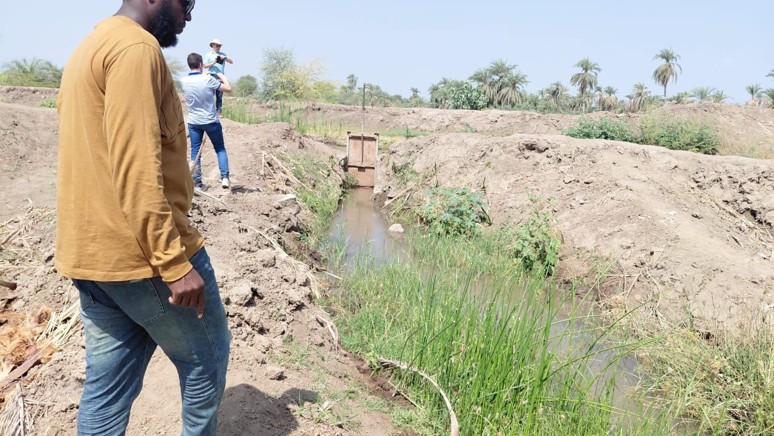
A poorly located diversion gate
diversion points built in the wrong place
poorly aligned and weakened dikes
unmeasured abstractions pulling water unpredictably
salt crusting over waterlogged soils
invasive weeds claiming canals
One elder pointed toward the sluggish river and said softly: “Hydraulic drought is not when water is gone. It is when water passes you, but refuses to work for you.” His words capture the contradiction: water visibly flowing past, yet most irrigation blocks remain unable to access it.
A traditional governance system
As we continue our conversation, another dimension of this region emerges: not defined by terrain, but by people and their social fabric. Within the Afar community, clan structures operate under a governance system that is seldom formally recognised by outsiders, yet it functions with remarkable coherence and authority.
A newly built dike in Assiyta Woreda
At the heart of this system is maa’da, the Afar customary law. It is not written in any document or codified in legal texts; instead, it lives in collective memory, shared responsibility, and the wisdom of elders. These elders, carrying decades of lived experience, serve as custodians of justice and social order. Their decisions, shaped by deep cultural understanding, guide community life in ways that external observers often overlook.
We learned how responsibilities are structured with quiet clarity:
Makaban: the elder – Respected not for his title, but for wisdom, fairness and age – Leads negotiations, directs labour, and holds the moral authority of the clan.
Fi’ima: the middle generation – Trusted middle-aged men who enforce decisions, organise communal work and act as intermediaries between the elder generation and the youth.
Ukubala : the youth The strength of the system. They reinforce dikes, clear canals, patrol grazing boundaries, and mobilize immediately when the river threatens to break its banks.
No written protocol exists, yet the system is efficient: the Makaban speaks. The Fi’ima relay the message. Household clusters mobilise within hours. If a dispute arises over water, grazing, canal access, or boundaries, everyone gathers beneath a tree. Memory, precedent, and negotiation guide the conversation. Honour carries more weight than punishment.
“A rule written on paper can be torn,” an elder said. “A rule written in the mind cannot be erased.”
Girls waiting to fetch water from the bank filtration
Discussions beneath the palm tree and a newly built dike
Also today, we gather beneath the shade of an old palm tree, beside a newly constructed but already eroded dike. Near us, a young girl bends down to collect water for her household. The ground around her is dusty, the dike crumbling at its edges a reminder of both the river’s force and the community’s ongoing struggle to protect their land.
As I stood there observing, I began asking simple questions: Who built this structure? Why was it built this way? What does it mean for the people who rely on it? These questions open a door. Slowly at first, then with growing intensity, concerns begin to surface. The elders, who had been listening quietly, eventually stepped forward more direct, more emotional, and unmistakably frustrated.
They explain that a technical study was conducted, machinery mobilised, and a contractor brought in. But all of it happened without genuine consultation in the community. The process overlooked the very people who depend on the river and the dike for their survival. “They finished the work and left,” one elder said. “Then the river broke through. And when the water came, we were the ones who had to fix it with our own hands, with our own governance system, with whatever materials we could gather.”
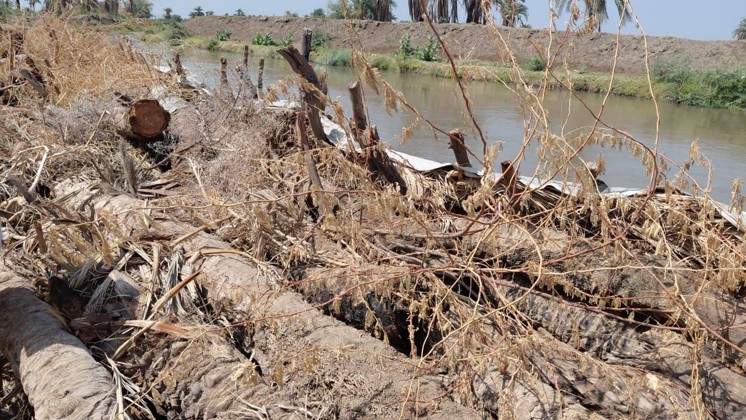
Despite limited resources, the community came into action. They rebuilt what they could: using old palm trunks as support columns, weaving palm leaves, gathering soil, organising labor through their clan system. They showed us how they even construct infiltration wells near the riverbank simple structures that cool and filter water for drinking when the river runs too muddy to use.
“We can do it,” another elder said. “But the river’s power is sometimes beyond our capacity. Still, we work. We organise ourselves. We don’t wait.”
A dike, maintained by the local community
He pauses, looking toward the damaged fields. When the river last breached the dike, it destroyed 120 hectares of land fields that families depended on. Then he adds quietly, “It would be better if our voices were truly heard. We are the beneficiaries. We live here. Sustainable dikes require our knowledge, our experience, our involvement.”
Later, another elder summarises it in a single sentence that captured the spirit of the community:
“If we wait for others, the river will move before they do. So we stand with our hands, our shovels, and our unity.”
Toward the silent edge of Awash and beyond
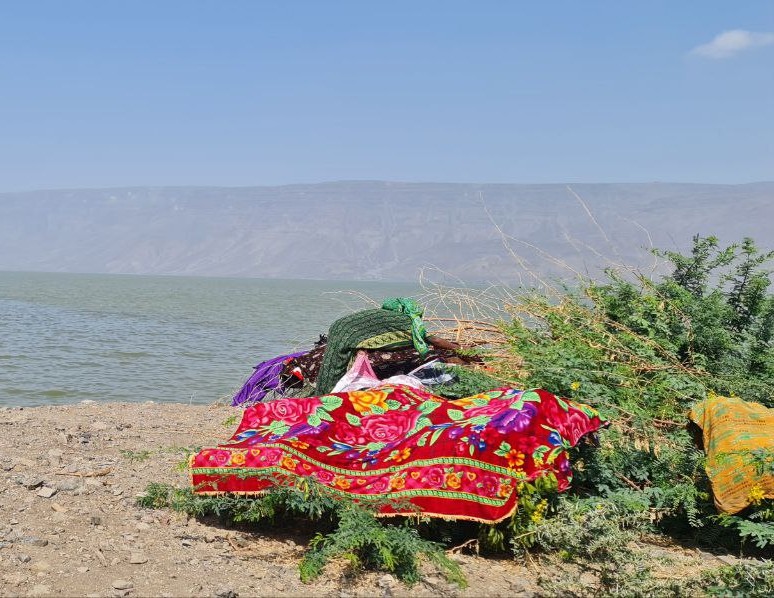
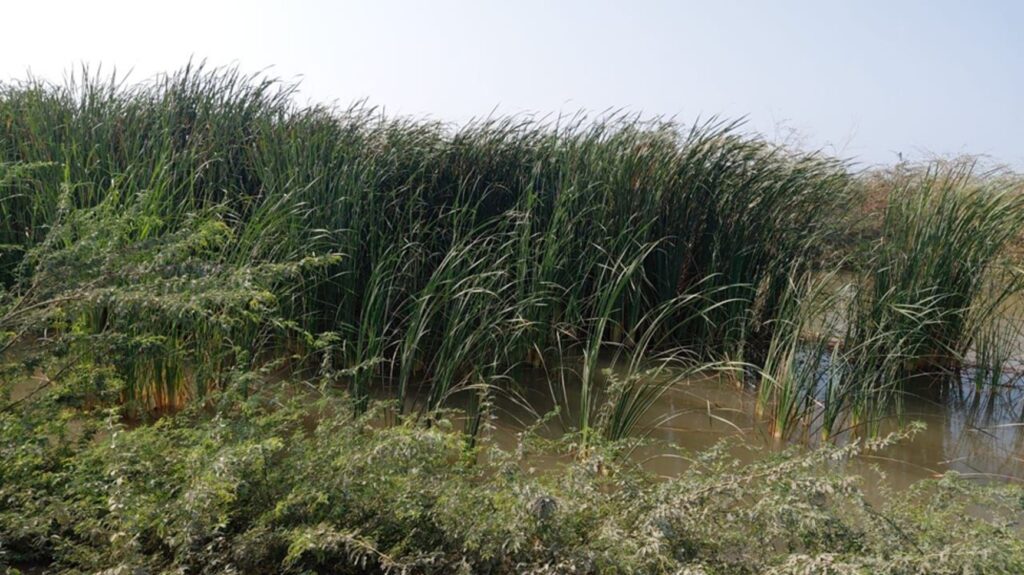
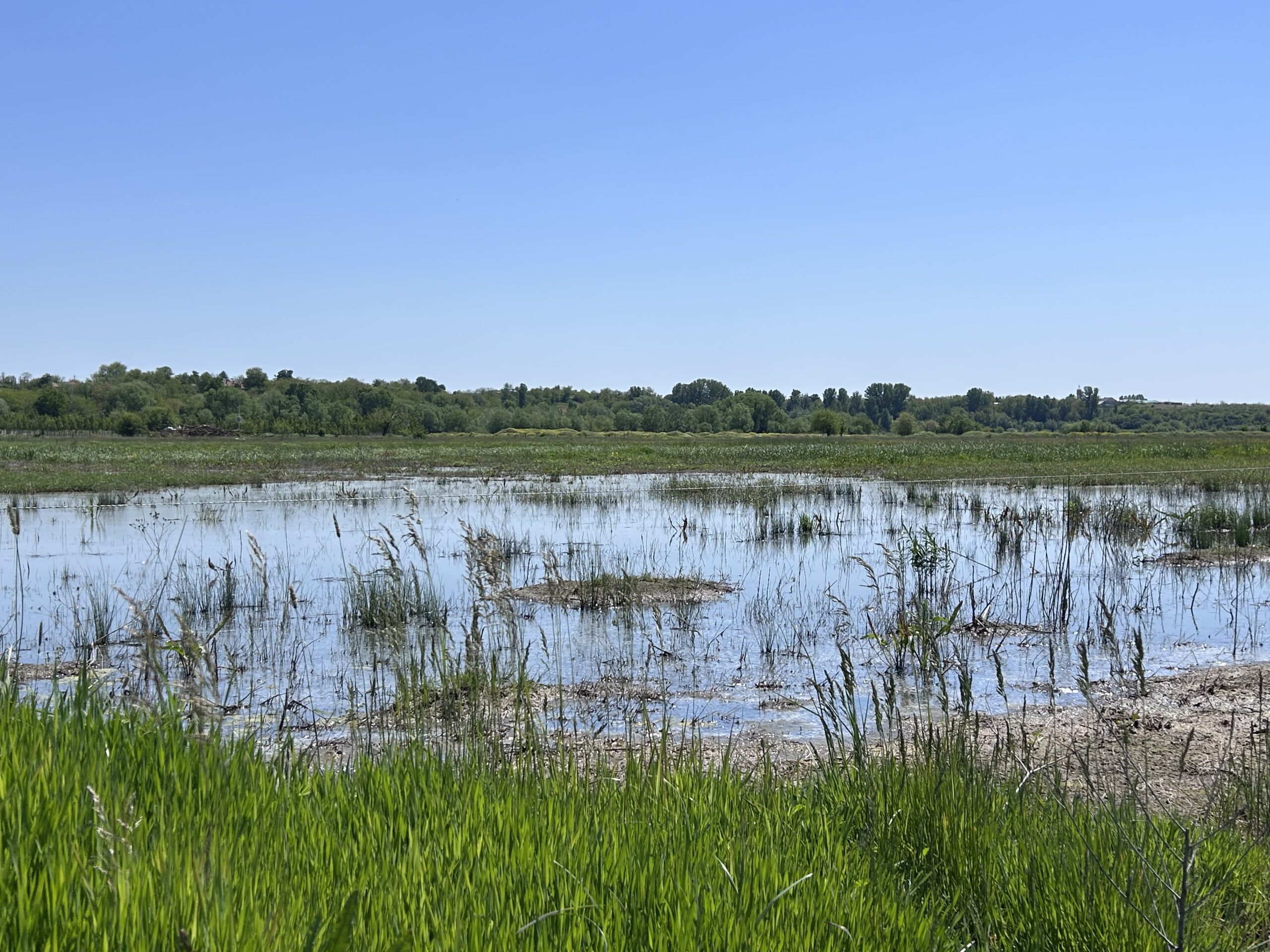
Later in the afternoon, our journey takes us further east, toward the far end of the Awash river where its long course empties into Lake Gemeri. The noise of the world slowly fades behind us. The wind settled. We see a vast wetland system that feels almost untouched. Tall grass sways. Birds hop, whistle, and dance between the reeds. Children splash near the shore, washing clothes and cooling themselves under the soft light. The entire setting feels like a healthy ecological pocket, an environment where water, land, and human life still move in harmony.
Lake Gemeri, where the Awash river ends, with a vast mountain range as a backdrop
Toward the Djibouti border where two countries meet
As we drive east near the Djibouti border, the elders point out riverbeds that had flowed decades earlier, but are now dry and silent. The terrain itself tells the stories, quiet but full of clues about past hydrological forces. Reaching the border feels like arriving at a natural T‑junction where two sisterly countries meet, connected by boundaries and shared history and intertwined livelihoods. The land here carries a peculiar stillness, yet the landscape speaks volumes about what once was and what could return if ecological systems are preserved and cross‑border cooperation strengthened.
A gesture of hospitality
On our return from the trip, the Woreda Water and Irrigation Head honours us with a warm and dignified lunch. The genuine and respectful and inclusive hospitality, beautifully accommodated both Muslim and Christian customs around the same table. It was more than a meal; it was a cultural bridge, a symbol of unity and shared purpose.
From the eroded dikes maintained through local governance, to the peaceful wetlands of Lake Gemeri, to the striking silence of the Djibouti border every place revealed something deeper. It showed how water shapes lives, cultures, economies, and ecosystems. And how communities, even with limited tools, hold centuries of knowledge about adapting, surviving, and sustaining their environment.
Day 2. A landscape of opportunity and challenge: the Dubti–Tendaho corridor
As we continued our journey through the Dubti–Tendaho area, the landscape opened into a wide expanse of plains—fertile land once shaped by the Awash River’s seasonal floods, now increasingly transformed for modern irrigation. The Tendaho Dam, standing upstream, offers immense potential: stabilizing flows, supporting wheat production for national programs, and enabling large-scale commercial agriculture. Well,‑organized settlements stretch along the plains, inhabited by both local Afar communities and technical staff working in the sugar estate. Compared to the downstream basin, this area feels more developed equipped with irrigation infrastructure, accessible roads, and visible signs of agricultural ambition.
But the picture is not without its complexities. Salinity patches shimmer on some fields, a warning of long-term soil stress. Market chains remain uncertain, and many farmers worry whether the available water will be enough once the entire command area becomes fully cultivated. Downstream users raise similar concerns: how will dam releases be managed, how will maintenance be ensured, and what happens during peak flood months when the river challenges even the most carefully engineered systems?
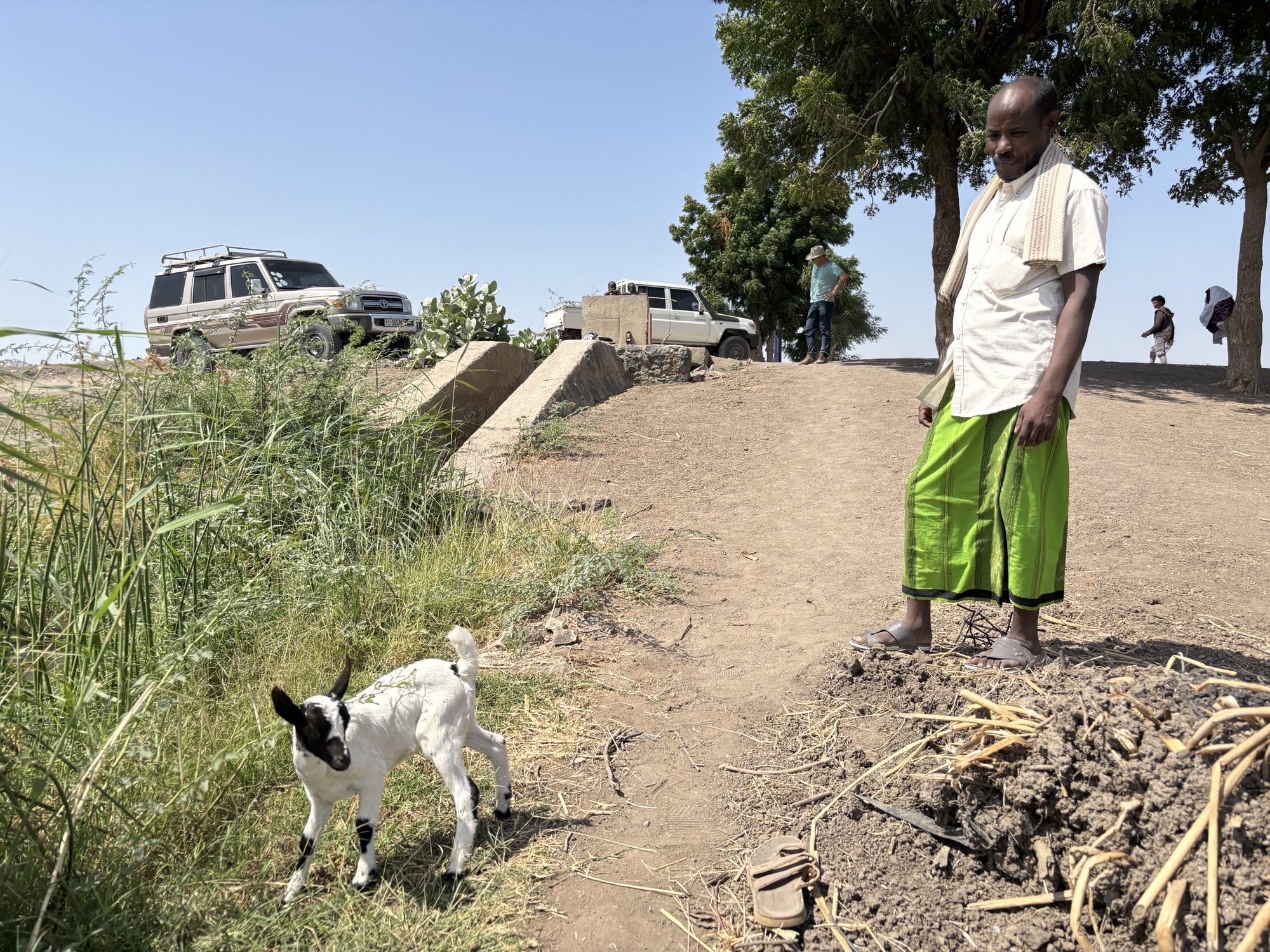
A man and his young goat along the roadside, a typical sight in daily rural life
Along the roadside, we encountered a man carrying a tiny goat only a few weeks old tucked in the crook of his arm, heading to the market. The sight startled my Dutch colleagues, yet for the locals it was an ordinary expression of daily life, resilience, and livelihood strategies rooted in pastoral culture.
The Woreda office head, proud of the region’s potential, walked us through the area with great enthusiasm. He emphasized that with proper water administration, Dubti could become a model of modernized agriculture in the Awash Basin. We observed aqueducts, concrete turnouts, and well-designed irrigation structures—evidence of thoughtful engineering. Yet many secondary canals were clogged with weeds, and silt had begun to accumulate in key distribution points. Water allocation remained inconsistent, and communication between upstream operators, district technicians, and water users was often fragmented.
The weeds are claiming the canals
“For now, the water is enough,” one technician explained, “because much of the irrigable land is still idle. But once everything becomes active, water stress will be inevitable.” His words reinforced the urgency: this is precisely the time to establish a strong, coordinated water administration system—one capable of balancing demand, measuring abstraction, planning releases, and protecting both upstream and downstream users.
The Dubti–Tendaho corridor stands at a crossroads. Its potential is undeniable, but so are its risks. And as we drove onward, past fields of wheat, over canals lined with grass, and through communities carrying both hope and uncertainty, it became clear that the future of this landscape will depend not only on infrastructure, but on governance, communication, and a shared commitment to sustaining the river that runs through them all.
A basin at a crossroads
Across the basin, evidence of stress within the environment was impossible to miss:
uncontrolled abstraction
unpredictable floods
longer dry spells
rapid irrigation expansion
land‑use change
Challenges now coexist with opportunities: invasive species spreading, salinity quietly expanding, grazing lands shrinking, yet markets opening, knowledge growing, and communities adapting in real time.
Everything seen, heard, and felt in these two days settled deep in the hearts of the team members. Heading into the workshop in Semera, all carried dust on their shoes – and the voices of the people in their minds.
The Semera workshop
When the participants entered the Yangudi International Hotel for a workshop to discuss the issues they had witnessed during their field visit, the atmosphere felt heavy with responsibility, yet earnest and quietly hopeful, as if everyone sensed that the next hours could shape the basin’s future. Around the room, familiar faces carried their own stories: the Branch Office Head whose eyes reflected years of navigating the basin’s pressures, Afar Bureau officials standing firm in their determination to advocate for their communities, and the Dutch water experts, humbled by the realities they had witnessed during the field visit, now ready to listen, learn, and to navigate collaboration points. This wasn’t a meeting, it was a crossroads.
Partnership manager Rens Huisman opened with the message that set the tone: “Fair share for all”, the motto of the Blue Deal Awash Partnership in water allocation and an aspiration carried from the fields into the conference hall.
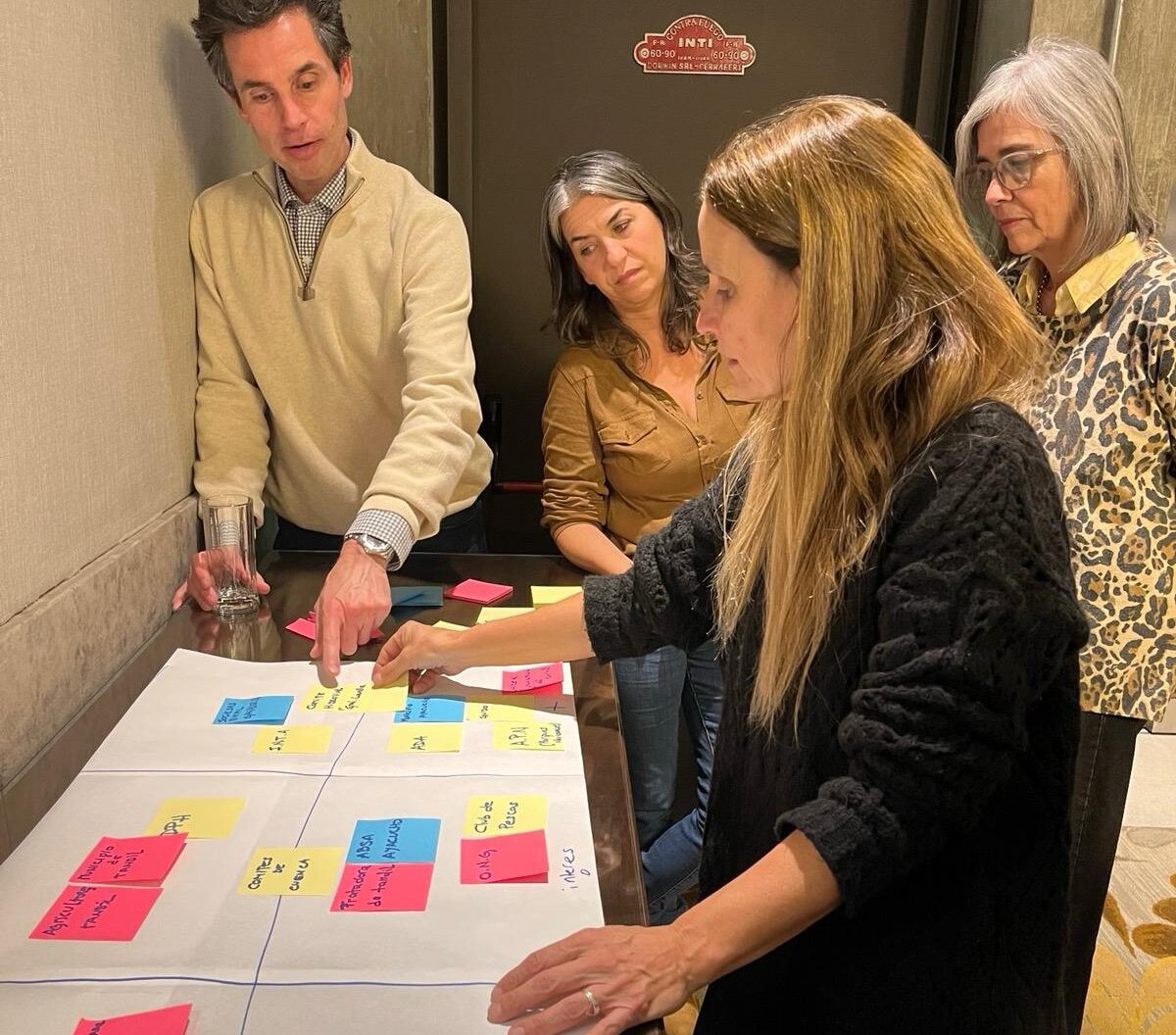
As each partner spoke, the room shifted from presentations to confessions, confessions of gaps, of failures, of the collective desire to do better: That data was missing. That institutions were overstretched. That customary law held wisdom regulators had yet to honor. That downstream voices had remained too quiet for too long.
Yet beneath those confessions was something powerful: a shared willingness to rebuild trust, to learn from mistakes, and to move forward together. And as groups formed around tables, the energy transformed. Maps were spread out, markers uncapped, hands animated. The fatigue of travel and long field days melted into lively argument and laughter.
One group spoke passionately about building IWUAs – “not as paperwork, but as bridges between conflict and cooperation.”
Another debated the need for real-time monitoring—“data means nothing unless the farmer understands what it means for tomorrow’s irrigation.”
A third group dreamed of universities stepping into the heart of basin issues -“because knowledge must stand shoulder-to-shoulder with communities.”
Slowly, the chaos turned into clarity:
From data to integration
From voices to inclusion
From institutions to collaboration
The basin’s story, once fragmented, began to weave itself into a shared narrative.
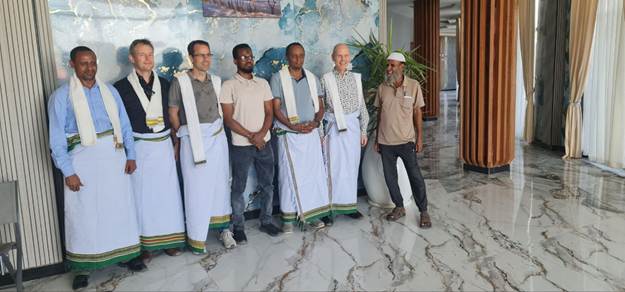
A Moment That Became a Memory As the workshop drew to a close, an unexpected moment unfolded. Officials from the Afar Water and Energy Bureau stepped forward carrying beautifully folded traditional Afar cultural clothes. When they placed the garments on the Dutch team embroidered, warm, symbolic the reception space fell silent.No slide, no graph, no report could have spoken louder. It was a gesture that meant:
“You have walked our land. You have listened to our people. Now you are part of our story.”
In that moment, the partnership transcended technical roles. It became human. A commitment sealed not by signatures, but by respect.
The team in Afar cultural cloth
What the basin needs now: recommendations emerging from the journey
The conversations with elders, officials, irrigators, pastoralists, and technical staff made one message unmistakably clear: sustainable water allocation cannot be engineered from an office desk alone. It must be built from the ground up through understanding, coordination, trust, and shared responsibility.
The basin now needs:
A deeper understanding of the whole system: Not just hydrology, but the social, economic, and cultural systems that shape water decisions. Both natural flow processes and human‑made dynamics must be understood together, not separately. Clear mapping of users and institutions: Who takes water, where, when, and under what rules? Without clarity, fairness becomes impossible and conflict becomes inevitable. A governance system built on connection, not competition: Formal and informal systems must not stand in parallel lines. They must intertwine, share information, and build a collaborative culture from basin to kebele. Recognition of customary governance: Systems like maa’da are not informal gaps in governance they are functioning structures that guide daily life. Any water‑allocation system that ignores them will fail before it begins. Bridges between clan structures and formal IWUAs: These two systems do not have to compete. In fact, the basin’s stability relies on them connecting, coordinating, and reinforcing one another. Transparent communication on Tendaho Dam releases and administration: Communities repeatedly raised concerns about unpredictable flows. Clear, timely, and open communication must become standard practice. Reliable measurement at abstraction points: Without accurate data, there can be no planning, no fairness, and no accountability. Protection of ecological flows and pastoral grazing zones: Wetlands, lakes, and floodplains provide life far beyond their borders. Protecting them is not optional—it is foundational for long‑term sustainability. Climate smart agriculture and livelihood improvement
*Many thanks to Tegenu Zerfu, Regional programme manager in the Blue Deal Ethiopia Awash partnership, for sharing his story.*
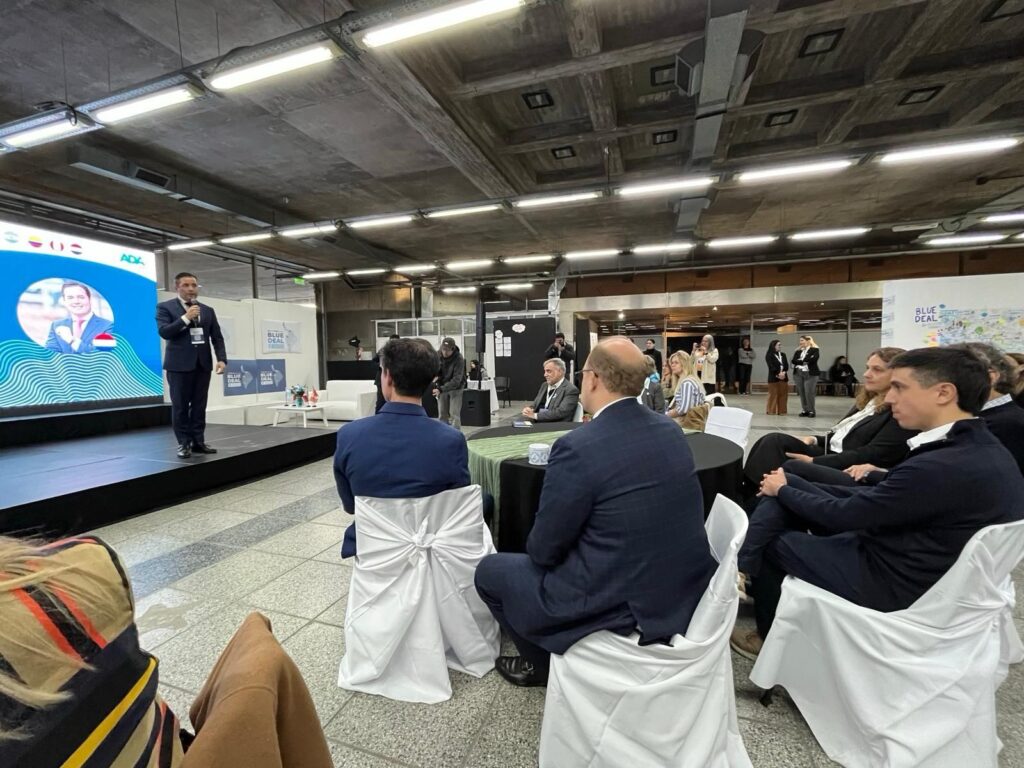
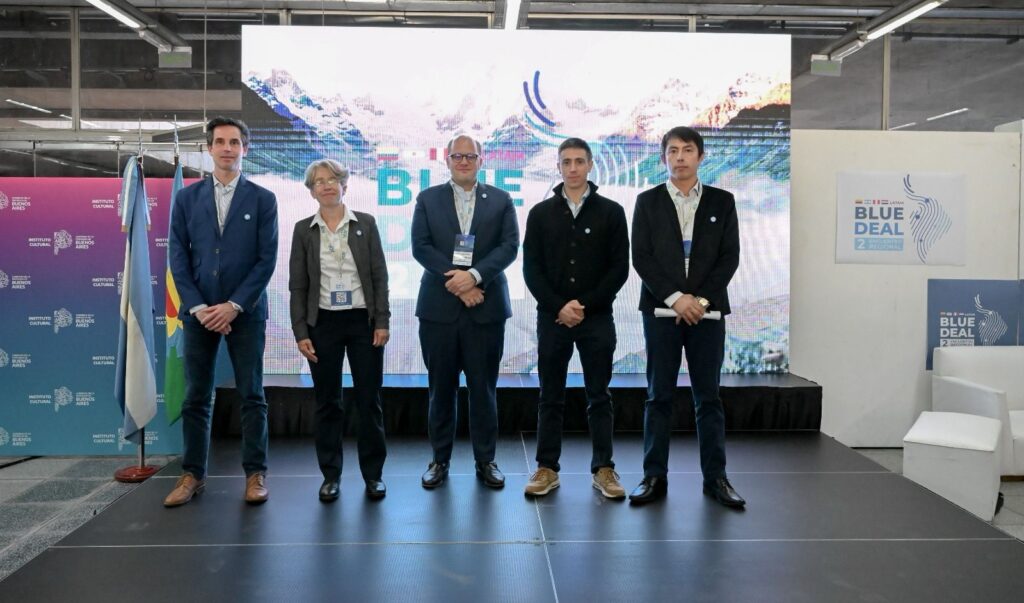
In May, partners from the Blue Deal programmes in Argentina, Colombia and Peru came together in La Plata (Argentina) for a week of exchange, reflection and collaboration at the second regional conference for the Latin American Blue Deal partnerships.
Multi-annual plans in the making
The first days were dedicated to developing the multi-annual plans of Colombia and Argentina for the final phase of the programme (2027–2030). The focus was clear: not doing more, but working more and better together – strengthening results, increasing impact and ensuring sustainable change.
During the multi-annual plan session, the team members looked ahead at the last phase of the Blue Deal programme.
In the second half of the week, the programme expanded into a regional conference, additionally bringing in partners from Peru. Together, we explored key themes such as data-driven decision-making, participatory monitoring, water funds, collaboration with knowledge institutes, and the power of regional networks. There were also presentations of two of the chairs of Dutch water authorities involved in the Latin American Blue Deal partnerships: Erik de Ridder (Chair / watergraaf of water authority de Dommel) and Joris Bengevoord (Chair / dijkgraaf of water authority Brabantse Delta).
Erik de Ridder, Chair (watergraaf) of water authority De Dommel presents at the conference
Alongside the technical sessions and strategic discussions, the conference also highlighted the important role of the Young Expert Programme (YEP) in strengthening water sector capacity across the region.
Active involvement from the Young Experts
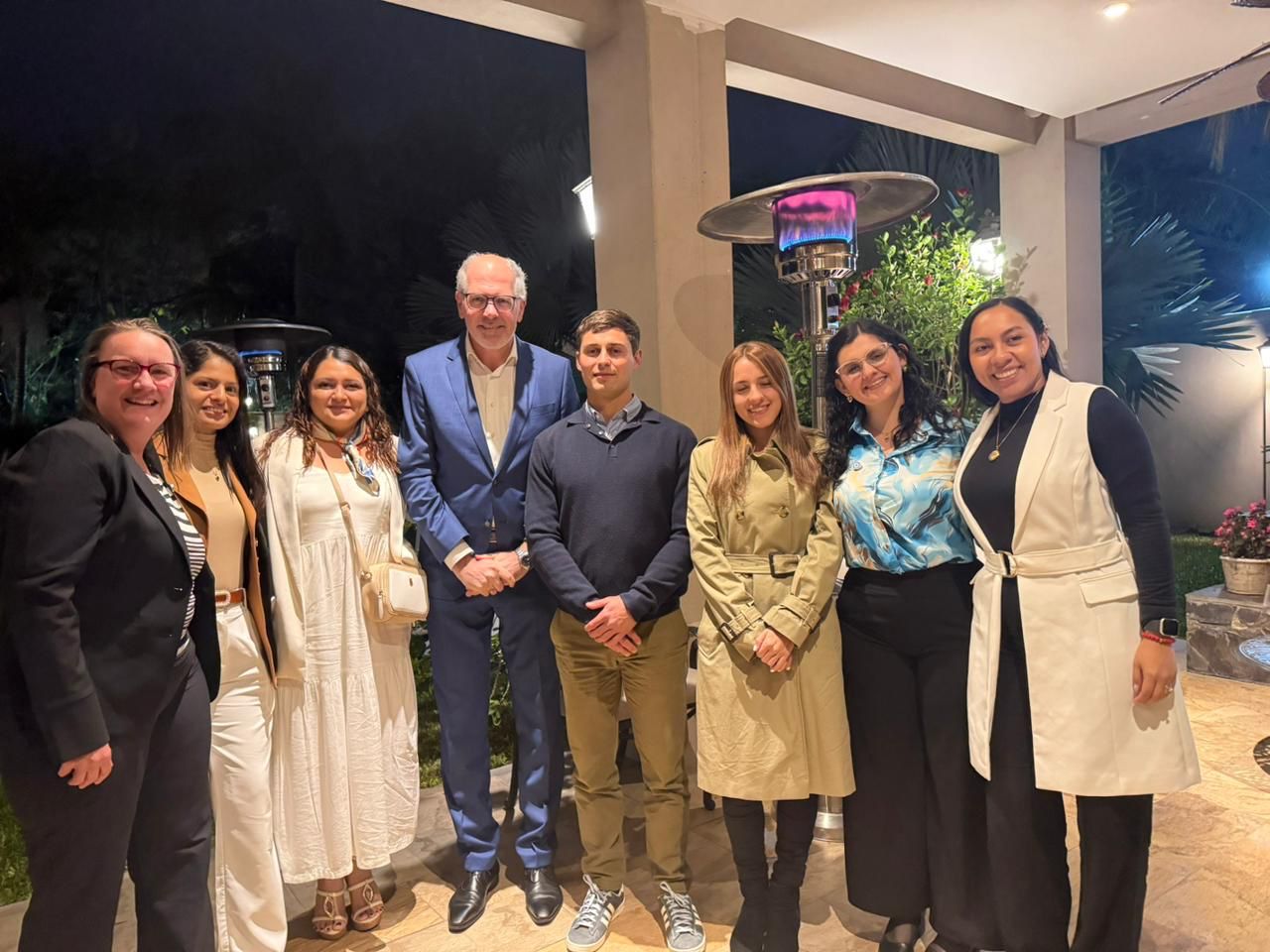
Six Young Experts (YEP: Young Expert Programmes) from Argentina, Colombia and Peru played an active and highly visible role throughout the conference, demonstrating how young professionals are helping to shape the future of sustainable water management in the region. The Young Experts not only connected, exchanged experiences, and reflected on challenges and progress in their respective regions, but also helped shape the event through a range of substantive and practical contributions.
Beyond this formal contribution, the Young Experts helped energise and animate the event. They took on the role of Blue Deal Sports reporters, bringing a dynamic and engaging perspective to the programme. In addition, they supported the facilitation of the serious game on Integrated Water Resources Management (IWRM), guiding teams and stimulating discussion.
Their involvement extended beyond the event itself. During the reception hosted by the Dutch Ambassador in Argentina, the Young Experts showcased to the embassy the impact of their participation in the YEP programme, sharing personal stories about what they have learned and accomplished and how they are contributing to sustainable water management in their countries.
The Young Experts meet with the Dutch Ambassador in Buenos Aires, Argentina
The week builds on earlier regional exchanges, including the Blue Deal LATAM meeting in Peru (October 2025). These moments of learning and connection are essential for tackling complex water challenges — from basin governance to stakeholder engagement.
Together towards lasting impact
The week in La Plata demonstrated how the Latin American Blue Deal partnerships are evolving from individual country programmes into a stronger regional network. By working together on multi-annual plans, exchanging knowledge across borders and investing in the next generation of water professionals, partners are laying the foundations for lasting impact beyond the programme period. From basin governance and stakeholder engagement to innovation and capacity development, the challenges facing the water sector are complex and interconnected. Addressing them requires collaboration, trust and continuous learning. The regional conference showed that these elements are firmly in place, strengthening not only individual partnerships but also the wider Blue Deal community across Latin America.
Leadership from Blue Deal and local Blue Deal partners came together at the regional conference
During a bilateral panel in Craiova, Dutch and Romanian water leaders visited key Blue Deal project sites, highlighting progress on drought resilience, river restoration and long‑term cooperation.
“We have moved beyond talking about issues.” With these words, Willemijn van Haaften, Ambassador of the Netherlands to Romania, opened the 12th bilateral Dutch–Romanian Panel on Water Management. The meeting took place on 4 and 5 May in Craiova, a city along the Jiu River in Romania’s Oltenia region, situated between the Southern Carpathians and the Danube.
Since the launch of the Blue Deal programme, the bilateral panel has also served as the steering committee for the four Blue Deal projects in Romania. One of these projects, Tackling Drought, focuses partly on the so‑called Oltenian Sahara (Sahara Olteniei). This area, between Calafat and Dăbuleni, is affected by severe land degradation and desertification, impacting an estimated 80,000 to 100,000 hectares. The Blue Deal project aims to identify sustainable pathways to address these challenges.
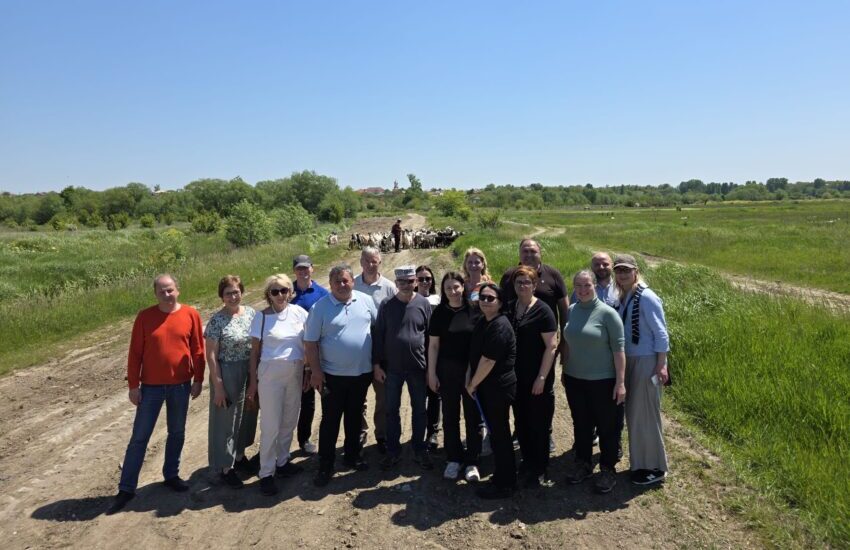
The Dutch delegation in Romania
Broad representation from water authorities
The panel was chaired by Luzette Kroon, dijkgraaf of Dutch water authority Wetterskip Fryslân. The Dutch delegation also included Marjon Verkleij, board member of Rijnland Water Authority, and Josette van Wersch, executive board member of Waterschap Limburg. In addition to representatives from Romania’s Ministry of Water, participants from Moldova were present. As an EU candidate country, Moldova is in the process of aligning its water legislation with European standards and is actively seeking best practices.
Key challenges in Romanian water management
During the meeting, the Netherlands embassy presented an overview of the current state of water management in Romania. At present, only 77% of Romanian households are connected to a public water supply. By 2030, authorities hope to reach 100%, but this represents a major national challenge. The total investment needed for drinking water and wastewater infrastructure is estimated at over €30 billion.
Sorin Rîndașu, Deputy Director at the Romanian Ministry of Water, highlighted that while European funding is available, there are ongoing challenges related to the absorption and effective use of these funds.
Field visits: reservoirs, irrigation and drought resilience
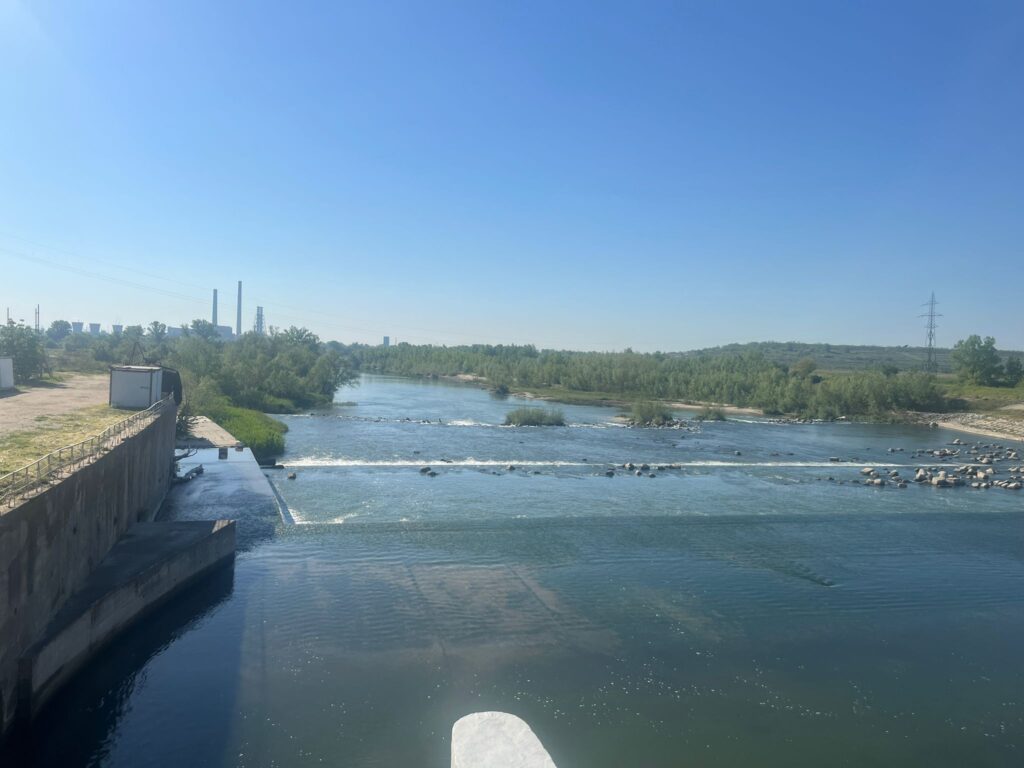
On the second day, the delegation visited several project locations, including the Isalnița reservoir on the Jiu River, a tributary of the Danube. The reservoir previously supplied cooling water to a coal‑fired power plant downstream. Following the decommissioning of the plant in line with the Paris Agreement, opportunities have emerged to use this water more effectively for agriculture.
Within the Tackling Drought project, the Blue Deal partnership has advised that water abstraction for irrigation from the Isalnița reservoir is more sustainable than current withdrawals from the Danube, as the reservoir is located at a higher elevation.
Another site visit focused on the Corabia–Sadova irrigation scheme, located on the left bank of the Jiu. Developed in the 1960s, the system consists of concrete channels pumping Danube water uphill over a height difference of approximately 160 metres. Originally designed to irrigate 70,000 hectares of agricultural land, the system has suffered from decades of underinvestment, as full rehabilitation would be energy‑intensive and unsustainable.
The Corabia–Sadova irrigation scheme, located on the left bank of the Jiu
The Corabia–Sadova area falls under two regional water authorities, Apa Jiu and Apa Olt. Within the Blue Deal project, it has been recommended to partially rehabilitate the irrigation system within the Apa Jiu district, while allowing space for reforestation in the northern sections.
Nature restoration in the Jiu Valley
The delegation also visited the Jiu Valley, a Natura 2000 protected area encompassing the Jiu River and its tributary, the Jiet (Little Jiu). The Dutch Water Authorities (Unie van Waterschappen) is an associate partner in the EU Interreg project Interlink Hard, which focuses on river and ecosystem restoration.
Planned measures include restoring river meanders, creating floodplain areas designed for pollinators, removing vegetation barriers to improve fish migration, and reconnecting the Jiu River with the parallel Jiet River. This reconnection is expected to prevent the Jiet from drying out during late summer.
The Interreg project, with a total budget of €3.5 million, will also involve deep borehole investigations to better understand groundwater conditions and soil composition. These data are highly relevant for the Blue Deal Tackling Drought project, as they will contribute to a more robust assessment of the water balance in the Jiu basin.
The Jiu river valley
Looking ahead: ensuring continuity of the Blue Deal partnership
During the panel discussions, participants also reflected on the importance of ensuring long‑term continuity for the Blue Deal partnership in Romania, particularly in light of changes in the funding landscape expected after 2028. The coming years will therefore focus on aligning shared ambitions, partnerships and financing arrangements to support the continued implementation and scaling up of results.
By combining national cooperation, EU programmes such as Interreg and the commitment of participating water authorities, the Dutch–Romanian partnership aims to build on the progress made so far and continue advancing climate‑resilient and sustainable water management in the years ahead.
Manage Consent
To provide the best experiences, we use technologies like cookies to store and/or access device information. Consenting to these technologies will allow us to process data such as browsing behavior or unique IDs on this site. Not consenting or withdrawing consent, may adversely affect certain features and functions.
Functional
Always active
The technical storage or access is strictly necessary for the legitimate purpose of enabling the use of a specific service explicitly requested by the subscriber or user, or for the sole purpose of carrying out the transmission of a communication over an electronic communications network.
Preferences
The technical storage or access is necessary for the legitimate purpose of storing preferences that are not requested by the subscriber or user.
Statistics
The technical storage or access that is used exclusively for statistical purposes.The technical storage or access that is used exclusively for anonymous statistical purposes. Without a subpoena, voluntary compliance on the part of your Internet Service Provider, or additional records from a third party, information stored or retrieved for this purpose alone cannot usually be used to identify you.
Marketing
The technical storage or access is required to create user profiles to send advertising, or to track the user on a website or across several websites for similar marketing purposes.