"Ce partenariat est sincère!” (This is a genuine partnership) With these words, Mr. Drissa Traoré, Technical Advisor to the Minister of Environment, Sanitation and Sustainable Development of Mali, closed a productive week of exchange and reflection on Friday 19 June.
From 15 to 19 June, a high-level delegation from ANGESEM, led by Director-General Mrs Doussouba Doumbia, visited the Netherlands. Accompanied by Mr Drissa Traoré, Mr Moumouni Damango (Embassy of the Kingdom of the Netherlands in Bamako) and colleagues from SNV Mali, the delegation reviewed progress within the Blue Deal partnership, exchanged management experiences and explored opportunities to further strengthen collaboration with its Dutch partners.
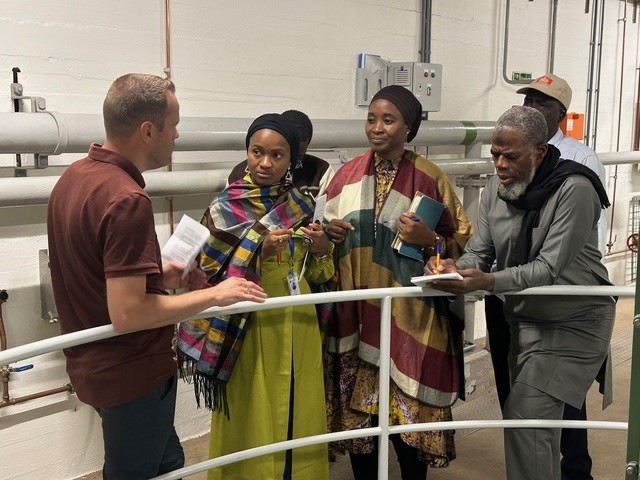
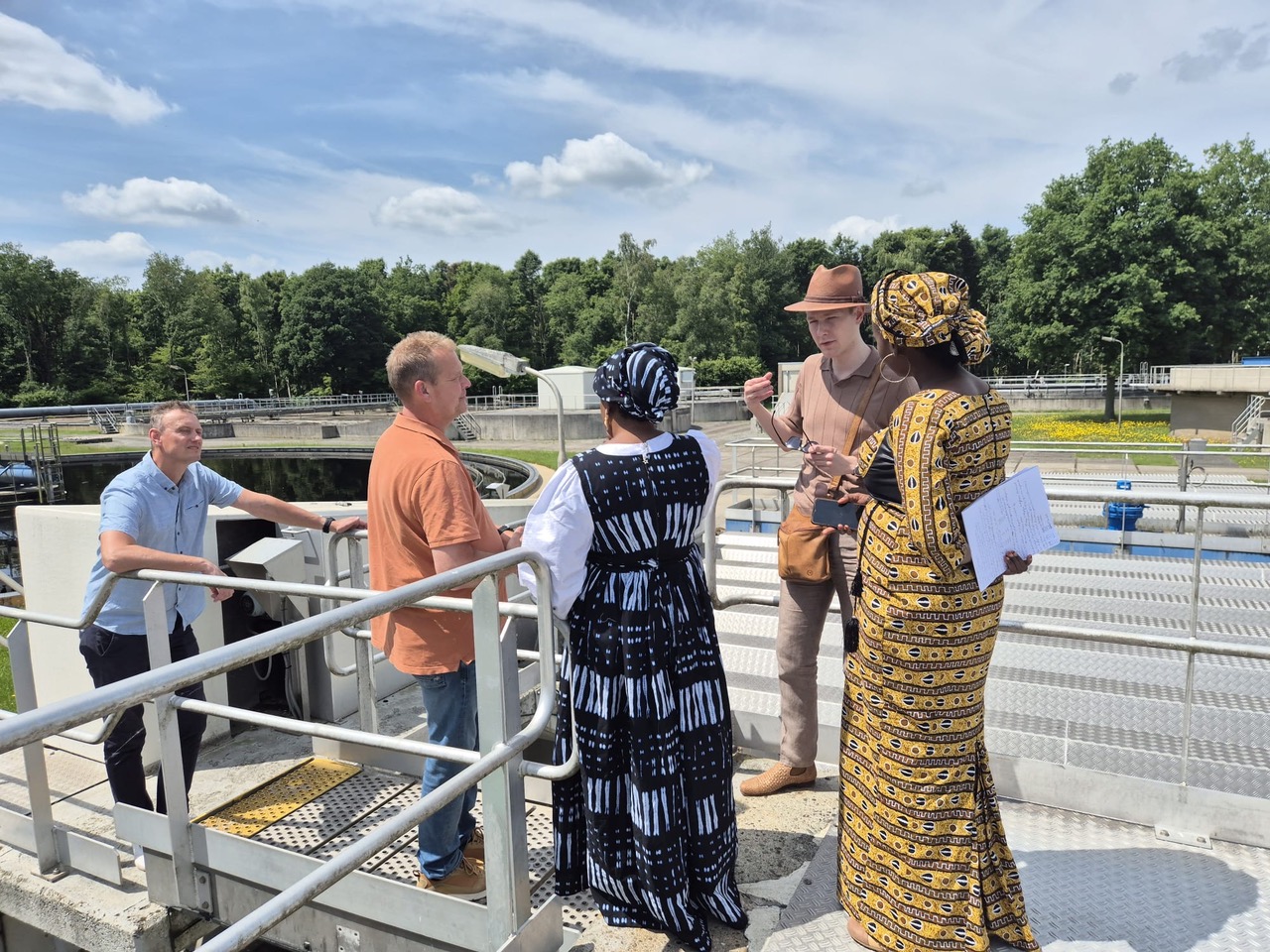
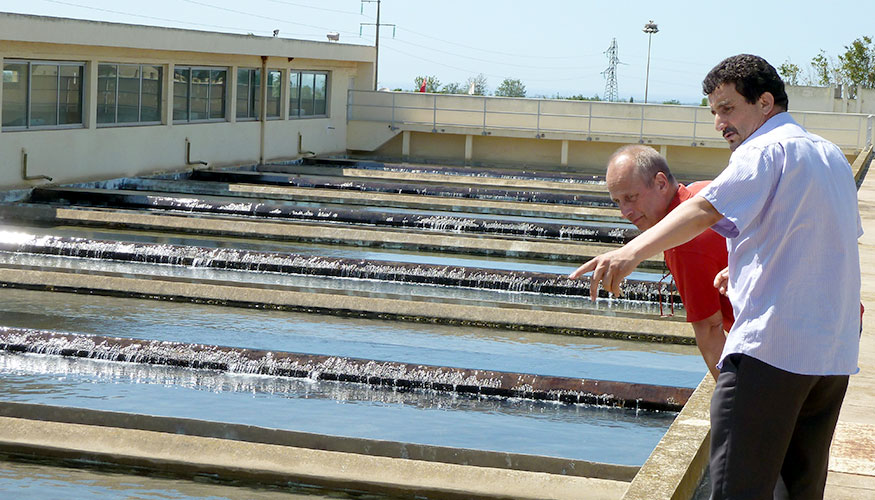
A site visit to the wastewater treatment plant of Noorderzijlvest
During meetings with the Blue Deal Office, the Ministry of Foreign Affairs, RVO and several Dutch water authorities, partners reflected on achievements to date. Alongside the expected results, it was positively noted that the Mali partnership has generated a range of additional outcomes. Notable examples include the mobilisation of additional funding from UNDP (approximately €170,000), the engagement of GIZ, strengthened regional cooperation with Blue Deal Burkina Faso, and increased external income for the laboratory.
The visit also provided valuable opportunities for peer-to-peer learning. Exchanges between Dutch water managers and the ANGESEM leadership proved particularly relevant. Discussions with the Secretary-Director and board member (“heemraad”) of Zuiderzeeland focused on the role of organisational values in water governance. Site visits to the wastewater treatment plant of Noorderzijlvest and the laboratory of Hunze en Aa’s sparked enthusiasm and offered practical inspiration for future application in Mali.
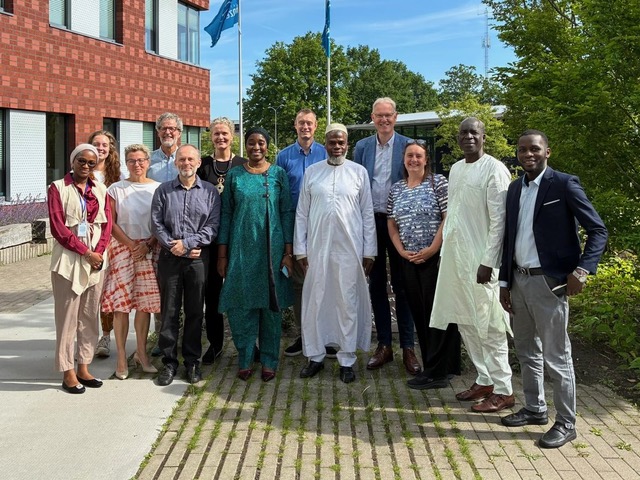
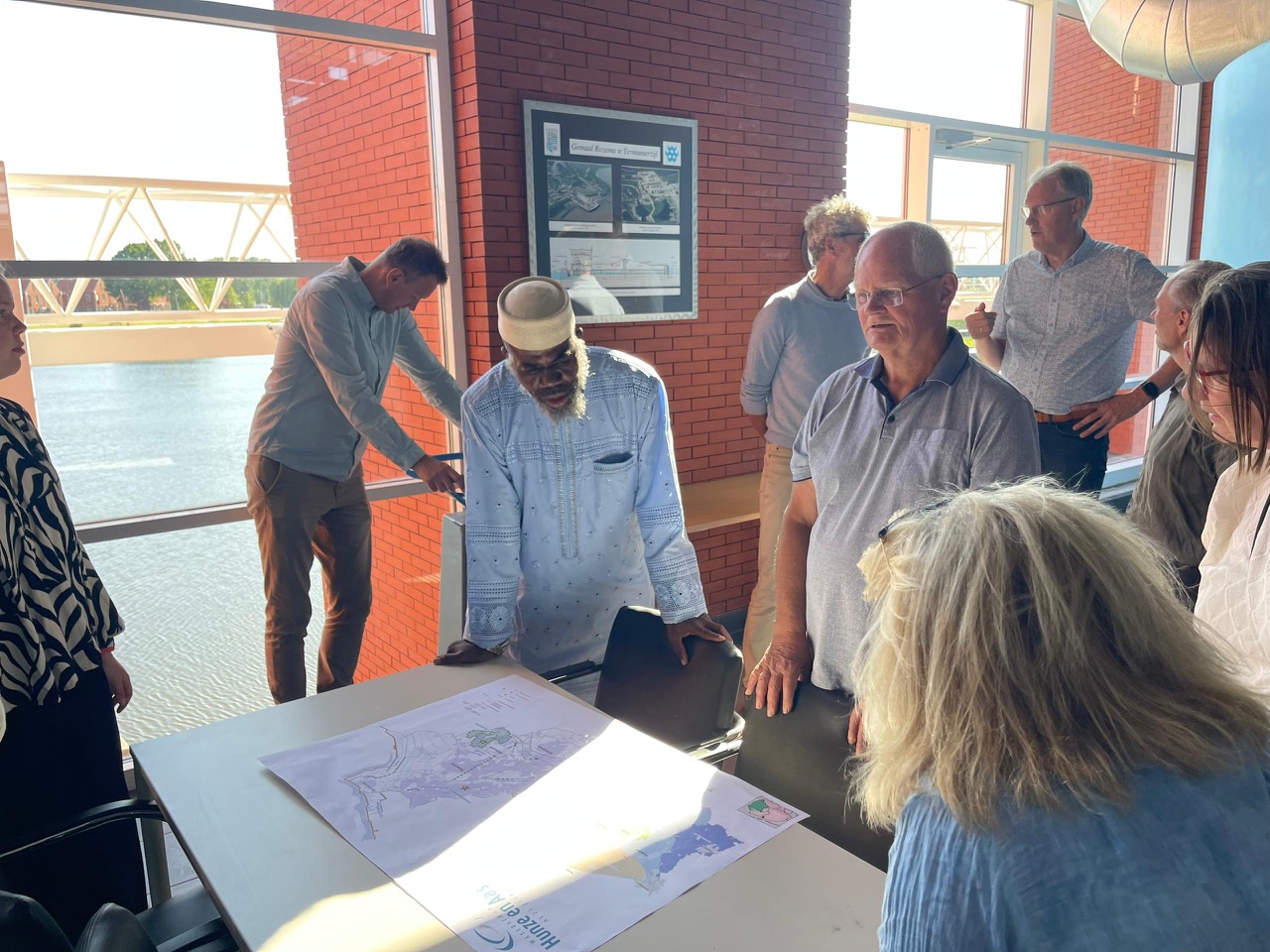
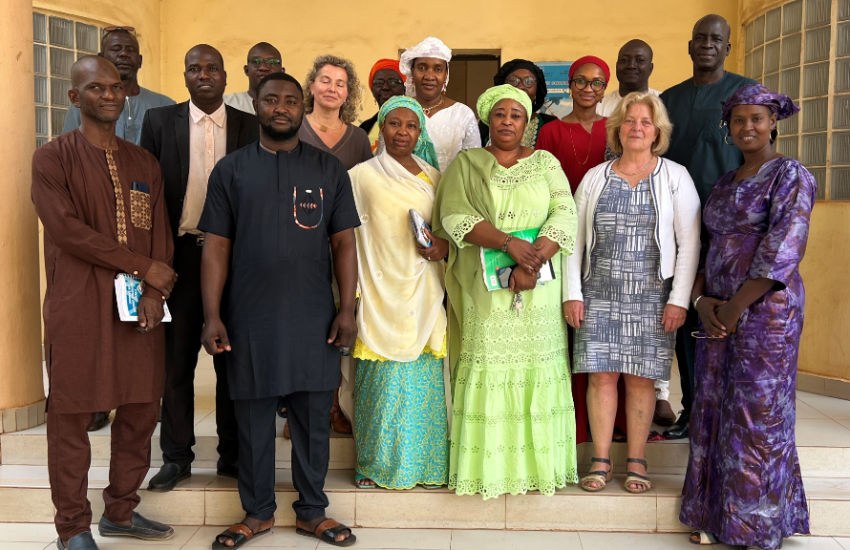
The delegation from Mali with Dutch partners at Hunze en Aa’s water authority
A key moment of the week was a strategic session at the offices of Water Authority Hunze en Aa’s, chaired by Geert-Jan ten Brink, ‘Dijkgraaf’ of Hunze en Aa’s water authority. Together with Dutch experts and partners, the Malian delegation explored the future of the partnership in an open and constructive dialogue. While the broader context remains complex and the outlook for external support requires careful navigation, partners demonstrated strong commitment and resilience. Hunze en Aa’s reaffirmed its support for the next phase, providing a solid basis to further engage partners and mobilise resources. Using the agreed vision on the way forward, the team will use this support of Hunze en Aa’s to engage additional partners and resources for the other topics and activities of the partnership.
Despite the challenges, the partnership continues to deliver tangible results and to build trust, knowledge and cooperation. As highlighted in the closing remarks of Mr. Drissa Traoré, this collaboration stands out as a truly genuine and forward-looking partnership.
In October 2025, three experts from Waterschap Rivierenland visited Bamako to support ANGESEM in strengthening its operational and organisational management.
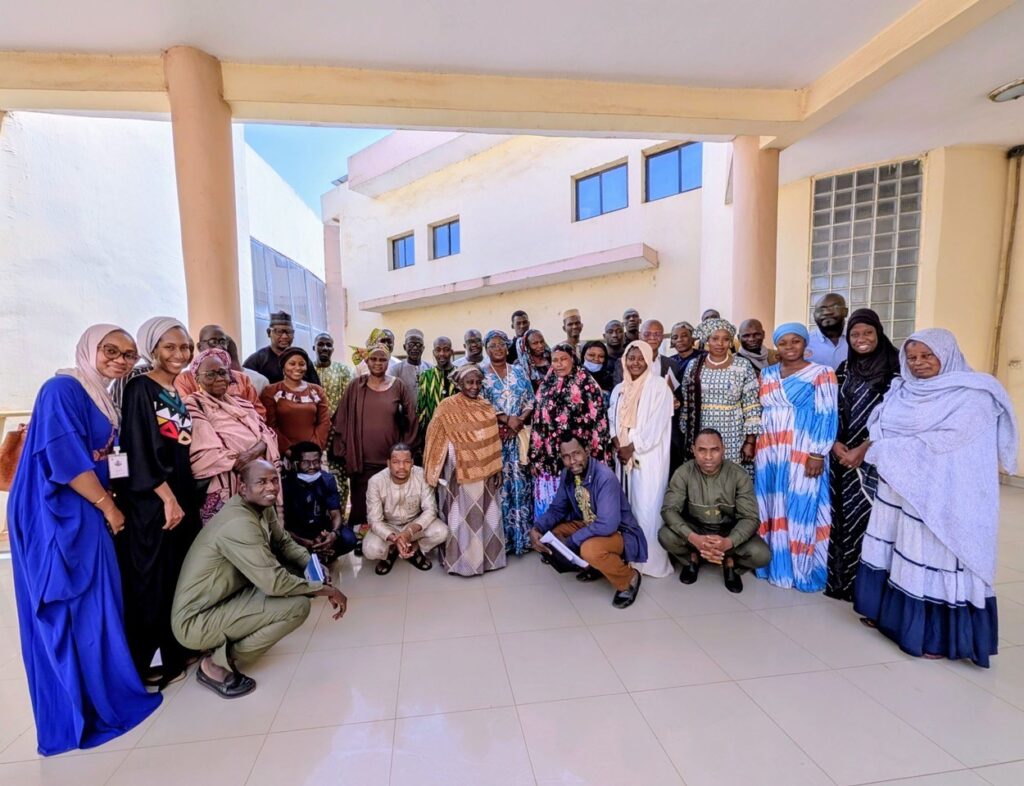
Group photo ANGESEM
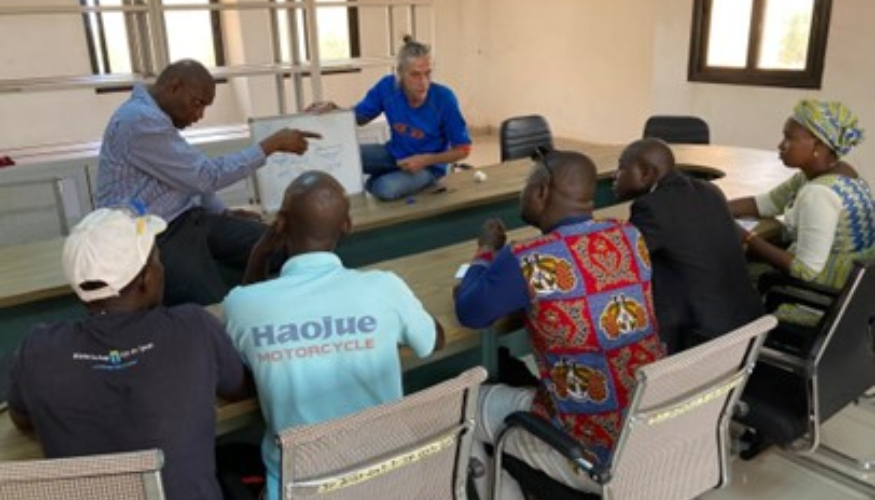
Through an interactive workshop, ANGESEM staff reflected together on the organisation’s values, teamwork, and leadership practices, with the goal of turning shared principles into concrete actions in daily work. The exchanges encouraged dialogue, mutual understanding, and team cohesion.
The workshop was enriched by the participation of a global SNV manager, who shared practical examples of values-based leadership. The mission also included discussions on future priorities and plans for 2026, helping set the direction for continued collaboration between the Blue Deal and ANGESEM.
This initiative marks an important step toward stronger, more effective management at ANGESEM, contributing to better public services and sustainable water management in Mali.
Cleaner dyeing for a healthier Niger river
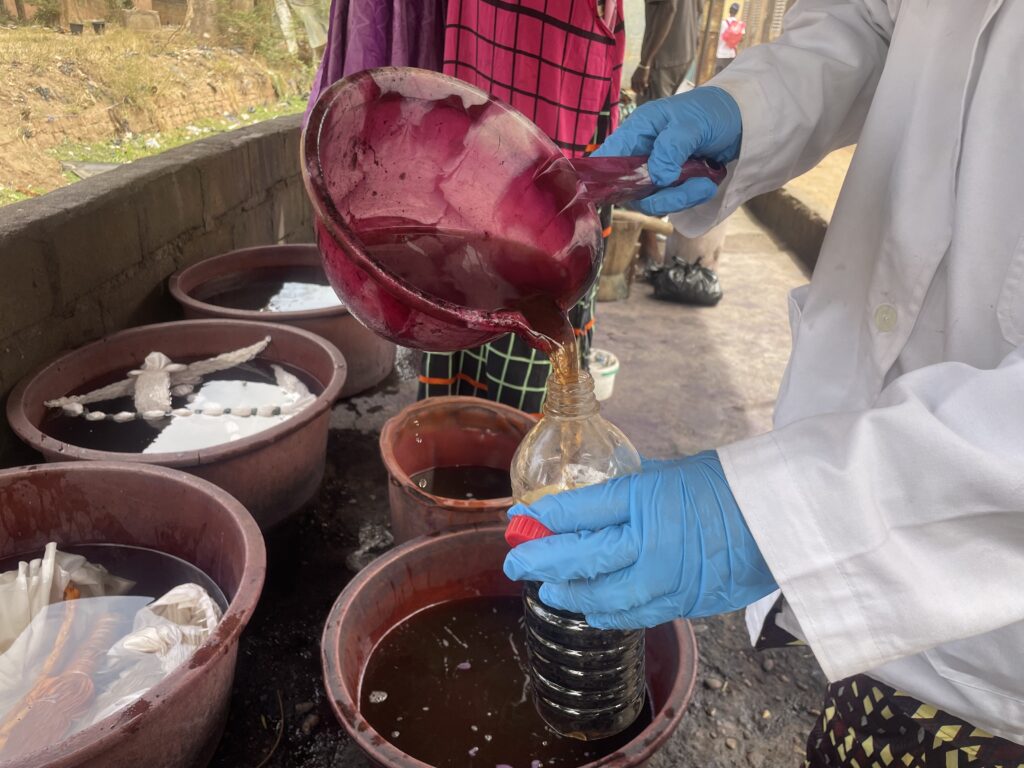
Artisanal dyeing is an important source of income in Bamako, Mali, especially for women. However, wastewater from dyeing activities is often discharged directly into the environment, contributing to pollution of the Niger River.
To address this challenge, the “Teinturerie” Pilot Project was launched by ANGESEM, in partnership with the Blue Deal programme, the Dutch Water Authorities, and SNV Mali. The initiative is financially supported by the Netherlands Enterprise Agency (RVO) and NWB Fund.
The Teinturerie project aims for environmental friendly approaches to managing wastewater from the dyeing factories.
The project works to reduce pollution, promote simple and sustainable wastewater treatment solutions such as helophytes, and support dyeing communities in adopting better environmental and hygiene practices. Field activities included mapping dyeing sites across Bamako, identifying pilot locations, and holding participatory workshops with dyers, local authorities, and technical partners.
In addition to the technical aspects of treating the polluted wastewater from the dyeing activities, the project also focuses on including the female entrepreneurs in the pilot. It is important that the entrepreneurs are involved in finding solutions that are sustainable from both the economic , social and environmental perspectives.
Entrepreneurial women at the heart of wastewater treatment from artisanal dyeing
Early 2026, female entrepreneurs attended a workshop as part of the “Teinturerie” Project to raise awareness and get engagement for this project, a spin-off of the Blue Deal activities in Bamako.
They shared water quality data results from ANGESEM’s laboratory highlighting the environmental and health impacts of untreated dyeing wastewater. Participants also learned about environmental regulations, their responsibilities, and the penalties for non-compliance. The session was highly participatory with dyers exchanging practices, suggesting solutions, and helping shape a future best practice manual while also discussing the project’s business plan.
What stood out most? Behind every dyeing basin are courageous women feeding families, creating jobs, and supporting the local economy. This was a strong first step in the collaborative approach of safeguarding traditional practices while preserving the environment and human health.
In June 2025, a delegation from Mali - including representatives from the Ministry of Sanitation, Environment and Sustainable Development, ANGESEM, SNV Mali, and the Embassy of the Netherlands in Mali - visited the Netherlands as part of the Blue Deal Mali partnership.
Exchange Mission to the Netherlands: Building ANGESEM’s Capacity The work visit focused on strengthening ANGESEM’s technical and organisational capacities through interactive workshops, site visits to wastewater treatment plants, and hands-on training. Laboratory technicians sharpened their skills at Waterschap Hunze en Aa, while operators gained practical experience at facilities managed by Hoogheemraadschap Hollands Noorderkwartier.
Pictured: Practical exchanges at Dutch wastewater treatment facilities
A leadership workshop hosted by Waterschap Rivierenland provided space to reflect on and improve ANGESEM’s management charter. Aside from these practical visits, the delegation also met with funders – Netherlands Enterprise Agency and NWB Fonds – to discuss the upcoming dyeing project supported by SNV Mali, with involvement from the Dutch Ministry of Foreign Affairs.
This exchange laid a strong foundation for more sustainable and efficient wastewater management in Mali.
Pictured:A visit to Dutch water authority Hunze en Aa
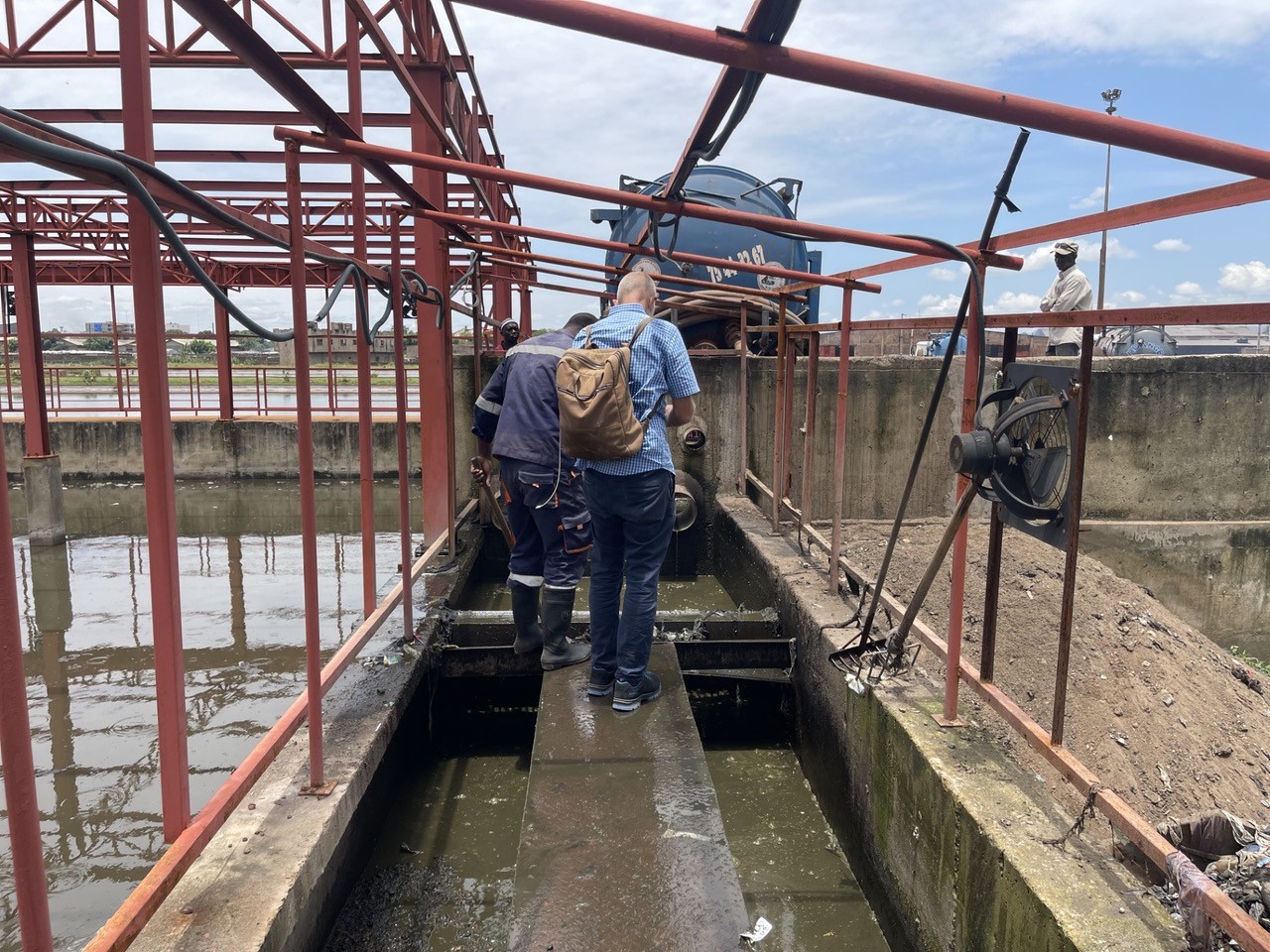
Expert Visit to Mali: Diagnostic Assessment of Bamako’s Treatment Plants To complement the exchange, Dutch wastewater expert Dirk Koot visited Mali from August 12 to 18, 2025, with support from PUM. His work visit involved a thorough diagnostic assessment of ANGESEM’s wastewater treatment plants in Bamako.
The visit concluded with a debriefing workshop, where key challenges and recommendations were shared with ANGESEM’s management, technical departments, and operators. These insights will be integrated into the ongoing Blue Deal partnership, helping to improve the sustainability and performance of sanitation infrastructure – ultimately benefiting both the population and the environment.
Pictured: Dirk Koot visits an ANGESEM wastewater treatment plant in Bamako, Mali
Senior staff of the partner organisation in Mali - the National Agency for the Management of Wastewater Treatment Plants of Mali (ANGESEM)- came together in February 2025 for a leadership workshop through the Blue Deal partnership.
Partnership Blue Deal Mali
During three days, the ANGESEM staff defined step-by-step the core values of ANGESEM. Paula Dobbelaar (DWA Rivierenland) and Caroline Figueres supported this workshop as part of the Mali partnership. The workshop also resulted in drafting a managerial charter aiming at strengthening governance and enhancing ANGESEM’s organisational culture.
Boost for laboratory activities Blue Deal Mali
The year 2025 has started off successfully for the Blue Deal Mali partnership. In January, a working visit to ANGESEM took place by a team from water authority Hunze and Aa’s, led by Geert-Jan ten Brink, the president of the water authority.
The main objective was to improve the operations of the water laboratory. Since the Mali partnership focuses on improving wastewater treatment for the city of Bamako, the ANGESEM laboratory plays a crucial role in better monitoring and enforcement of water quality.
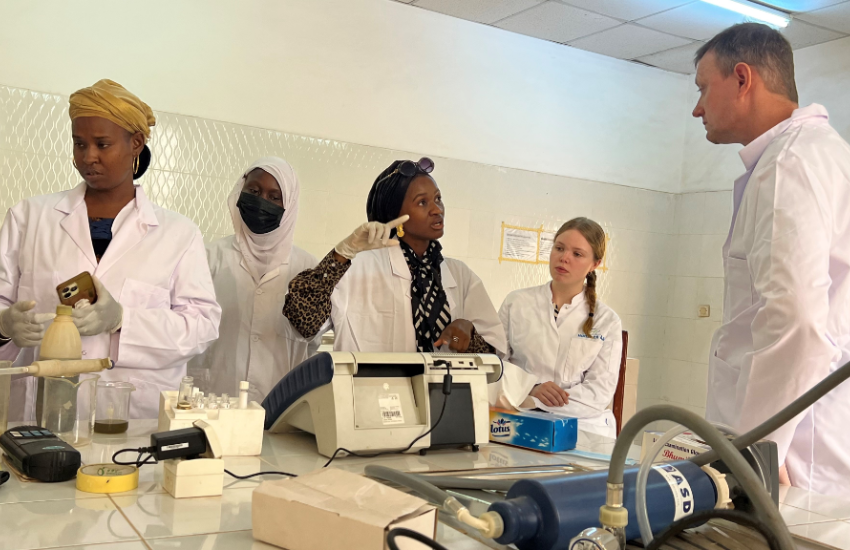
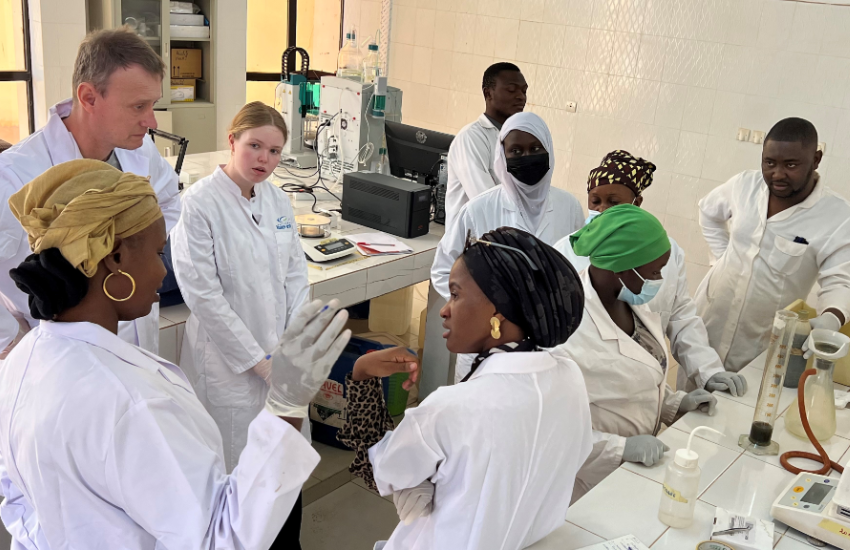
Robert Boonstra, head of the Hunze and Aa’s laboratory, and chemical physical analyst Manon Schaap, worked together with the highly enthusiastic colleagues from ANGESEM during the visit to improve water analyses, protocols, database usage, and on better reporting of laboratory results.
People working together in laboratory
The visit strengthened relationships with the embassy, the Ministry of Environment, Sanitation and Sustainable Development, and ANGESEM’s management. All parties are pleased that the Blue Deal restarted in 2024. This happened despite Mali’s challenging geopolitical situation, which makes cooperation difficult. Collaboration with SNV, which has a large local office, has shown that the partnership is safely and effectively structured. Therefore, the partnership is very meaningful and relevant.
Through the Blue Deal, Dutch Water Authorities works in 15 countries worldwide. Even in countries where intense conflicts sometimes arise. Like now in the Palestinian Territories, Mali, Ethiopia, and Burkina Faso. How and why does the Blue Deal continue to operate there? Water expert Frank Tibben says: "We continue to collaborate to improve access to sufficient, clean, and safe water. In good times and in bad."
“Can I travel safely to and from my home? Will I still see my family again after this training?” These are questions Duaa Matar asks herself before deciding to travel to the Netherlands for training at the end of November 2023. Matar is a Palestinian woman working as a Young Expert Professional (Yepper) for the Blue Deal. She lives and works in the West Bank, in the Palestinian Territories.
The interview takes place in a coffee shop in The Hague, the day before she heads back home. A surreal experience as she talks about the war situation in her country. “It’s like I stood outside of reality for 2 weeks. I felt guilty for not being in my homeland. Physically I was here, but mentally I was at home.”
Political situation has changed
The Blue Deal is the international programme of the 21 Dutch water authorities, the Dutch ministries of Foreign Affairs and Infrastructure and Water Management, and water managers worldwide. The goal: to improve access to clean, sufficient, and safe water for 20 million people worldwide. That’s why the Blue Deal has formed 17 partnerships with water managers in 15 countries.
“In some of these countries, the political situation looked different when we started with the Blue Deal,” explains Frank Tibben. He is responsible for collective intelligence and strategic relationships at World Waternet, which works for the Blue Deal on behalf of the Dutch water authority Amstel, Gooi en Vecht. Some of the areas they work for in the Blue Deal, include conflict regions. Tibben also serves as the partnership manager for the Blue Deal in the Palestinian Territories.
Good and bad times
He continues: “We don’t construct infrastructure ourselves; we’re not an engineering firm or contractor. We support local water managers in carrying out their tasks. We do this through knowledge exchange in line with the Sustainable Development Goals (SDGs) of the United Nations. Dutch and local colleagues work in a hybrid manner, with short visits to the country or to the Netherlands as needed. This makes us flexible and allows us to continue, even when conflict arises. The work then often becomes more digital.”
“Within the Blue Deal, we form partnerships until 2030. A lot can happen in such a long period, positively or negatively. We continue to collaborate to improve access to sufficient, clean, and safe water. In good times and in bad,” says Tibben.
Long-term commitment
“Of course, sometimes I wonder: couldn’t we achieve much more in other, safer areas?” says Luzette Kroon. She is board member of the Association of Dutch Water Authorities and is responsible for the international portfolio and chair of the Blue Deal. “But that also means throwing away what we’ve built and abandoning our principles. We operate on the principle of long-term commitment. It’s precisely because of that long-term commitment that we can achieve things. That’s what makes us powerful.”
Pilots
How does the work of the Blue Deal continue in conflict regions? Matar talks about a pilot in Salfit, a city in the West Bank. “A smart system has been created here for monitoring water levels. We can remotely read and adjust the water level. This means the engineer in this area no longer needs to visit the location. It is a relief, because it is currently an unsafe region near Israeli settlements.” The pilot started 3 months before the outbreak of renewed violence.
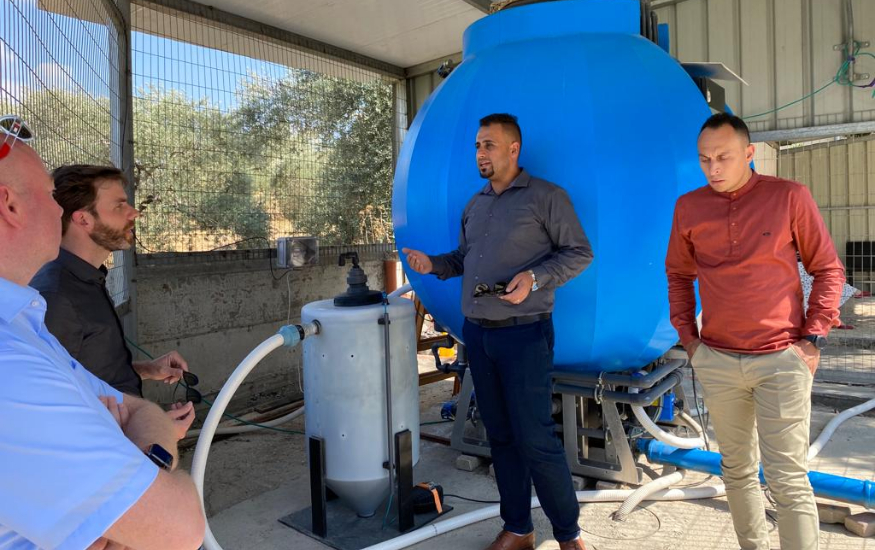
Another example is the pilot with 3 BluElephants in the cities of Salfit and Halhul in the West Bank. These are mobile, decentralised purification plants that purify wastewater for reuse. Now that Palestinian colleagues in the West Bank can no longer safely travel to and from work, these installations ensure that wastewater continues to be purified.
A pilot with 3 BluElephants ensures that wastewater continues to be purified.
Working in neighbouring countries
In other conflict-affected countries, the Blue Deal also seeks creative solutions. Much of this involves thinking along and providing advice. From a distance. Tibben says: “It helps if the Dutch colleagues have already visited the locations and partners. Last year, for example, we were involved in Ethiopia in the construction of a wetland, a natural water buffer for wastewater treatment. This makes it easier for us in the Netherlands to provide digital support for the monitoring of the wetland and the construction of new wetlands.”
Other options are that Dutch and local colleagues meet in a safe neighbouring country. Or that local colleagues come to the Netherlands.
Continuous support
The Blue Deal team in the Netherlands and the team in the West Bank speak weekly. Digitally, which works well thanks to the experiences from the COVID-19 period. Matar says: “Our colleagues from the Netherlands provide us with continuous support. Every week, we assess what is realistic. We even made plans for 2024, although we don’t know exactly how the situation will develop.” Tibben adds: “Especially in difficult times, the long-term Blue Deal partnership focuses on sustainable water management.”
Kroon says: “In conflict areas, water management is so necessary. We work on solutions that fit the local context, focusing on local people. With the Blue Deal, we contribute to a bit of stability. The fact that our partner water authorities are still functioning indicates that our work is meaningful. As long as we achieve sustainable impact, we continue our work.”
In May the first visit of the Blue Deal Dji Don Mali team in 2 years was realised. The Dutch Embassy Bamako also joined the opening of the visit to local partner Agence National de Gestion des Stations d'Epuration du Mali (ANGESEM).
The team covered key themes including safety at work, maintenance plans and Phase 2 priorities based on the SWOT analysis conducted by Blue Deal. This enables the programme to identify where the Blue Deal will focus to contribute to improving wastewater quantity and quality management.
The mission solidified the partnership commitments of working together and there was a strong team spirit throughout the week.
From 28th November to 2nd December, the Malian waste water operator (ANGESEM) visited the Burkinabe operator (ONEA) in Burkina Faso. During the working visit the partners exchanged challenges, approaches and opportunities for collaboration.
To develop ANGESEM’s knowledge of wastewater valorisation, the partners visited utility and household scale biodigesters to understand the transformation process. Read more here.
The Blue Deal partnership in Mali facilitated a pre-feasibility study at a wastewater treatment plant. The goal of the study is to see if an existing wastewater treatment plant could be developed into the first energy-producing wastewater treatment plant in Mali.
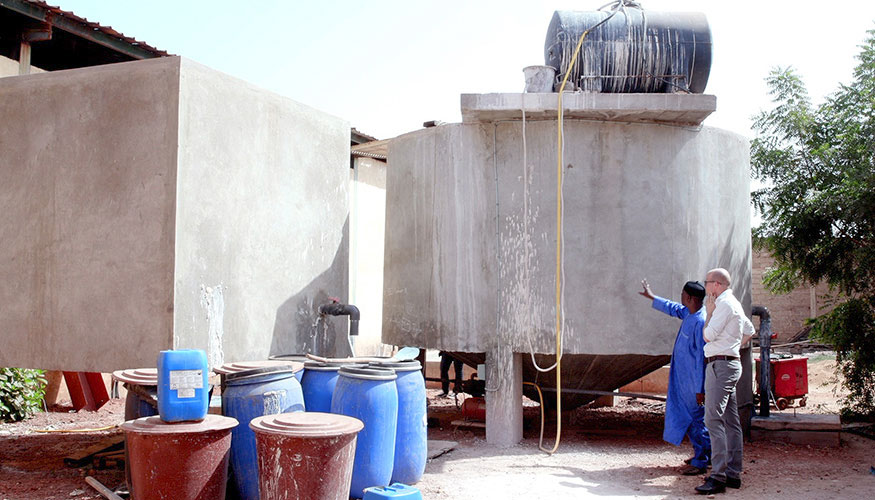
Visit to a wastewater treatment plant in Mali
The energy-producing wastewater treatment plant would be the first project of its kind in Mali. The project is being carried out with support from the Dutch Fund for Climate and Development and SNV.
The KIWI learning programme recently organised a lecture by professor Guy Alaerts about the unruly nature of international water management and solutions for complex water problems.
Water managers worldwide are looking for integrated solutions for complex water problems. Major investments are often required to become climate proof, but finding financing is difficult. Water managers and financial institutions do not know where to find each other and converting globally available financing into concrete projects on a large scale is difficult. Watch the lecture below. The lecture is in Dutch, but can be viewed with subtitles.
The 2021 annual plan of the Blue Deal programme has been approved by the steering committee. The partnerships will continue their work in 2021 to improve water management in 14 countries.
The focus of the Blue Deal Annual plan 2021 is on three crucial elements: sufficient knowledge and skills, a well-functioning organisation and collaboration with key stakeholders.
Online learning
As COVID-19 continues into 2021, the Blue Deal partnerships focus on online learning and training in the first six months. This is not easy in all countries, for example due to slow internet connections or recently initiated partnerships. Therefore, the partnerships also focus on additional local representation. Dutch Water Authorities hopes to physically meet its partners again in the second half of 2021.
To provide the best experiences, we use technologies like cookies to store and/or access device information. Consenting to these technologies will allow us to process data such as browsing behavior or unique IDs on this site. Not consenting or withdrawing consent, may adversely affect certain features and functions.
Functional
Always active
The technical storage or access is strictly necessary for the legitimate purpose of enabling the use of a specific service explicitly requested by the subscriber or user, or for the sole purpose of carrying out the transmission of a communication over an electronic communications network.
Preferences
The technical storage or access is necessary for the legitimate purpose of storing preferences that are not requested by the subscriber or user.
Statistics
The technical storage or access that is used exclusively for statistical purposes.The technical storage or access that is used exclusively for anonymous statistical purposes. Without a subpoena, voluntary compliance on the part of your Internet Service Provider, or additional records from a third party, information stored or retrieved for this purpose alone cannot usually be used to identify you.
Marketing
The technical storage or access is required to create user profiles to send advertising, or to track the user on a website or across several websites for similar marketing purposes.