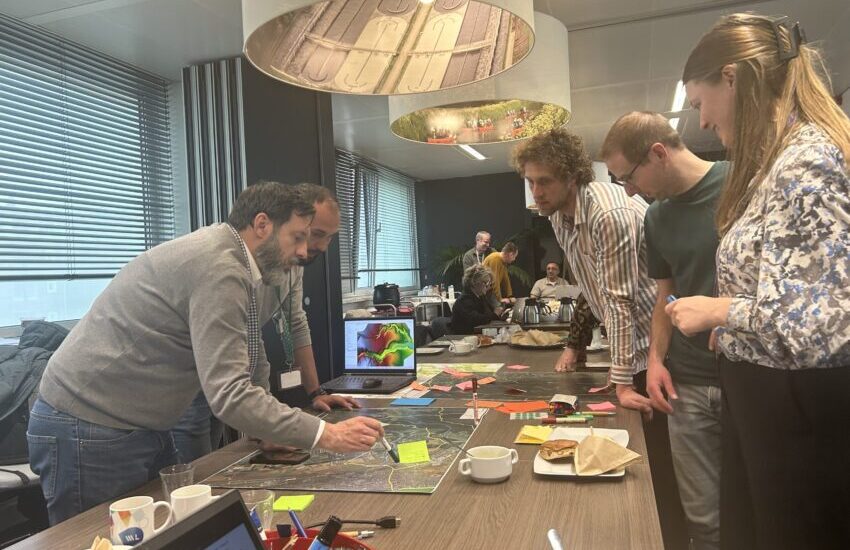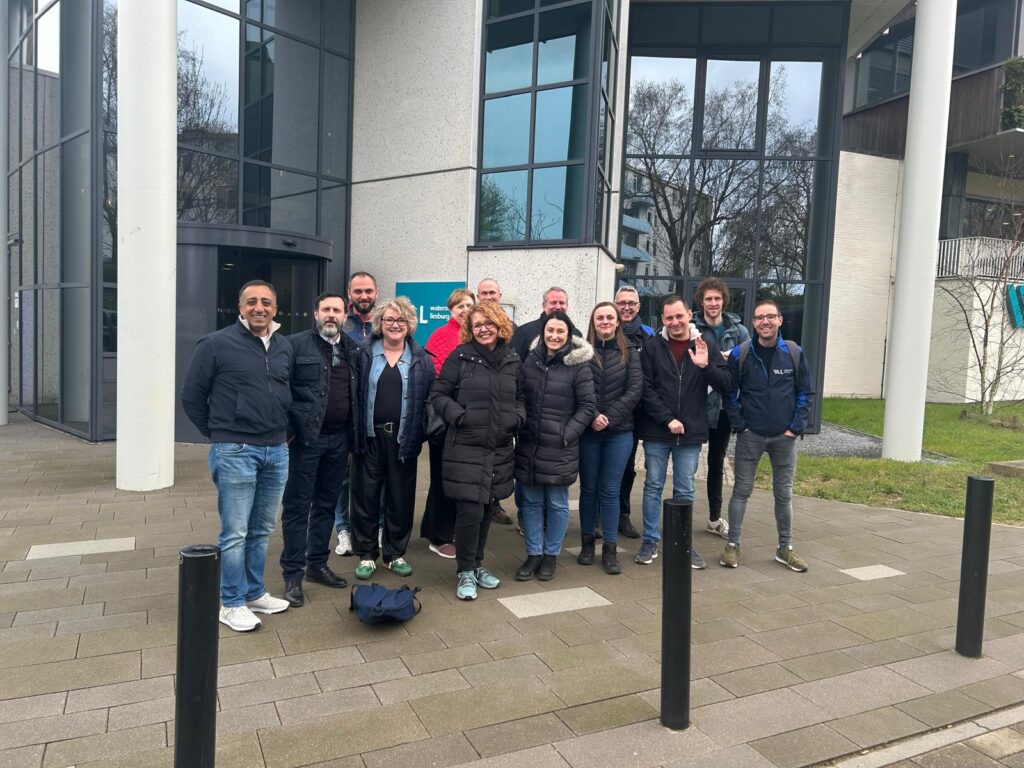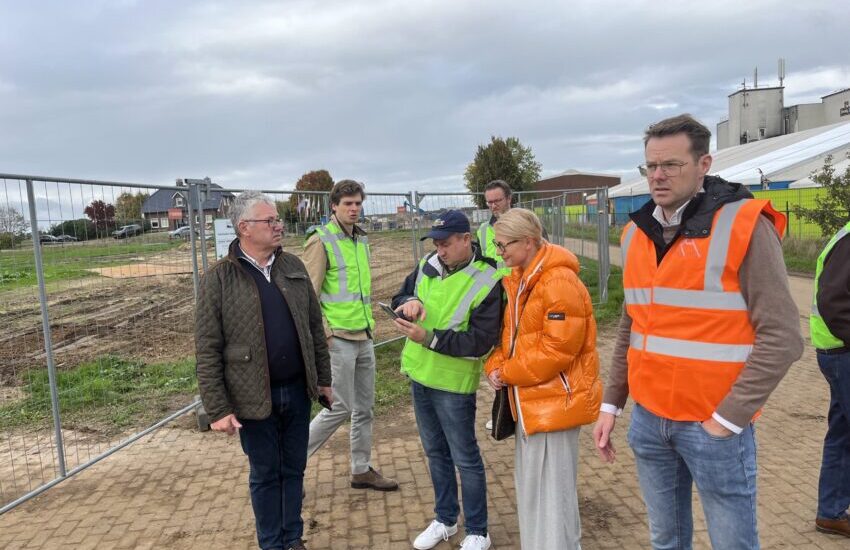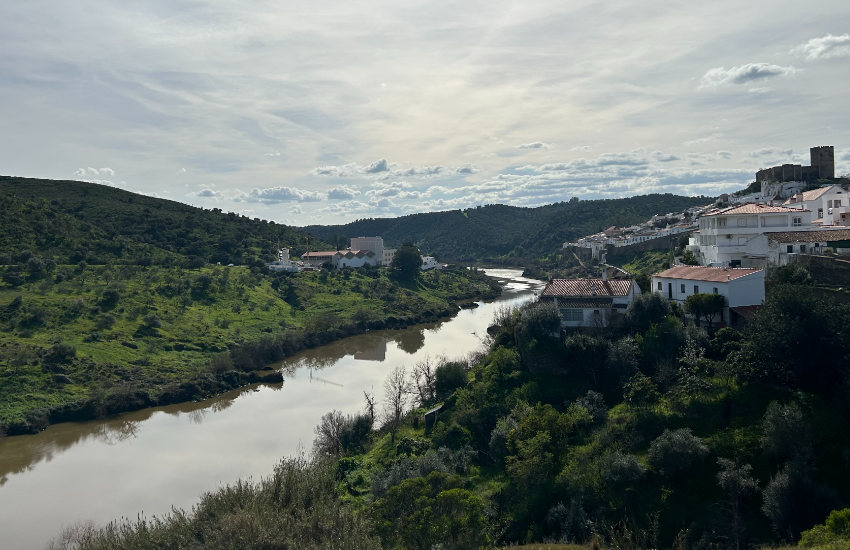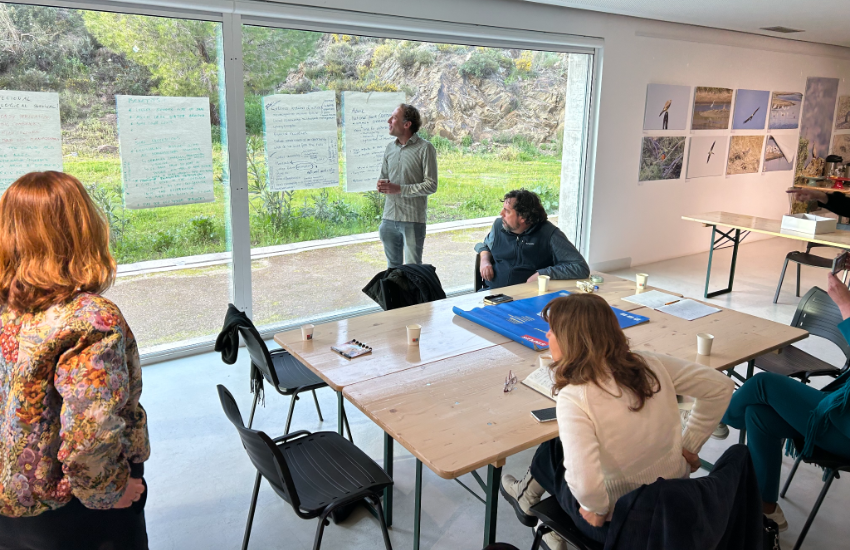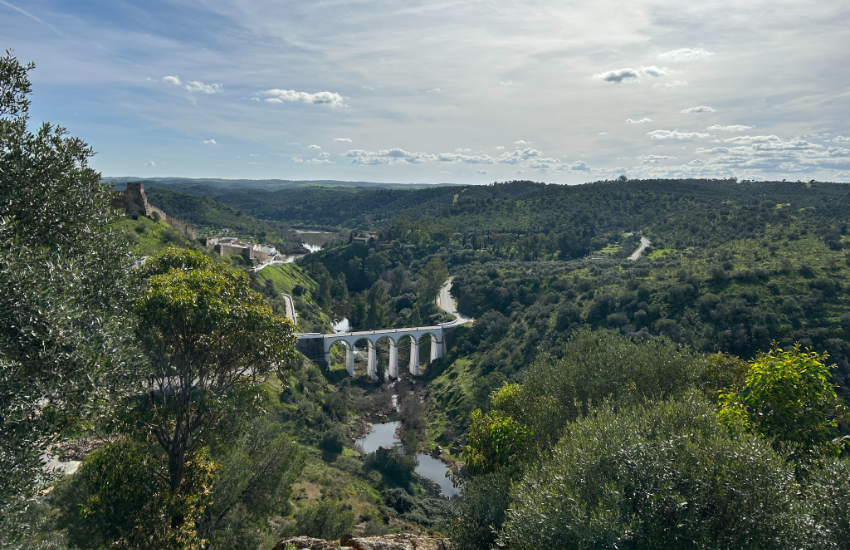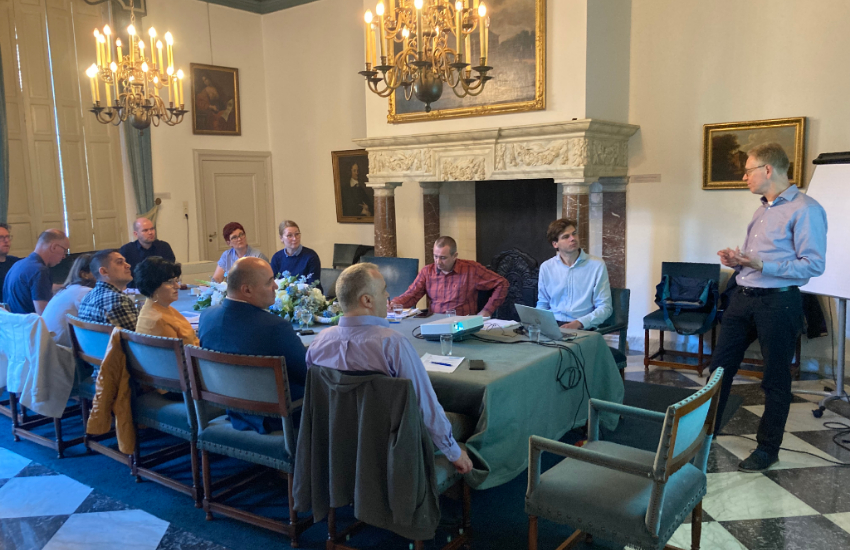
During a bilateral panel in Craiova, Dutch and Romanian water leaders visited key Blue Deal project sites, highlighting progress on drought resilience, river restoration and long‑term cooperation.
“We have moved beyond talking about issues.”
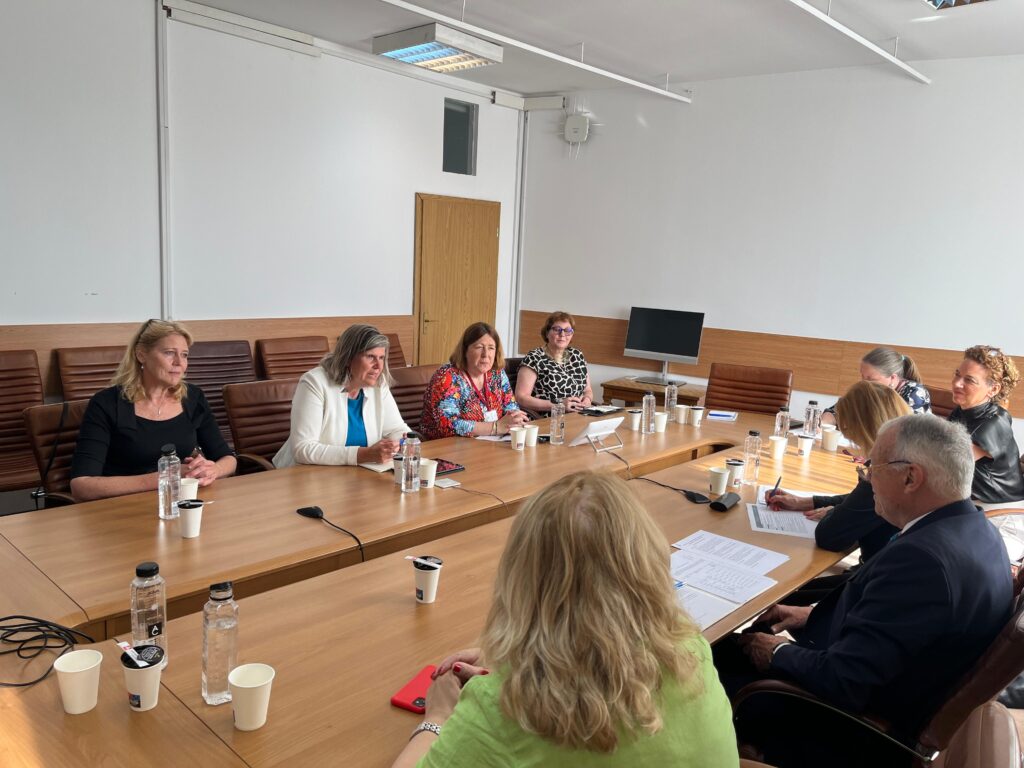
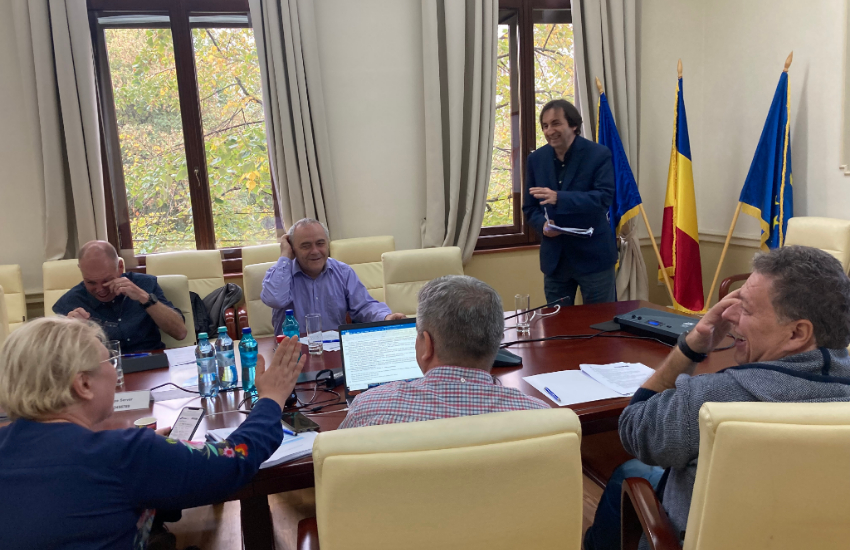
With these words, Willemijn van Haaften, Ambassador of the Netherlands to Romania, opened the 12th bilateral Dutch–Romanian Panel on Water Management. The meeting took place on 4 and 5 May in Craiova, a city along the Jiu River in Romania’s Oltenia region, situated between the Southern Carpathians and the Danube.
Since the launch of the Blue Deal programme, the bilateral panel has also served as the steering committee for the four Blue Deal projects in Romania. One of these projects, Tackling Drought, focuses partly on the so‑called Oltenian Sahara (Sahara Olteniei). This area, between Calafat and Dăbuleni, is affected by severe land degradation and desertification, impacting an estimated 80,000 to 100,000 hectares. The Blue Deal project aims to identify sustainable pathways to address these challenges.
Broad representation from water authorities
The panel was chaired by Luzette Kroon, dijkgraaf of Dutch water authority Wetterskip Fryslân. The Dutch delegation also included Marjon Verkleij, board member of Rijnland Water Authority, and Josette van Wersch, executive board member of Waterschap Limburg. In addition to representatives from Romania’s Ministry of Water, participants from Moldova were present. As an EU candidate country, Moldova is in the process of aligning its water legislation with European standards and is actively seeking best practices.
Key challenges in Romanian water management
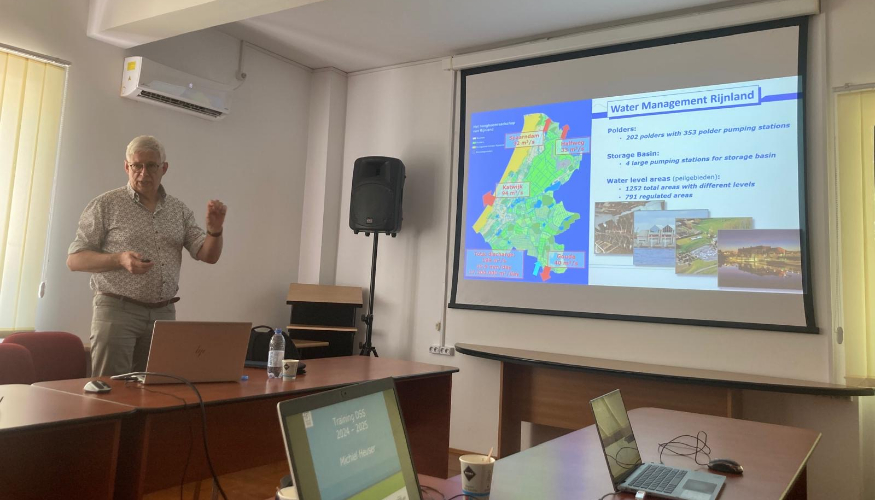
During the meeting, the Netherlands embassy presented an overview of the current state of water management in Romania. At present, only 77% of Romanian households are connected to a public water supply. By 2030, authorities hope to reach 100%, but this represents a major national challenge. The total investment needed for drinking water and wastewater infrastructure is estimated at over €30 billion.
Sorin Rîndașu, Deputy Director at the Romanian Ministry of Water, highlighted that while European funding is available, there are ongoing challenges related to the absorption and effective use of these funds.
Field visits: reservoirs, irrigation and drought resilience
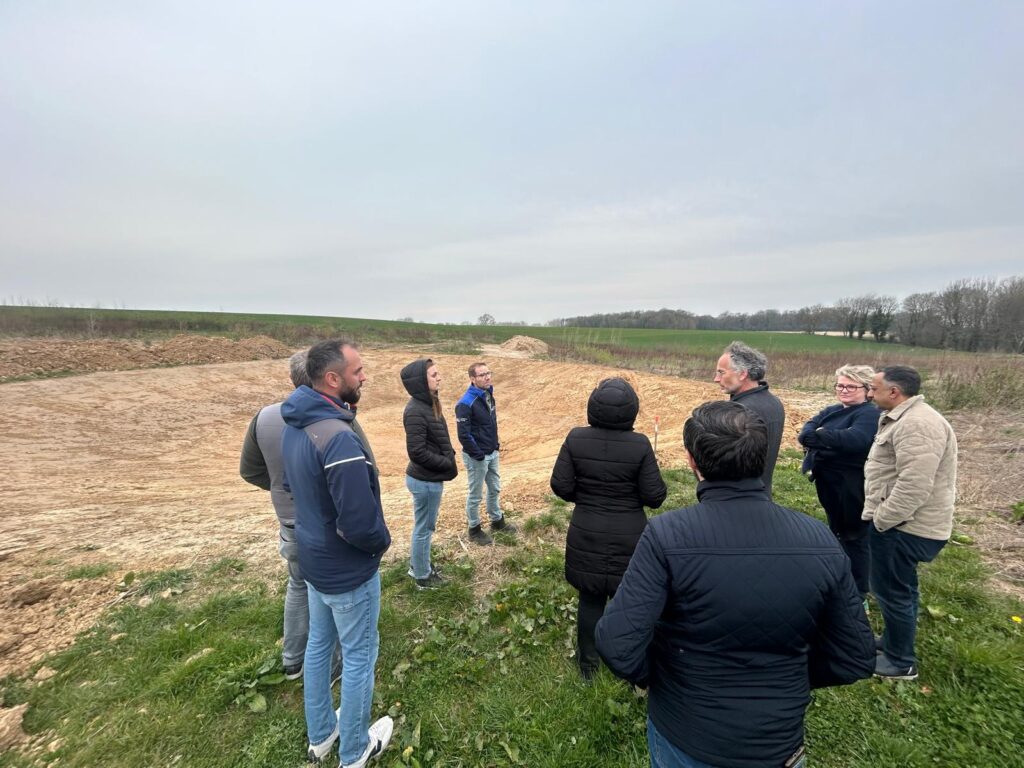
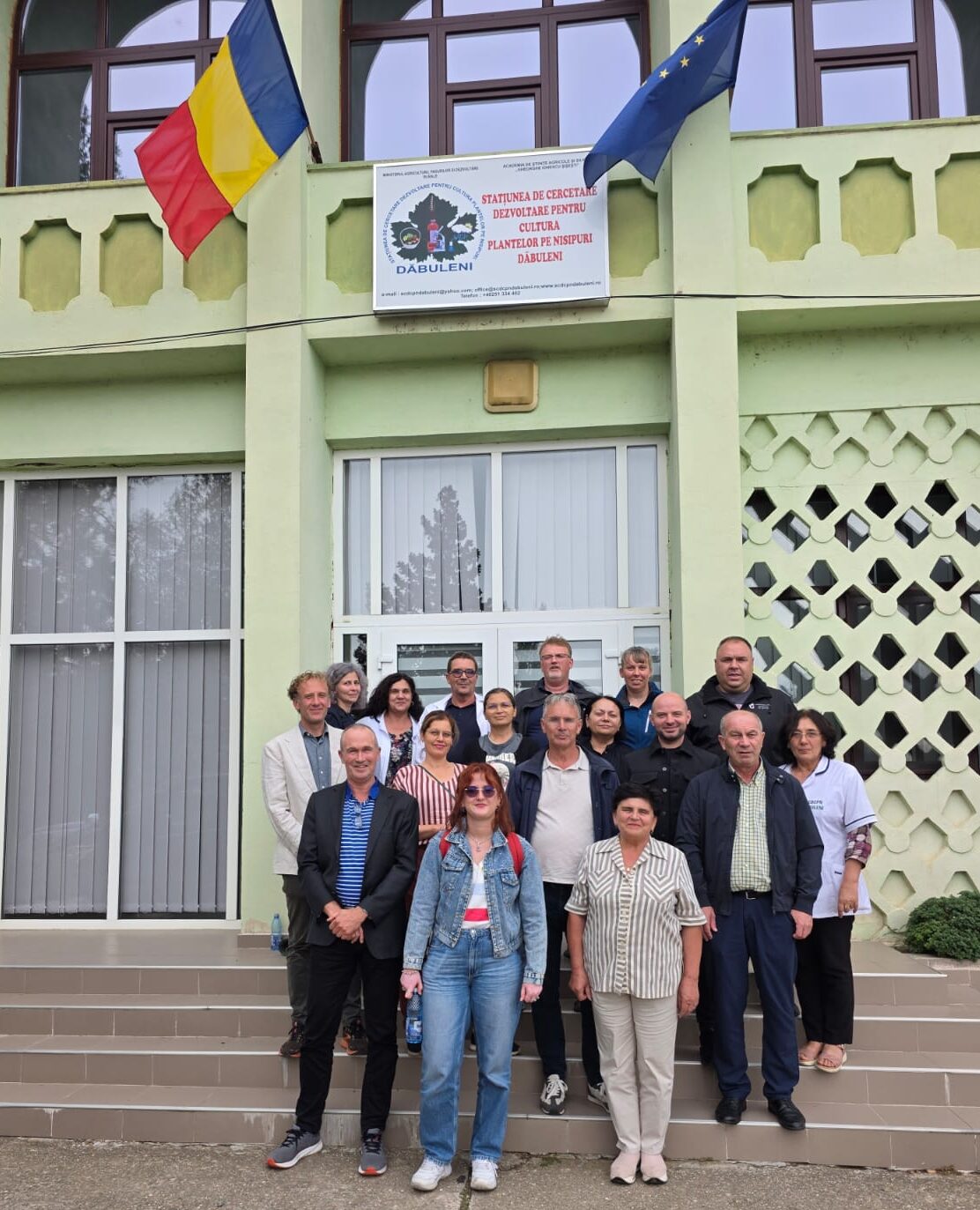
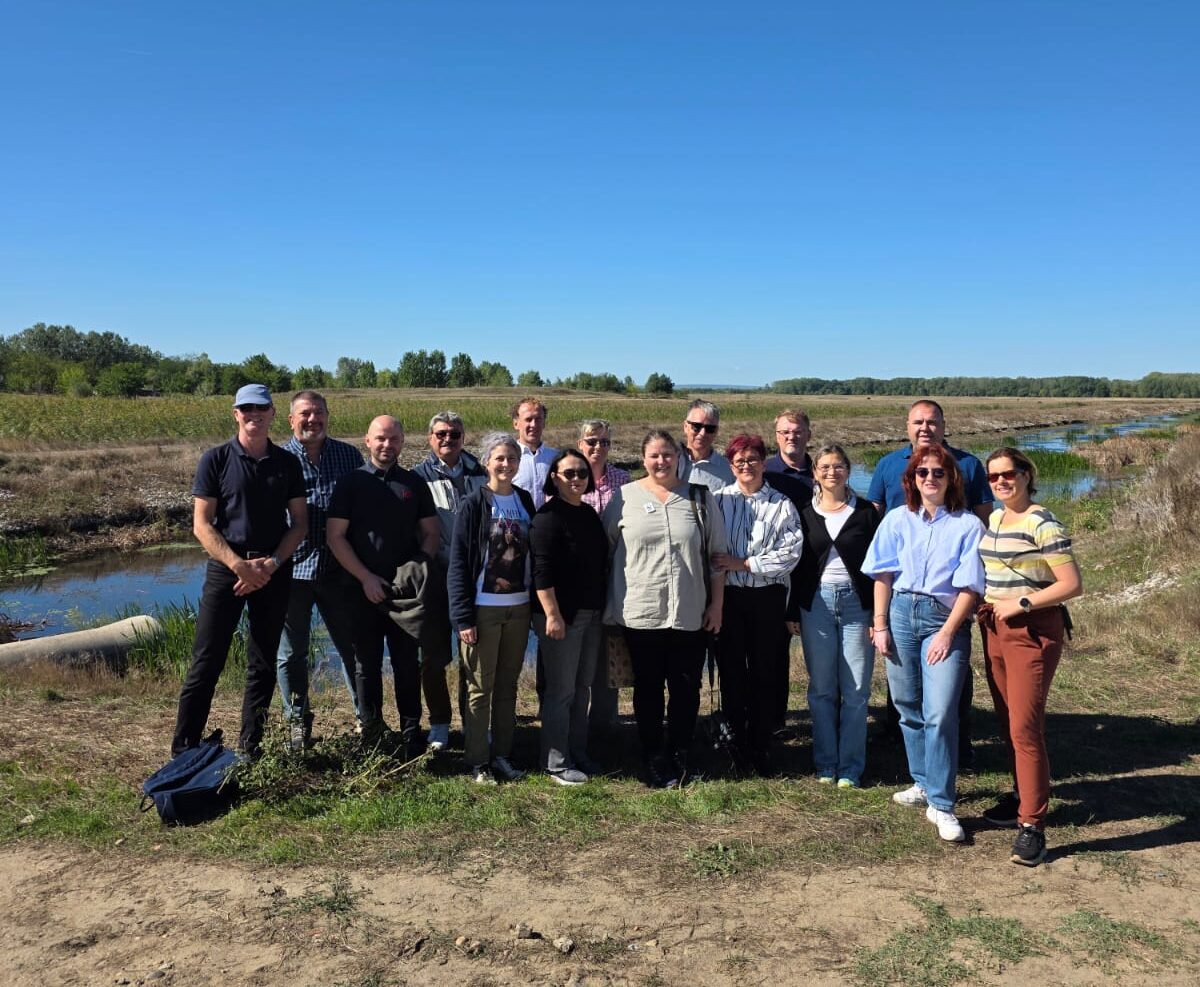
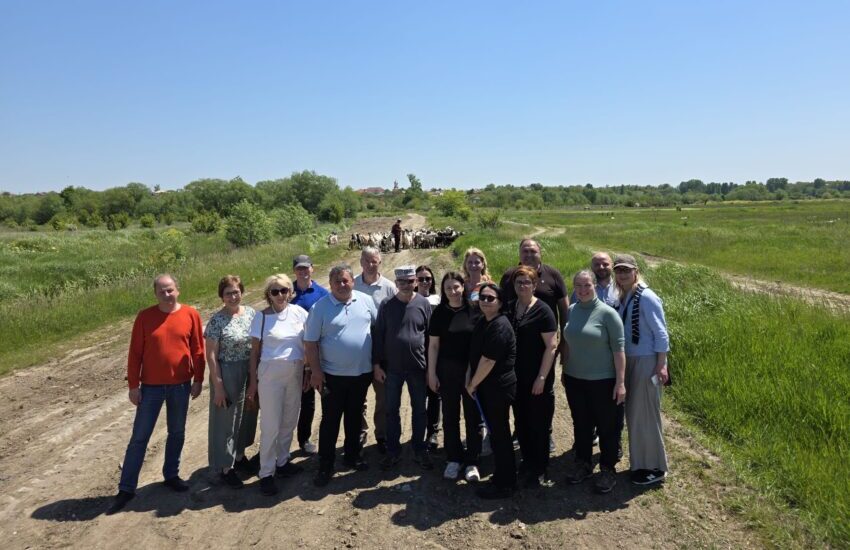
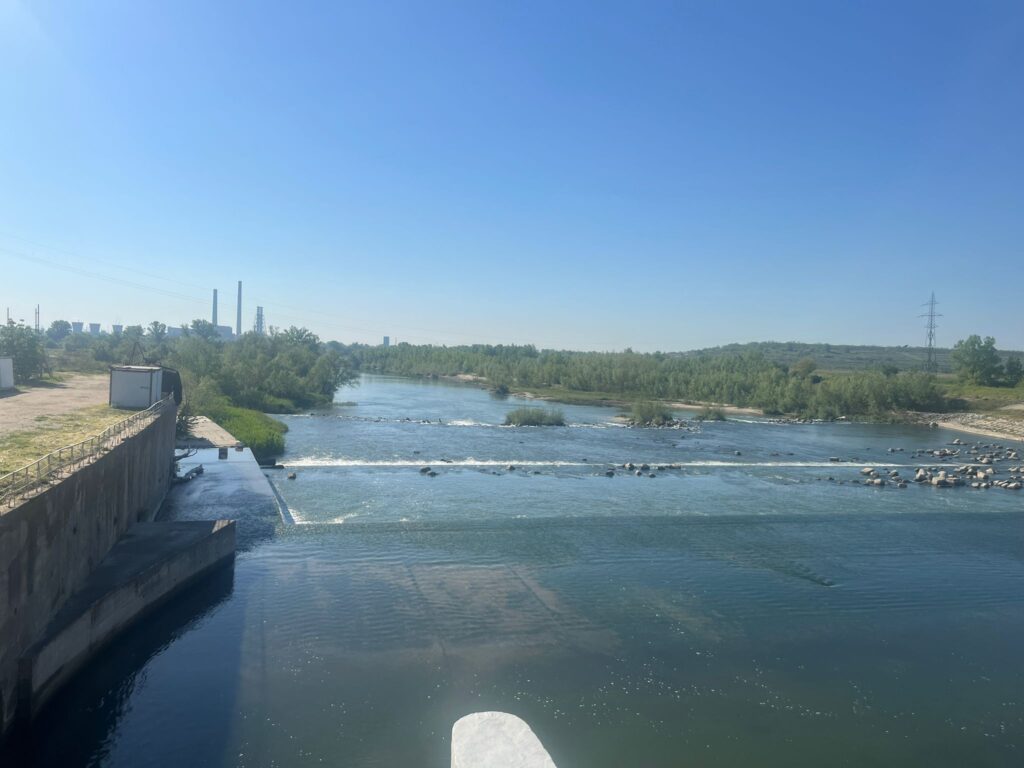
On the second day, the delegation visited several project locations, including the Isalnița reservoir on the Jiu River, a tributary of the Danube. The reservoir previously supplied cooling water to a coal‑fired power plant downstream. Following the decommissioning of the plant in line with the Paris Agreement, opportunities have emerged to use this water more effectively for agriculture.
Within the Tackling Drought project, the Blue Deal partnership has advised that water abstraction for irrigation from the Isalnița reservoir is more sustainable than current withdrawals from the Danube, as the reservoir is located at a higher elevation.
Another site visit focused on the Corabia–Sadova irrigation scheme, located on the left bank of the Jiu. Developed in the 1960s, the system consists of concrete channels pumping Danube water uphill over a height difference of approximately 160 metres. Originally designed to irrigate 70,000 hectares of agricultural land, the system has suffered from decades of underinvestment, as full rehabilitation would be energy‑intensive and unsustainable.
The Corabia–Sadova area falls under two regional water authorities, Apa Jiu and Apa Olt. Within the Blue Deal project, it has been recommended to partially rehabilitate the irrigation system within the Apa Jiu district, while allowing space for reforestation in the northern sections.
Nature restoration in the Jiu Valley
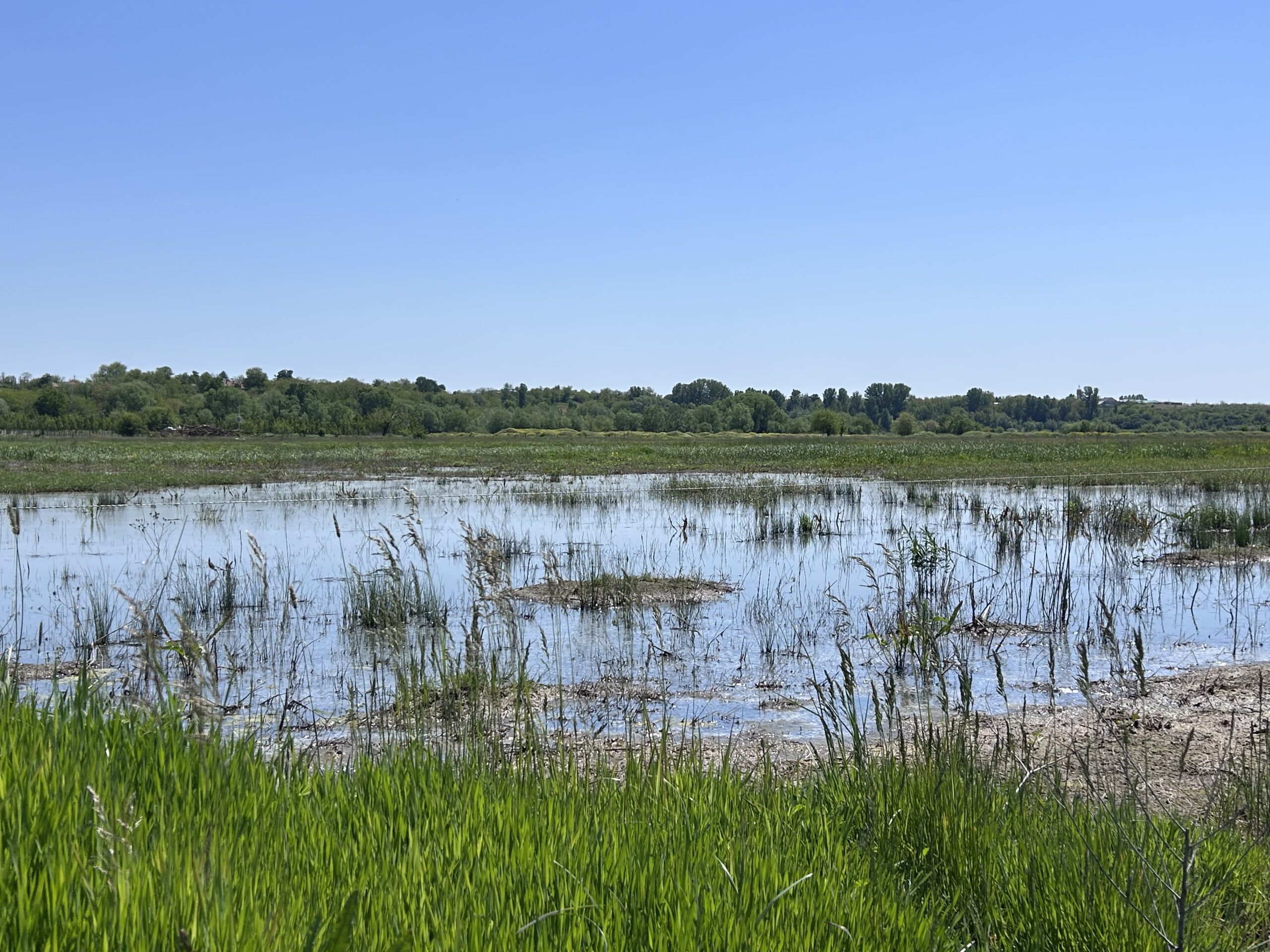
The delegation also visited the Jiu Valley, a Natura 2000 protected area encompassing the Jiu River and its tributary, the Jiet (Little Jiu). The Dutch Water Authorities (Unie van Waterschappen) is an associate partner in the EU Interreg project Interlink Hard, which focuses on river and ecosystem restoration.
Planned measures include restoring river meanders, creating floodplain areas designed for pollinators, removing vegetation barriers to improve fish migration, and reconnecting the Jiu River with the parallel Jiet River. This reconnection is expected to prevent the Jiet from drying out during late summer.
The Interreg project, with a total budget of €3.5 million, will also involve deep borehole investigations to better understand groundwater conditions and soil composition. These data are highly relevant for the Blue Deal Tackling Drought project, as they will contribute to a more robust assessment of the water balance in the Jiu basin.
Looking ahead: ensuring continuity of the Blue Deal partnership
During the panel discussions, participants also reflected on the importance of ensuring long‑term continuity for the Blue Deal partnership in Romania, particularly in light of changes in the funding landscape expected after 2028. The coming years will therefore focus on aligning shared ambitions, partnerships and financing arrangements to support the continued implementation and scaling up of results.
By combining national cooperation, EU programmes such as Interreg and the commitment of participating water authorities, the Dutch–Romanian partnership aims to build on the progress made so far and continue advancing climate‑resilient and sustainable water management in the years ahead.